
The complete guide
How to Choose a 4 Person Dome Tent That Actually Keeps You Dry
The problem with most cheap tents
Almost everyone who gives up on camping gives up for one of two reasons. Either the tent took forty minutes to pitch in fading light while the kids got cold, or it rained and the inside got wet. Both of those are solvable, and both come down to the way the tent is built rather than how much you spent.
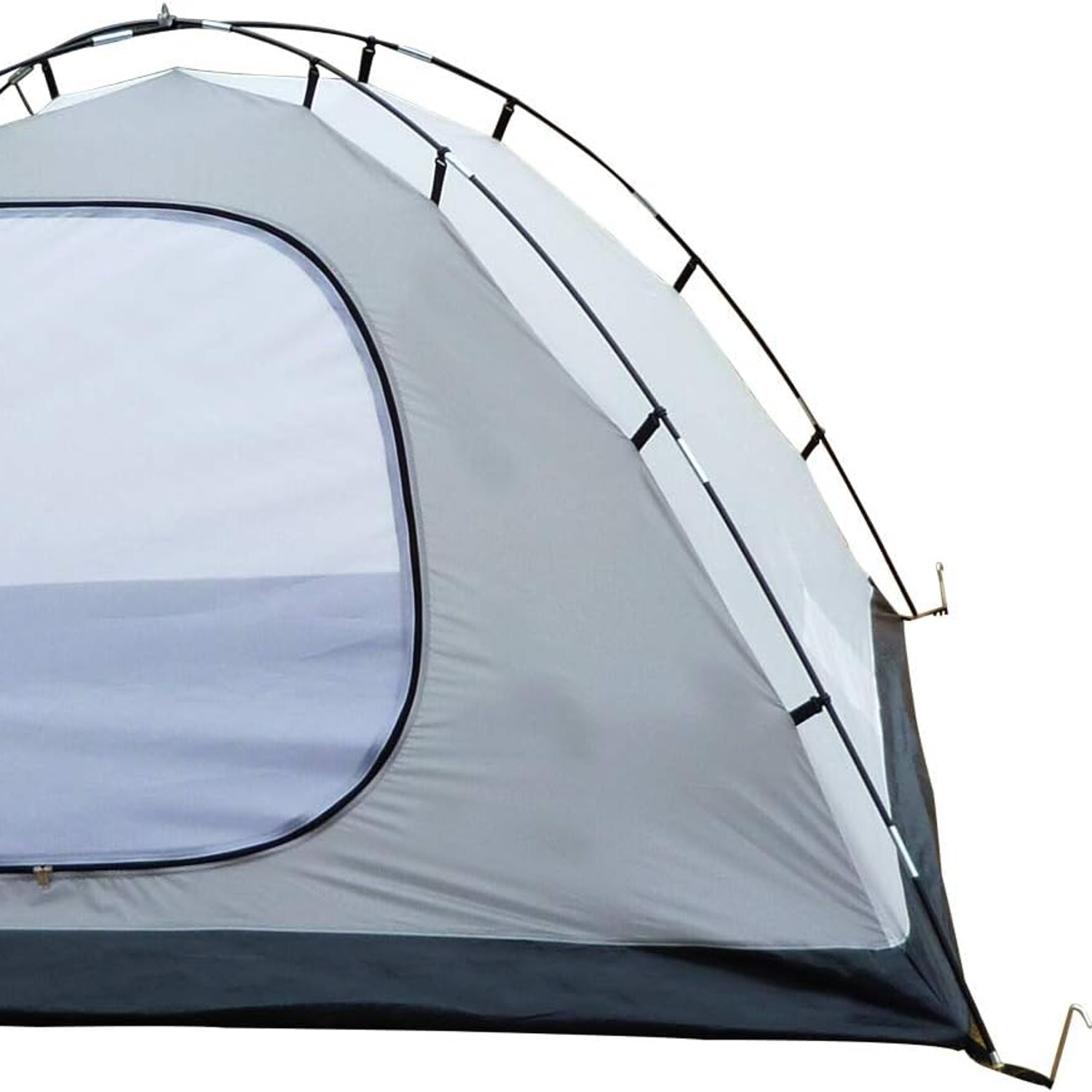
The first problem is about poles. Tents that thread long poles through fabric sleeves are slow and awkward, especially when you are on your own and the wind is pushing the fabric around. Tents that use clips are faster because you build the frame first, then attach the body to it in a few seconds per clip.
The second problem is about layers. A single-skin tent has one piece of fabric between you and the sky. It might be waterproof on the outside, but the warm moist air from four sleeping people hits the cold inner surface and turns straight back into water. You wake up thinking the tent leaked when really it was just breathing.
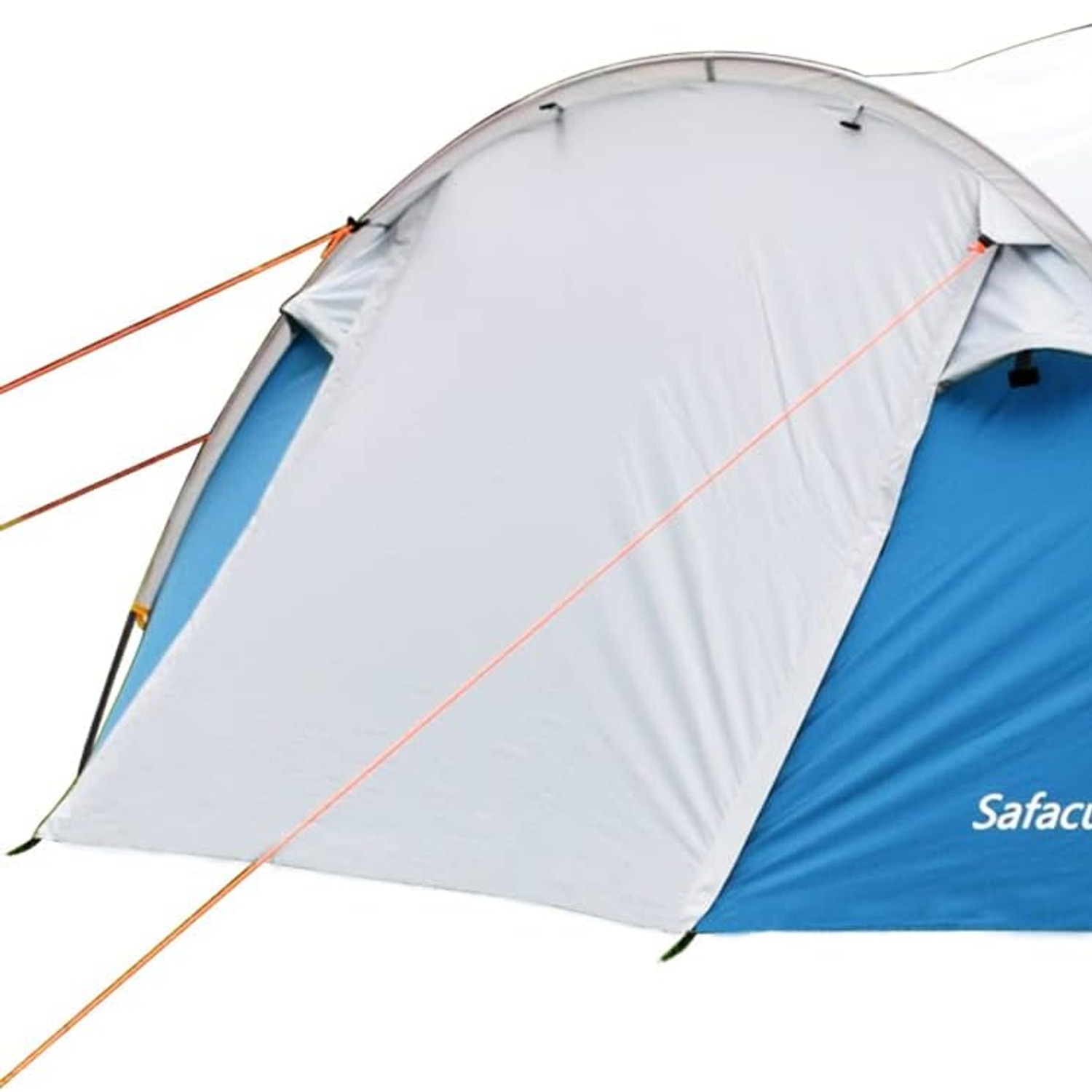
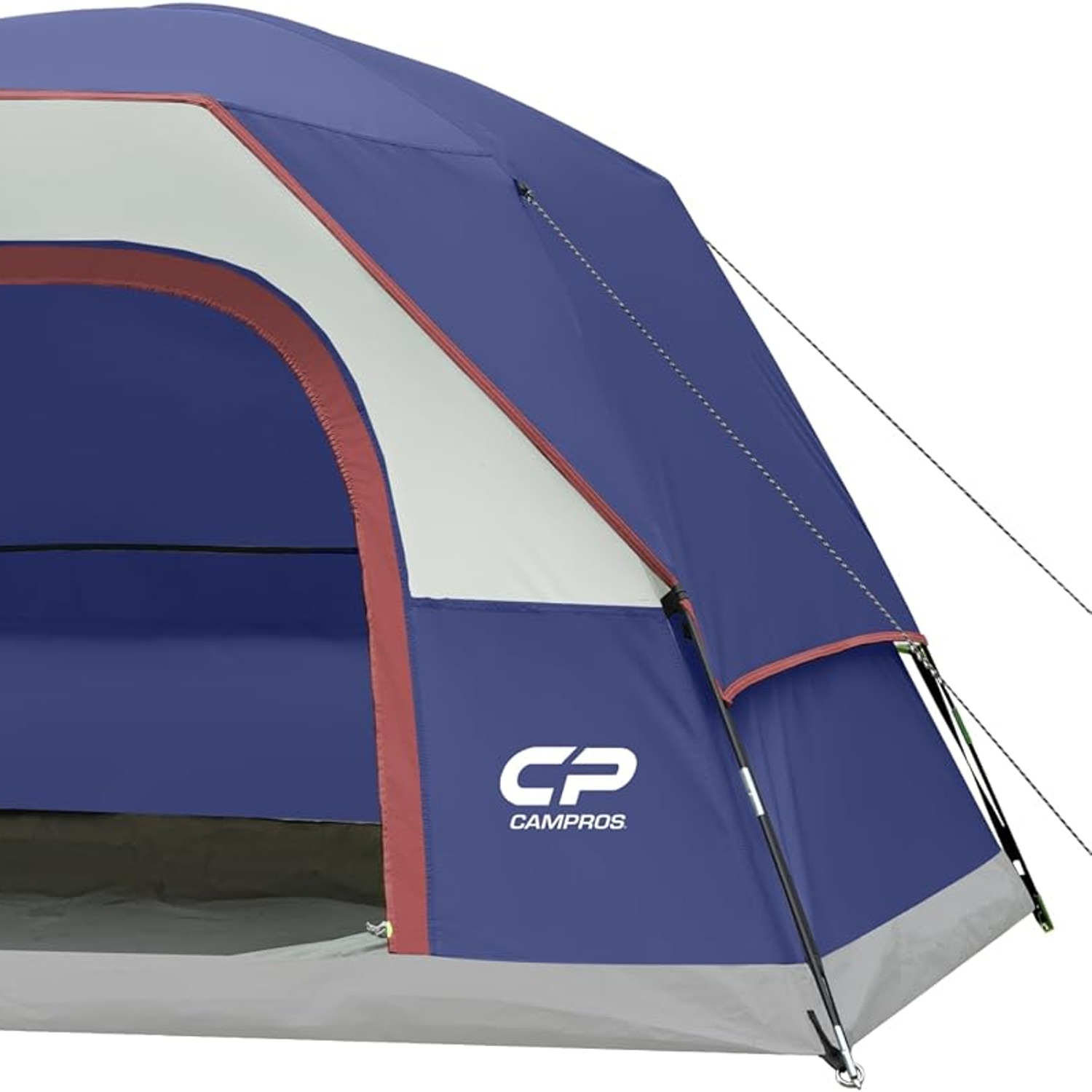
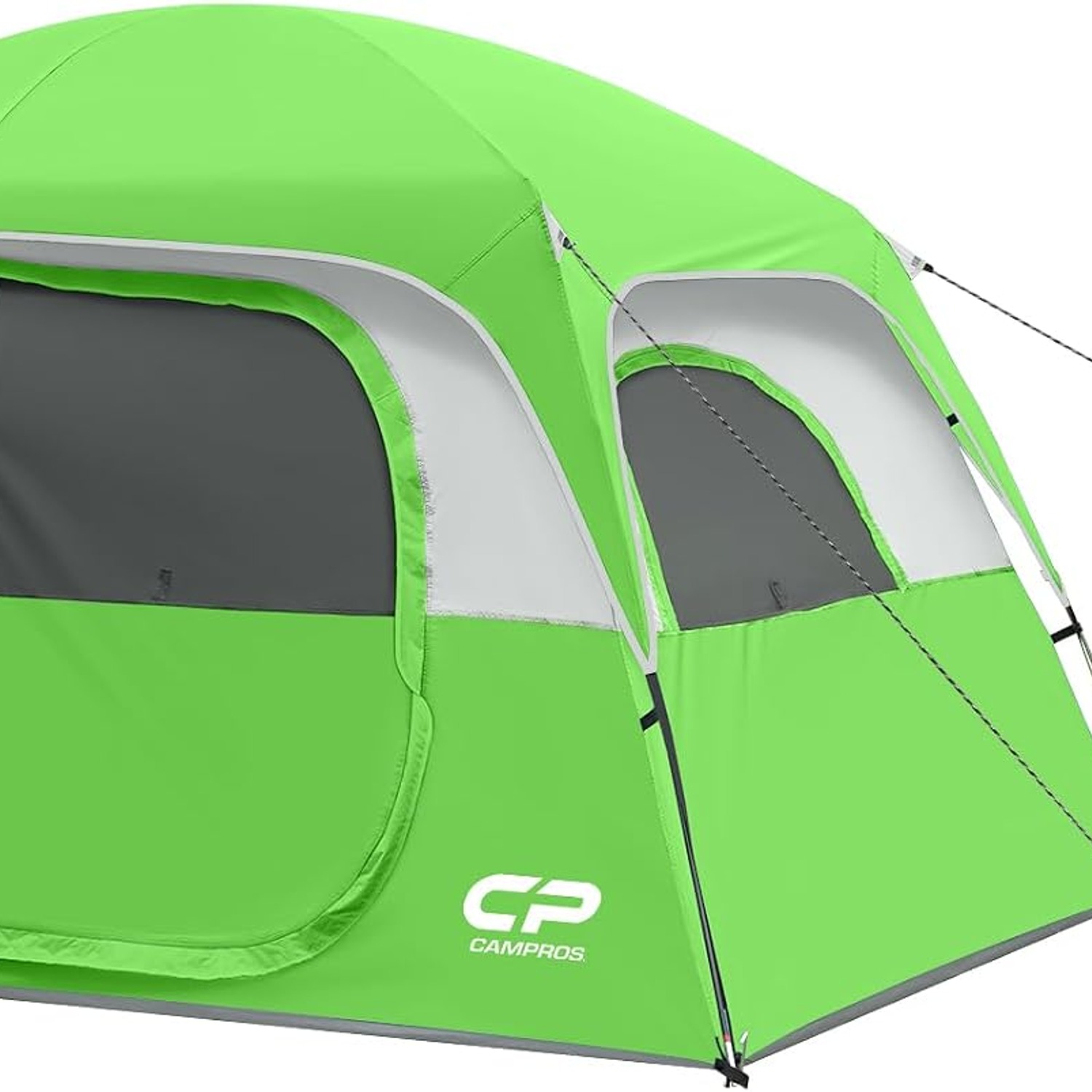
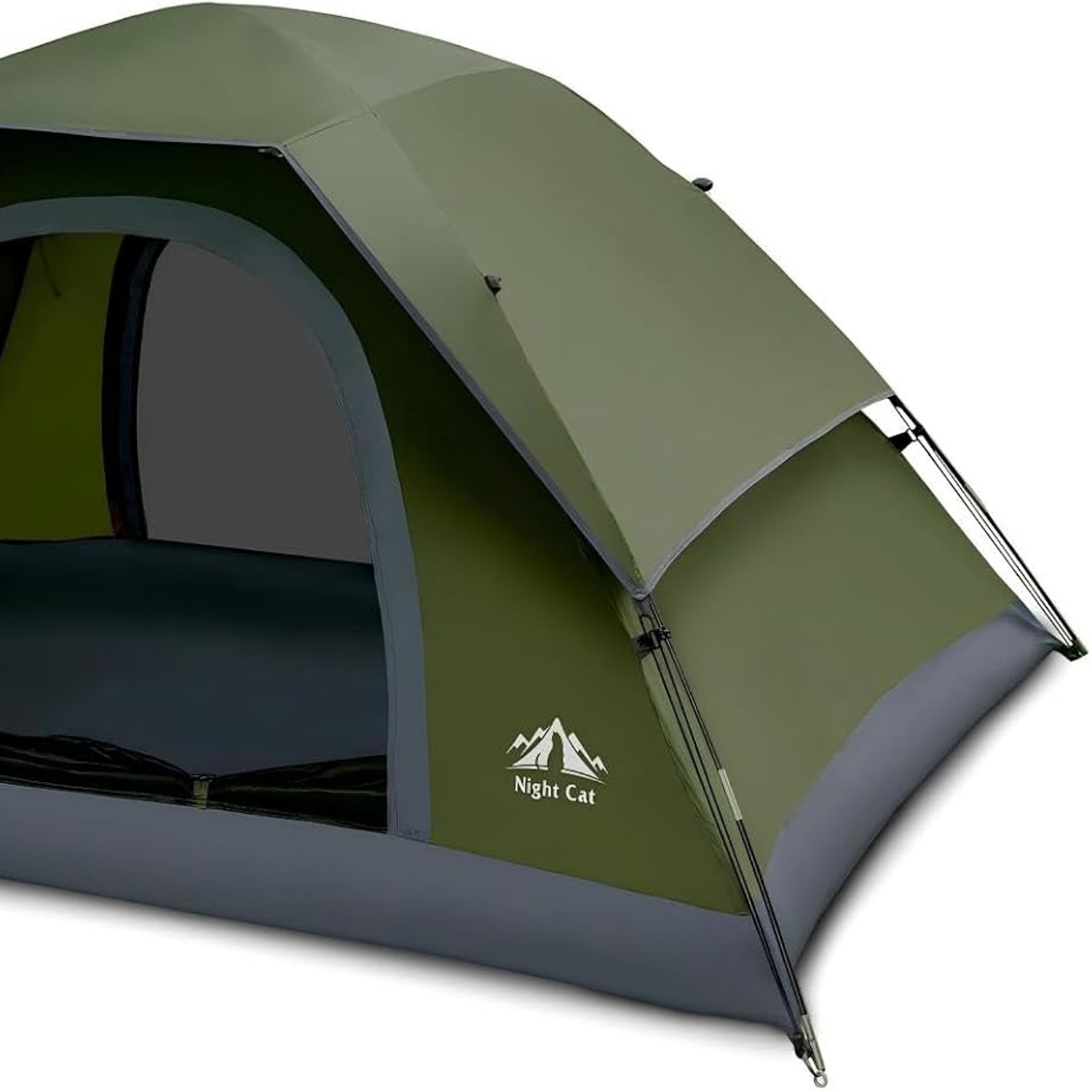
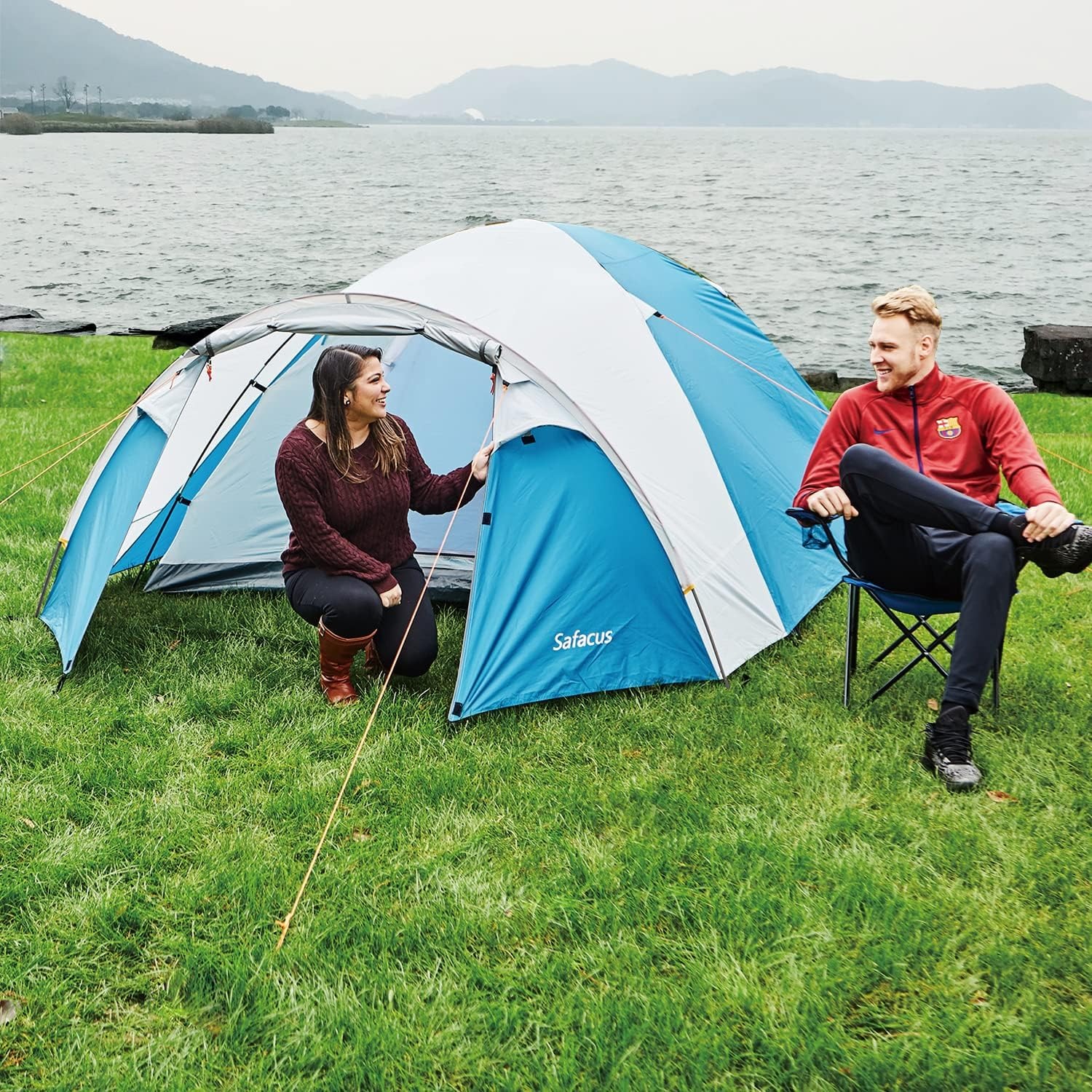
This 4 person camping tent addresses both. Two fibreglass poles clip into place, and a breathable inner sits under a separate waterproof fly.
How a double layer dome tent works
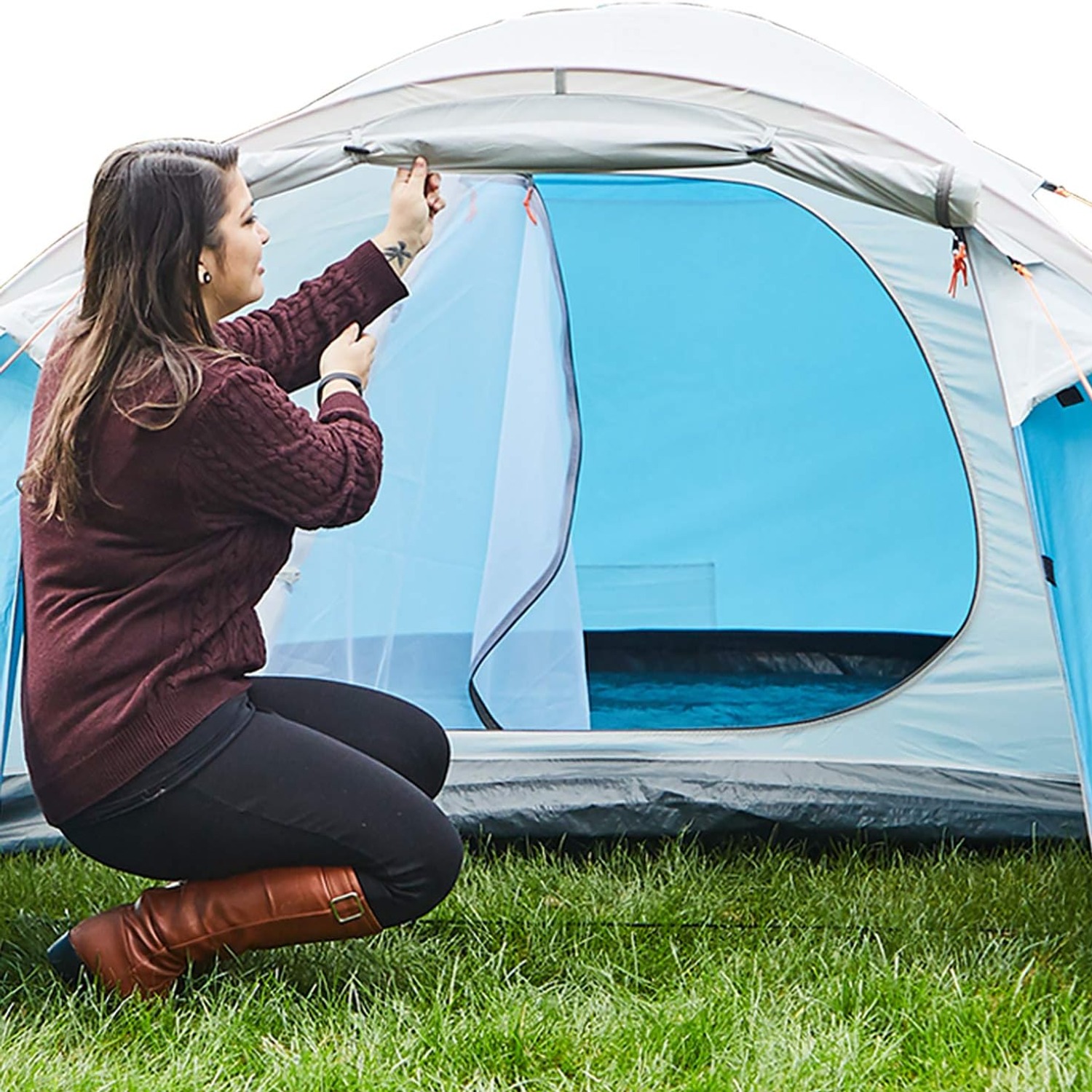
Picture two shells. The inner one is breathable polyester. It is not trying to be waterproof, which sounds odd until you understand its job. Its job is to let water vapour pass outwards while keeping bugs and draughts out.
Over the top goes the rainfly, a polyester outer with a polyurethane waterproof coating. That is the layer doing the weather work. Between the two sits a gap of moving air. Vapour from inside passes through the inner, hits the cooler fly, condenses there, and runs down the outside of the inner tent to the ground. You never touch it.
That is the whole trick of a double layer camping tent, and it is why experienced campers will not go back to single-skin shelters for anything longer than a nap.
The dome shape matters too. A cross of two poles creates a self-supporting arch that sheds wind from any direction, and it is freestanding, so you can pick it up and move it before pegging down. The listing describes this tent as independent for exactly that reason.
Who this tent suits
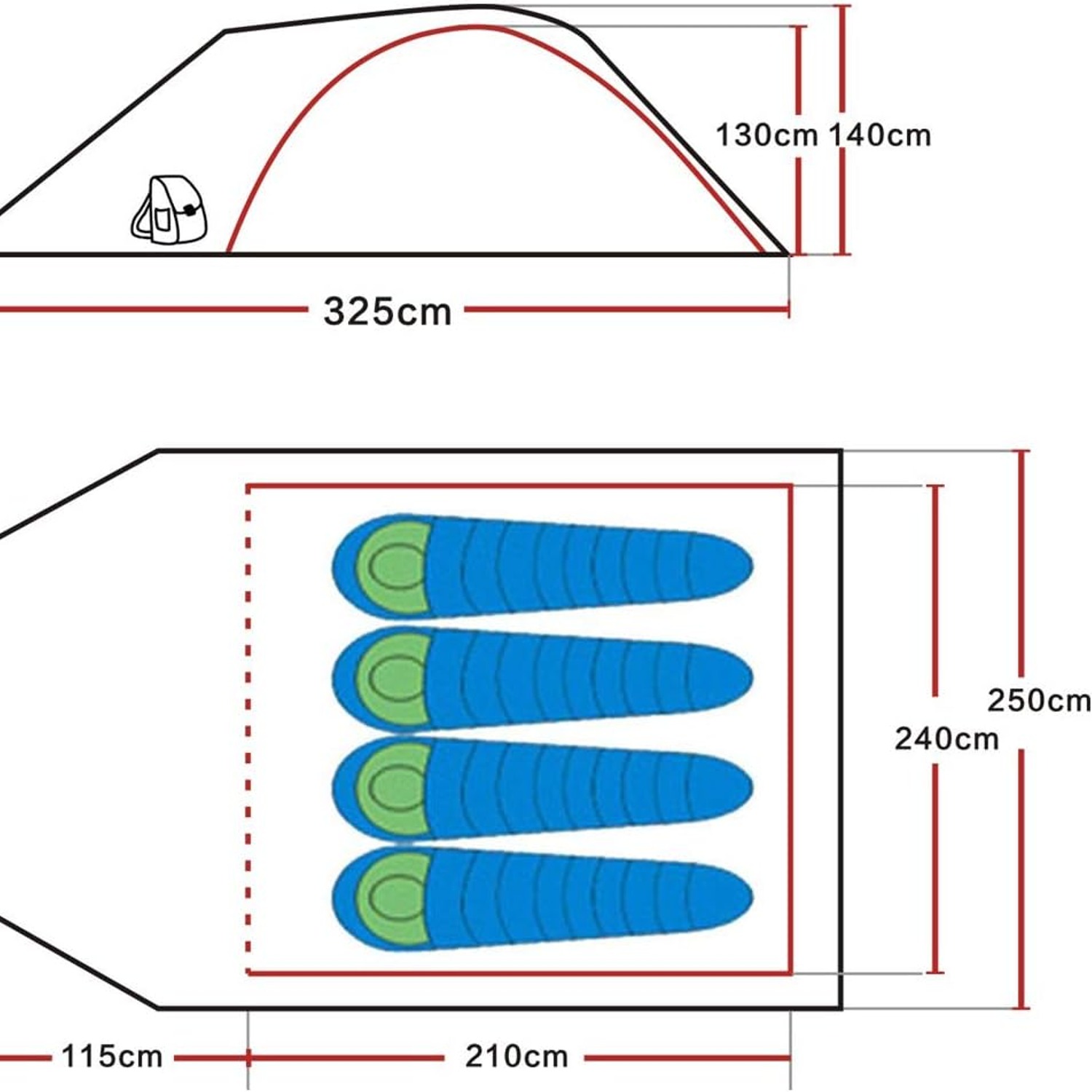
Four adults will fit. The floor is 325 cm long and 3.25 m wide, giving 81,250 square centimetres of floor area. Line up four standard sleeping mats side by side and you will use most of that width, with gear stacked at the feet.
Realistically, this works best for two adults and two children, or three adults who want space for bags and a bit of elbow room. That is normal for tent capacity ratings everywhere. The number tells you how many sleeping bodies fit shoulder to shoulder, not how many people can live in it comfortably for a week.
Peak height is 140 cm. You sit up, kneel, change clothes, and play cards on a wet afternoon. You do not stand. If standing height matters to your group, you are looking for a cabin tent, not a dome.
It is a good fit for car camping, beach days, fishing trips and festivals. It is a less good fit for long backpacking routes, because 4.8 kg is a lot to carry for several days even if you split it between packs.
Reading the specs that matter
People get lost in spec sheets. Here is what to actually care about.
Pole material. This tent uses fibreglass. Fibreglass is flexible, affordable and holds a dome arch well. It is heavier than aluminum and it can split with hard use over many seasons, but replacement sections are cheap and easy to find.
Number of guylines. Four here. Guylines are the cords you run from the fly out to pegs in the ground. Most people skip them in good weather, which is fine. The moment the forecast turns, they are the difference between a tent that holds its shape and one that flaps all night.
Stakes. Aluminum and plastic are both included. Aluminum goes into firm ground. Plastic works in soft soil and sand. Having both is more useful than having eight identical pegs.
Doors. One. Fewer doors means fewer zips and fewer seams, which is a small reliability gain. It also means someone has to climb past someone else at 2am.
Packed size. 128 x 98.4 x 55.1 cm with a 4.8 kg weight. Measure your boot. This is the spec people forget until the morning they leave.
Pitching it properly
Do a practice run at home. This sounds like fussy advice until you have tried to pitch an unfamiliar tent in the rain.
Lay the tent flat with the door facing where you want it. Think about wind direction and morning sun. A door facing east gets you an early wake-up in summer, which some people like and others really do not.
Build the two fibreglass poles, cross them over the top, and seat the ends. Clip the tent body on. Stake the four corners so the floor is taut but not stretched like a drum. Throw the rainfly over, line it up, and attach it.
Then do the part most people skip. Run all four guylines out to pegs at roughly 45 degrees and put real tension on them. This pulls the fly away from the inner, which protects the air gap that keeps you dry. A sagging fly touching the inner wall will transfer water through by contact.
Looking after it
A tent that is looked after lasts years. A tent that gets shoved damp into a bag lasts one bad week.
Dry it fully before storage, every time. If you pack up wet because you are leaving in the rain, that is fine, but pitch it again at home within a day or two and let it air out. Mildew on polyester is permanent, and it smells.
Clean with a soft brush and cool water with a little mild soap for marks. No washing machine, no bleach, no tumble dryer, no iron. Those will damage the polyurethane coating that makes the fabric waterproof.
Keep the poles and pegs in a separate bag so metal edges do not rub holes in the fabric. Store somewhere dry and out of direct sun, because UV is what eventually makes tent fabric brittle.
Zips deserve a mention. Most tent failures are zip failures, and most zip failures are caused by sand and grit. Shake the tent out before packing, especially after a beach trip.
Small things that make camping better
Put a tarp or footprint under the floor. Keep it tucked inside the fly line so rain does not run onto it and pool underneath.
Bring more pegs than you think you need. Pegs bend and pegs vanish into long grass.
Keep wet boots and coats just inside the door rather than loose in the sleeping area, or you are adding moisture to the air all night.
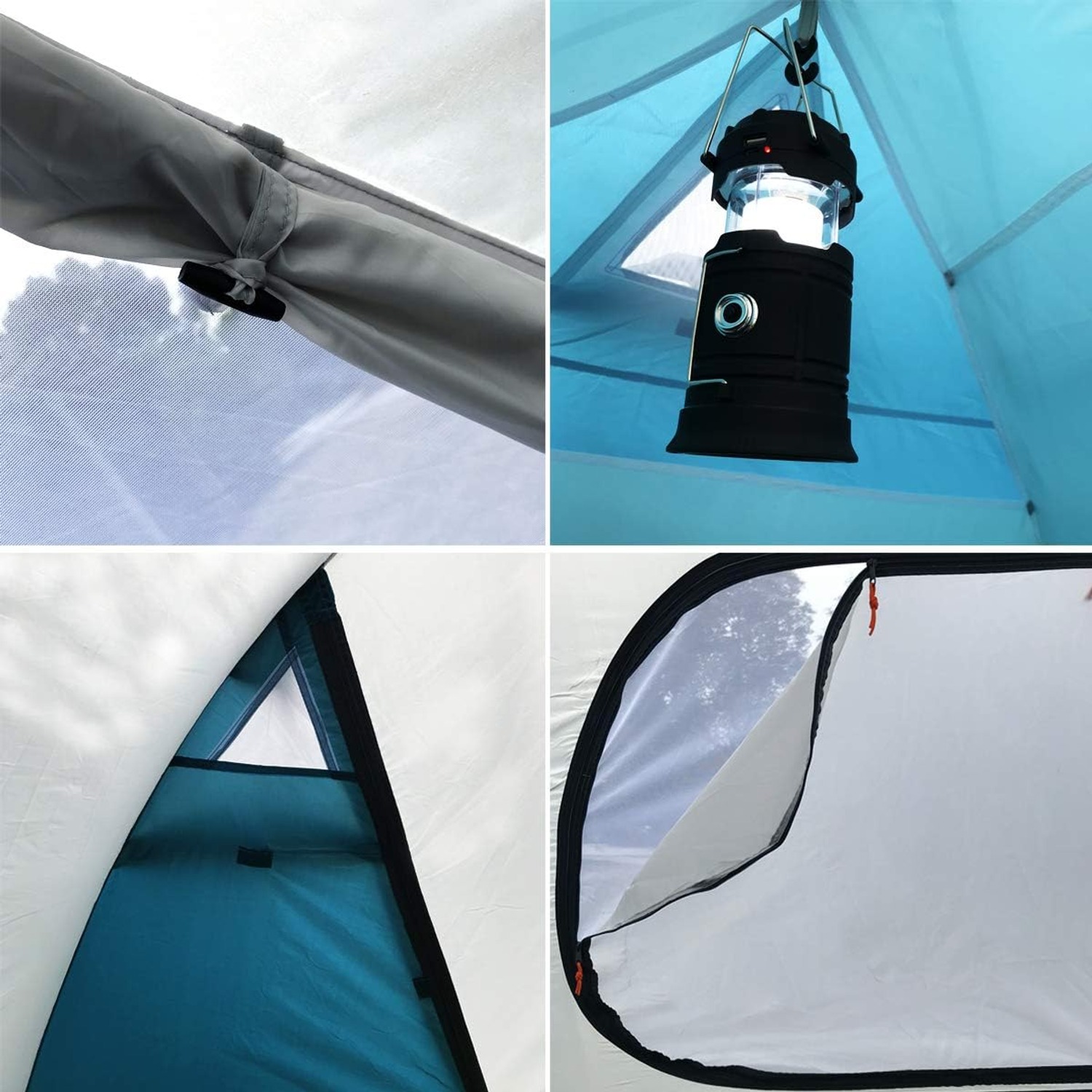
Hang a small lantern from the centre. Nobody wants to fumble for a torch in a dark dome.
The short version
This is a straightforward 4 person dome tent built around two things that matter most for ordinary campers. It pitches in about ten minutes thanks to clip-on fibreglass poles, and it has a proper double layer with a waterproof polyurethane-coated polyester fly over a breathable inner.
The floor runs 325 cm long by 3.25 m wide with 140 cm of headroom. There is one zippered door, four guylines, and a mixed set of aluminum and plastic stakes. Packed, it is 4.8 kg.
Four adults fit. A family of four fits comfortably with room for gear. Stake it properly, dry it before storing it, and it will cover plenty of weekends.