
The complete guide
How to Choose a Self Inflating Sleeping Mat That You Will Actually Sleep On
The night that puts people off camping
Ask anyone who stopped camping why they stopped, and the answer is rarely the walking. It is the night. Cold seeping up through the ground, a hip bone pressing into a rock, a rolled-up jacket standing in for a pillow. One bad night like that and the gear stays in the garage.
A sleeping mat is the single piece of kit that changes this. It does two jobs at once. It cushions you from the ground, and it puts an insulating layer between your body and soil that is quietly pulling heat out of you all night. A good sleeping bag on bare ground still leaves you cold, because your body weight crushes the insulation underneath you flat. The mat is what stops that.
The problem with older mats was setup. Closed-cell foam rolls are light and indestructible but thin and lumpy. Pure air pads are comfortable but need five minutes of hard breathing at the end of a long day. A self inflating sleeping mat splits the difference. It has open-cell foam inside a sealed shell, so when you open the valve the foam expands and sucks air in by itself. You unroll it, open the valve, and get on with putting up the tent while the mat does most of its own work.
How the self-inflating design works
The mechanism is simple once you see it. Inside the shell is foam that has been compressed flat. Compressed foam wants to return to its full thickness. When the valve is closed, nothing can get in and the foam stays squashed. Open the valve and the foam springs back, pulling air through the opening to fill the space it creates.
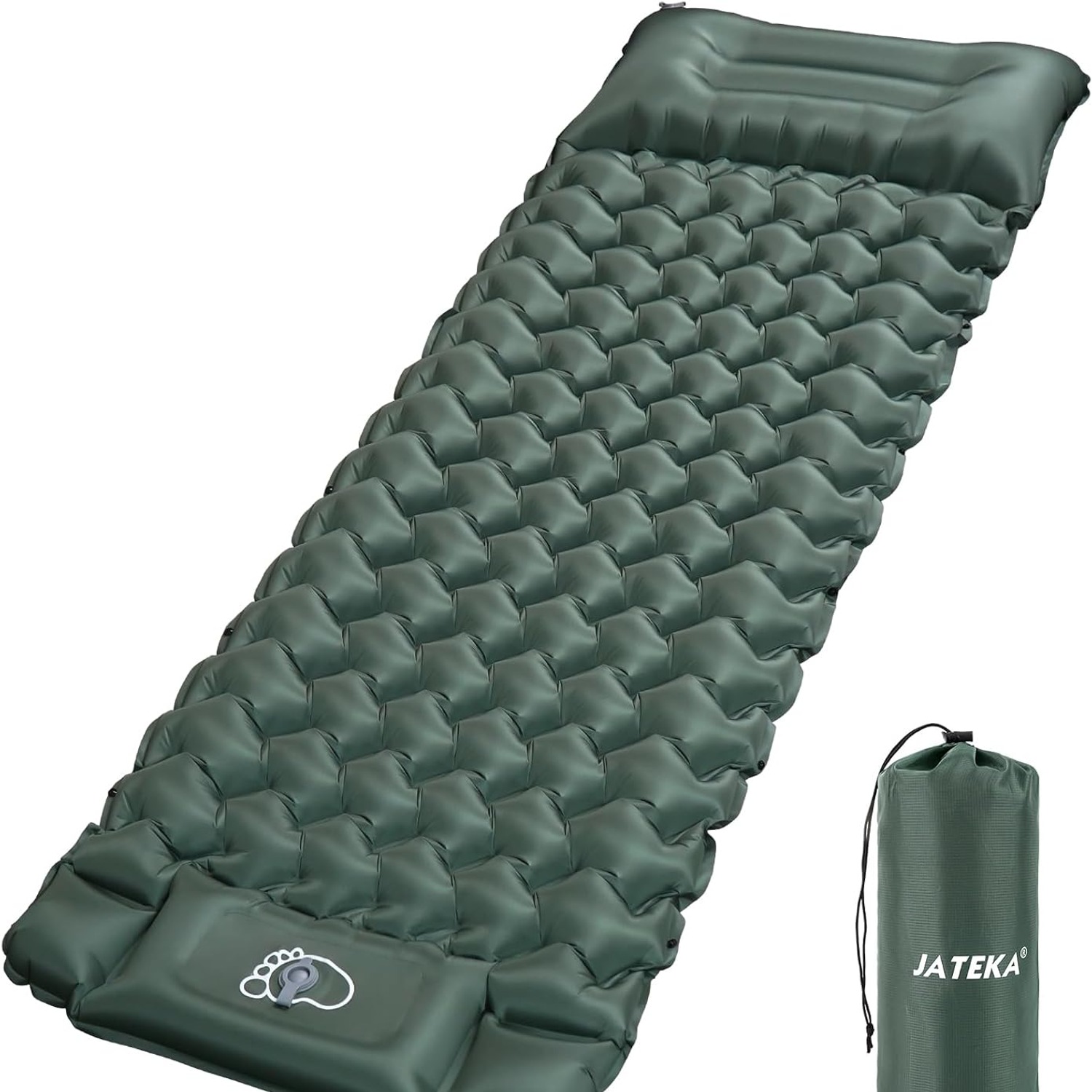
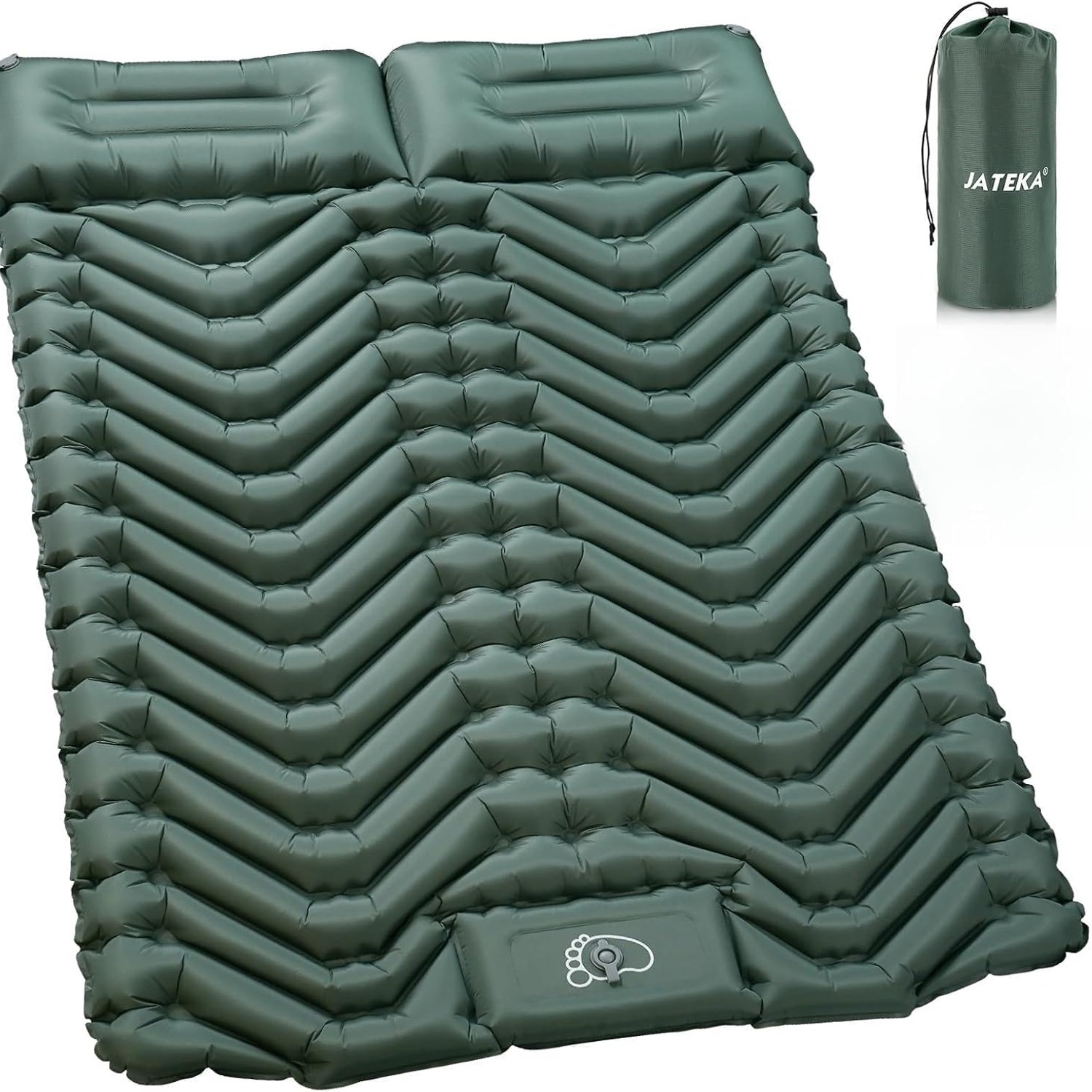
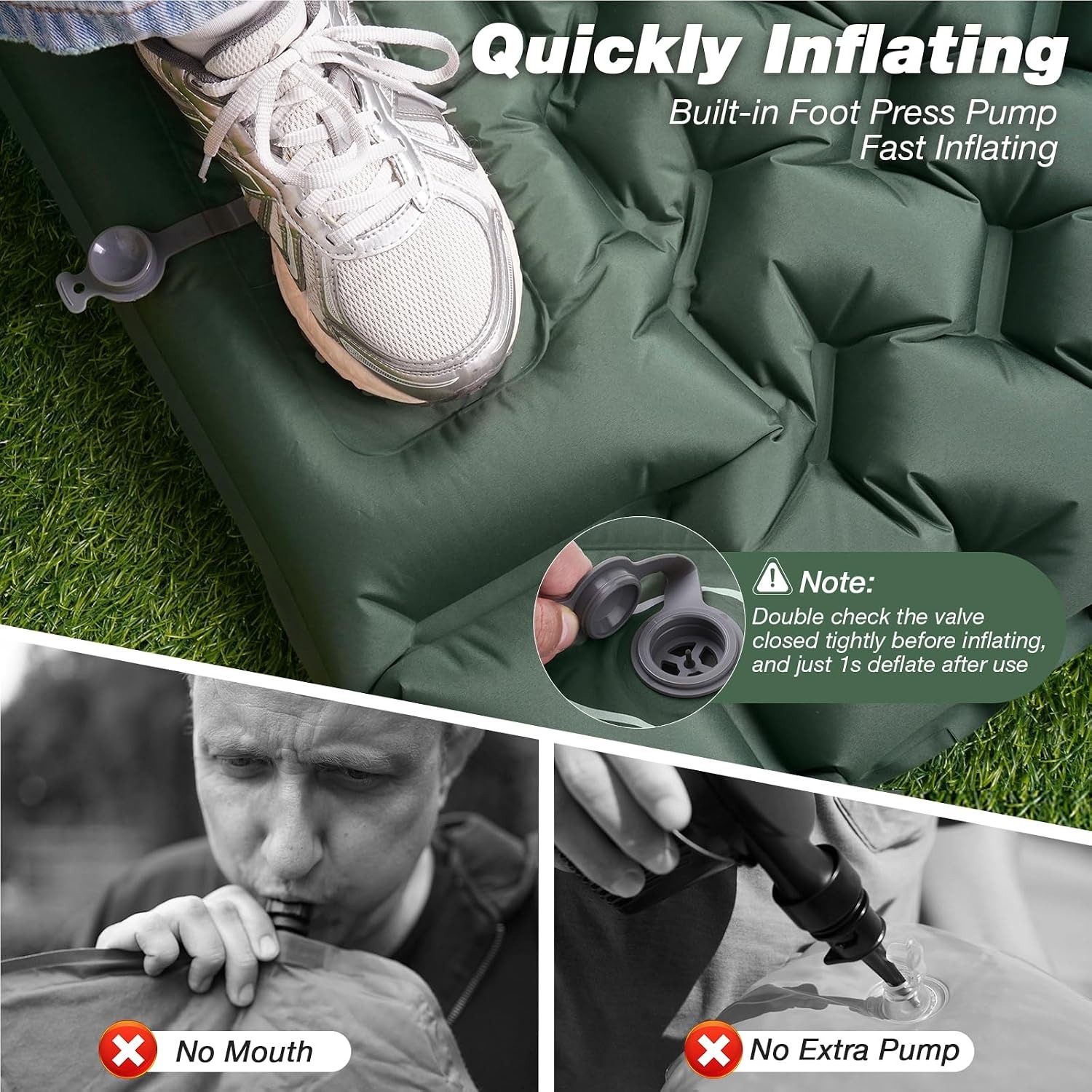
That gets you most of the way there, but usually not to the firmness you want. This JATEKA mat solves the last stretch with a built-in foot pump. You press it with your heel while kneeling or standing, and the mat firms up without you putting your mouth anywhere near the valve. That matters for more than convenience. Breath carries moisture, and moisture inside a foam mat eventually means mildew. Pumping with your foot keeps the inside dry.
Deflating is the reverse. Open the valve, press down and roll from the far end toward the valve so the escaping air has somewhere to go. The foam will fight you a little, which is normal. Roll firmly and evenly and it goes back into the bag.
What this mat is made from
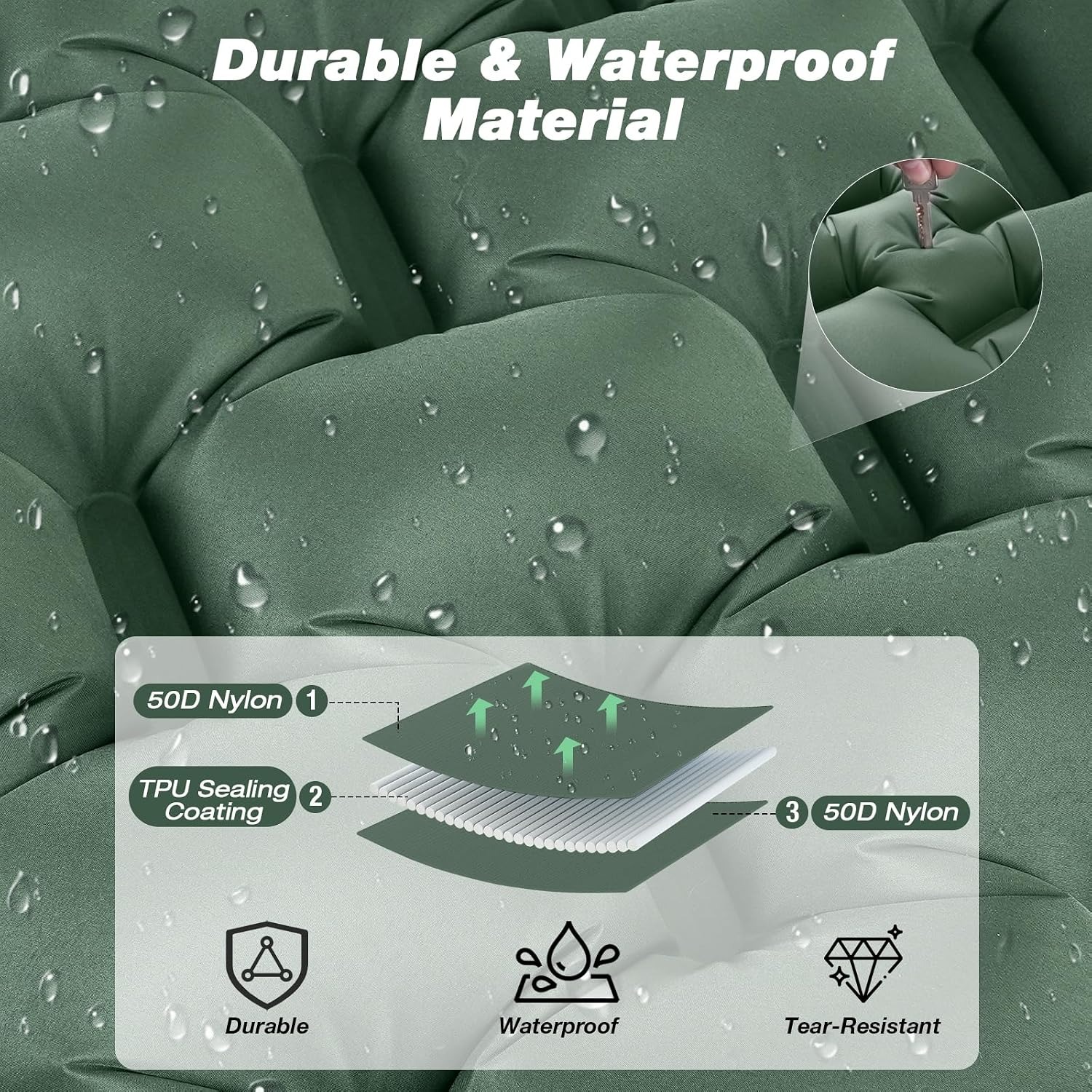
The shell on this model is 50D nylon with a TPU coating on the inside. The denier number, the 50D part, tells you how thick the fibres are. Lower numbers are lighter and pack smaller. Higher numbers are tougher. 50D sits in a sensible middle for camping use, light enough to carry and sturdy enough to handle a tent floor without you treating it like glassware.
The TPU layer on the inside is what actually holds the air and makes the mat waterproof. The supplier rates the water resistance level as waterproof, which in real use means tent condensation and damp ground will not soak into it. That is the moisture most campers actually meet, since rain from above is usually the tent's problem, not the mat's.
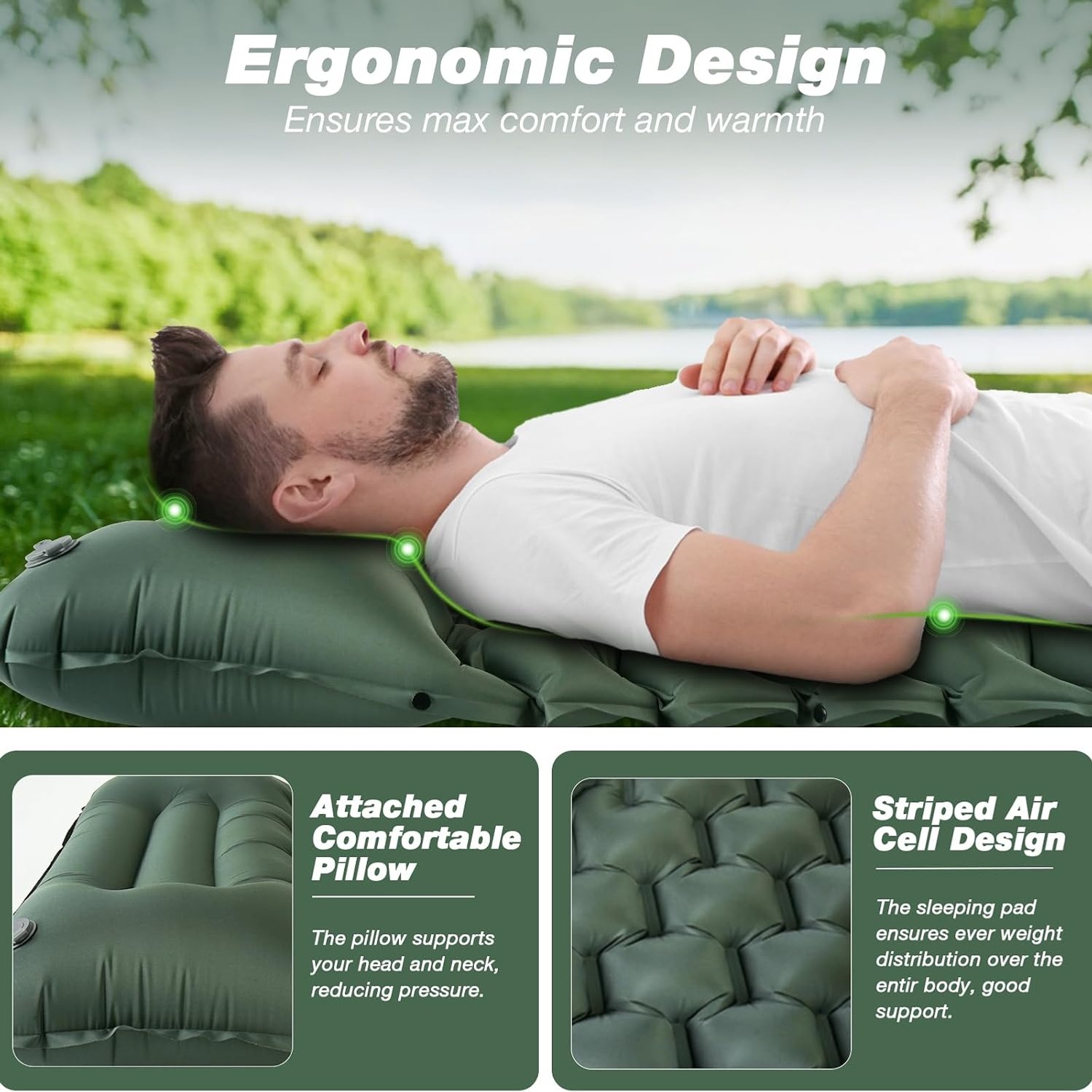
Inside is comfort foam, in a single layer, with the firmness described as plush. Plush means it has give. It is not the drum-tight feel of a high-pressure inflatable pad. For most people that is the better option, especially if you sleep on your side.
The pillow and the double option
Two small details on this mat save real hassle. The first is the pillow, which is built in rather than packed separately. Camp pillows are the thing people forget most often, and the usual fallback of a stuffed jacket is lumpy and slides around. Having the cushion attached means your head is sorted the moment the mat is up.
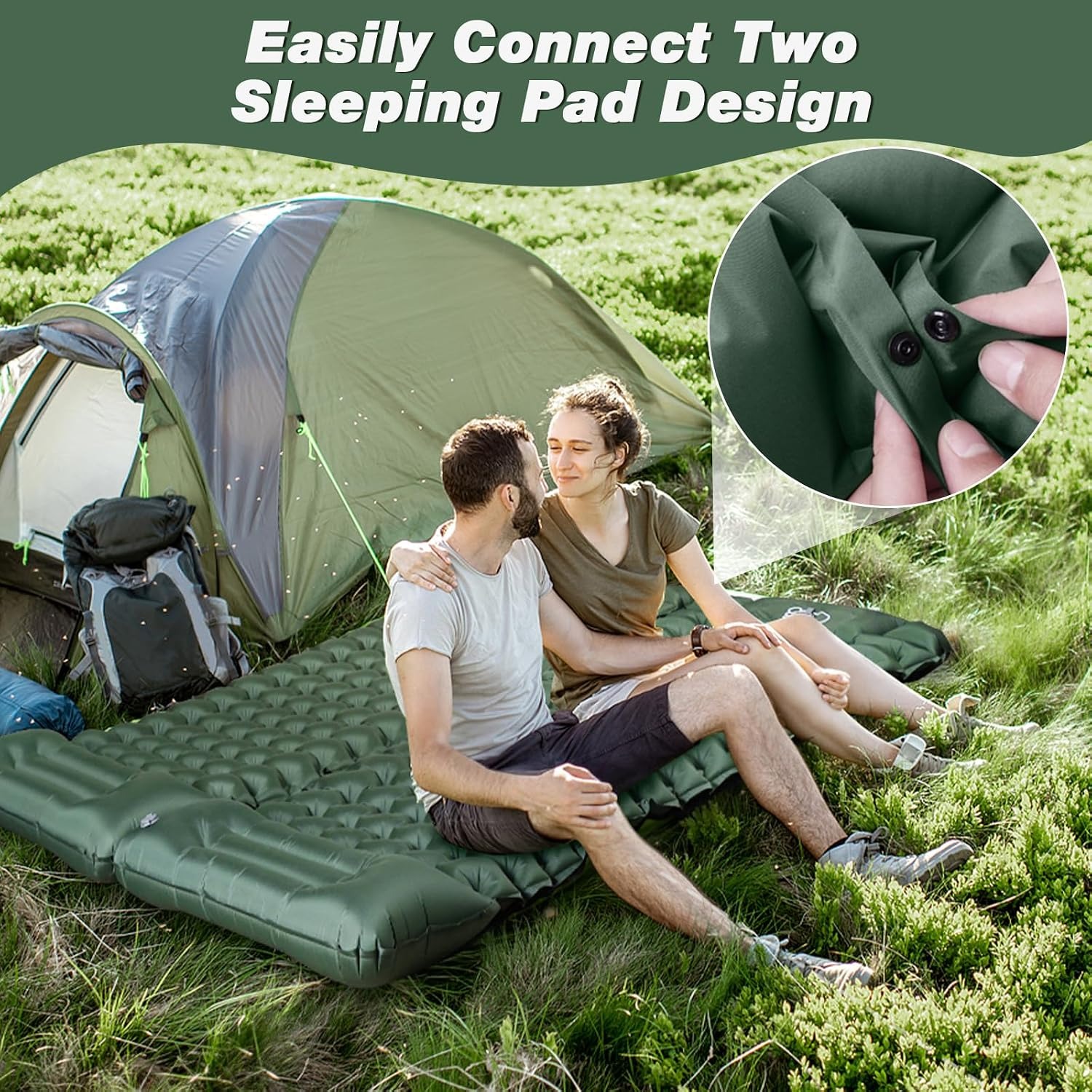
The second is the side connectors. The mat is listed as extendable, and two of them clip together to form a double. If you have ever shared a tent with a partner and spent the night slowly sliding into the gap between two separate mats, you will know why this matters. Buy two, clip them, and you have one surface instead of two islands.
Who it suits
This mat is a good fit if you camp in a tent a few times a year and want the night to be genuinely restful. It suits car camping, where pack size is not a worry and comfort is everything. It suits festivals, since there is no pump to carry and no faff at the end of a long day. It works for hut trips and van floors. And it is a reasonable emergency guest bed at home when more people turn up than you have beds for.
For backpacking it depends on your own standards. The packed size of 33 x 14 x 8.5 cm is compact and will strap to a pack or sit inside it without dominating the space. The mat weight is not given in this product record, so if you are counting every gram on a long thru-hike, weigh it on arrival and decide. For weekend walking trips, the comfort is worth the bulk for most people.
Choosing the right firmness
This is where most people get it wrong. The instinct is to pump a mat as hard as it will go. A rock-hard mat puts all the pressure on your hip and shoulder, which is exactly where the aches come from.
Try this instead. Inflate it fully, lie on it, then open the valve for a second or two and let a little air out. Lie down again. Repeat until your hip sinks slightly but does not touch the ground when you press. Side sleepers usually want it softer than they expect. Back sleepers tend to prefer a touch more support. Once you find your setting, you will remember it for every trip after.
Looking after it
Good care more or less doubles how long a mat lasts. A few habits do the job.
Clear your pitch before you lay anything down. Sharp stones and broken sticks are the main cause of punctures, and thirty seconds of sweeping the tent footprint saves you a repair patch later. If you are on gravel or rough ground, a groundsheet under the tent is cheap insurance.
Wipe the shell with a damp cloth and a little mild soap when it gets grubby, rinse the soap off, then let it dry completely in the air. Never put it in a washing machine or a dryer. Heat and tumbling damage the seams and the TPU layer.
Store it properly between trips. Tightly rolled foam held compressed for six months loses some of its springiness, which means slower self-inflation next season. Keep it loosely rolled or lightly inflated with the valve open in a dry cupboard. Keep it well away from stoves, campfires and anything with a spark.
If you do get a puncture, find it by inflating the mat and listening or running a wet hand across the surface to spot bubbles. Clean and dry the area, then press a repair patch on firmly and give it time before packing up.
The short version
A self inflating sleeping mat gets you a comfortable night without a long setup. This one has a built-in foot pump so you do not need lungs or a separate pump, a pillow so you do not need a separate one of those either, and a 50D nylon and TPU shell that is rated waterproof and wipes clean.
It packs to 33 x 14 x 8.5 cm, comes in green with a plush comfort foam layer, and clips to a second mat if you want a double. Mat weight, inflated size and country of origin are not specified in this record, so we have not guessed at them.
If your camping has been limited by bad nights rather than bad weather, this is the piece of kit that changes the maths.