

The complete guide
Head Lamp Buying Guide - Choosing Hands-Free Light That Actually Works
The problem with holding a torch
Anyone who has tried to change a tire at night knows the routine. You hold the torch with one hand, work with the other, drop something, and then you are feeling around in the dark with the beam pointing at the sky. Phone torches make it worse, because now the thing you might need to call for help with is lying face down in gravel.
A head lamp fixes this with one simple idea. Put the light on your head, and it follows your eyes. You look at the bolt, the light is on the bolt. You look at the tent peg, the light is on the tent peg. No juggling, no clamping a torch under your chin, no asking someone to hold it steady while you work.
That is the whole appeal of a battery headlamp, and it is why people who buy one usually end up buying a second for the car.
What this Energizer lamp does
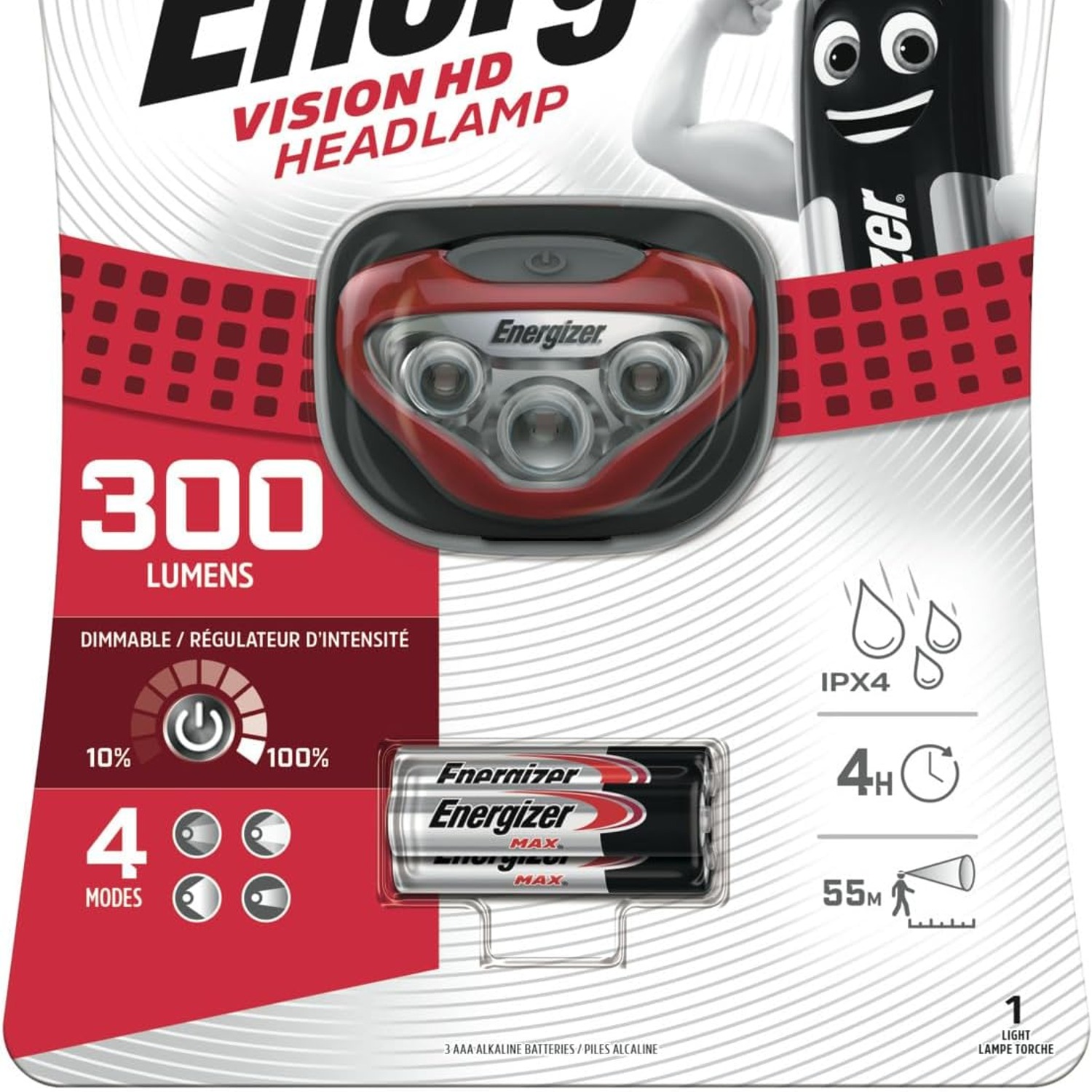
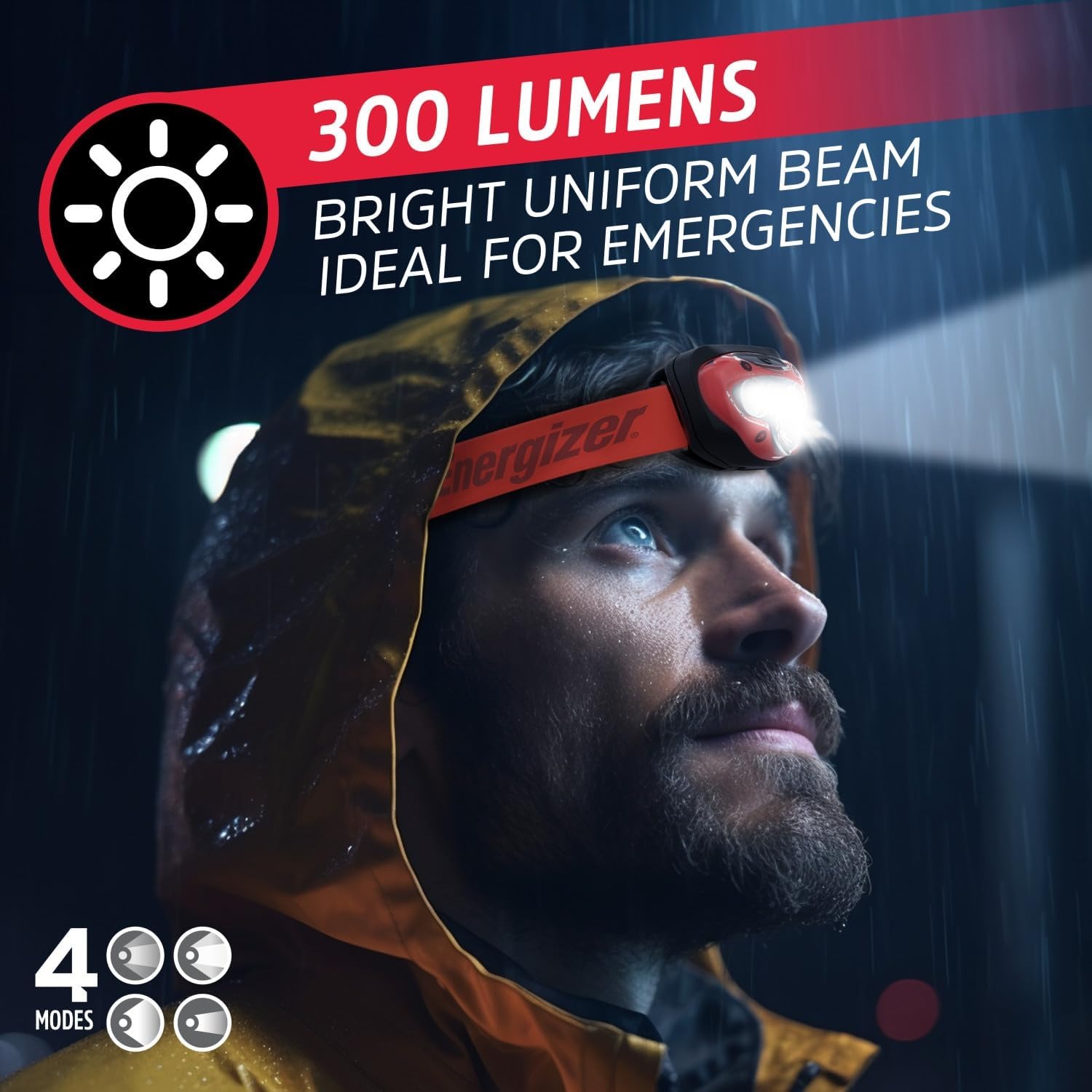
The Energizer Vision HD runs four LED light sources with a rated white brightness of 150 lumens. Beam distance is listed at 18 metres. Those two numbers tell you most of what you need to know about what kind of lamp this is.
One hundred and fifty lumens is a genuine working brightness. It lights a tent interior easily, covers a camp kitchen, shows you a footpath, and makes short work of a dark cupboard or engine bay. It is not a search-and-rescue beam that lights a field at a hundred metres, and it does not pretend to be. Eighteen metres is roughly the length of a decent back garden, which is honestly where most of us use a torch.
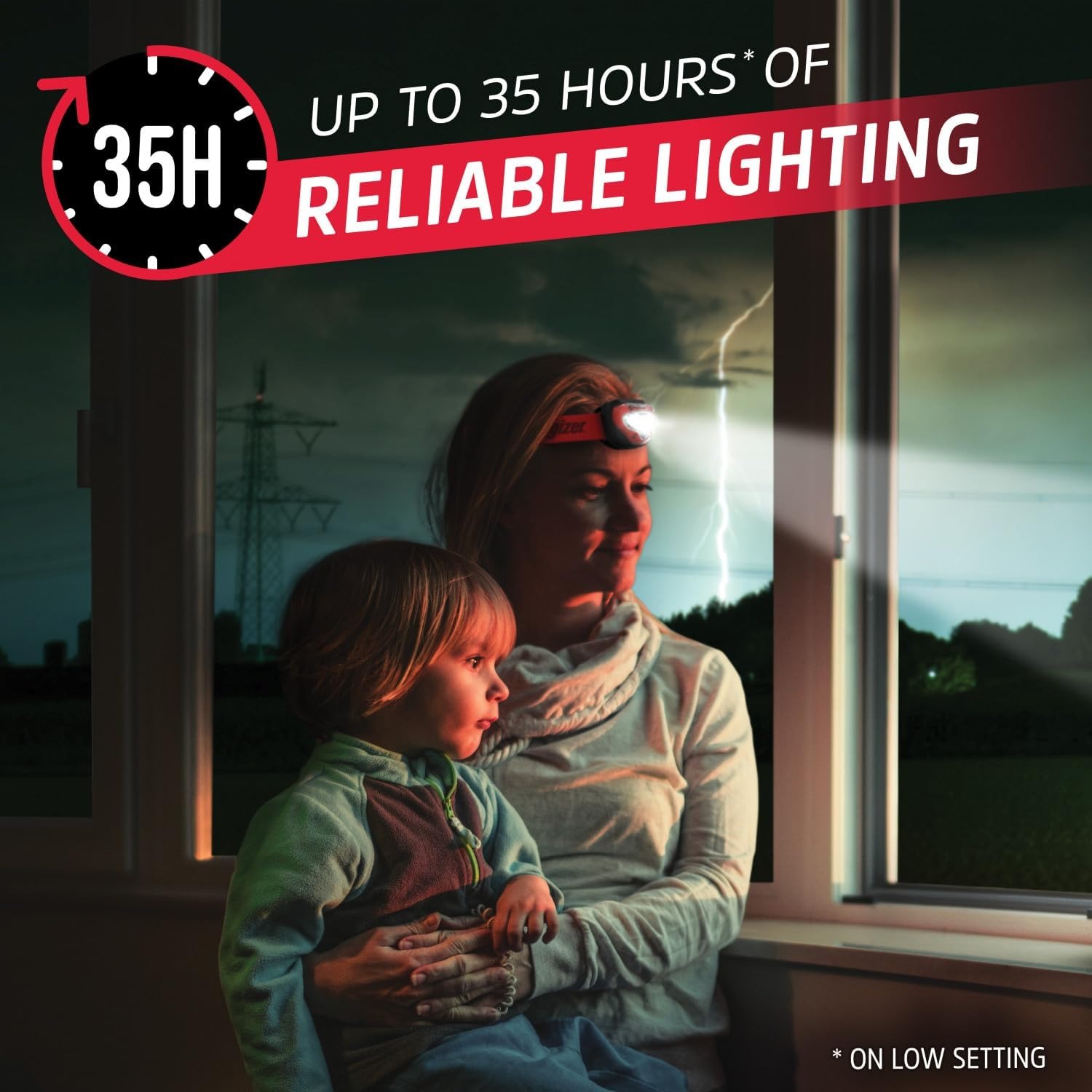
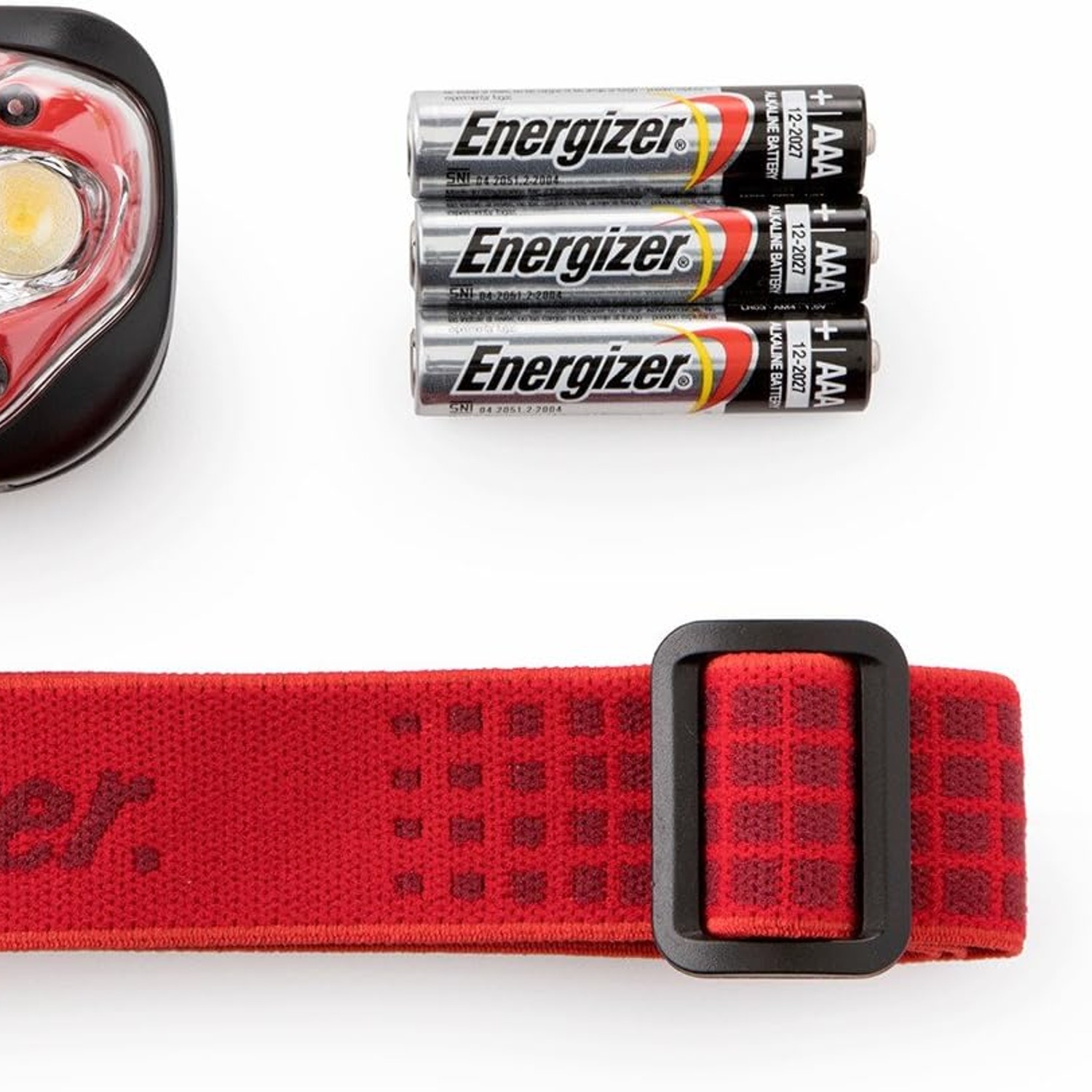
Runtime is stated at four hours on the included batteries. It takes three AAA alkaline cells, running at 4.5 volts in total, and those cells come in the pack. There is no charging cable, no proprietary battery, no waiting for a top-up before you can leave the house.
The whole unit weighs 0.06 kg. The housing is plastic with a matte finish.
Why weight matters more than people expect
Brightness is the number everyone compares. Weight is the number that decides whether you keep wearing the thing.
A heavy lamp pulls forward as you look down, which is exactly when you need it most. You tighten the strap. Then it presses on your forehead. You loosen it. Then it slides again. After twenty minutes you take it off and go back to holding a torch.
At 0.06 kg this one sits lightly enough that it mostly disappears. That is the difference between a lamp you use for the full evening and one that lives in a drawer. If you are looking for the best lightweight head torch for long sessions, the weight figure is the first spec to check, not the lumen count.
Who it suits
Campers get the most obvious benefit. Setting up in the dark, finding things in a bag, cooking, walking to the facilities and back, all of it works better hands free. The fact that it runs on AAA cells matters here too, because you can buy replacements at any petrol station or corner shop on the way.
Walkers and runners use it for the dark half of the year. If your route is familiar and you are moving at a sensible pace, 150 lumens over 18 metres is plenty to see your footing. Someone hunting for the best headlamp for running will also care about the weight, and 0.06 kg is firmly in the comfortable range.
Cyclists find it useful as a supplement, particularly for looking at road signs, checking a chain, or lighting a path your bar-mounted light does not cover. It is a supplement though. Proper bike lights are still the legal and sensible requirement.
Anglers, dog walkers and anyone who works outdoors in winter get the same benefit. So do people who simply want a light in the house for power cuts. A head lamp plus a spare pack of AAAs in a kitchen drawer is one of the cheapest bits of household preparedness there is.
Then there is the DIY use. Under sinks, in lofts, behind washing machines, inside fuse boxes. Indoor jobs are listed among the recommended uses, and anyone who has worked in a cramped space understands why.
How to choose a head lamp
A few things separate a lamp you like from a lamp you tolerate.
Battery format. Replaceable AAA cells, like this one uses, mean you are never stranded by a dead charge. Rechargeable lamps are tidier day to day but useless when the power is out and you forgot to plug them in. For an emergency kit, replaceable cells win.
Weight. Under about 100 grams is the comfort zone for extended wear. This lamp is well under that.
Brightness versus runtime. These two trade against each other on every lamp ever made. More lumens, shorter life. One hundred and fifty lumens with a stated four hour runtime is a sensible middle. If you want a lamp that burns for twenty hours, you will be looking at far less light.
Beam character. Four light sources spread the output rather than squeezing it into a pinpoint. Spread light is easier on the eyes for close work and less likely to leave you with a bright circle surrounded by blackness.
Strap comfort. A head mount lives or dies on its band. Adjust it so the lamp sits level on your forehead with no pressure on your temples.
A note on water
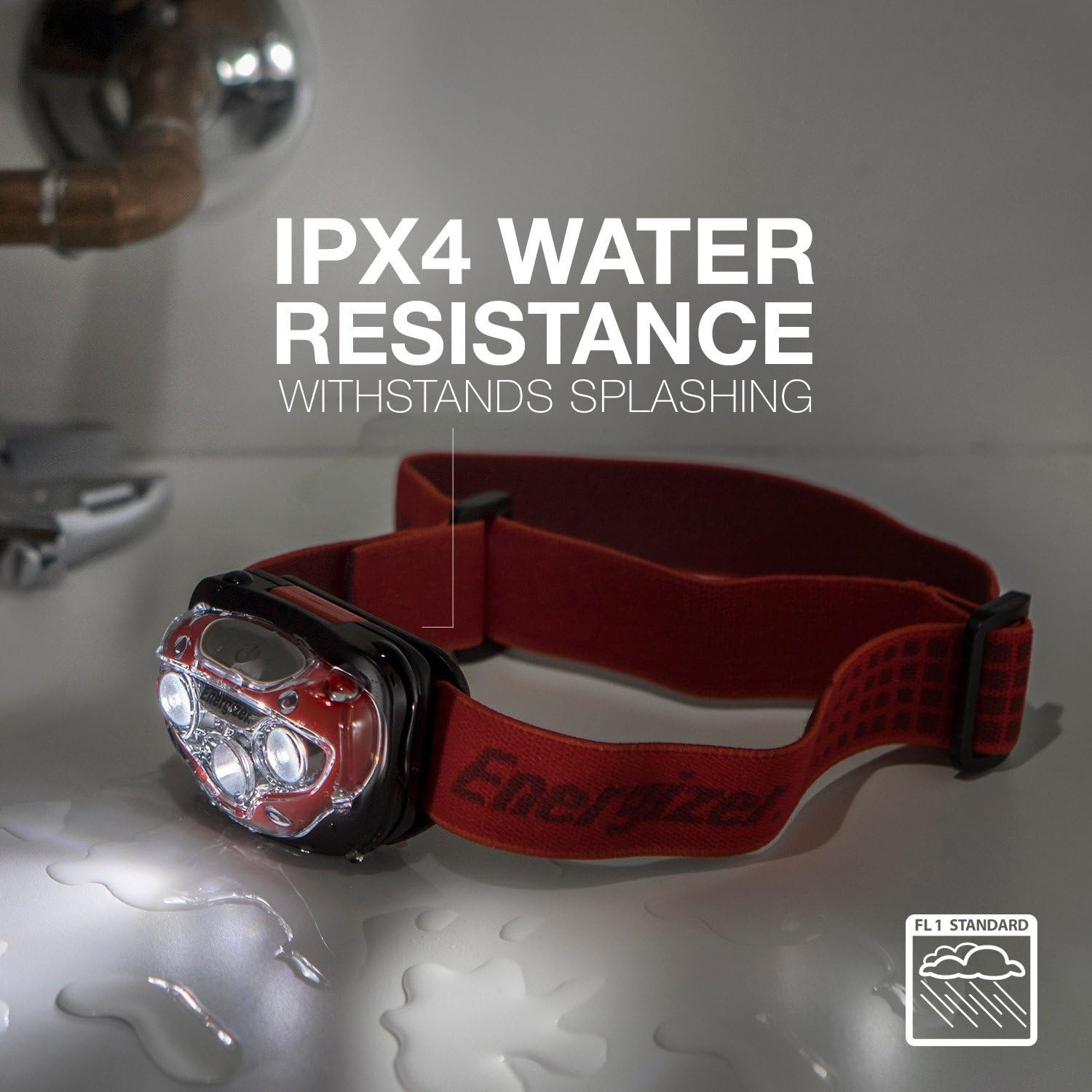
The supplier record for this product is contradictory about water. One field lists waterproof as a feature, another lists the water resistance level as not water resistant. We are not going to pick the flattering one and print it as fact.
So the honest answer is that the water rating is not confirmed. Treat the lamp as fine for ordinary damp conditions and a bit of drizzle, and do not deliberately soak it, drop it in a creek, or wear it in the shower. If you need a lamp you can submerge, you should buy one with a published and verified IP rating.
Looking after it
There is very little to do, which is part of the charm.
Wipe the lens and body with a soft dry cloth when it gets dusty. Skip the solvents, because they can cloud plastic lenses over time. Keep it out of direct heat and out of a hot car glovebox in summer if you can.
The important habit is battery care. If the lamp is going to sit unused for more than a few weeks, take the three AAAs out. Alkaline cells can leak as they age, and a leak inside the battery compartment will corrode the contacts and finish the lamp off. Removing them costs you ten seconds and can save the whole unit.
When you do replace cells, change all three at once and match the polarity markings inside the compartment. Mixing a fresh cell with two tired ones gives you inconsistent output and shortens the life of the new one.
Hand wash the headband in cool water if it gets sweaty, and let it dry completely before you refit the lamp.
Getting the most out of it
Two small habits improve the experience enormously.
First, carry spares. A sealed pack of three AAA cells weighs almost nothing and turns a dead lamp into a working one in under a minute. Keep them in the same pocket or pouch as the lamp itself.
Second, think about where you point it. Head lamps dazzle other people, because the beam goes straight at face height. In a camp or a tent, tilt the lamp down or look away when you talk to someone. Everybody around a campfire appreciates it.
The short version
This is a light, simple, battery powered head lamp from a brand that has been making portable lighting for a very long time. You get 150 lumens from four LEDs, about 18 metres of reach, a stated four hour runtime, and three AAA batteries already in the pack.
It weighs 0.06 kg, so you will actually wear it. It takes the most common battery size there is, so you can always feed it. It works for camping, walking, running, riding, fishing, repairs and power cuts.
If you want a long-range beam or a confirmed submersible rating, this is not that lamp. If you want a practical hands-free light that is ready the moment it arrives, it does the job well.