
The complete guide
How To Choose A Small Folding Camping Table That Earns Its Space
The problem nobody mentions until they are camping
Gear lists always cover the tent, the sleeping bag and the stove. They rarely mention that you will spend half the trip looking for somewhere flat to put things down.
It sounds minor. It is not. Without a table you end up chopping onions on a chair, balancing a stove on an esky lid, and putting your coffee on the ground where it gets kicked over at some point on day two. Everything takes longer, and the campsite feels messier than it needs to.
A small folding camp table solves that for very little weight and almost no packed space. The job is simple. Give yourself one reliable flat surface at a sensible height, and the rest of the camp kitchen organises itself around it.
What makes an adjustable camping table different
A fixed-height table makes one choice for you. If it is tall, you cannot use it when you are sitting on a rug. If it is low, you are hunched over it to cook.
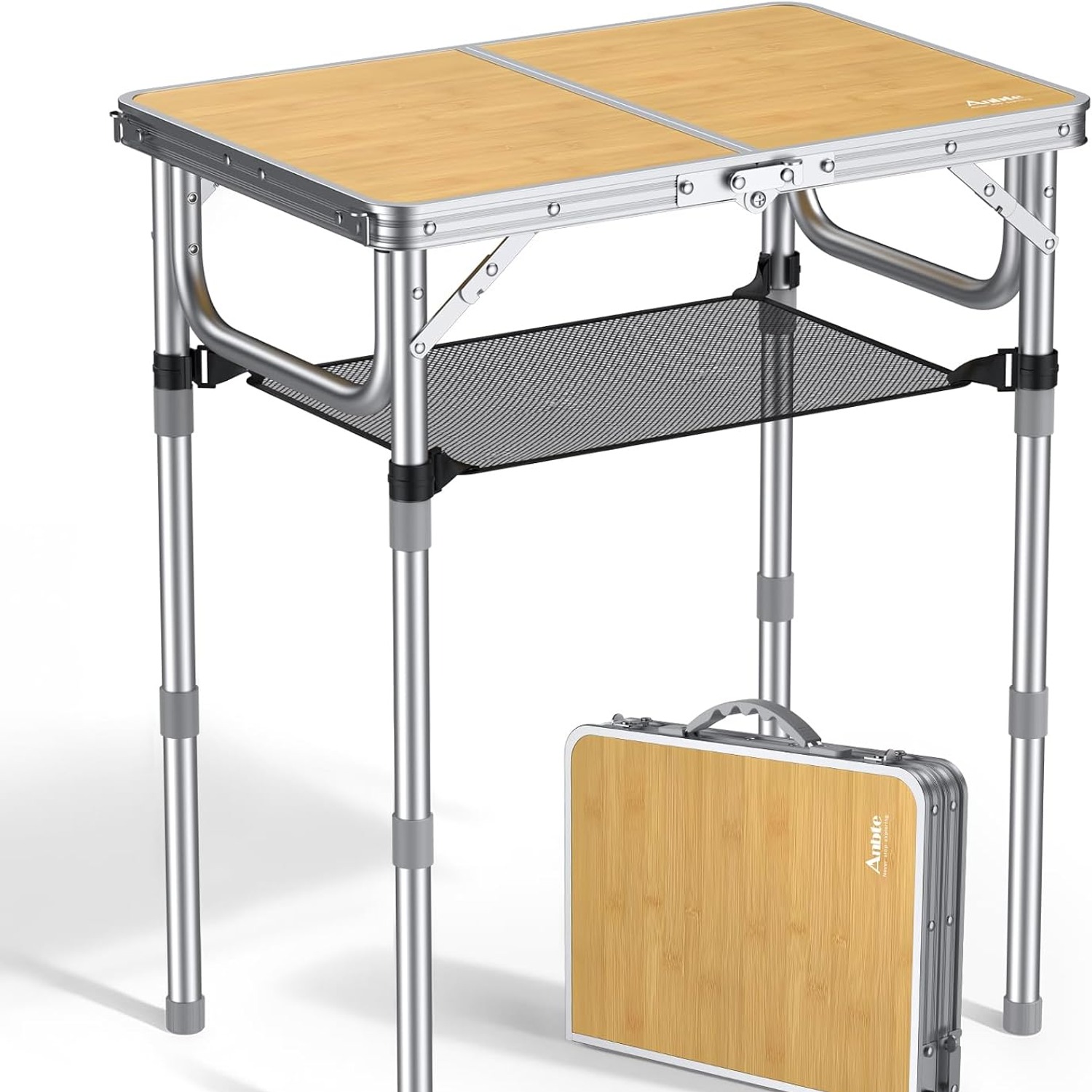
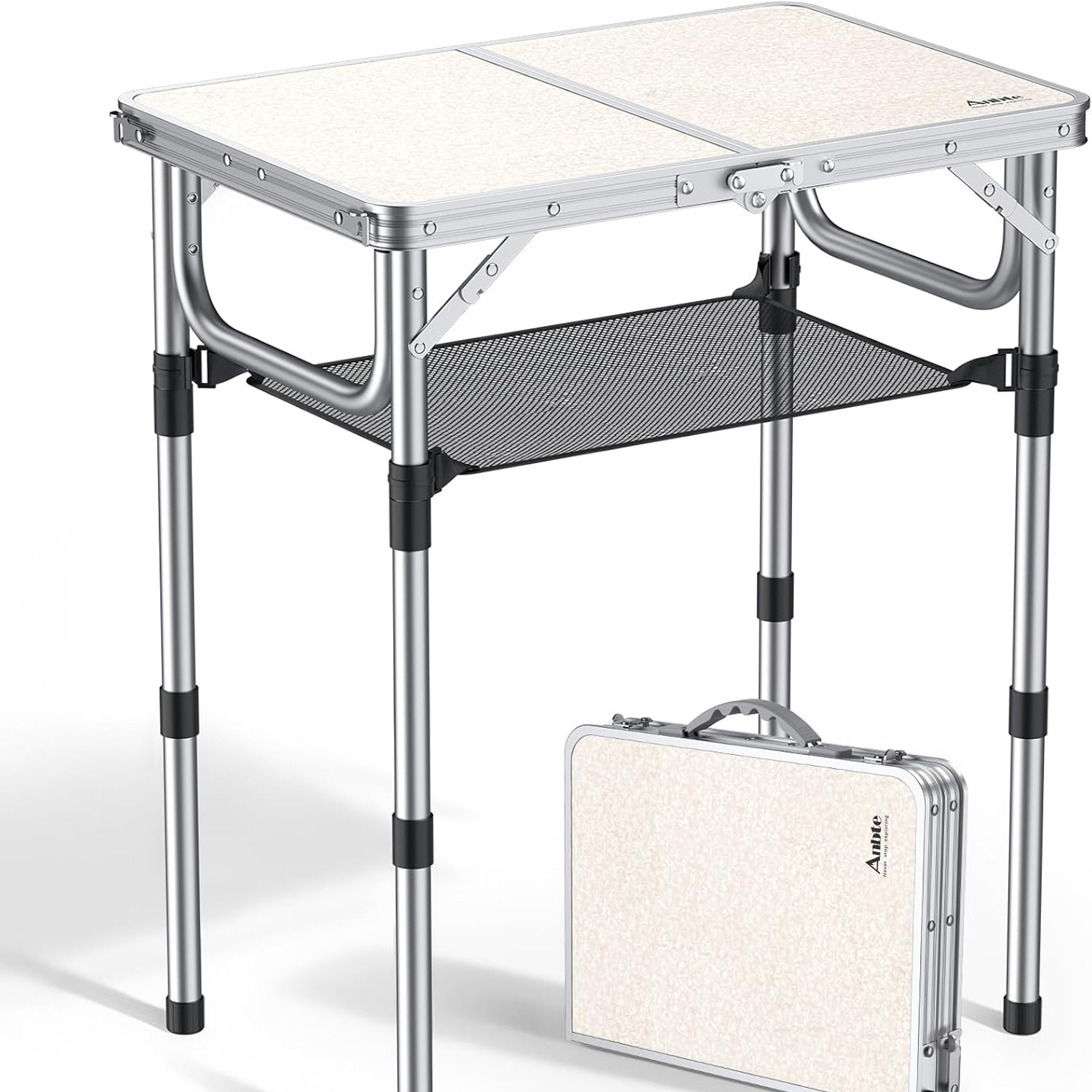
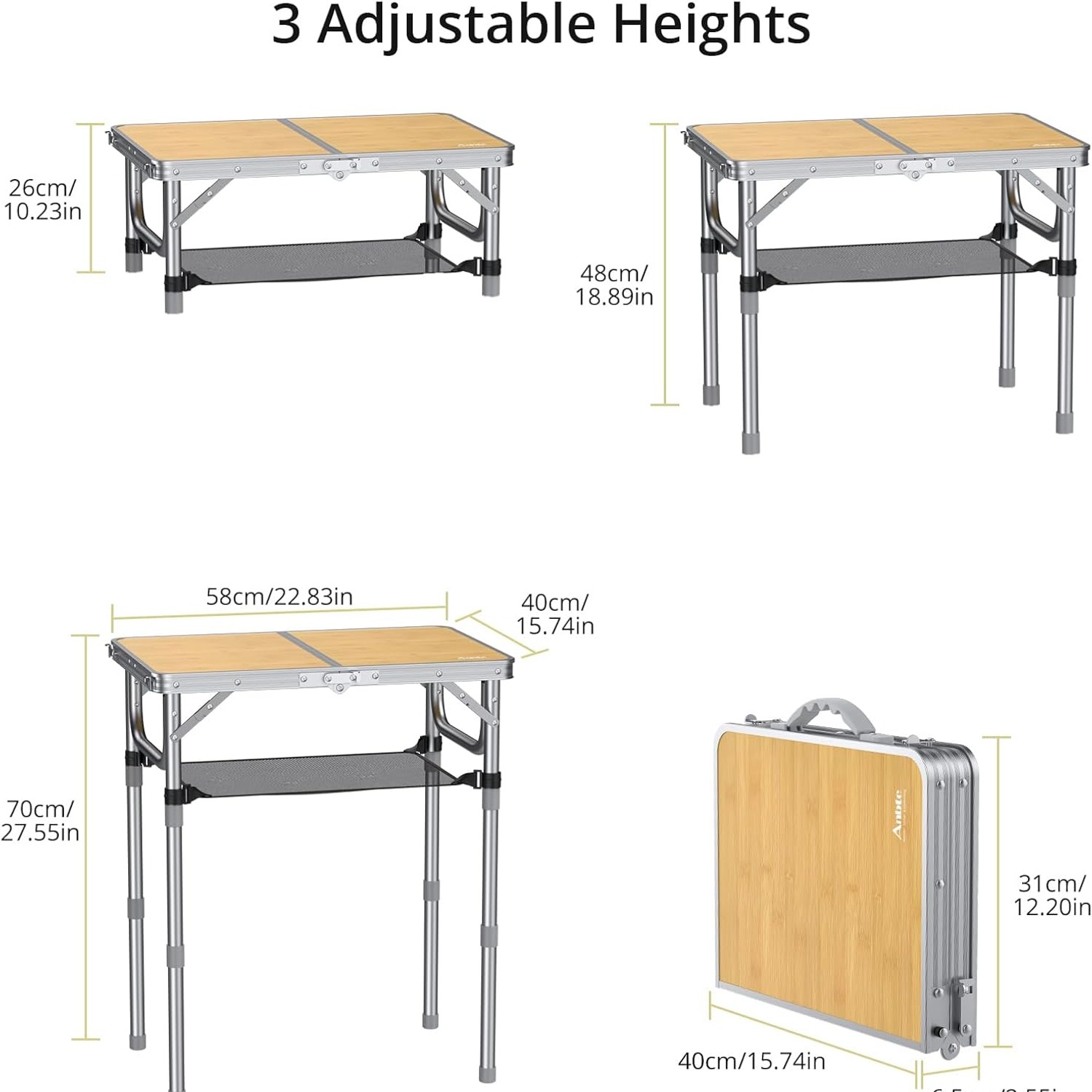
An adjustable camping table lets you pick. This one assembles at three set leg lengths. The lowest suits sitting on the ground at a picnic or on the beach. The middle sits at a comfortable reach from a standard camp chair. The tallest runs to 69.9 cm, which is close to desk height and right for standing prep or serving.
Changing between them takes seconds because you are swapping leg sections rather than fiddling with clamps. There is nothing to slip, and nothing to wear out and start collapsing after a season. The trade is that you get three settings instead of infinite ones, which in practice covers almost everything people actually do.
Frame and top, and why the pairing matters
The frame is aluminum tube. The top is engineered wood (MDF) with a painted finish.
Aluminum is the obvious choice for anything you carry. It holds its shape, it does not rust in damp air, and it keeps the whole table down to 2.235 kg. You can lift it by the handle with one hand while carrying a chair in the other.
The wood top is the more interesting part. A lot of light camping tables use slats or stretched fabric. Those pack smaller but they flex, and anything with a narrow base wobbles on them. A solid panel gives you a genuinely flat surface. You can use a cutting board without it rocking, put a pot down without watching it tilt, and play cards without the pile sliding into a gap.
The cost of a wood-based top is that it hates water. Keep it dry, wipe it down, and it will stay good for years. Leave it out in a downpour and you will shorten its life quickly. That is a fair trade for most people, but it is worth knowing before you buy.
Working out the size you need
Set up, the top measures 57.9 cm wide by 39.9 cm deep. The listed seating capacity is 4.
Be honest about what that means in use. Four people can sit around it with drinks, cards or snacks very comfortably. Four full dinner plates plus serving bowls is a squeeze. If you are feeding a family of four every night, treat this as the prep and side table and plan a second surface for eating.
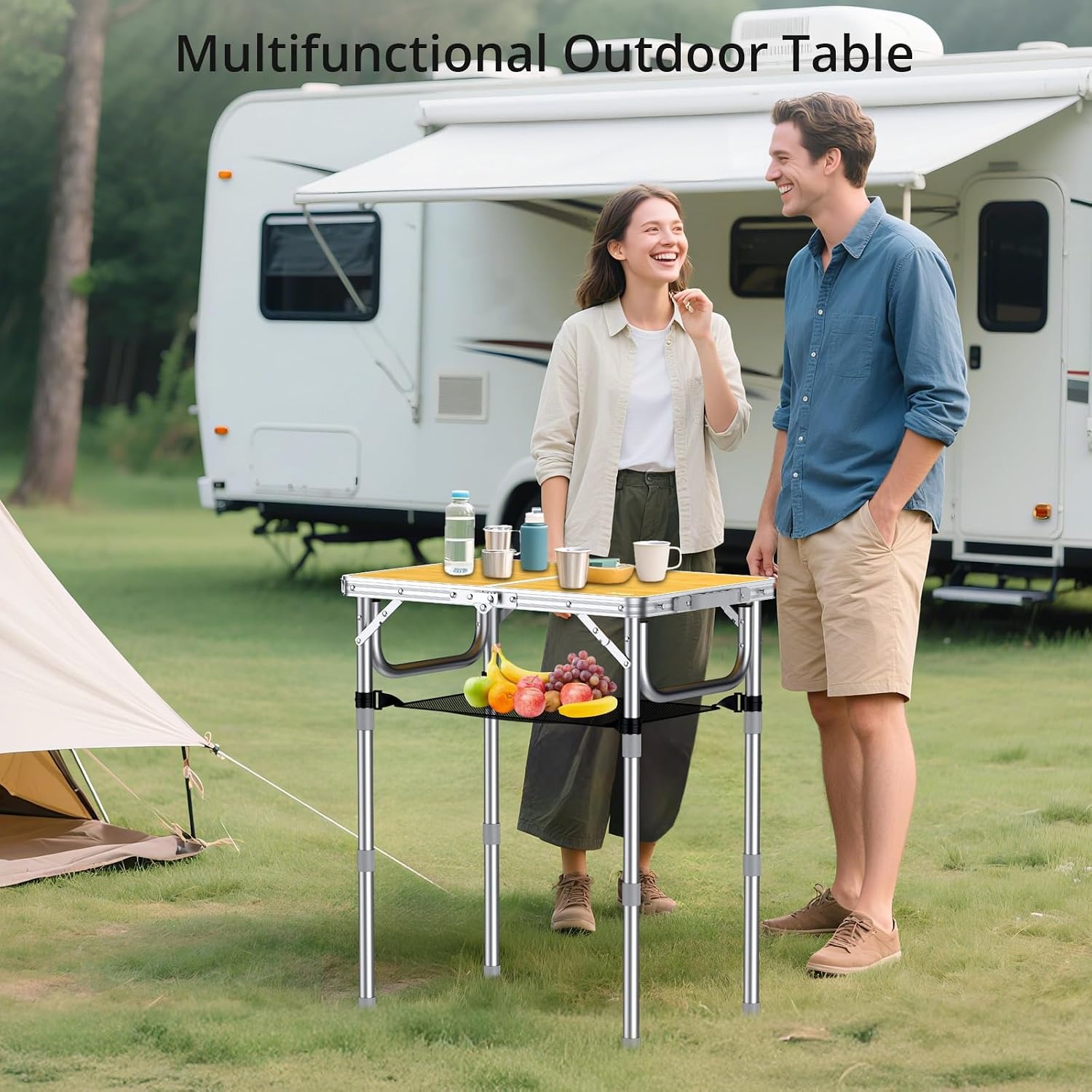
Where it shines is as the dedicated working surface. Stove at one end, board and knife in the middle, mugs at the edge. For couples, solo travellers, day trips and tailgate setups, it is often the only table you need.
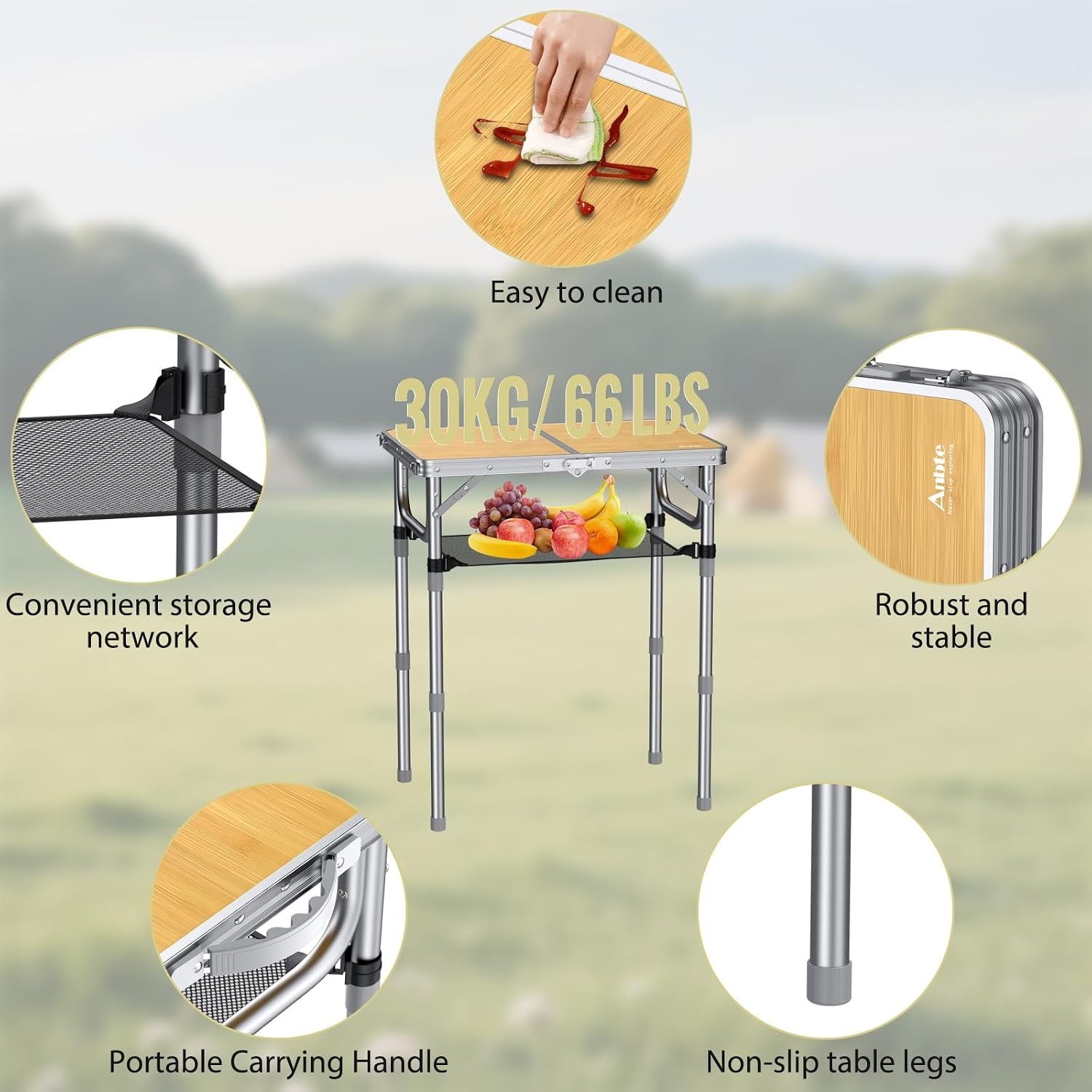
The 30 kg recommended load is generous for this class. A stove, a full billy, food and plates together sit well inside it. The limit is about the top panel, not just the legs, so spread heavier things out rather than piling them in one corner.
Who it suits
Car campers get the most out of it, because it folds flat and slides behind a seat without competing with the esky for space.
Caravanners and camper trailer owners like it for the same reason. It stores in a side locker and comes out as an extra surface in the annexe, which is usually when you need one most.
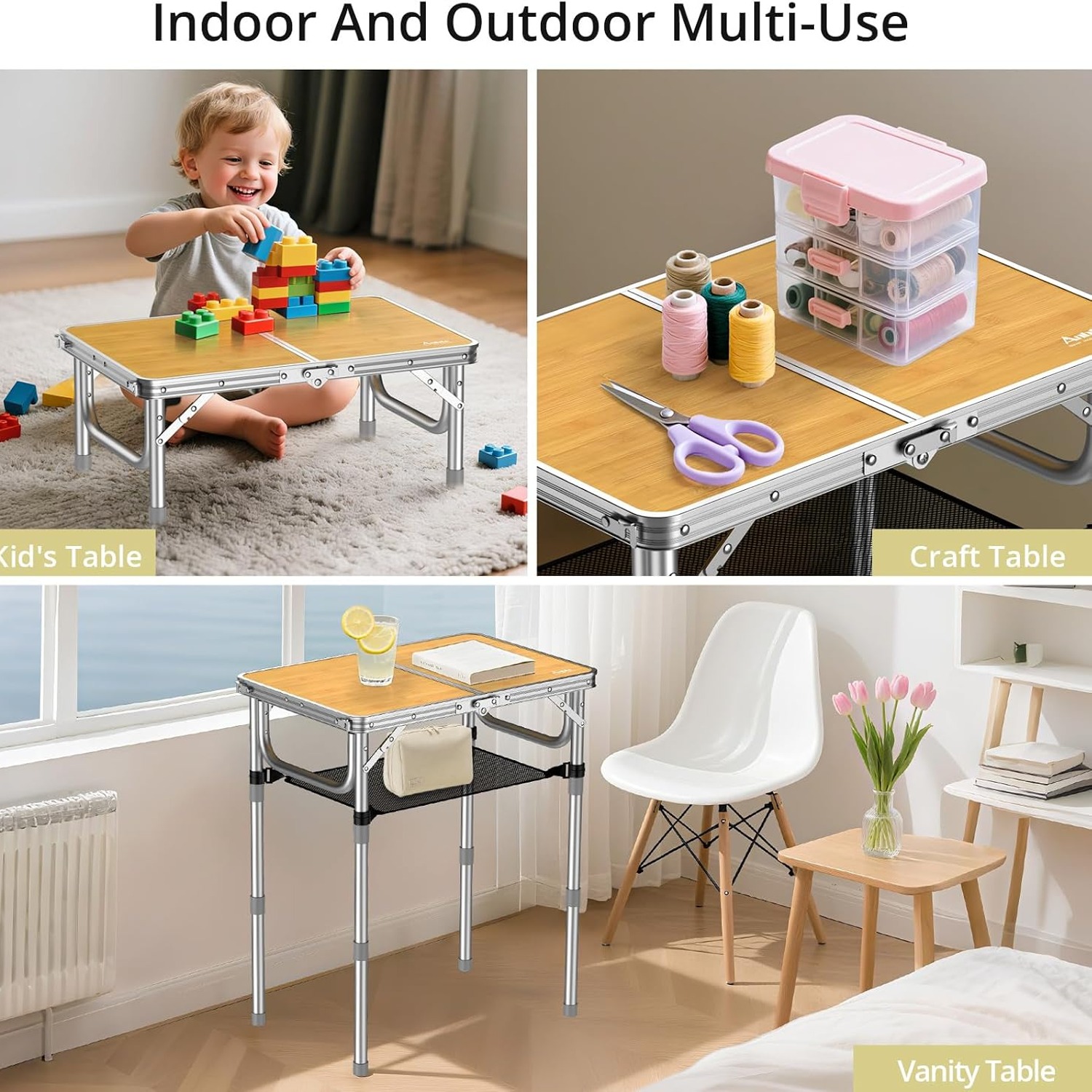
It also works well for people who are not strictly camping. Fishing trips, beach days, kids' sport, markets, festivals, and the backyard BBQ where you need somewhere to rest the tongs. Indoors, it does duty as a small desk or a craft table. The listed use is outdoor, so indoor use is a nice extra rather than the design intent.
Hikers carrying everything on their back are the group it does not suit. At 2.235 kg it is light for a table, but it is still a table, and that weight belongs in a vehicle rather than a pack.
Setting it up properly
Three small habits make a noticeable difference.
First, pick your spot before you unfold. Level ground beats pretty ground every time. A table set on a slope will annoy you all weekend.
Second, after the legs are in, press down gently in the middle of the top. That seats everything properly and tells you straight away if a leg is sitting in a dip. Fix it then rather than after you have loaded it up.
Third, match the height to the chair you are actually using. People default to the tallest setting out of habit, then spend the evening reaching up. If you are in a low camp chair, the middle setting will be more comfortable and you will not think about it again.
Using the storage net
The net clips under the top and gives you a second tier. It is for light things only.
What goes in it: cutlery, sauces, sunscreen, a head torch, gloves, keys, a phone, tea bags. What does not: tins, full water bottles, gas canisters, anything with real weight. Loading the net heavy pulls on the frame and makes the table top-heavy, especially at the tallest leg setting.
Used the way it is meant to be, the net is the detail people end up liking most. It stops small gear ending up in the dirt, which is where most of it gets lost.
Looking after it
The care routine is short because there is not much to go wrong.
Wipe the top after each use with a damp cloth and a little mild detergent, then dry it. The surface is listed as stain resistant, so sauce and coffee come off easily if you do not leave them to sit. Skip the scouring pads, which will mark the painted finish.
Keep it out of rain and do not use it in wet conditions. If it gets caught in a shower, dry it straight away and let it air before folding it down.
Do not put very hot items directly on the top, and keep it away from open fire. Use a trivet or heatproof mat under stoves and hot pans.
When you pack down, make sure everything is dry, fold it and store it somewhere dry. Damp storage is what kills wood-topped tables, not use.
The short version
If you want one flat surface that travels easily and adapts to how you are sitting, this covers it. The aluminum frame keeps it at 2.235 kg, the three leg heights handle ground, chair and standing use, and the engineered wood top gives you a properly flat surface that wipes clean.
Treat it as a prep, side and small-group table rather than a full dinner table for four, keep it dry, and it will be the piece of gear you stop thinking about because it just works.