
The complete guide
Choosing a Rechargeable Camping Lantern, A Buyer's Guide
The problem with camp light
Most people arrive at a campsite with the wrong kind of light. A head torch is brilliant for finding the tent pegs and useless for eating dinner, because it blinds whoever you look at. A phone torch flattens everything and kills your battery at the same time. A big spotlight lights one wall of the tent and leaves the rest in shadow.
What you actually need, most of the time, is a lamp. Something that sits in the middle of a table or hangs from the tent ceiling and lights the whole space evenly, so you can talk, cook, play cards and find your socks without pointing anything at anyone.
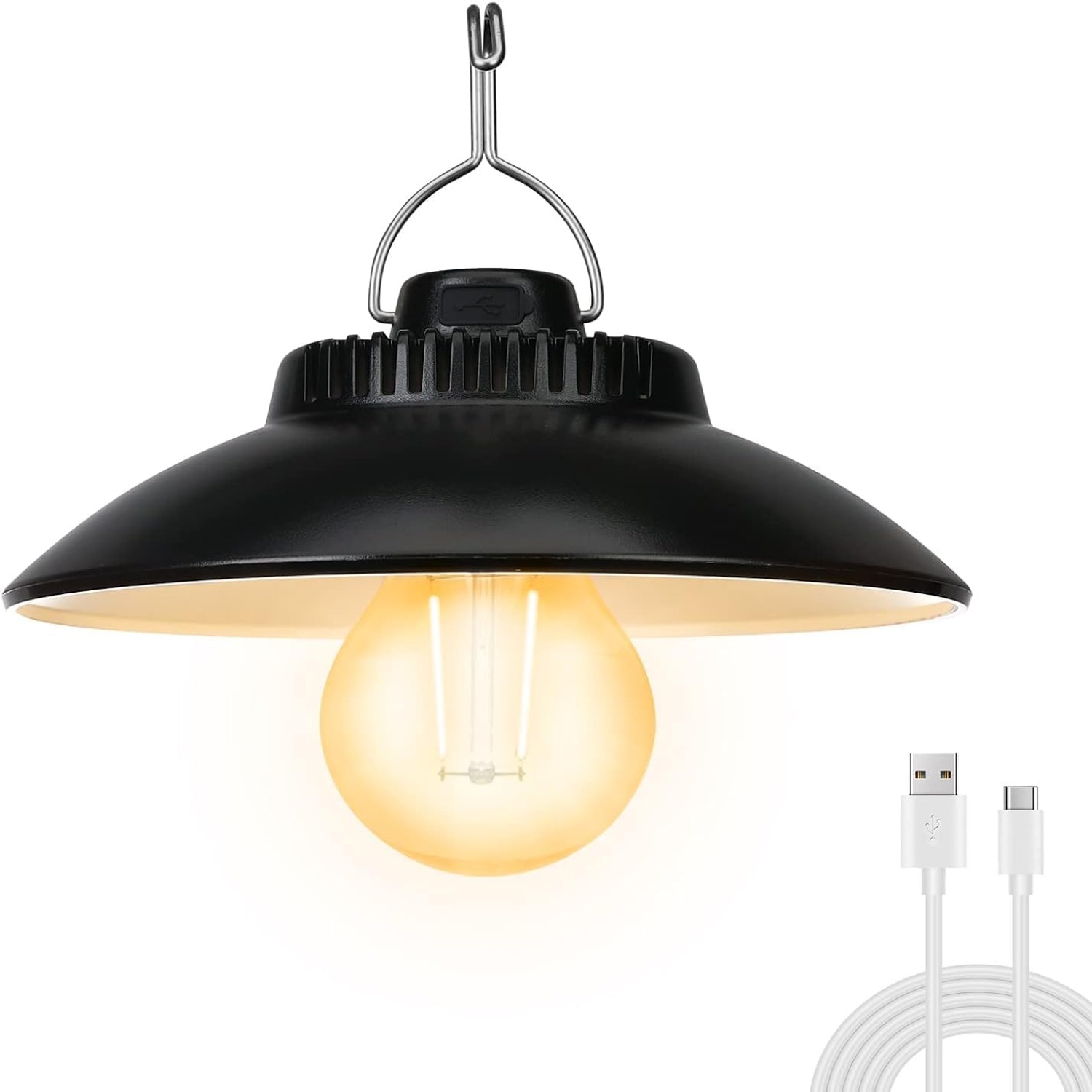
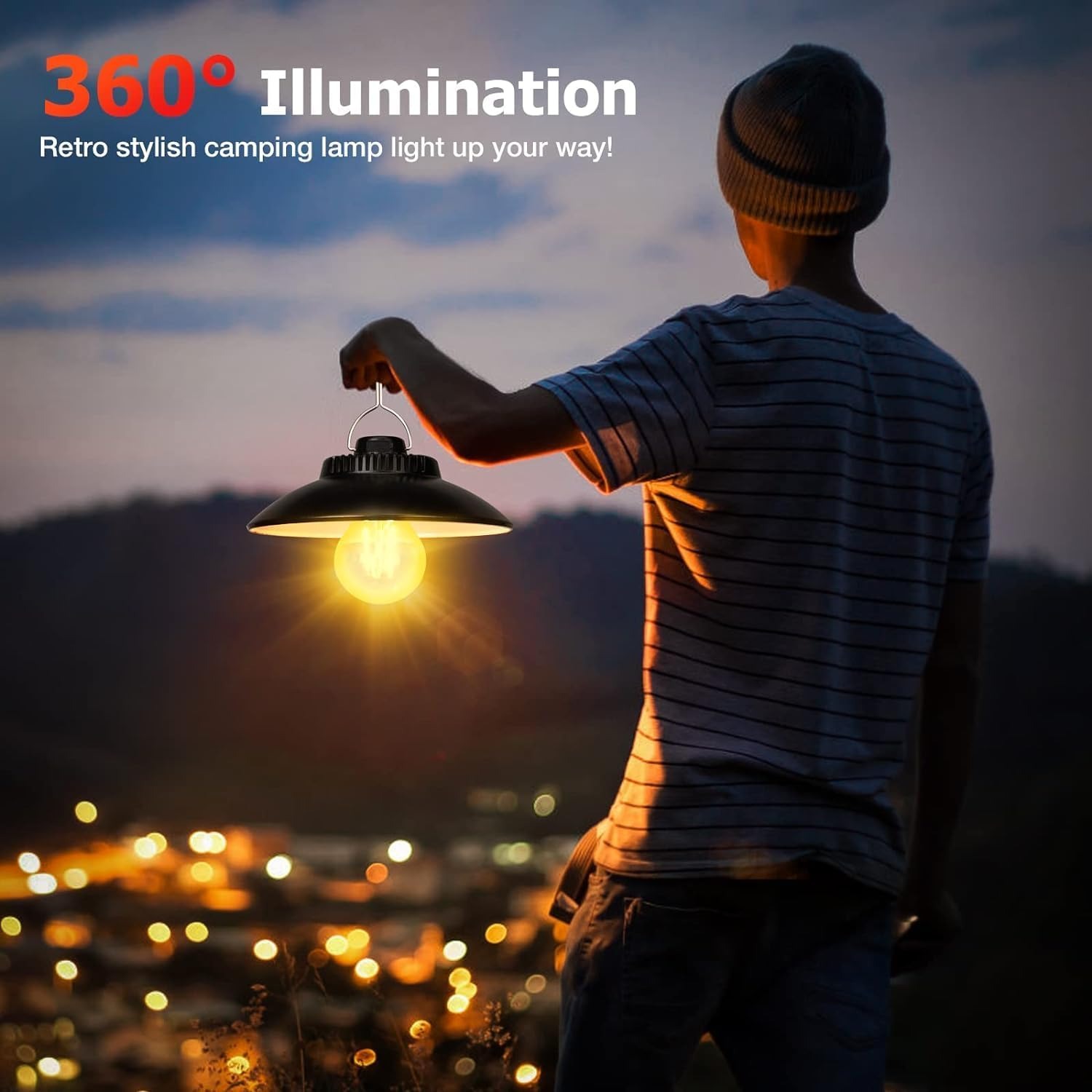
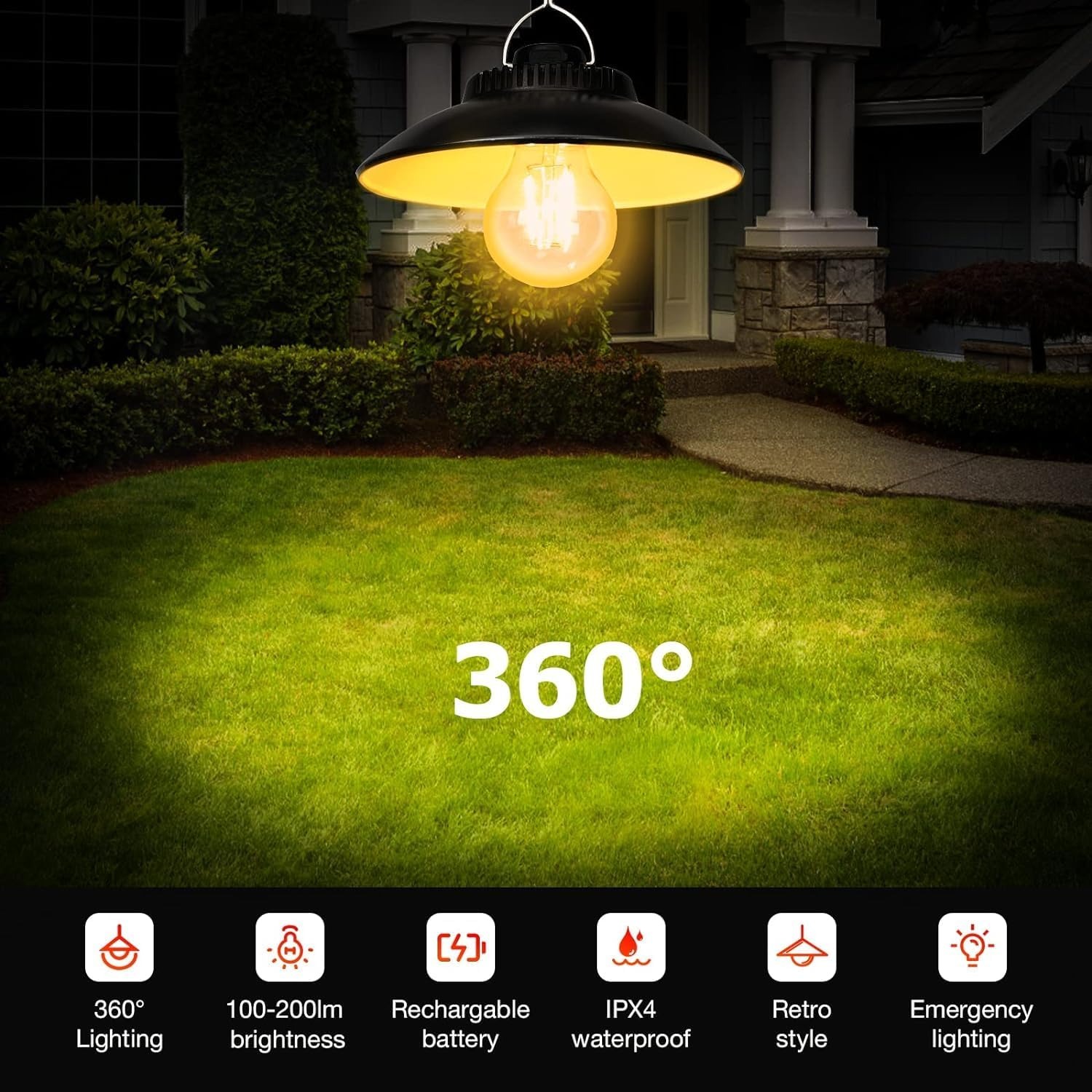
That is the job this lantern is built for. The old hurricane lamp shape is not just decoration. It puts the light source in the middle and lets it escape in every direction, which is why that shape survived a hundred and fifty years of competition. Swapping the burning wick for an LED keeps the useful part and drops the fuel, the heat and the fire risk.
How it works
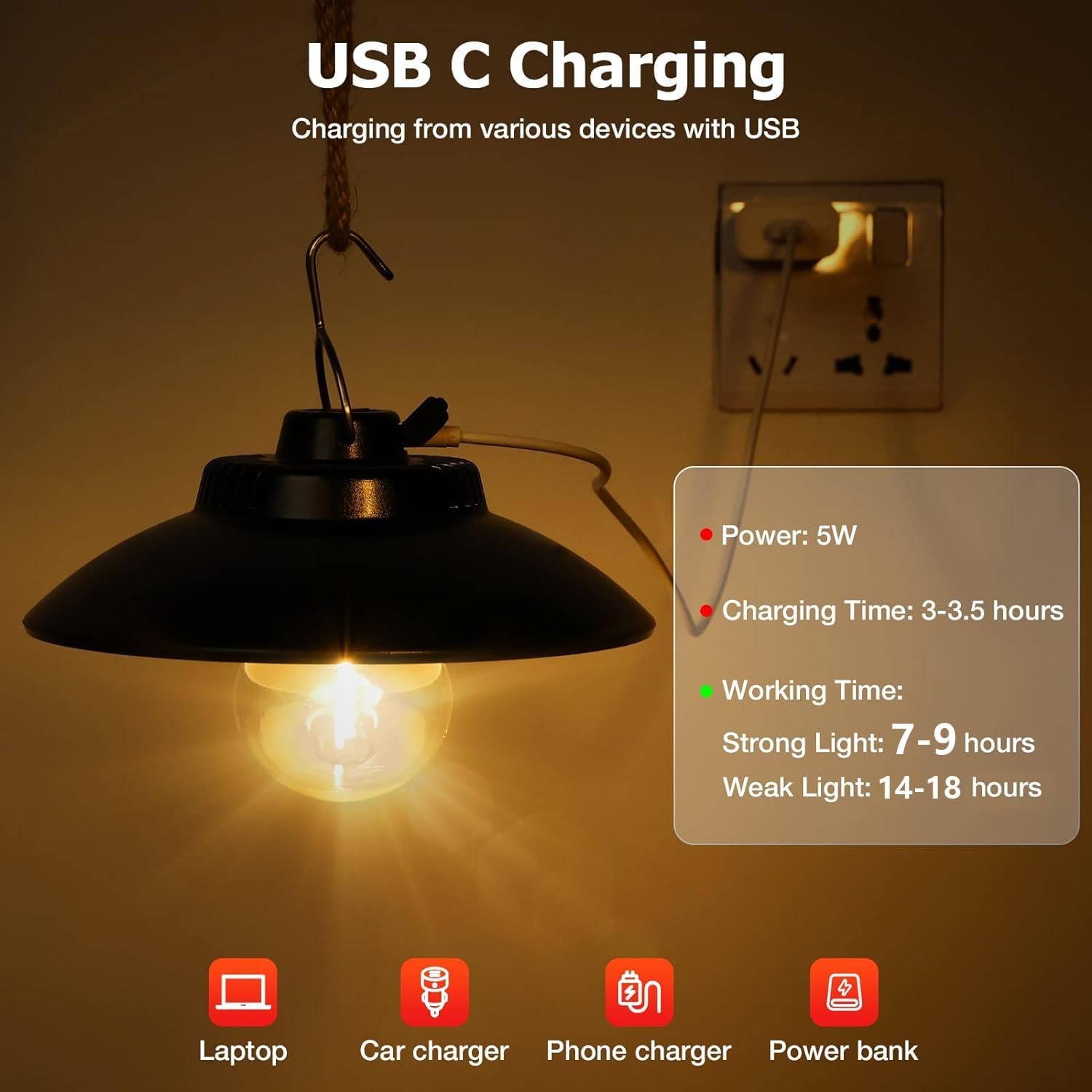
Inside the body is a 2600 mAh lithium battery. It charges through a Type-C port, the same connector most phones, tablets and headphones now use. For a lot of people that is the deciding factor. One cable in the glovebox charges everything, and there is no scrabbling through a kitchen drawer looking for AA batteries while the power is out and everyone is holding a phone torch.
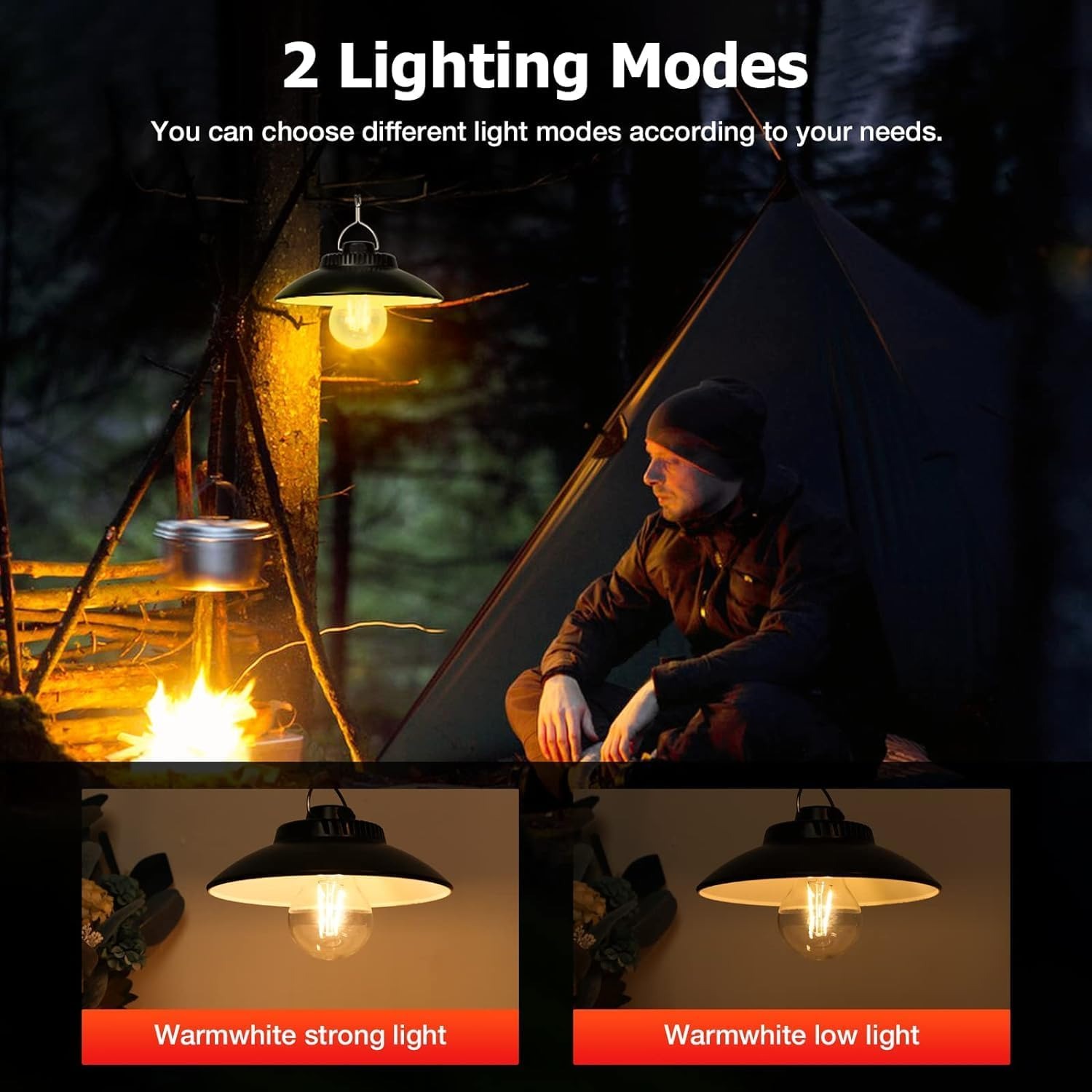
Stated battery life is 7.75 hours. In practice, how long you get depends entirely on which of the two modes you run. Full brightness burns through the charge faster. The lower setting is gentler and will carry you through an evening and well into the night. Most campers run bright for the twenty minutes it takes to set up and cook, then drop to low for the rest of the night.
Electrically it is a 5 watt LED running at 5 volts and 1 amp, with a single light source and a 360 degree beam angle. Those numbers matter less than what they mean in use. It is an area light. It lights the circle you are standing in rather than throwing a beam down a track. If you need to walk a long dark path, carry a torch as well. If you need to see the people and the food in front of you, this is the right tool.
Who it suits
Tent campers get the most out of it, mainly because of the hook. Clipped to a ceiling loop, it turns the whole inner tent into a soft lit room. Nobody has to hold anything, and there is no hot surface for a child to touch or a sleeping bag to rest against.
Caravan and camper van owners tend to keep one for outside, where the built-in lighting does not reach. Hang it off the awning pole and the annex becomes usable after dark.
Backyard use is quietly one of the most common. People buy these for camping and then find them living permanently on the back table for summer dinners, because warm all-round light makes an outdoor meal feel like something rather than just eating outside.
Then there is the blackout drawer. A charged lantern on a shelf by the back door beats candles in every way that matters. No wax, no smoke, no risk, and far more light. If you live somewhere that loses power in storms, having one of the best emergency lights for home sitting ready is a small thing that pays off on a bad night.
Night fishing, market stalls, garage work, power cuts in a share house, camping with kids who want their own light. The list stays open because the thing is just a good lamp.
How to choose
A few things separate a lantern you keep from one you lose interest in.
Charging method. USB-C is the one to look for now. Older lanterns with micro USB or proprietary chargers become annoying the moment you lose the cable. Disposable battery lanterns are fine until you are three hours from a shop with four dead AAs.
Light direction. Check whether the light goes out all the way around or just downwards. All-round light is better for tables and tents. Downward-only lanterns can be good for a work area but they leave faces in shadow.
Light colour. Warm light is kinder at night. Cold white light is brighter on paper but harsher in practice and harder to settle under. For evenings and sleep spaces, warm wins.
Modes. Two or three settings is plenty. Lanterns with a dozen flashing modes mean more button presses to get to the one you want, usually while standing in the rain.
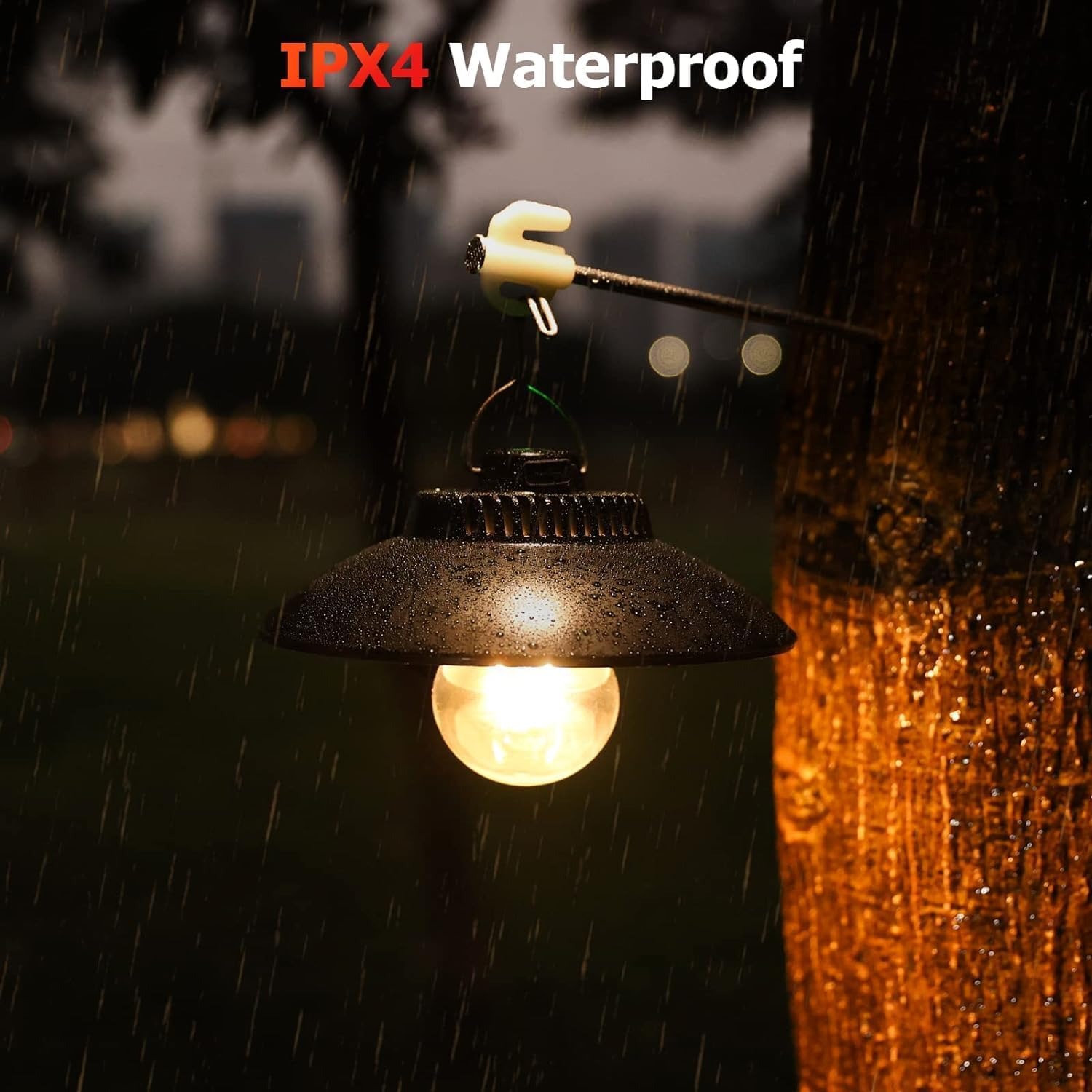
Water rating. Water resistant covers camping weather. Rain, spray, damp grass, condensation inside the tent. Nothing short of a purpose-built dive light survives being dropped in a creek, so treat "water resistant" as "will not die in a shower" and plan accordingly.
Size and weight. Car campers can carry anything. Hikers cannot. At 14.5 x 11 x 18.5 cm this one sits in the easy middle, small enough to pack and big enough to actually light a space. If you are counting grams for a multi-day walk, a smaller collapsible light might suit better.
Hanging options. The hook is the feature you will use without thinking about it. Check it is integrated rather than a separate clip that goes missing in the first week.
Living with it
Lithium batteries like being used and topped up. They do not like sitting flat for months, and they do not like heat. So the two habits worth building are simple. Recharge the lantern when the light starts to look weaker rather than running it until it dies. And store it somewhere cool and dry, not in a hot car trunk through summer or a damp shed through winter.
Cleaning is a wipe with a soft damp cloth and a dry off afterwards. Keep the charging port clear of dust and sand, which is the real enemy at a beach campsite. If you have been somewhere salty, give the housing a wipe before it goes back in the tub.
If the lantern lives in your blackout kit rather than your camping kit, set a reminder to charge it when the clocks change. Twice a year is enough to keep it ready, and it takes two minutes.
Little things that make a difference
Hang it higher than you think. Light from above spreads further and casts fewer awkward shadows than light sitting on a table at eye level.
Use the low setting more than you expect. Your eyes adjust to the dark surprisingly well, and running low doubles your evening while keeping everyone's night vision intact.
Keep the cable with the lantern. Tape a short USB-C cable to the inside of the camping tub lid and you will never arrive with a flat lantern and nothing to charge it with.
Give each child their own light if you camp as a family. It stops the tug of war over the one lamp, and it keeps them from wandering off with the main light while you are cooking.
The short version
This is a warm, all-round LED lantern in a classic lantern shape, with a 2600 mAh battery that charges over USB-C, two brightness levels, a water resistant ABS housing and a hook that lets it hang anywhere. Listed battery life is 7.75 hours, and running on the low setting stretches that out.
It suits tent campers, caravanners, backyard dinners and anyone who wants something better than candles when the power drops. It is not a long-throw torch and it is not waterproof, so pair it with a head torch for walking and keep it out of the water.
If you want one good light that works at a campsite, on a balcony and in a blackout, this is the shape to look for.