
The complete guide
How to Choose a Portable Camping Shower That Actually Works
The problem with getting clean outdoors
Anyone who has camped for more than two nights knows the feeling. There is sunscreen, insect repellent, sweat, campfire smoke and a layer of dust all sitting on your skin, and the nearest shower block is a 40 minute drive away or does not exist at all. A wet wipe only goes so far. A bucket and a cup works, but it is cold, slow and you end up wearing most of it down one arm.
The old fix was a solar shower bag hung from a tree. They are cheap, but they need a branch strong enough to hold 20 kilos of water, they never hold pressure for long, and the flow is a trickle by the end. The other fix was a 12V pump wired into the car, which works well but means running the engine, pulling cables out and setting things up properly.
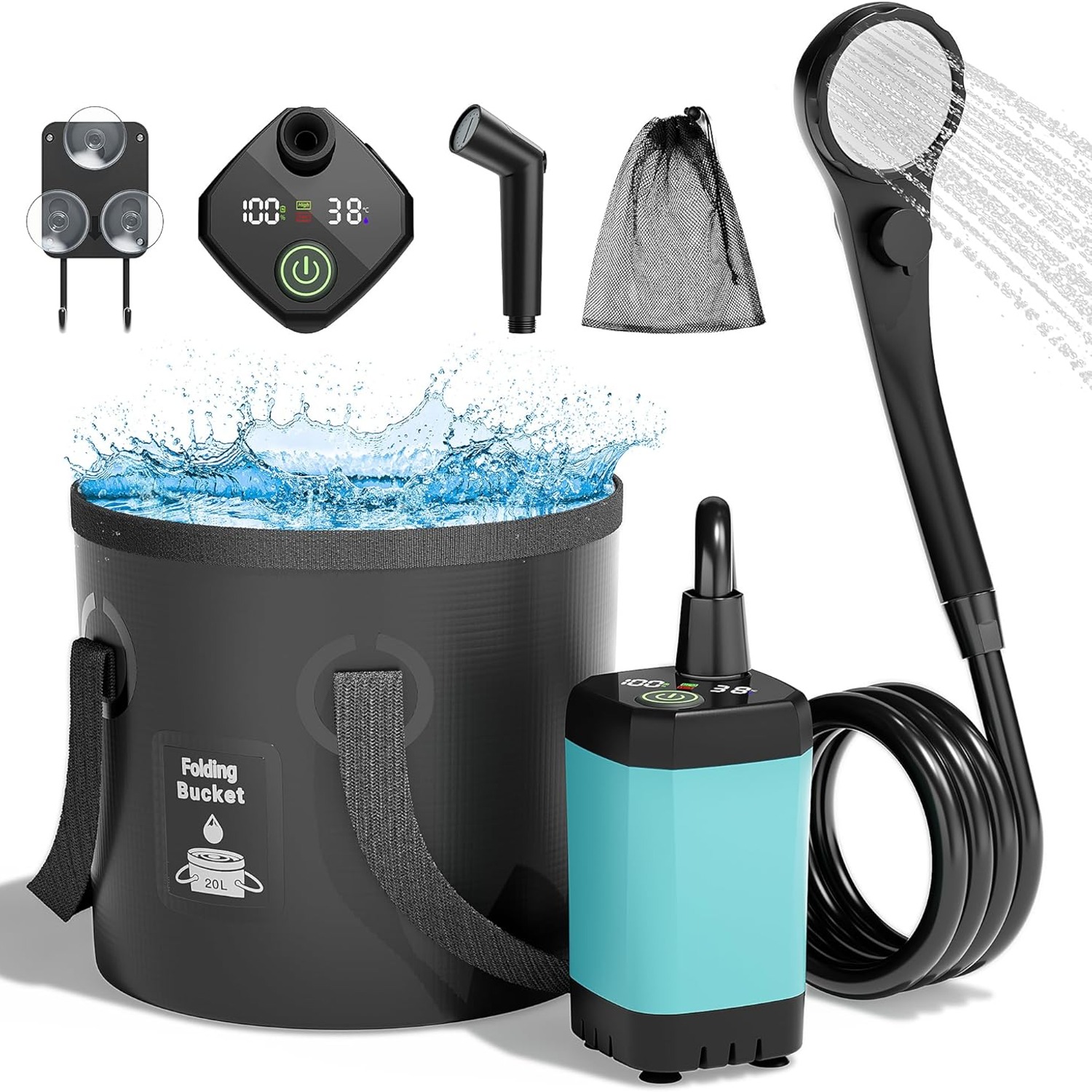
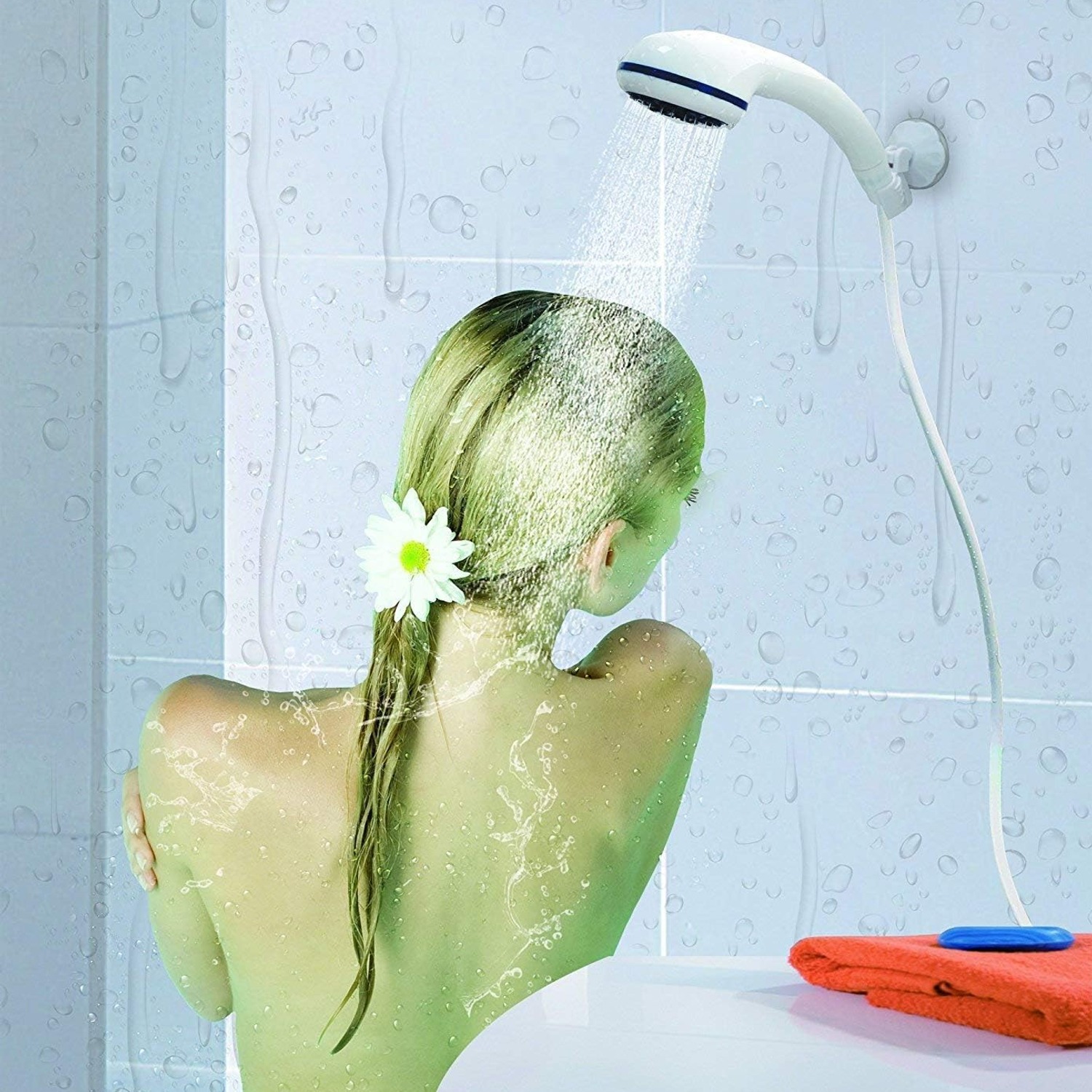
A battery powered portable camping shower sits between those two. It is a small submersible pump with a hose and shower head, and it runs for a decent stretch off its own charge. You put the pump in water, you press a button, and you have running water. That is the whole idea.
How this one works
The pump drops into any container of water you have. A bucket, a jerry can, a camping basin, a creek, the shallows at a beach. There is no tank built into the unit, which is deliberate. Tanks make these things bulky and heavy, and you usually have a water container with you already.
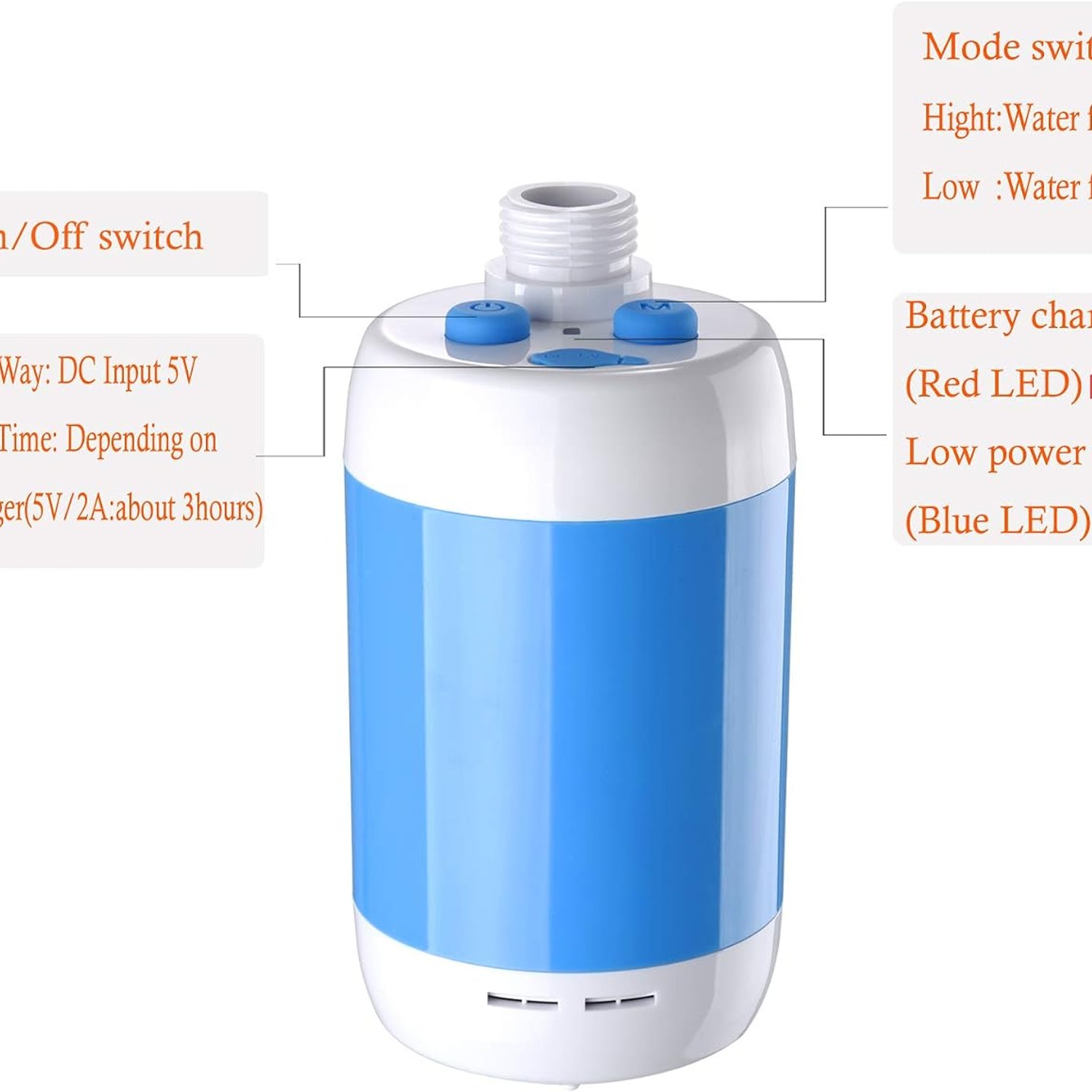
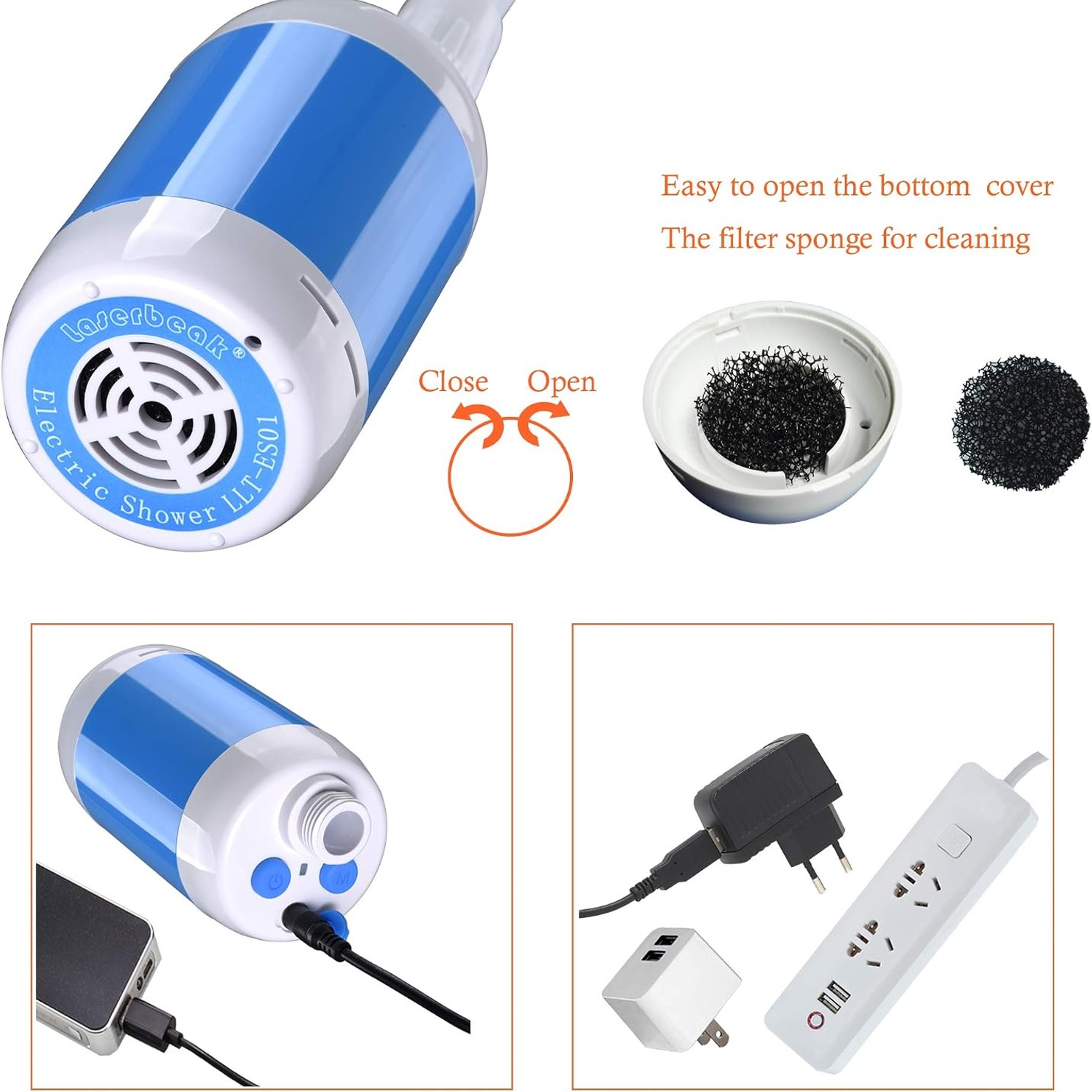
Inside the housing is a 4800mAh lithium battery, made up of two 2400mAh cells running at 3.7 volts. It charges from a 5V USB cable, the same kind that charges a phone. Give it a 5V/2A source and it is full in about three hours. A blue light glows while it charges, and a red light comes on when the pack is running low, so you know before you are standing there mid-rinse with soap in your eyes.
Water flow has two settings. Low gives you about 3 litres a minute, high about 4 litres a minute. The difference matters more than it sounds. On low, a 20 litre jerry can stretches a long way across a family. On high, you get enough pressure to rinse shampoo properly out of long hair or blast mud off a dog's belly.
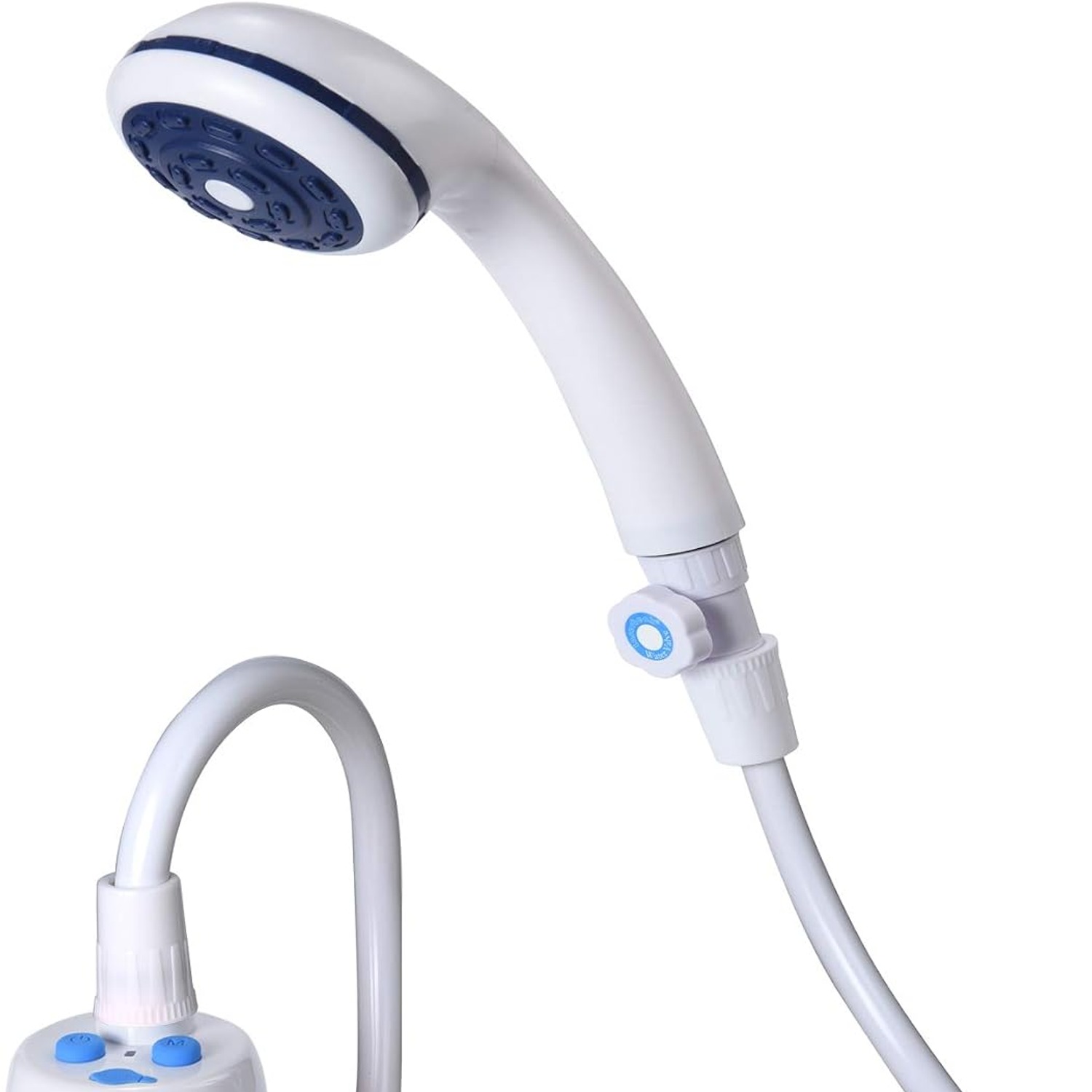
The shower head has its own flow control and a shut-off valve. Use it. Turning the water off while you soap up is the single biggest thing you can do to stretch a bucket, and it is the difference between one container doing two showers and running out halfway through the first.
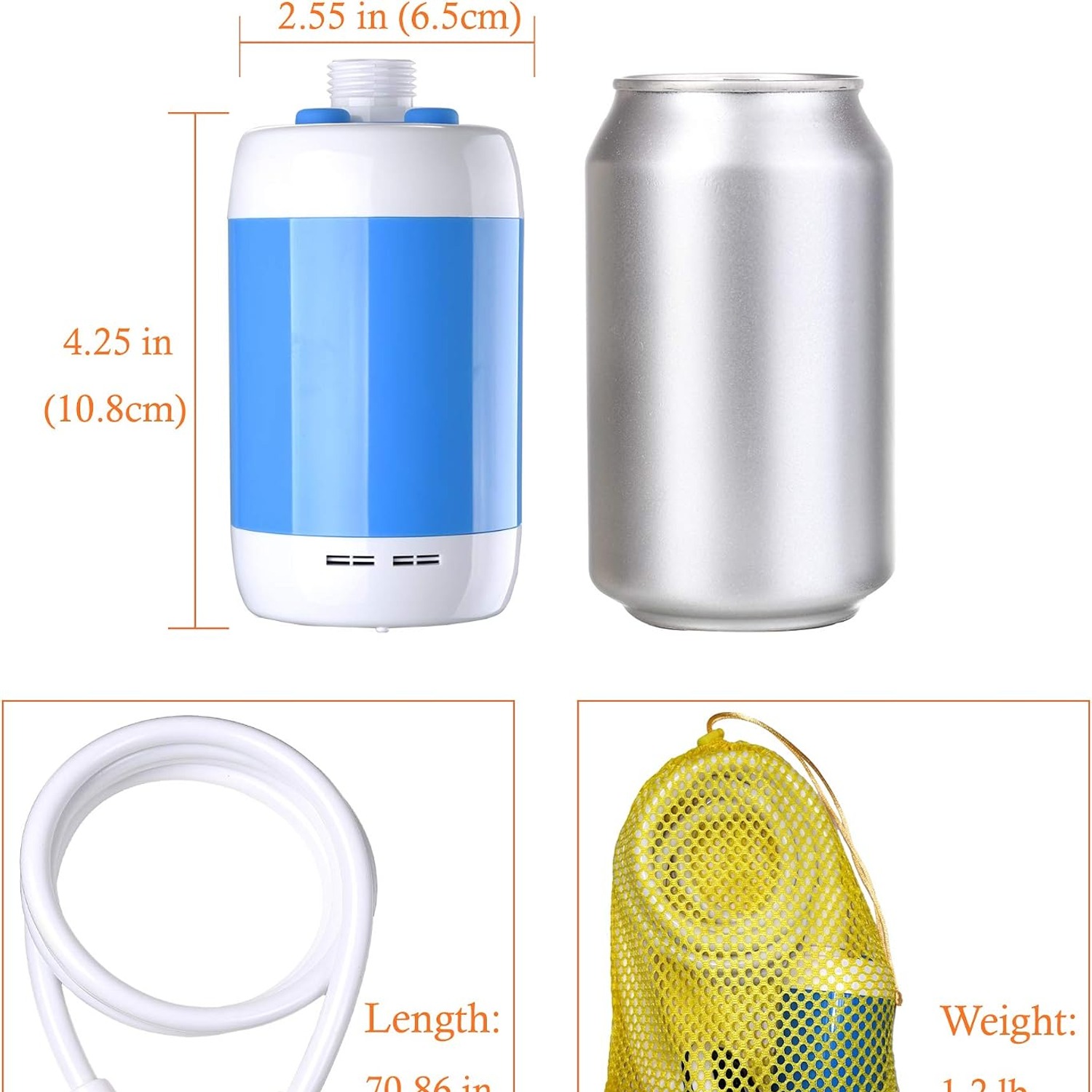
The hose runs about 210 cm in total. That gives you enough reach to stand upright with the pump sitting on the ground, or to hang the head from a hook on a shower tent and keep your hands free. The pump body itself is small, around 65 mm across and 108 mm long, so it fits through the neck of most jerry cans.
There is a filter built into the pump to stop sand, leaves and grit getting into the mechanism. Worth saying clearly: it is a strainer, not a purifier. It protects the pump. It does not make creek water safe to drink.
Who it suits
Campers and caravanners are the obvious group. If you free camp, or you stay at sites where the facilities are basic, this covers the gap. Pair it with a shower tent and you have a private setup in about two minutes.
Van lifers get a lot from it because it needs no plumbing and no 12V wiring. The whole kit lives in a drawer and comes out when needed. For people building out a van slowly, it is a way to have a shower long before you have a water system.
Surfers, swimmers and beach walkers use it for the salt rinse. A jerry can in the trunk plus this pump means you get in the car clean instead of sandy. The same applies to mountain bikers hosing mud off legs and frames at the trailhead.
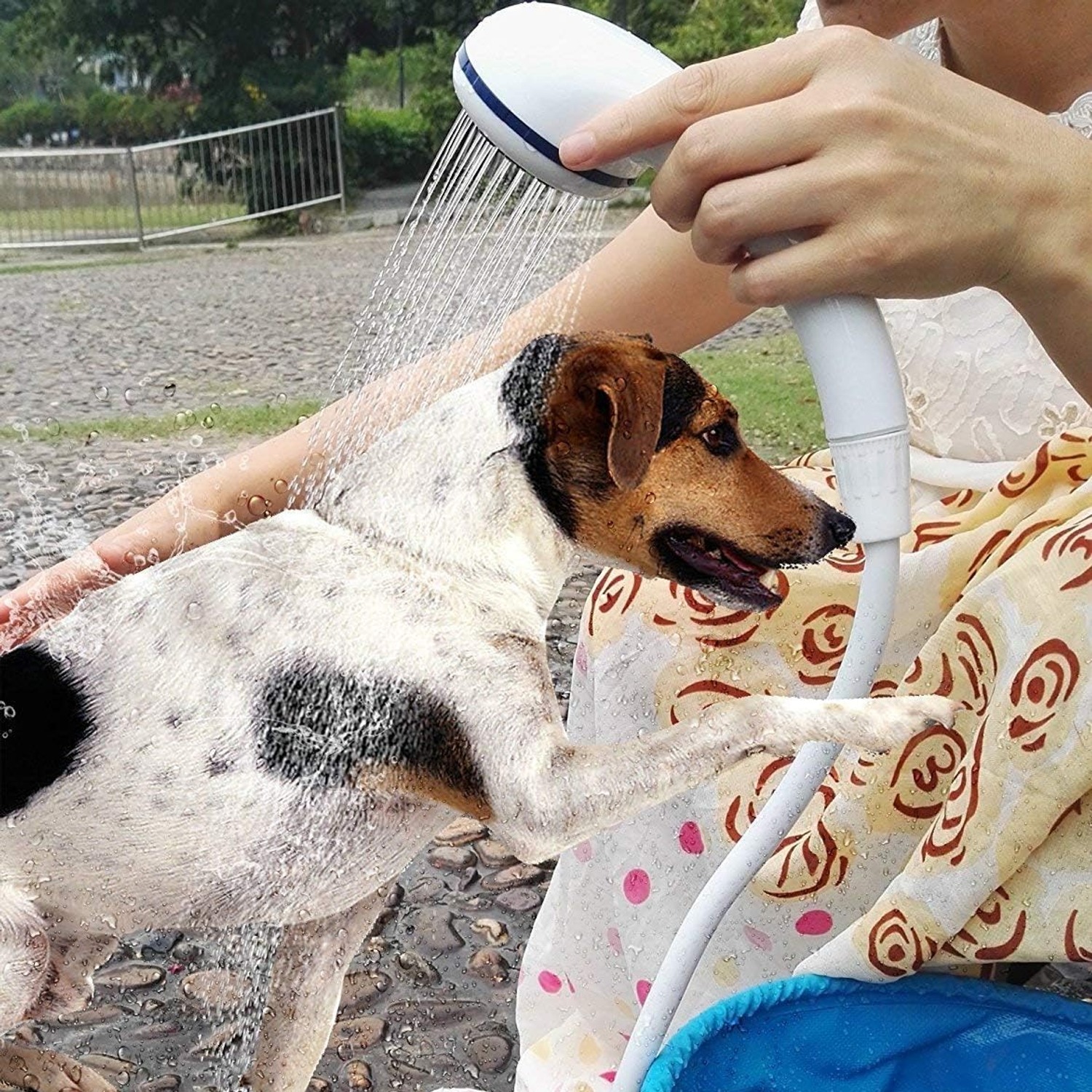
Dog owners buy these almost as much as campers do. The low flow setting is gentle, the hose lets you move around the animal, and the shut-off valve means you are not wasting water while you work shampoo in. If you are hunting for the best dog washing shower and do not want to drag a wet dog through the house, this does the job on the lawn.
Then there are the odd jobs. Rinsing a windscreen, washing muddy boots, cleaning fishing gear, watering a raised bed the hose will not reach, washing a kayak. People find uses for it that were not on the list when they bought it.
How to choose one
A few things actually matter when you compare models.
Battery capacity first. 4800mAh is a decent size for this type of unit, and it is the number that decides how many showers you get between charges. Smaller packs run out faster than the spec sheet suggests, because real use involves stopping and starting.
Charging method next. USB charging is far more practical than a proprietary plug, because you can top it up from a power bank, a car socket or a laptop. If you are off grid for a week, that flexibility matters more than almost anything else.
Flow rate is a trade-off, not a race. Higher numbers feel better but empty your container quicker. Having two settings, as this one does, is more useful than a single high flow, because you can match the water to the job.
Hose length decides how comfortable the shower is. Anything much under two metres means crouching or holding the container up. Around 210 cm is enough to stand normally.
Finally, look for a shut-off valve at the head. It sounds minor. It is not. Without it you are either wasting water or switching the pump on and off constantly.
Getting more out of it
A few habits make a real difference. Warm your water first if you can, within the 5 to 50 degree C range the unit handles. A dark bucket in the sun for a few hours will take the edge off nicely, or mix a kettle of hot into a cold bucket and test with your hand before you stand under it.
Keep the pump off the very bottom of a container if there is sediment. Sand is the enemy of small pumps, and the filter can only do so much.
Charge it the night before you leave rather than the morning of. Three hours goes quickly when you are packing.
And if you have been in salt water, rinse everything through with fresh water before it dries. Salt crystals inside a pump will shorten its life faster than anything else you do to it.
Care and storage
After each use, run clean water through the system for a minute, then shake the hose out and let the lot dry. Pull the filter every few trips and flush the grit out of it. The unit comes apart without tools, which makes this painless.
Never run the pump dry. It is a water-cooled motor in practice, and air does not cool it.
Store the battery with some charge in it rather than completely flat, and keep it somewhere that does not freeze or bake. Coil the hose loosely so it does not take a permanent kink. Packed down the kit is 27.1 x 21.4 x 8.1 cm at 830 grams in the box, so a small tub or a corner of a camping crate is plenty.
The short version
This is a battery powered pump that turns any bucket of water into a running shower. It charges over USB in about three hours, runs at 3 or 4 litres a minute, reaches 210 cm from pump to head, and has a shut-off valve so you can stop the water while you soap up. It is rated IPX7 and includes a debris filter, a suction lid and the USB cable.
If your camping or van setup is missing one thing and that thing is a shower, this is a small, cheap fix that does not need plumbing, wiring or a tree branch. Add a 20 litre jerry can and you are set.