
The complete guide
Survival Tarp Buyer's Guide - Choosing a Reflective Shelter That Actually Works
The problem a survival tarp actually solves
Ask people why they bought a tarp and most say rain. Rain is the obvious one. But if you have ever spent a night outdoors and woken up cold despite a decent sleeping bag, you already know the real culprit. Heat leaves you in several directions at once. It sinks into cold ground. It gets stripped away by wind. And on a clear night it radiates straight up into the open sky, which is why frost forms on a car roof and not on the ground beneath a tree.
A thin plastic tarp handles the rain and does almost nothing about the rest. A reflective thermal tarp handles both. The waterproof face deals with water, and the aluminised face deals with radiant heat loss by bouncing it back toward the source. That is the whole idea behind this Arcturus XL survival tarp, and it is why the same piece of kit gets used for warmth in winter and shade in summer.
How the two faces work
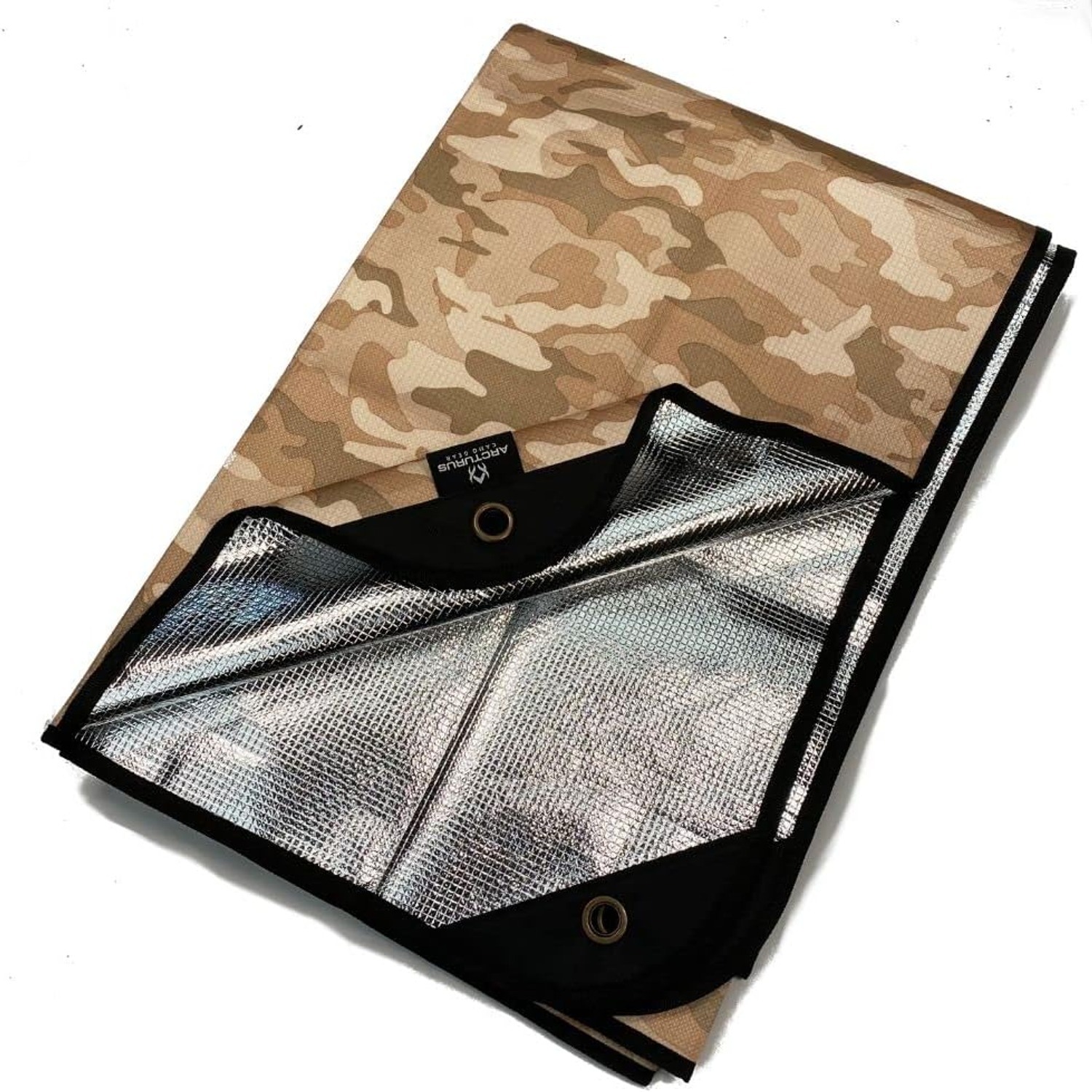
The reflective face is a Mylar layer, the same mirror-like aluminised film used in emergency blankets. It does not generate heat. It reflects it. Point it at your body and the warmth you are already producing gets returned instead of escaping. Point it at the sun and solar heat gets turned away before it loads up the space underneath.
That second use is underrated. Pitch this tarp above a tent in the middle of a hot afternoon with the shiny side up and a gap of air between the two, and the tent underneath stays far more bearable than it would under plain shade cloth. The gap matters, because you want the reflected heat to escape rather than transfer through contact.
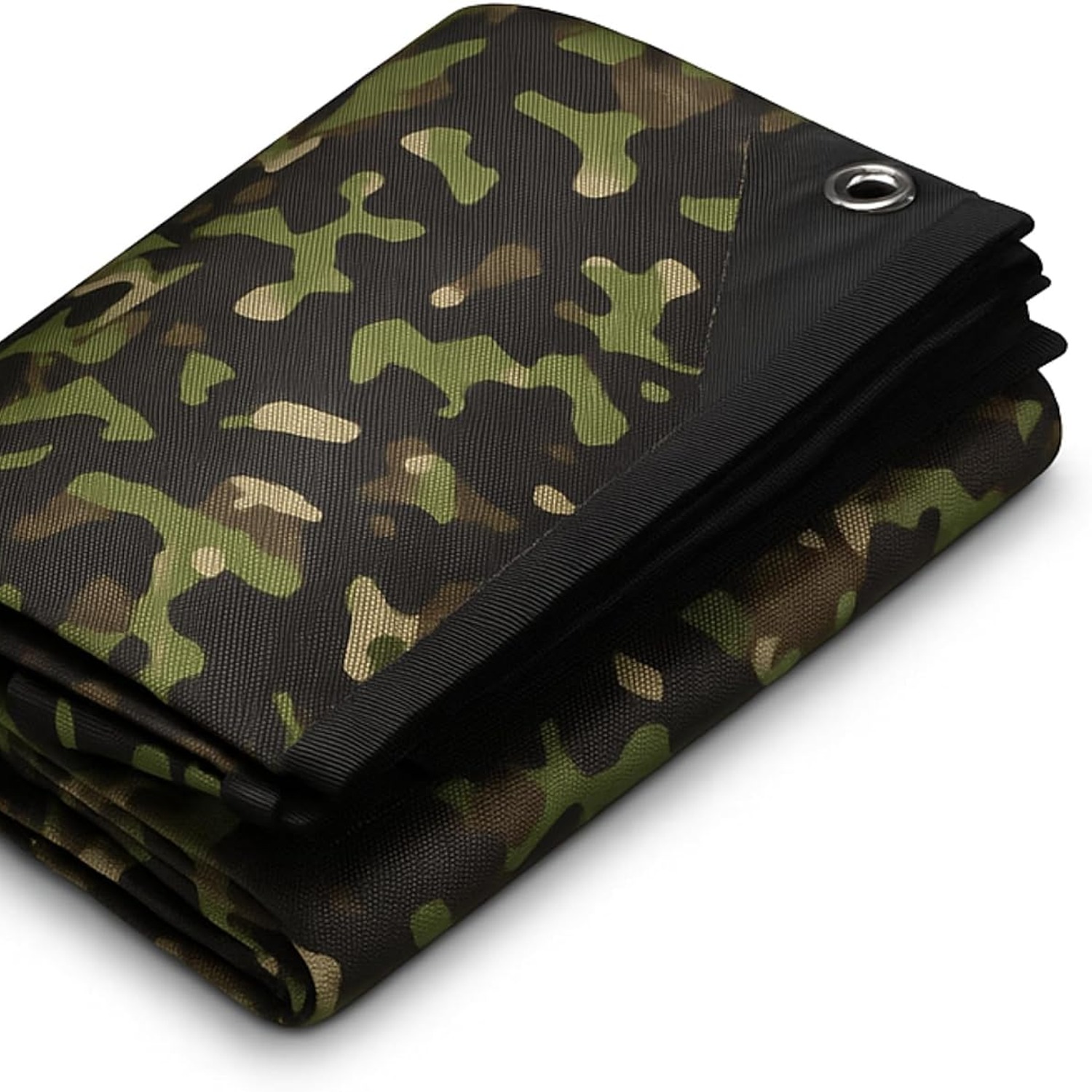
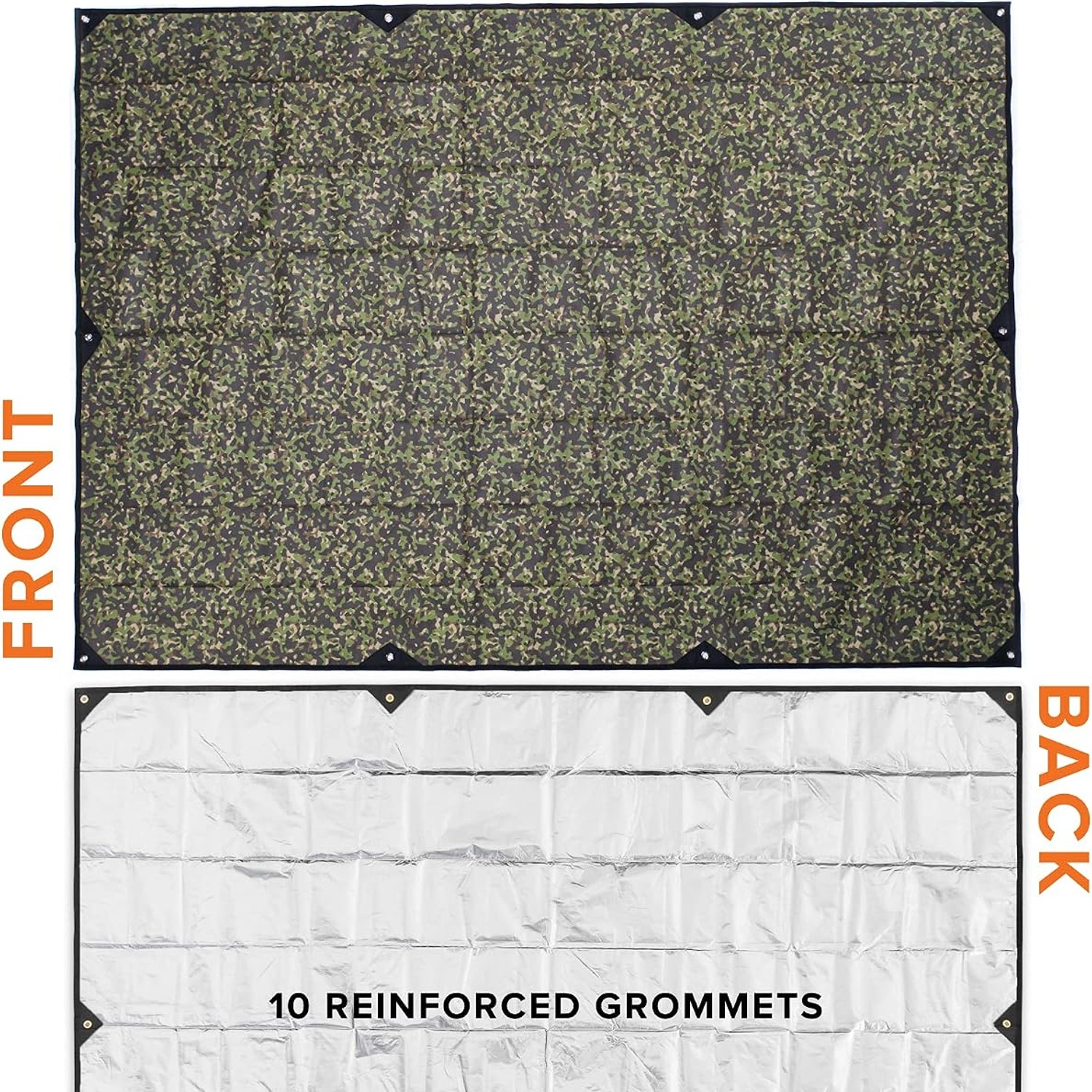
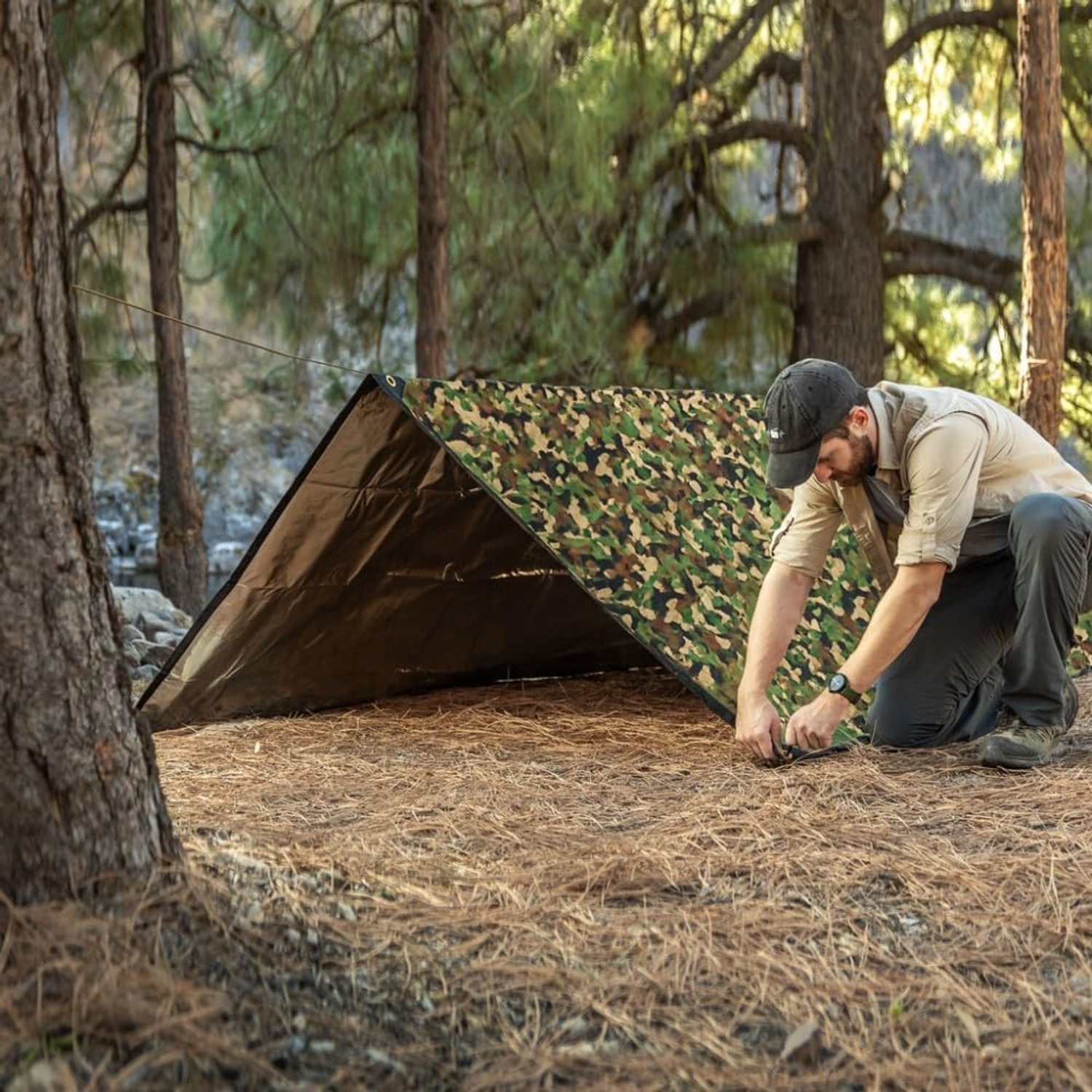
The opposite face is two layers of polypropylene. That is the hard-working side. It is waterproof, it tolerates being dragged across gravel better than foil ever could, and it is the side you want against wet ground. The colour on this face is Woodland Camo, which is a practical touch for hunters and anyone who would rather not be visible from the next ridge.
Why the grommets matter more than people expect
Every tarp fails at the same place. Not the middle of the sheet, the edges. You tension a line, the wind gusts, and the grommet pulls a neat slot through the fabric. From then on the tarp is only as good as the knots you can improvise around a corner.
This model carries ten reinforced tie-down grommets. They use a claw-style fitting that grips a reinforced nylon patch rather than simply squeezing through the sheet. That spreads the load across the patch instead of concentrating it on a small ring of fabric. Ten points also gives you flexibility. You can run a ridge line through the long edge, peg out the corners, and still have spare points mid-edge to stop the middle sagging and pooling water.
If you are comparing options and want the best tarp with grommets you can find, count them and look at how they are attached. A tarp with four corner eyelets and nothing else limits you to one pitch.
Who this suits
Campers get the most obvious value. Ground sheet, rain fly, windbreak, picnic base, gear cover. Hunters get the camo face and the compact pack size. Boaties keep one in a locker for sun shade and wet-weather cover. Four wheel drivers and road trippers tend to buy one as the best emergency blanket for car storage and then end up using it on every stop.
Then there is the preparedness crowd. If you are putting together a kit for storms, power cuts or evacuations, this is a sensible inclusion precisely because it is reusable. A disposable foil blanket is single use and tears if you look at it wrong. Something at 1.63 kg with ten anchor points keeps working.
Who it does not suit: ultralight through-hikers counting every gram. At 1.63 kg this is heavier than a minimalist silnylon fly. You are trading weight for toughness and thermal function. For most people that is a good trade. For someone walking a thousand kilometres, it may not be.
How to choose the right size and setup
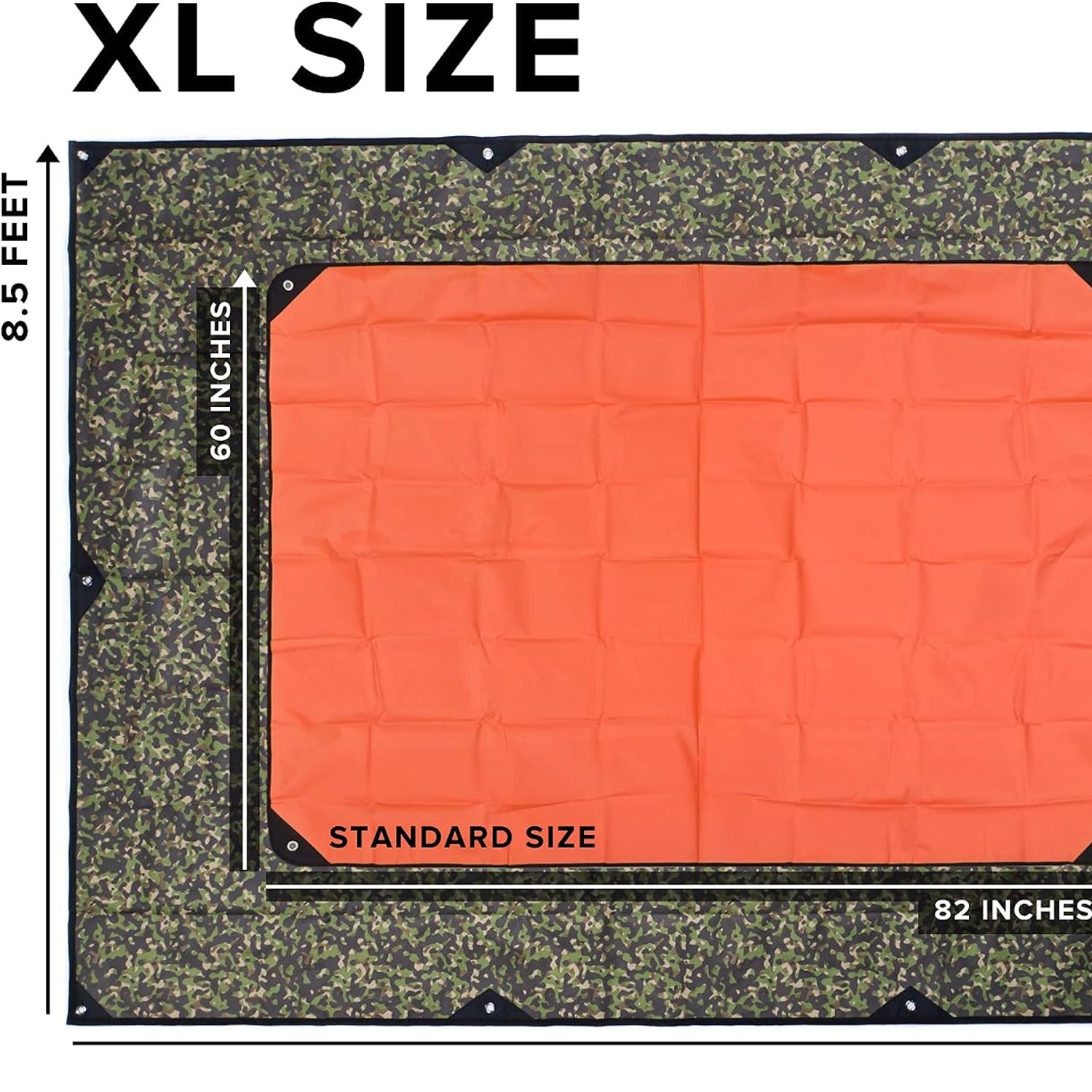
Size first. This is the extra large version at 2.59 by 1.52 metres. As a ground sheet that covers two sleeping mats side by side with a bit left over. As an overhead fly it roofs a sleeping area or a small cooking spot, but it will not cover a camp table and four chairs. If you want a full camp shelter, think of this as the core piece and plan to add a second tarp for the extra span.
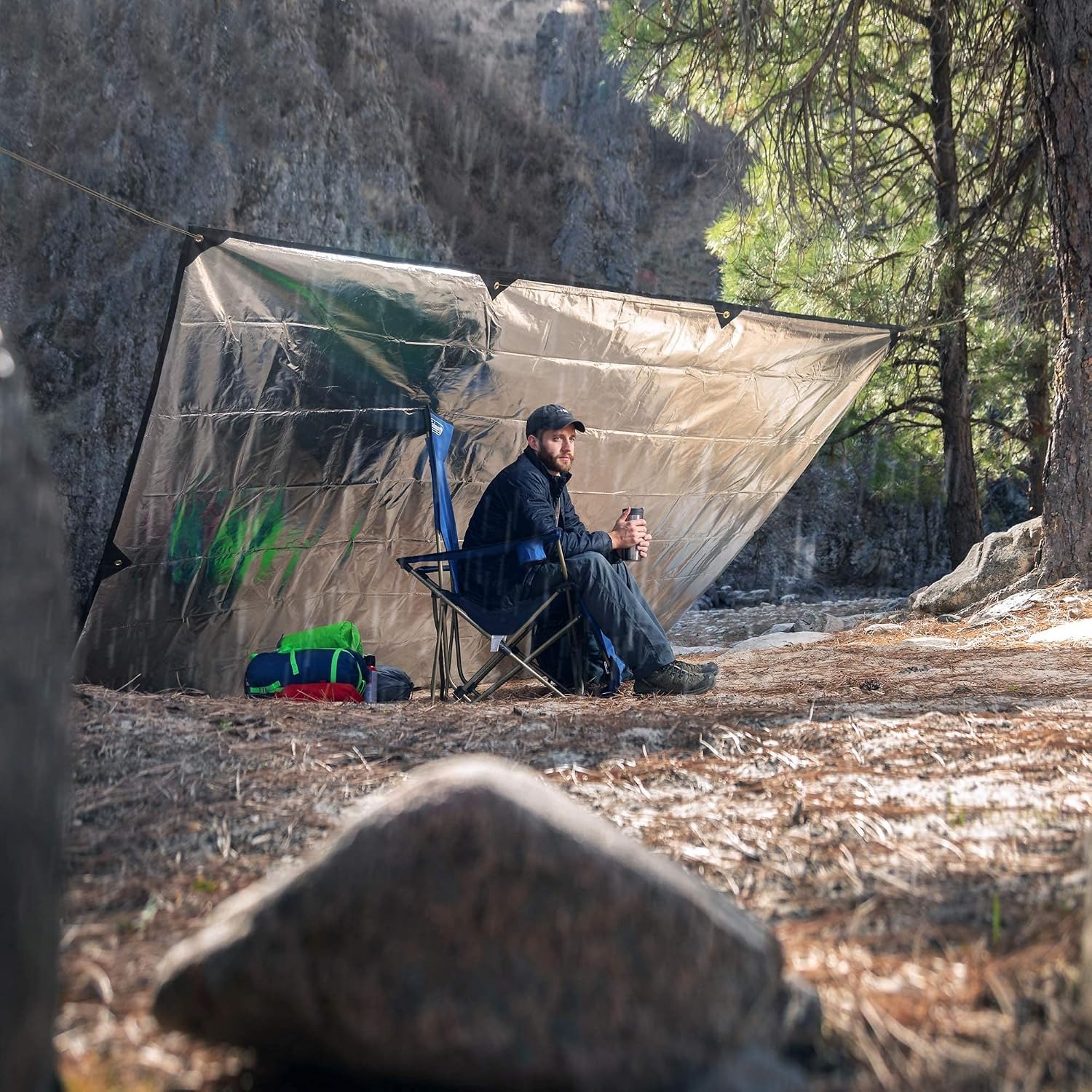
Next, work out your most common pitch. The A-frame is the classic. Run a ridge line between two trees, drape the tarp over it, peg out the four corners. It sheds rain well and gives you a sheltered tunnel. The lean-to is better in wind: peg one long edge low to the ground, lift the other on poles or a line, and point the closed side into the weather. The flat fly is the hot weather option, pitched high and level with the reflective side up.
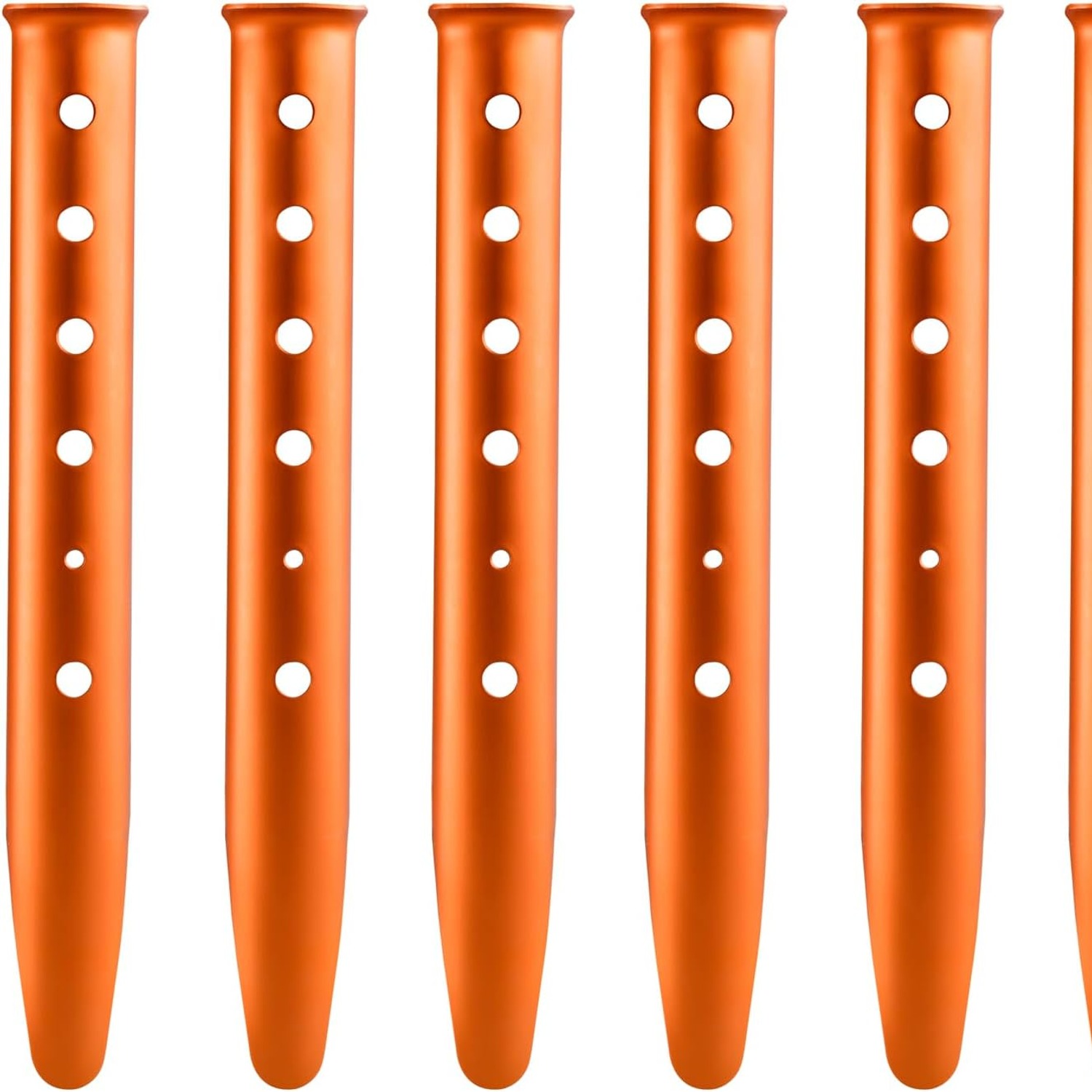
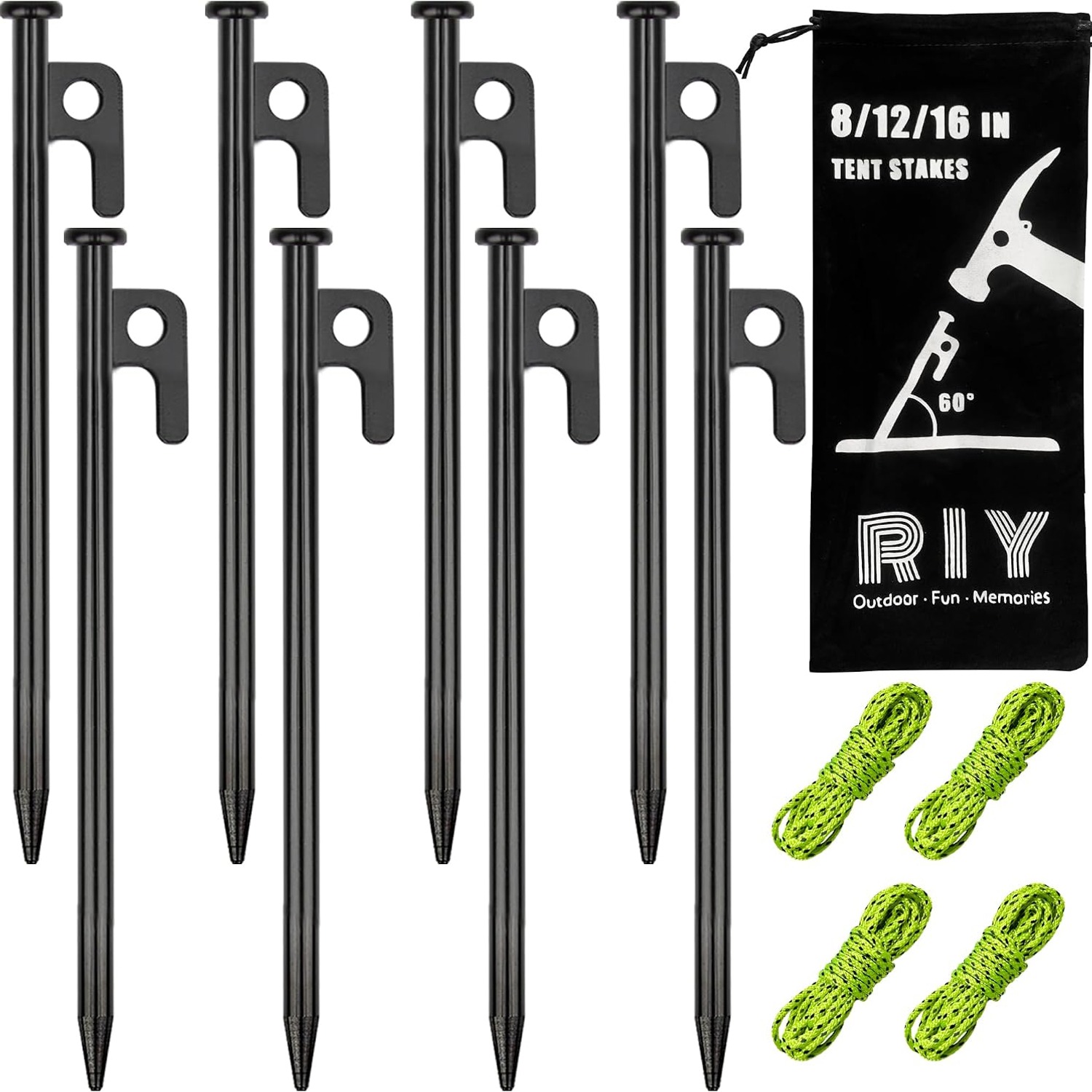
Finally, buy the hardware that goes with it. This tarp ships with a carry bag, not cord or pegs. A small kit of guy line, a few carabiners, and six to eight decent pegs turns it from a sheet into a shelter. Soft ground needs longer pegs. Rocky ground often needs rocks and cord instead of pegs at all, which is where those extra grommets earn their place.
Looking after it
The care routine is short. Shake the dirt and leaves off before you pack it down. If it is muddy, wipe it with a damp cloth and a little mild soap, rinse, and hang it over a line until both faces are properly dry. Packing a tarp away damp is how you end up with a musty-smelling sheet and a patchy reflective coating.
Keep it out of the washing machine and the dryer. Heat and tumbling are rough on a laminated reflective layer, and nothing is gained by it. Store it loosely in the bag rather than crammed into the same tight creases every trip, and try to keep the shiny side away from sharp gear, tent poles and anything that can scuff it.
Treated reasonably, the reflective face holds up for years. Treated like a floor mat under a trailer hitch, it will not. It is tough, not indestructible.
A few setups worth knowing
Behind a camp chair, reflective side facing in, strung between two trees. You will feel the difference from a fire or heater straight away.
Under a sleeping mat on cold ground, with the waterproof side down. Ground conduction steals more heat than most people realise.
Over a tent on a hot day, shiny side up, with air space between. One of the best heat reflective ground sheet uses that has nothing to do with the ground.
Draped over a load in a ute tray or on a roof rack, lashed through the grommets. Keeps rain off and dust down.
The short version
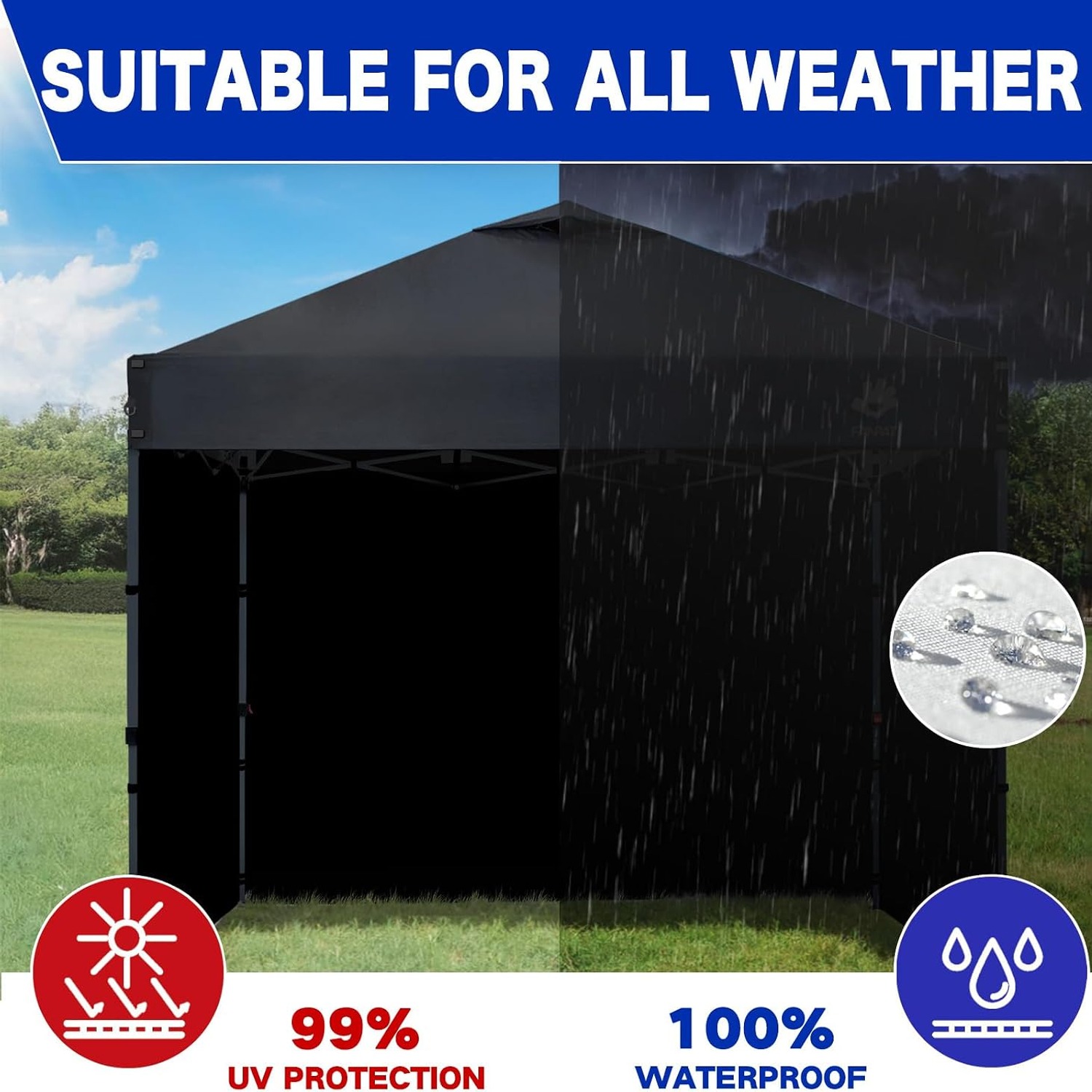
This is a 2.59 by 1.52 metre survival tarp with a reflective Mylar face, a waterproof two-layer polypropylene face, ten reinforced grommets, and a carry bag. It weighs 1.63 kg, comes in Woodland Camo, and is rated waterproof with UV protection.
Buy it if you want one piece of gear that covers shelter, ground cover, shade, wind protection and emergency warmth, and you would rather it survive more than a single trip. Keep it in the car or the boat where you will actually have it when the weather changes. That is when it stops being a tarp in a bag and starts being useful.