Camping Company
Company
Shop By Category
T&Cs
Shop Online
  • Clear materials and product specifications
  • Free tracked Canada-wide delivery over C$150
  • 14-day returns

Travel Sleeping Bag | Lightweight Sleeping Bag | Summer Sleeping Bag

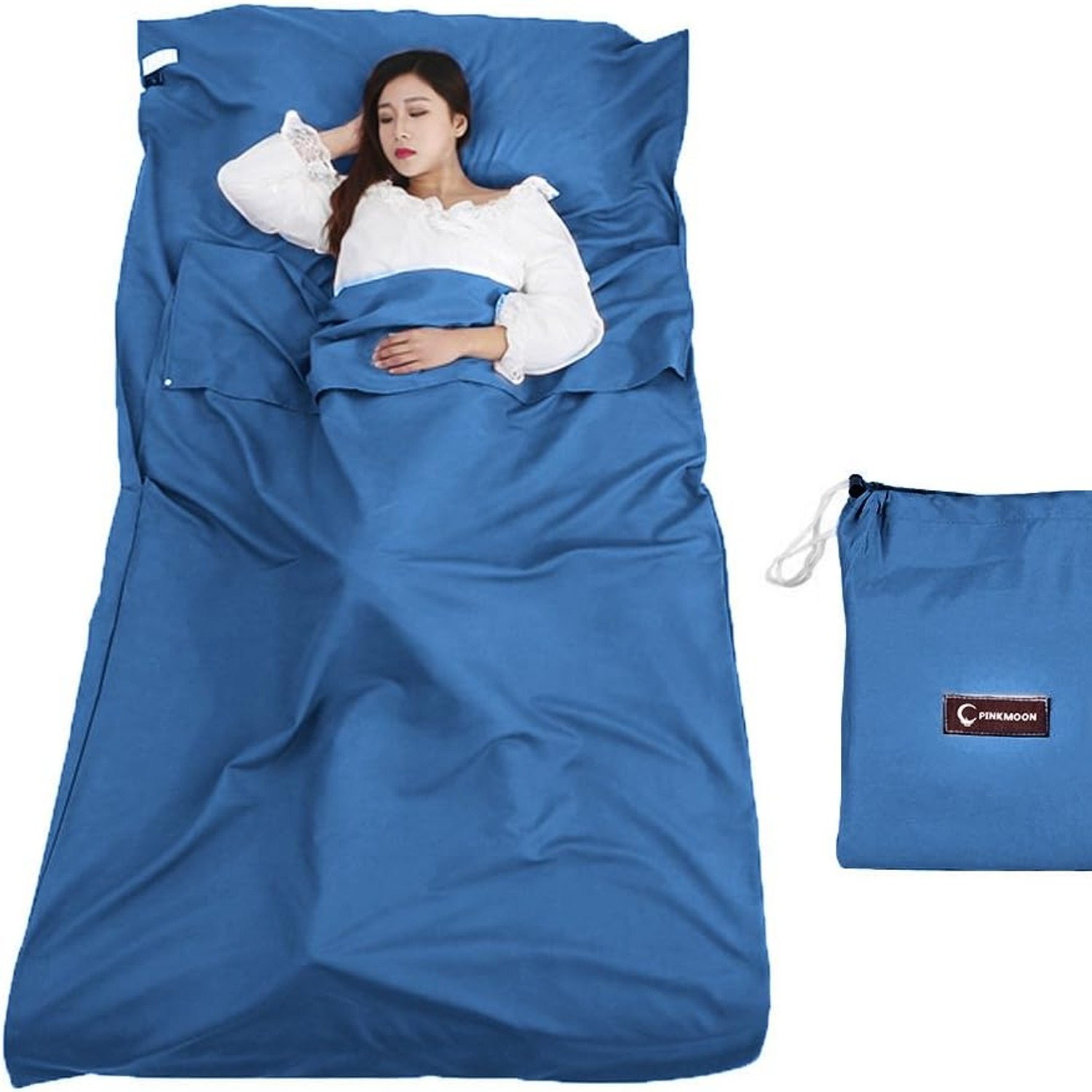
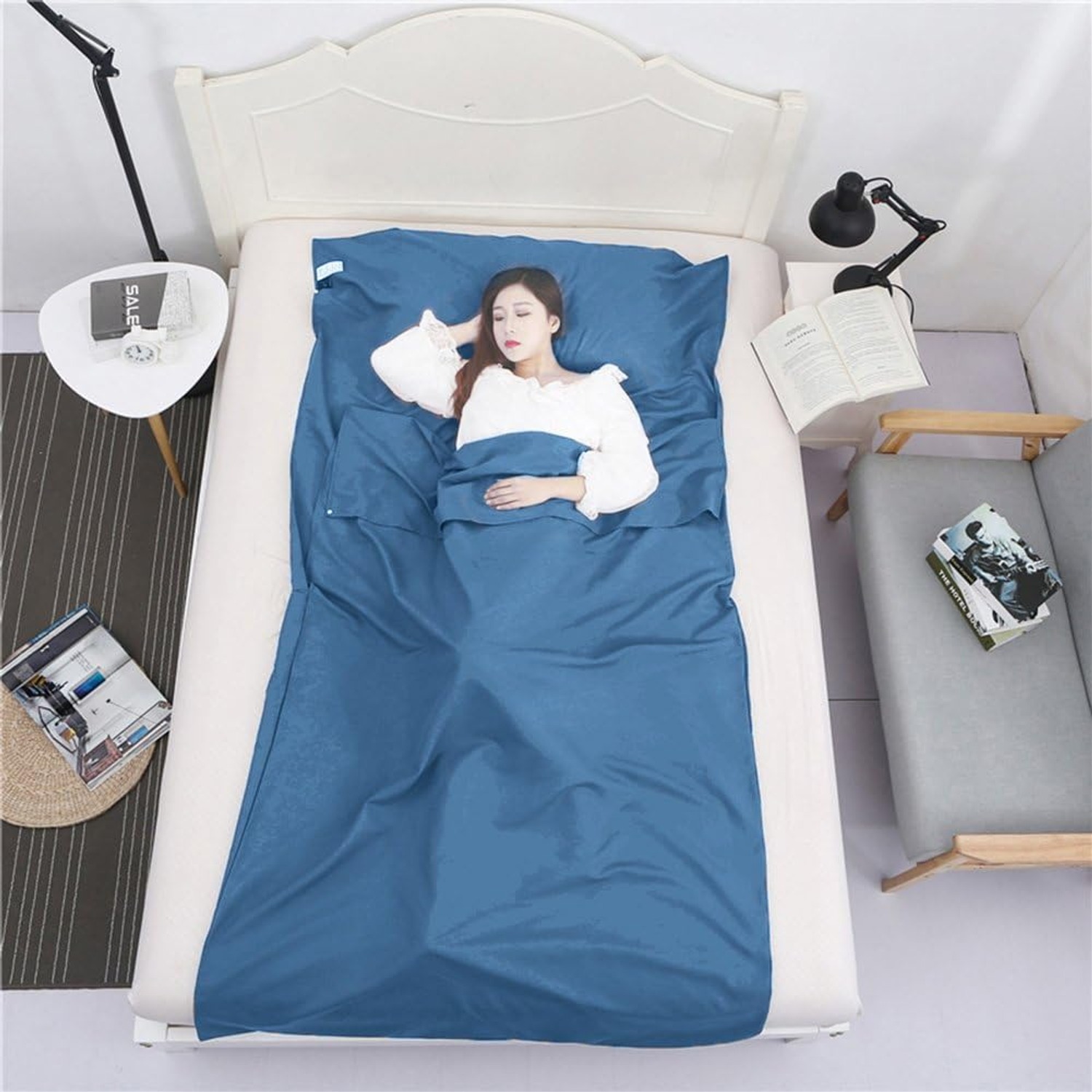
Queta Lightweight Microfibre Travel Sleeping Bag with Carry Bag

C$92.99 C$111.99 Save C$19
  • Only 500 Grams
  • Packs To 20 cm
  • Soft Microfibre
  • Button Closure

Price: C$92.99 C$111.99

  • Free tracked Canada-wide delivery on orders C$150+, otherwise a flat C$20
  • Pay by card or PayPal, handled by the payment provider
  • 14 days to change your mind, plus your statutory rights
Product specifications
BrandQueta
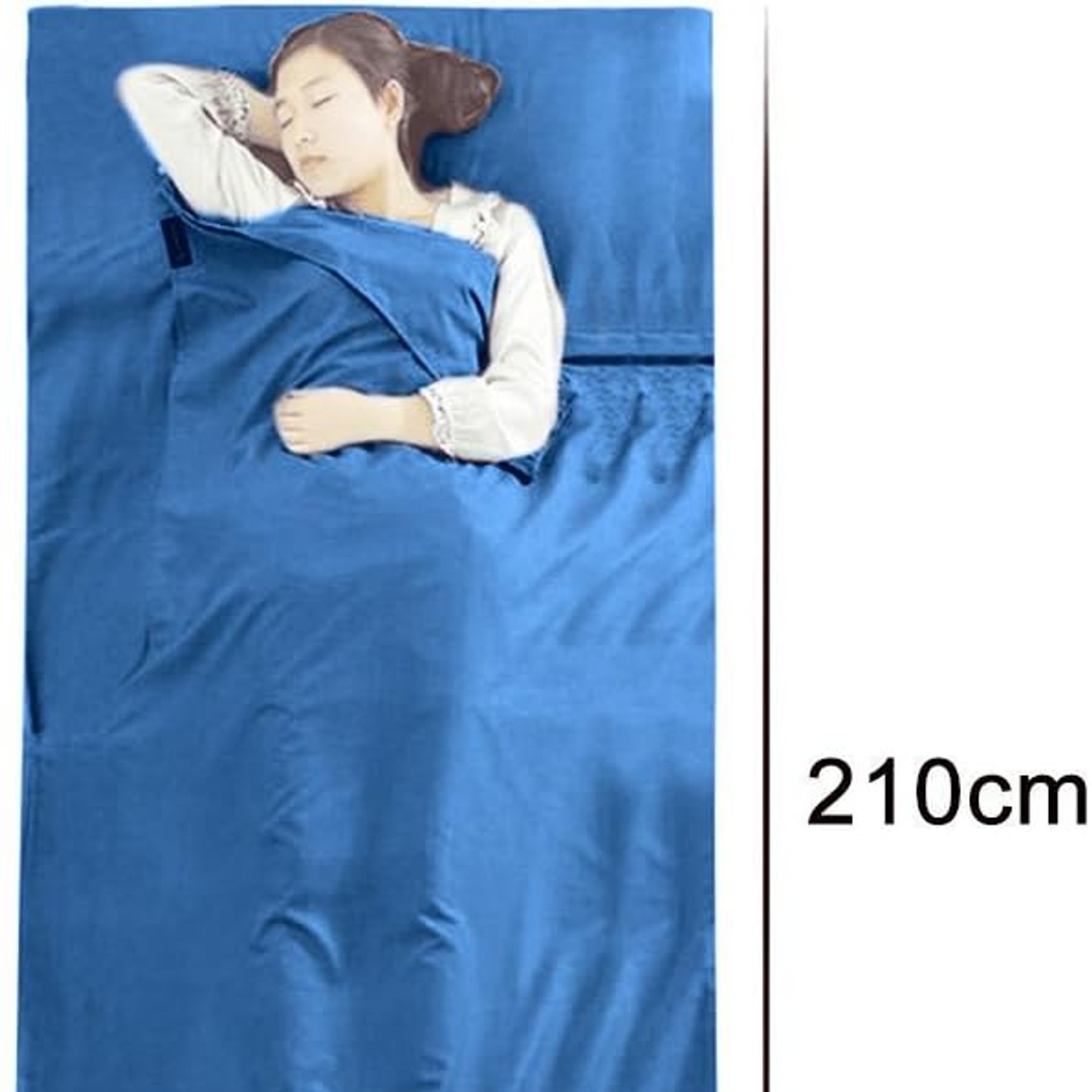
Size210 cm x 115 cm
Weight500 g
Shell MaterialMicrofibre
Fill MaterialPolyester
ShapeRectangular
ClosureZipper
Additional FeaturesLightweight, compact size, button design
ColourMysterious Blue
Occupancy2 person
Maximum Height Recommendation180 cm
Age RangeYouth
Sport TypeCamping and outdoors
Unit Count1
Weight500 g
Shipping & returns

Tracked delivery anywhere in Canada. It is free on orders of C$150 or more, and a flat C$20 below that.

If it is not right for you, send it back within 14 days of delivery in resaleable condition and we refund the price you paid, including standard delivery. That is a voluntary policy we offer on top of your legal rights. You cover the cost of returning it unless the item is faulty.

If it arrives faulty, damaged or not as described, we put it right at no cost to you under the consumer protection law of your province or territory (for example the Ontario Consumer Protection Act, 2002), return postage included.

Shipping details · Refunds and returns

Only 500 GramsLight enough that you stop noticing it in your pack.
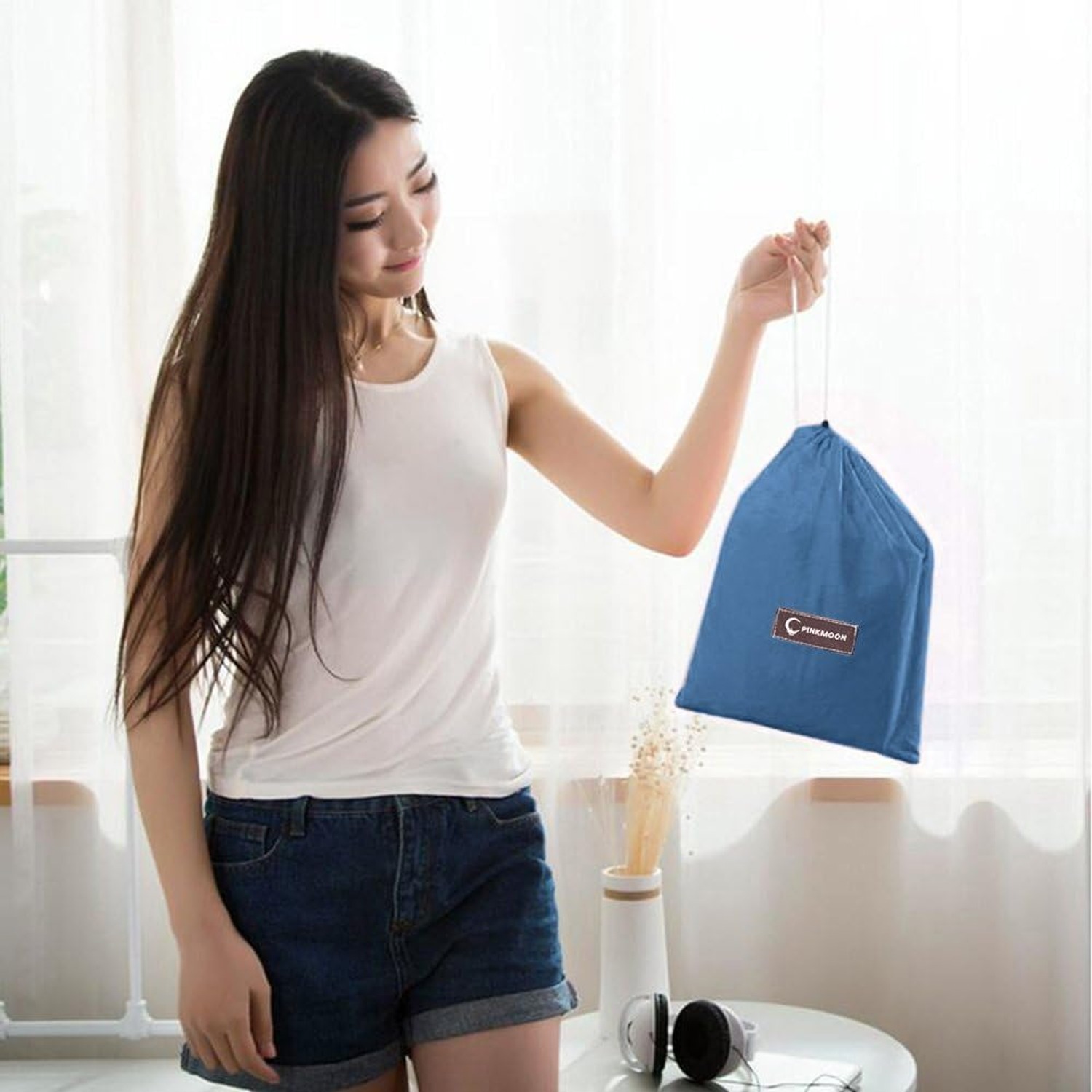
Packs To 20 cmComes with its own carry bag, roughly 20 x 20 cm packed.
Soft Microfibre100% microfibre shell that feels smooth against skin.
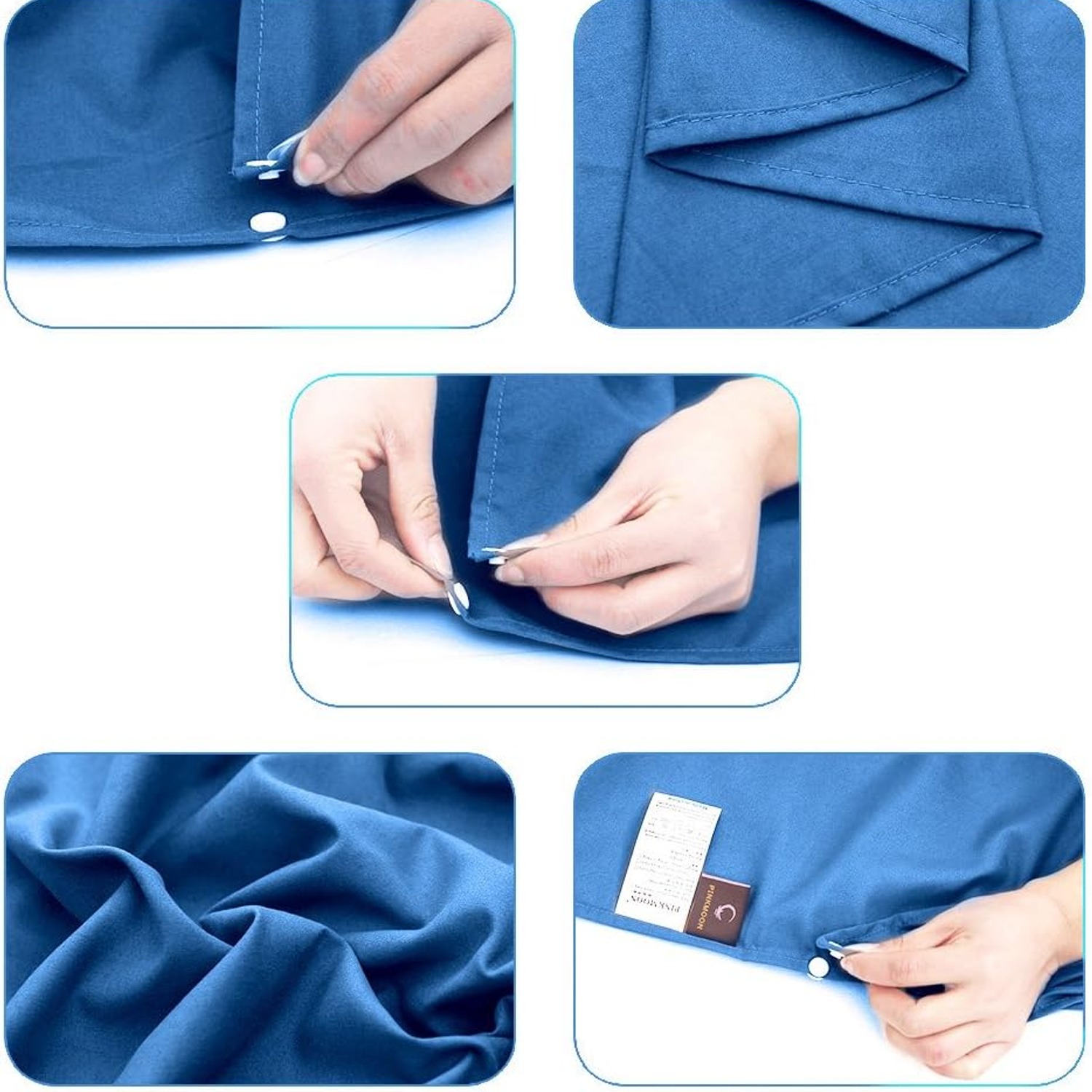
Button ClosureSimple button design you can open or close in seconds.

Pack your own clean bed into a 20 cm bag with a travel sleeping bag that goes wherever you do.

Soft 100% microfibre, a full 210 x 115 cm sleeping surface, a button closure and a matching carry bag, all at just 500 grams.

A 210 x 115 cm microfibre travel sleeping bag that gives you your own clean sleeping surface wherever you stay.

At 500 grams it adds almost nothing to a daypack, carry-on or rucksack.

The included carry bag packs it down to roughly 20 x 20 cm, so it slots into a side pocket.

Soft 100% microfibre fabric that stays smooth wash after wash and does not discolour easily.

Works as a standalone summer sleeping bag or as a liner inside a heavier bag on cooler nights.

Queta Lightweight Microfibre Travel Sleeping Bag with Carry Bag

There is a particular kind of hesitation that hits when you pull back the covers in an unfamiliar room. Maybe it is a hostel bunk, a bus-station guesthouse, a relative's spare couch or a tent you borrowed from a friend. The bedding might be perfectly fine. It might not be. A travel sleeping bag removes the guesswork, because the only fabric touching you is fabric you packed yourself.

Queta Lightweight Microfibre Travel Sleeping Bag with Carry Bag

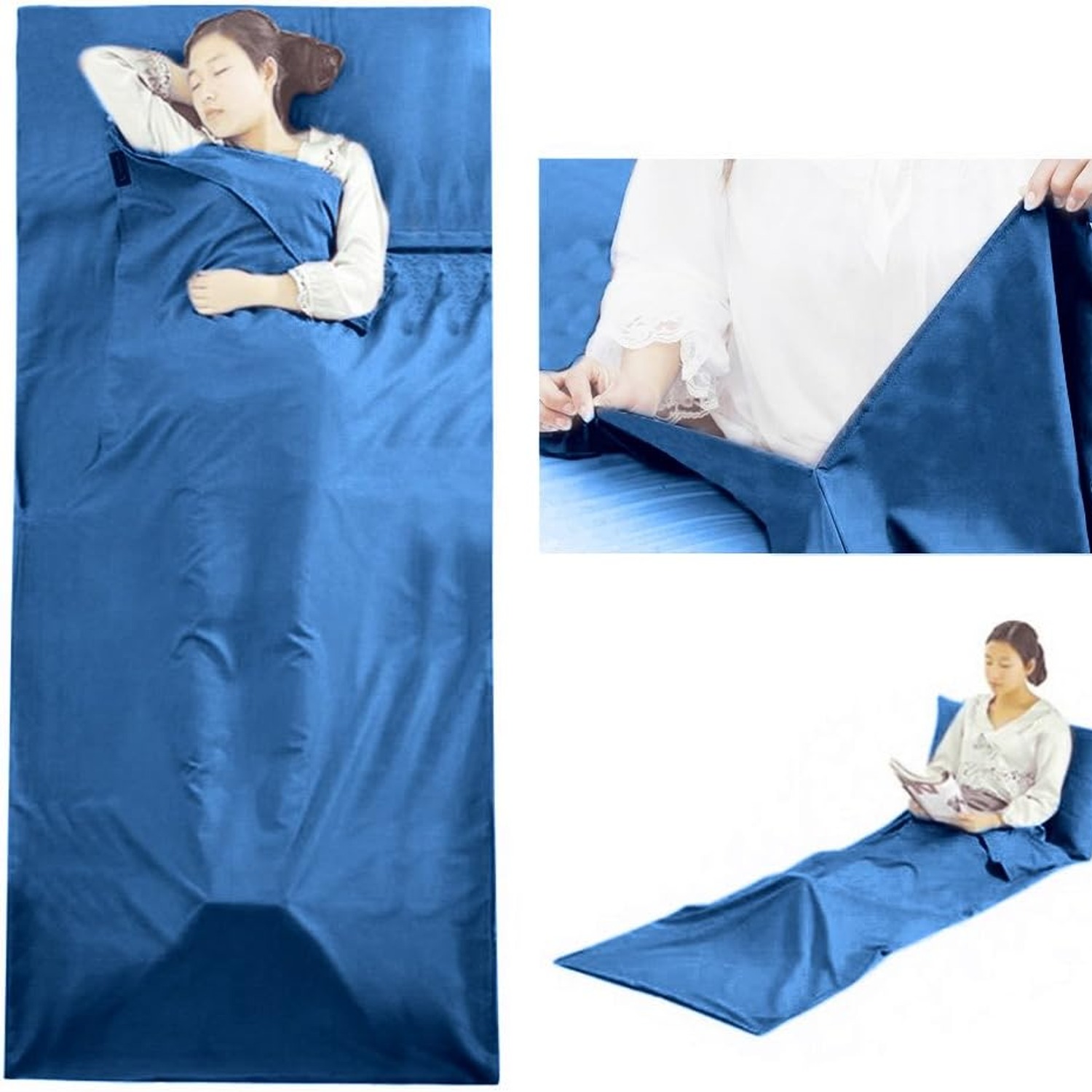
This one is built from 100% microfibre and measures 210 by 115 centimetres opened out, which is a generous rectangle rather than a narrow mummy shape. That matters more than people expect. Rectangular bags let you bend your knees, roll onto your side and stick a foot out when you get warm. The maximum recommended height is 180 centimetres, so it suits most adults and teenagers comfortably.

Queta Lightweight Microfibre Travel Sleeping Bag with Carry Bag

Weight is where it earns its place in a pack. The whole thing is 500 grams, and the included carry bag brings it down to around 20 by 20 centimetres. That is small enough to live permanently in a backpack side pocket or a carry-on, which is really the point. A lightweight sleeping bag you leave at home because it is bulky does not help anyone.

Queta Lightweight Microfibre Travel Sleeping Bag with Carry Bag

The construction uses a zipper closure along with a button design that makes opening and closing quick and fuss free. Fill material is polyester and the shell is microfibre, a combination chosen for softness and for washing well. The colour is Mysterious Blue. If you want a sleeping bag liner rather than a standalone bag, this slides inside a bulkier winter bag and adds a clean layer plus a little extra warmth.

Queta Lightweight Microfibre Travel Sleeping Bag with Carry Bag

Where it fits best is warm-weather travel, hostels, hotels you are unsure about, train journeys, festivals, backpacking in mild conditions and as a spare for guests at home. For genuinely cold nights you would pair it with a heavier bag or an insulated sleeping mat. Used that way, it is one of the most useful 500 grams you can carry.

Not sure yet? That is fine.

Camping gear has to suit your trip and your climate, and you cannot always judge that from a photograph. If it is not right for you, send it back within 14 days of delivery in resaleable condition and we refund the price you paid, including standard delivery. That is a voluntary policy we offer on top of your legal rights.

If it turns up faulty, damaged or not as described, that is on us. The consumer protection law of your province or territory covers you, and we pay the return postage. Read the full detail on our refunds and returns page, or ask us anything before you order.

Frequently Asked Questions

What exactly is a travel sleeping bag?

It is a lightweight, packable sleeping bag designed for carrying rather than for extreme cold. This one is made from microfibre, weighs 500 grams and folds into a carry bag about 20 by 20 centimetres. The idea is that you always have your own clean sleeping surface with you.

How big is it when opened out?

The bag measures 210 by 115 centimetres. That is a rectangular shape rather than a tapered mummy cut, so there is room to move your legs and change position during the night.

How small does it pack down?

It packs into the included carry bag at roughly 20 by 20 centimetres. That fits in a daypack pocket, a carry-on or the top of a rucksack without eating much space.

How much does it weigh?

500 grams. For anyone counting pack weight, that is light enough that it rarely gets left behind, which is really the test of a good lightweight sleeping bag.

What is it made from?

The shell is 100% microfibre and the fill material is listed as polyester. Microfibre is a fine synthetic fabric chosen here for softness and for holding colour well through repeated washing.

Is microfibre comfortable against bare skin?

Yes, microfibre is smooth and fine-textured, which is why it is used for sheets and travel liners. It feels closer to a soft bed sheet than to the crinkly nylon some campers associate with sleeping bags.

What colour is it?

It comes in Mysterious Blue. A mid-tone colour is practical for travel, since it hides the marks that come with hostel floors and tent vestibules better than a pale shade.

Can I use it as a sleeping bag liner?

Yes, that is one of its main uses. Slide it inside a bulkier winter bag and you get a clean layer next to your skin plus a small amount of added warmth, and you only have to wash the liner rather than the whole bag.

Is this warm enough for winter camping?

On its own, no. Treat it as a summer sleeping bag or a liner. For cold nights, pair it with an insulated outer bag and a sleeping mat, because most heat loss happens through the ground rather than the air.

What temperature range suits it best?

It is best suited to mild and warm conditions, indoors or in sheltered camping. The supplier record lists a seasonal and temperature claim that we cannot independently verify, so we would rather you plan around it as a warm-weather and liner product.

Who is the height limit for?

The maximum recommended height is 180 centimetres. Taller sleepers can still use it, but the fit will be snug at the shoulders and feet, and a liner role may suit better than a standalone bag.

Is it suitable for kids and teenagers?

The age range description is youth, and the dimensions work well for children and teens. For younger kids the extra width means they can wriggle without feeling trapped, which usually makes for a better night.

How does it close?

It uses a zipper closure, and there is also a button design on the bag. The buttons are quick to work in the dark, which is handy when you are getting in and out of a bunk at odd hours.

Can two people use it?

The supplier record lists a two-person occupancy figure, though at 115 centimetres wide it is realistically a roomy single. Two adults would find it very tight. Two children sharing in a tent is more plausible.

Can it be opened out flat as a blanket?

With the zip fully open a rectangular bag like this lies out as a large covering. That makes it useful on a train, a long-haul flight or a sofa where you do not want to be zipped in.

Is it good for hostels?

This is one of the most common reasons people buy a travel sleeping bag. You get your own sheet layer regardless of what the bunk provides, and some hostels specifically prefer guests to bring their own.

Will it work on flights and overnight buses?

Yes. It packs small enough to go in a carry-on and opens out as a blanket or a full bag depending on how cold the cabin gets. It is a lot more pleasant than a thin airline throw.

Can I use it for festivals?

It is a good festival option because it is cheap to replace, light to carry across a field and easy to wash afterwards. For a cold overnight festival, bring an insulated mat as well.

Is it waterproof?

No. Microfibre is a fabric shell, not a waterproof layer. Keep it inside a tent or dry bag in wet conditions, since a damp sleeping bag of any kind loses comfort fast.

How do I wash it?

Machine wash cold or warm on a gentle cycle with mild detergent. Skip bleach and fabric softener, since softener coats microfibre and makes it less soft over time rather than more.

Can I tumble dry it?

Tumble dry on low, or line dry in the shade. Make sure it is bone dry before you roll it into the carry bag, because storing any sleeping bag slightly damp leads to musty smells.

Should I store it compressed?

Use the carry bag for travel, but at home store it loose in a cupboard or under a bed. Long-term compression is hard on any fill material, and loose storage keeps the loft and softness.

Does the colour run in the wash?

Microfibre generally holds its colour well. As a precaution, wash it on its own the first time, then with similar colours after that.

Does the carry bag come included?

Yes, a matching carry bag is included. It is roughly 20 by 20 centimetres when the sleeping bag is packed inside.

How do I get it back into the carry bag?

Roll rather than fold, pressing the air out as you go, then feed it in from one end. If it feels tight, unroll and start again with a tighter roll instead of forcing the fabric.

Is this a good gift?

It makes a practical gift for a student heading overseas, a first-time backpacker or anyone who hosts guests. It is compact enough to post and useful enough that it actually gets used.

Can I use it at home for guests?

Absolutely. Keep one in a cupboard and you have an instant extra bed layer for a sofa or a camp bed, with no spare duvet to store the rest of the year.

Does it have a hood?

It is a rectangular bag rather than a hooded mummy bag. If you want head warmth on a cool night, a beanie does the job and weighs almost nothing.

What is delivery and returns like?

Orders ship from our fulfilment partner and you will get tracking once it leaves the warehouse. Unused items in their original packaging can be returned within the published returns window listed at checkout.

What if it is not right for me?

Try it unused first, check the 210 by 115 centimetre footprint against your height and your pack space, and if it does not suit, start a return within the stated window with the carry bag included. If something arrives damaged or faulty, contact us with a photo and we will sort out a replacement or refund.

How to Choose a Lightweight Travel Sleeping Bag

6 min read Camping Company

The problem with other people's bedding

Travel throws you into a lot of beds you did not choose. A hostel bunk in a city you landed in at midnight. A guesthouse where the linen smells faintly of someone else's laundry powder. A friend's couch with a blanket that has clearly lived a full life. None of it is necessarily dirty. It just is not yours, and that small uncertainty is enough to keep some people awake.

A lightweight travel sleeping bag fixes this in the simplest way possible. You bring your own fabric. Whatever the bed situation turns out to be, the layer against your skin is one you packed, washed and know.

That is the main job. The second job is being light and small enough that you actually carry it. Plenty of people own a sleeping bag that is technically excellent and permanently in the garage, because hauling it means repacking everything else. A 500 gram bag that compresses to roughly 20 by 20 centimetres does not force that decision. It lives in a side pocket and you stop thinking about it.

How a microfibre travel bag works

This bag is made from 100% microfibre with a polyester fill material. Microfibre is a very fine synthetic yarn, which is why it feels smooth rather than slick or scratchy. It is the same family of fabric used for travel sheets and hotel-style bedding, and it washes repeatedly without going rough.

Opened out, the bag measures 210 by 115 centimetres. That is a rectangle, not a tapered mummy shape, and the difference is bigger than the spec sheet suggests. Mummy bags trap warmth efficiently but they also pin you in one position. A rectangular cut lets you bend a knee, roll over, or push a leg out when you get too warm. For warm-weather travel, that freedom matters more than squeezing out the last degree of insulation.

Closure is by zipper, and there is also a button design on the bag for quick opening and closing. In practice, the zip does the main work and the buttons are useful when you are half asleep in a dark dorm and do not want to fumble.

Because the bag is thin, it does two jobs rather than one. On its own, it is a summer sleeping bag or a clean sheet layer. Inside a heavier winter bag, it becomes a sleeping bag liner that adds a bit of warmth and keeps the expensive outer bag clean. Washing a 500 gram liner is a lot easier than washing a down bag.

Who this suits

Backpackers and hostel travellers get the most obvious benefit. Many hostels are fine, some are not, and a few prefer guests to bring their own bedding anyway. Carrying your own removes the lottery.

Warm-weather campers do well with it too. In a mild summer, a thick bag is overkill and you end up sleeping on top of it. A thin microfibre bag plus a decent sleeping mat is often more comfortable, because the mat is doing the real insulating work against the ground.

It also suits people who travel long distances by train, bus or plane. Opened flat, it covers you properly, which is more than you can say for most cabin blankets.

Families find a use for it at home as well. Keep one in a cupboard and you have an instant extra bed layer when someone stays over, without storing a full spare duvet all year.

Who it does not suit: anyone planning genuine cold-weather camping with this as their only bag. The supplier record carries a cold-season claim we cannot independently verify, so plan around warm conditions or use it as a liner alongside proper insulation. Very tall sleepers should also note the 180 centimetre maximum recommended height. Above that, it works better as a liner than as a standalone bag.

How to choose between options

Start with weight and packed size. These are the numbers that decide whether the bag travels with you or stays home. 500 grams and a 20 centimetre packed bundle sits firmly in the "forget it is there" category. If you are comparing products, check both figures, because some bags are light but bulky and others compress well but weigh more.

Then look at shape. Rectangular bags give room to move and double as blankets. Mummy bags are warmer for the weight but restrictive. For travel rather than mountaineering, rectangular usually wins.

Check the fabric against your skin preference. Microfibre is soft and quiet. Cotton liners breathe well but are heavier and slower to dry. Silk is lightest but costs more and needs careful washing. For mixed travel where things get damp and washed in hotel sinks, microfibre is a practical middle ground.

Think about how you will actually use it. If the plan is hostels and hotels, you want something that opens flat and goes in a washing machine. If the plan is backpacking in shoulder season, you want something that layers inside a warmer bag. This one does both, which is why it ends up in a lot of packs.

Do not forget the mat. This comes up constantly with new campers. Most of the cold you feel at night comes up from the ground, not down from the air. A thin bag over a good insulated mat beats a thick bag on bare ground almost every time.

Looking after it

Washing is simple. Cold or warm machine wash on a gentle cycle with a mild detergent. Wash it separately the first time, then with similar colours after that. Skip the bleach. Skip the fabric softener too, which sounds counterintuitive, but softener leaves a residue on fine synthetic fibres and makes them feel less soft over time.

Dry on a low tumble setting or hang it in the shade. Direct sun for hours is unnecessary and hard on any coloured fabric. The important part is making sure it is completely dry before you pack it. A sleeping bag rolled away even slightly damp develops a smell you will remember, and getting it out again is a chore.

For packing, roll rather than fold. Press the air out as you roll and feed it into the carry bag from one end. If it will not go in, unroll and roll tighter rather than forcing fabric through the opening.

At home, store it loose. Use the carry bag for travel only. Any fill material is happier uncompressed between trips, and the bag keeps its softness longer.

A few honest limitations

It is not waterproof. Microfibre is fabric, not a membrane, so keep it inside a tent or a dry bag when the weather turns.

It has no hood. For a cool night, a beanie solves this and weighs nothing.

The two-person occupancy figure in the supplier record is optimistic at 115 centimetres wide. Two adults would be uncomfortable. Two kids sharing in a tent is more realistic.

And it is a warm-conditions product. Used honestly within that range, it performs well. Used as a winter bag, it will disappoint.

The short version

If you want one piece of gear that makes unfamiliar beds less of a gamble, this is a good candidate. It is 500 grams, packs to about 20 by 20 centimetres, opens to a roomy 210 by 115 centimetre rectangle and is made from soft 100% microfibre. It works as a standalone summer sleeping bag, as a hostel sheet, as a travel blanket and as a liner inside something warmer.

It will not keep you warm on a frozen mountainside, and it is not trying to. What it does is make the light, frequent, slightly unpredictable parts of travel more comfortable, for very little weight and very little space. For most travellers, that is the trade worth making.

Browse the shop

Ready to pack your own bed?

Add the travel sleeping bag to your order and you will never have to wonder about hostel sheets again.

Ask us a question

Page summary

The Queta lightweight travel sleeping bag is a 210 x 115 cm rectangular bag made from 100% microfibre with a polyester fill material. It weighs 500 grams and comes with a carry bag that packs it to roughly 20 x 20 cm. Closure is by zipper and it also features a button design. The colour is Mysterious Blue and the maximum recommended user height is 180 cm. The supplier record lists it as suitable for camping and outdoors, with a youth age-range description and a two-person occupancy figure. It is commonly used as a standalone warm-weather sleeping bag, a hostel or hotel sheet, or a liner inside a heavier bag. Country of origin is not specified in this record.