
The complete guide
How To Choose A Pop Up Beach Tent That Actually Survives Summer
The problem with a beach day in full sun
Most people underestimate how long they will be out. You plan two hours, you stay five. An umbrella covers one person if the sun stays still, which it does not. By mid afternoon the shade has crept three metres away, somebody has pink shoulders, and the group is packing up early for the wrong reason.
A proper sun shelter changes the maths. Instead of chasing a narrow patch of shadow, you get a room. People can sit up, eat, change a baby, nap, or hide from the glare for twenty minutes and then go back in the water. The day stretches out instead of getting cut short.
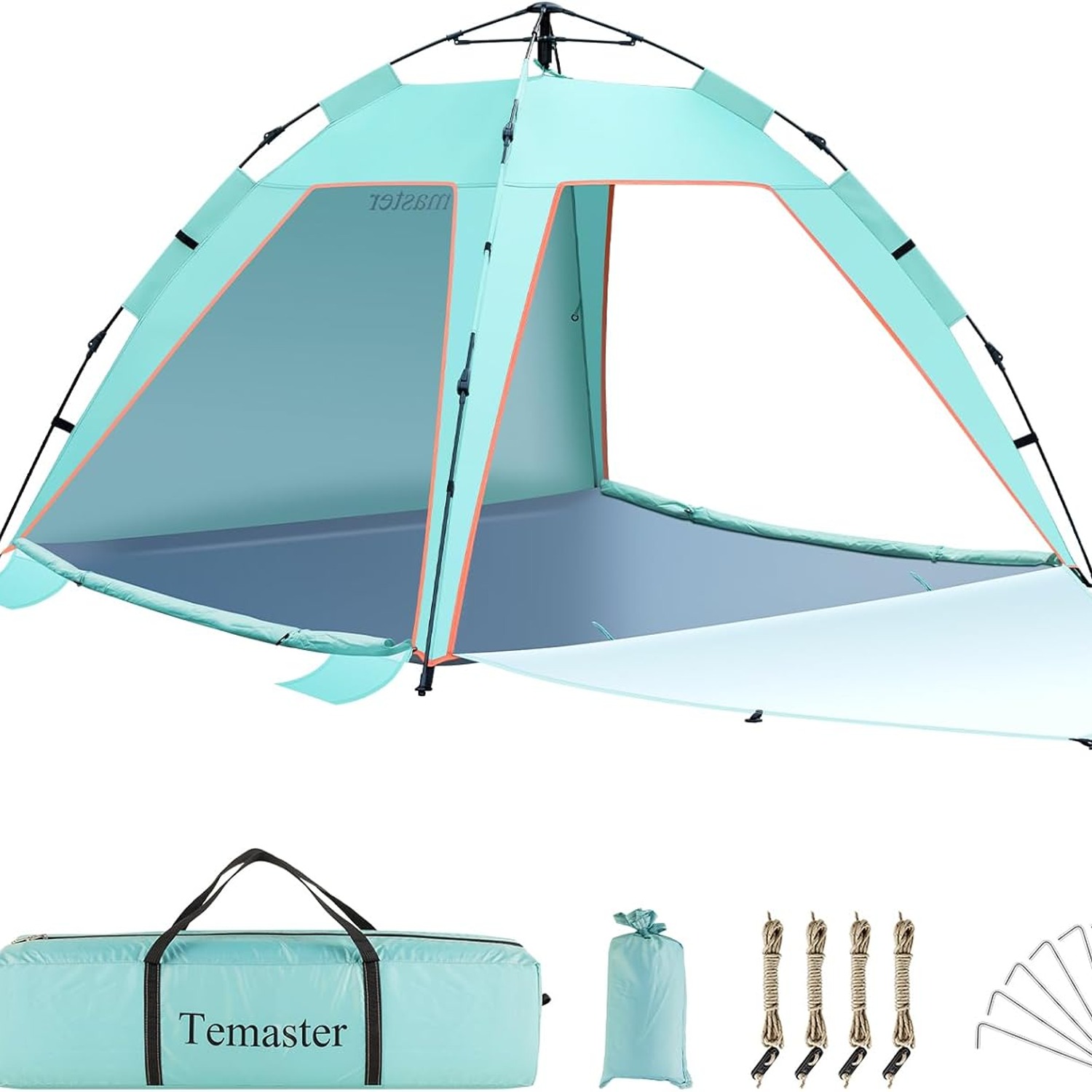
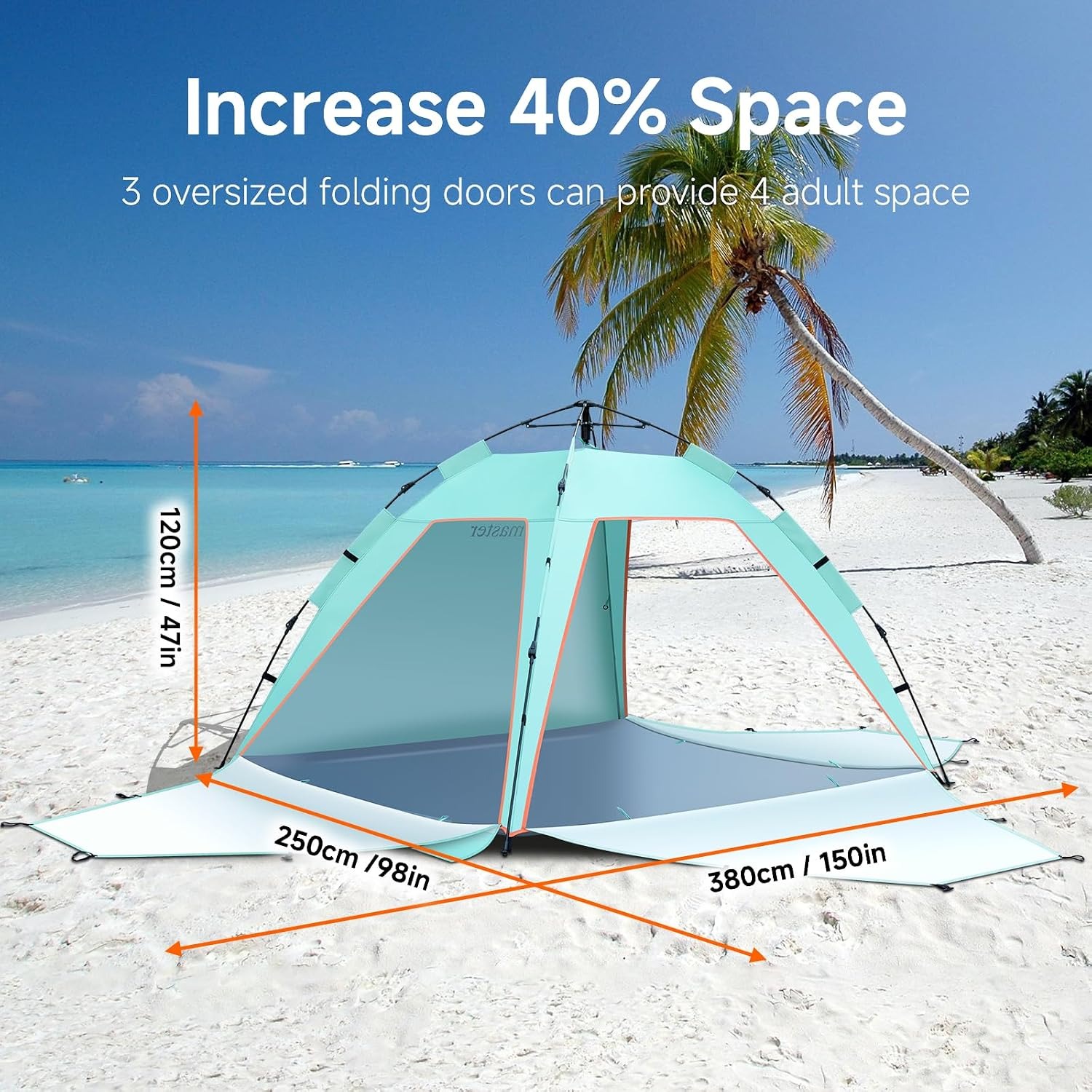
That is what this Temaster shelter is for. It opens to 190 cm long, 170 cm wide and 120 cm high, which is enough for four to five adults to sit under. The polyester canopy is rated UPF 50+, which is the top rating given to sun protective fabric. That combination of floor space plus real UV blocking is what separates a shade tent from a decorative canopy.
How an automatic frame works
Older beach tents came in two flavours. One was the pole tent, where you threaded fibreglass rods through sleeves while the wind tried to take the canopy out to sea. The other was the spring steel pop up, which opened fast but then turned folding into a wrestling match.
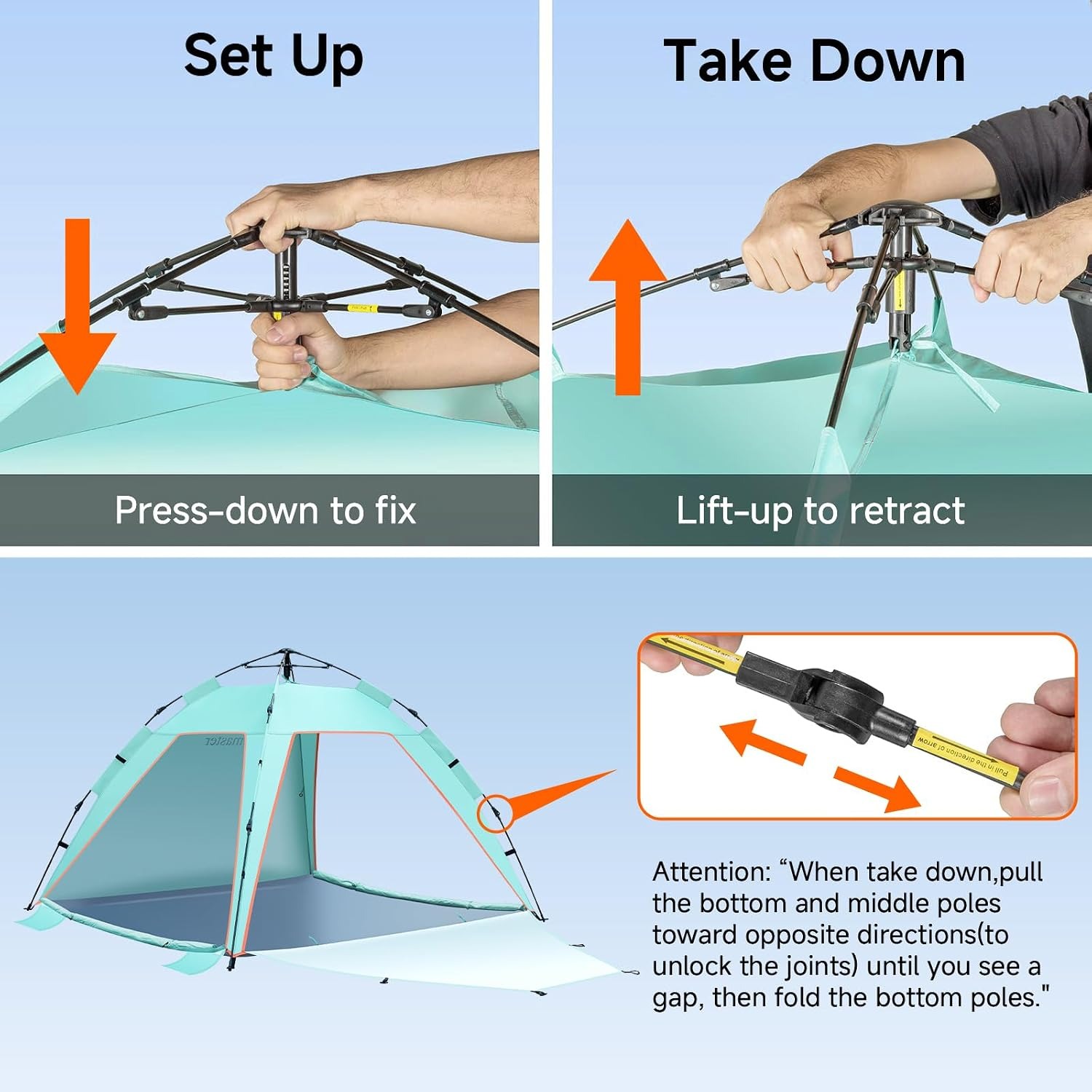
The hydraulic automatic frame used here sits in a different category. The fibreglass poles stay connected and held under tension inside the folded shelter. Release the catch and the frame pushes itself into shape. There is nothing to thread, nothing to clip and no assembly required at all.
The practical effect is that one person can handle it. You walk down to the sand, pick your spot, release the tent and it stands up. That is the whole reason people search for the best automatic beach tent rather than just any shelter. The setup time is not the real benefit. The real benefit is that you will actually bother to bring it.
Fibreglass is the right material for this job because it bends and springs back. Aluminum holds a shape but takes a permanent kink if you lean on it wrong. Fibreglass flexes under a gust and returns. It does have one weakness, which is impact. Dropping the folded frame on concrete or treading on a pole is the main way these shelters get damaged, so handle it with a bit of care in transit.
Reading the UV rating properly
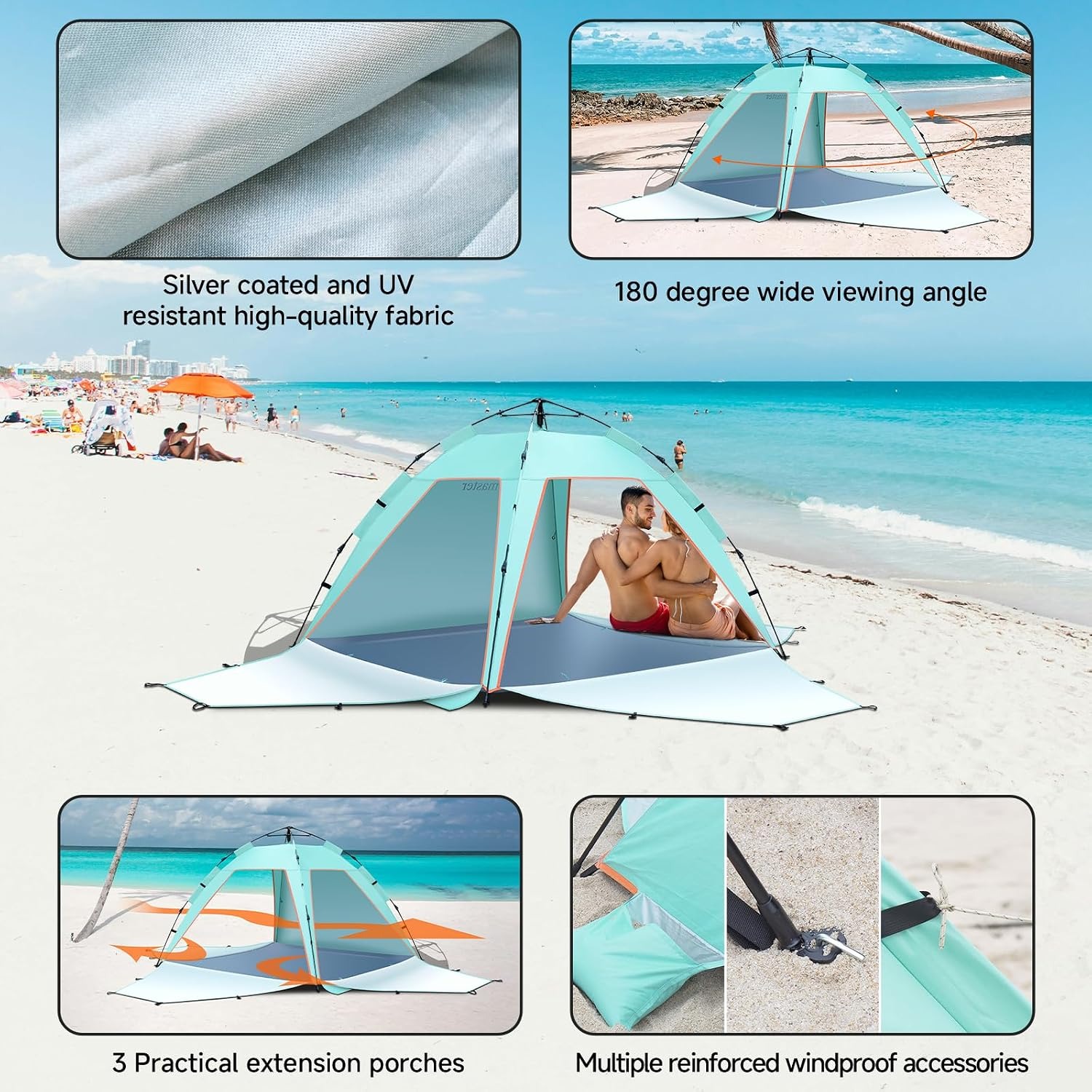
UPF 50+ means the fabric lets through less than one fiftieth of the ultraviolet radiation hitting it. That is a meaningful number, and it is the single spec worth checking before you buy anything sold as a sun shelter. Plenty of cheap canopies are just thin fabric with no rating at all, and they give you shade from the brightness without much protection from the burn.
Two things to keep in mind, though. First, UV reflects. Sand bounces a surprising amount of ultraviolet back up at you, and water bounces even more. A shelter cuts your exposure a lot but it does not reduce it to zero, so sunscreen still belongs in the bag. Second, heat and UV are not the same thing. The canopy blocks radiation, but on a 35 degree day the air under any enclosed shelter gets warm. Airflow is how you deal with that, which brings us to the doors.
Why the three porch doors matter
This design has three expandable porch doors instead of a single opening. It sounds like a minor feature until you use it.
With all three doors open, air moves through the shelter instead of sitting in it. On a still afternoon that is the difference between comfortable and stifling. You also get a view out in three directions, which matters if you are watching kids in the water from inside the shade.
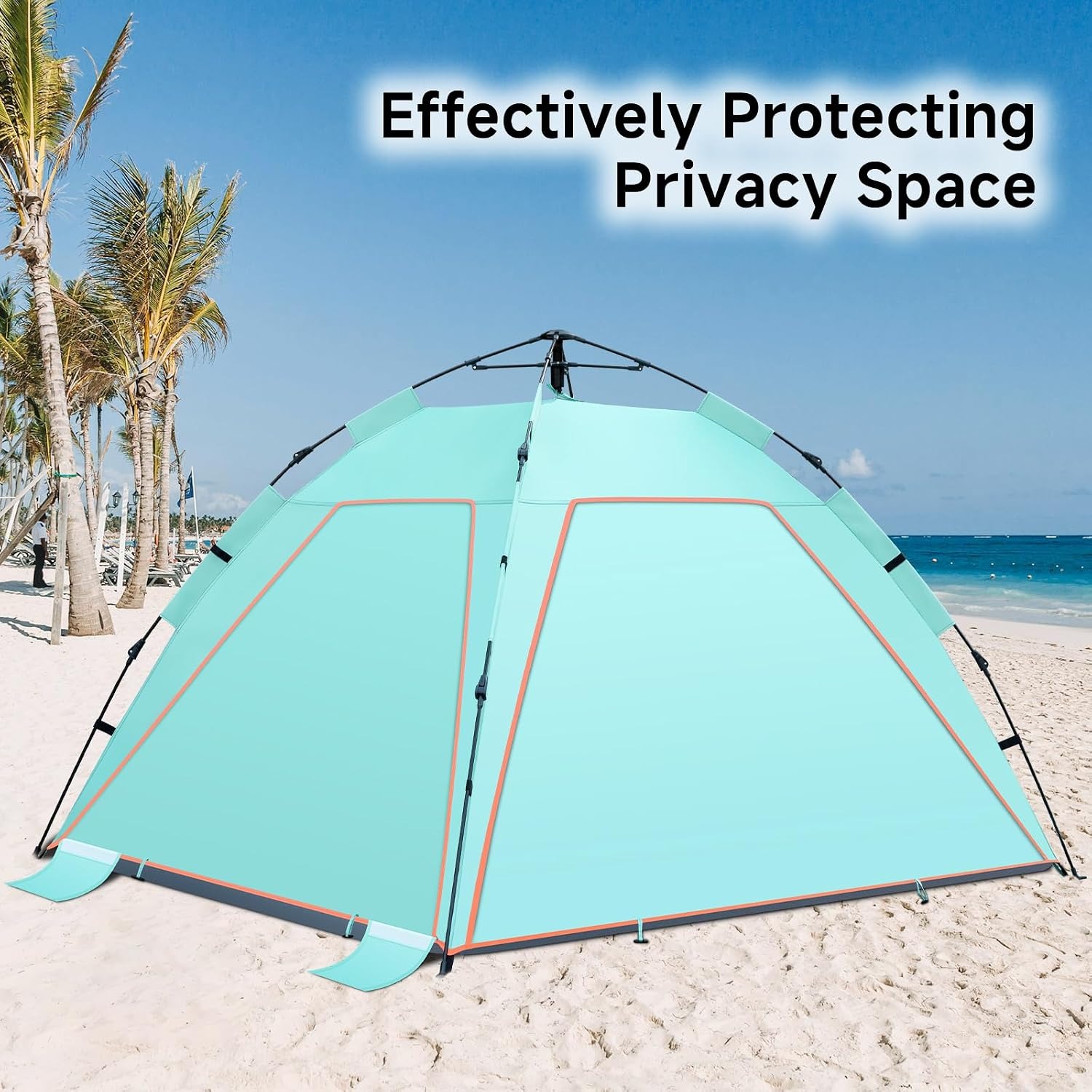
With all three closed, you have a private enclosure. That is useful for getting changed, for a toddler who needs a nap away from stimulation, or for keeping blown sand off food. Being able to switch between those two states in seconds is more flexible than a tent with one fixed door.
If ventilation is your priority, this is worth weighing up against simpler designs. A lot of people hunting for the best ventilated beach tent end up buying something with a single opening and then wondering why it feels like an oven by noon.
Who this suits and who it does not
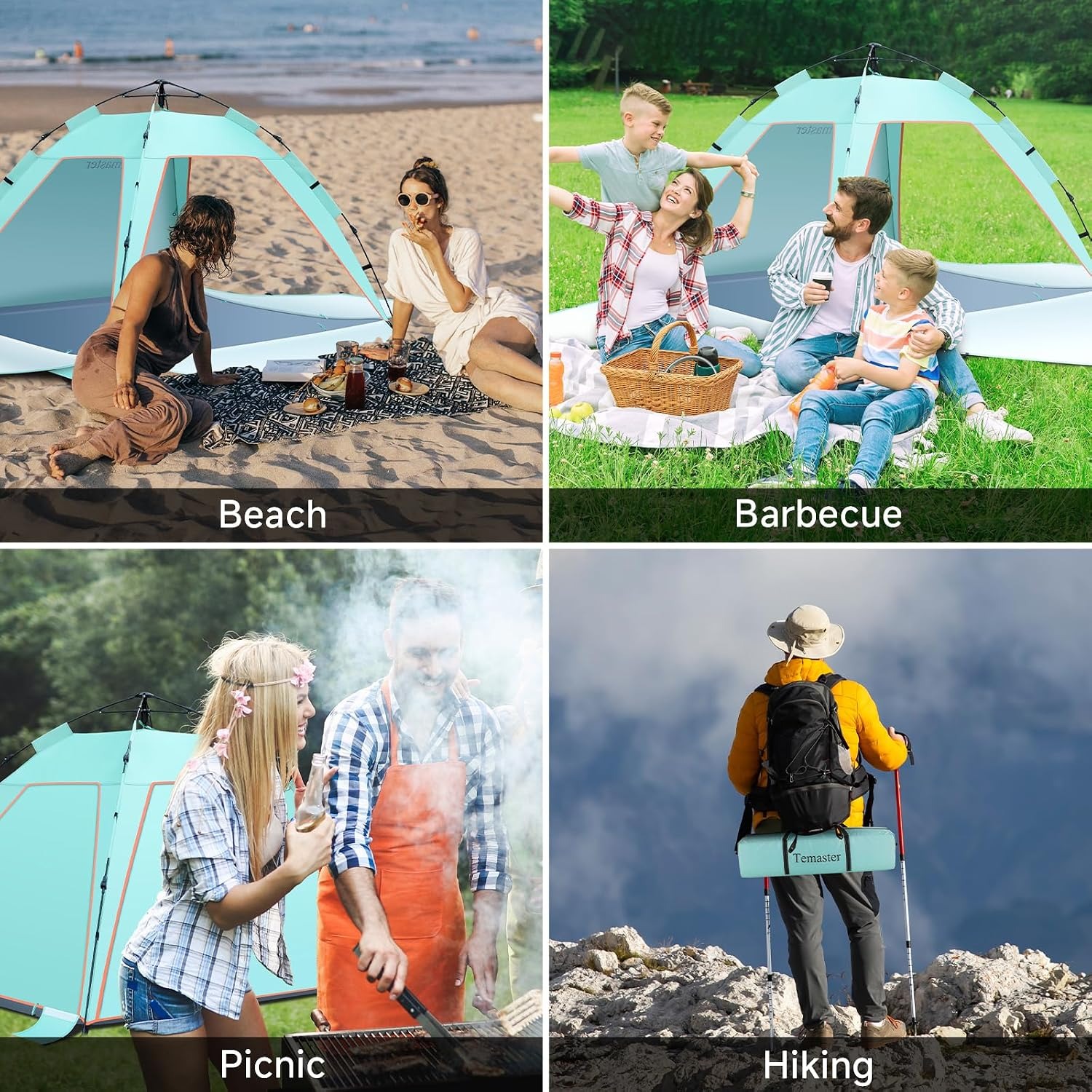
It suits families with young children, groups of friends who stay at the beach most of the day, anyone with fair skin who needs real shade, and people who go to sports carnivals, parks and picnics where there is no natural cover. At 190 x 170 cm it is big enough to be a genuine base camp rather than a personal sun hat.
It does not suit campers. The water resistance level is listed as not water resistant, and it is recommended for beach and day use. This is a sun and wind shelter, not a weatherproof tent. If rain comes in, pack it down and move the party rather than trying to shelter under it.
It also will not replace a wind break in genuinely rough conditions. It has four guylines and reinforced wind strips, which handle a normal sea breeze well. A strong onshore blow is a different situation, and no lightweight shelter is a good idea in that weather.
How to anchor it so it stays put
This is where most beach shelters fail, and it has nothing to do with quality. People open the tent, admire it, and walk off without anchoring anything.
Dry sand gives pegs almost nothing to grip. The reliable method is weight plus angle. Run each of the four guylines out away from the tent at a low angle and anchor them, then bury the lower edges of the shelter under a shovel of sand so wind cannot get under the floor. Put weight inside too, which can be as simple as the esky, a packed bag or a couple of shoes in each corner.
Point the closed side of the shelter into the prevailing wind and open the doors on the sheltered side. A tent with a wide opening facing the breeze turns into a sail, and that is how shelters end up tumbling down the beach.
Looking after it
Sand and salt are the two things that shorten a beach tent's life. Sand works into zips, hinges and stitching, and salt dries out fabric coatings.
The routine is simple. Shake everything out before you fold it. If it has been near spray, rinse the fabric with fresh water and let it dry fully in the shade before it goes in the bag. Never pack it damp, because that is how mildew gets into the seams.
For cleaning, a damp cloth with mild soap is enough. Skip the washing machine, the dryer, bleach and the iron. The coating on the fabric does the UV work, and aggressive washing strips it.
Store it loosely in a dry place rather than crushed under heavy gear. Fibreglass poles hold their shape better when they are not compressed for months at a time.
Getting the fold right
Folding is the only skill involved in owning an automatic shelter, and it takes a couple of goes. Lay the tent flat with the doors open so no air is trapped. Let the frame find its natural curve rather than forcing it. Twist in the direction the poles want to go, and the loops will collapse into each other.
If it fights you, stop and reset rather than pushing harder. Forcing a fibreglass loop the wrong way is one of the few ways to actually break one of these frames. Practise once in the backyard before the first beach trip and you will never think about it again.
The short version
If you want shade you will actually carry to the beach, an automatic frame is the feature that matters most. This one opens itself, covers 190 by 170 cm with 120 cm of headroom, and uses a UPF 50+ polyester canopy on fibreglass poles. Three porch doors let you choose breeze or privacy, and four guylines plus wind strips hold it steady in a normal sea breeze.
Just be clear on what it is. A day shelter from sun and wind, not a rain tent and not a camping tent. Used that way, it is one of the cheapest upgrades to a summer you can make.