
Camping Company
Company
Shop By Category
T&Cs
Shop Online
  • Clear materials and product specifications
  • Free tracked Canada-wide delivery over C$150
  • 14-day returns

Heavy Duty Tent Pegs | Steel Tent Stakes | Camping Ground Pegs

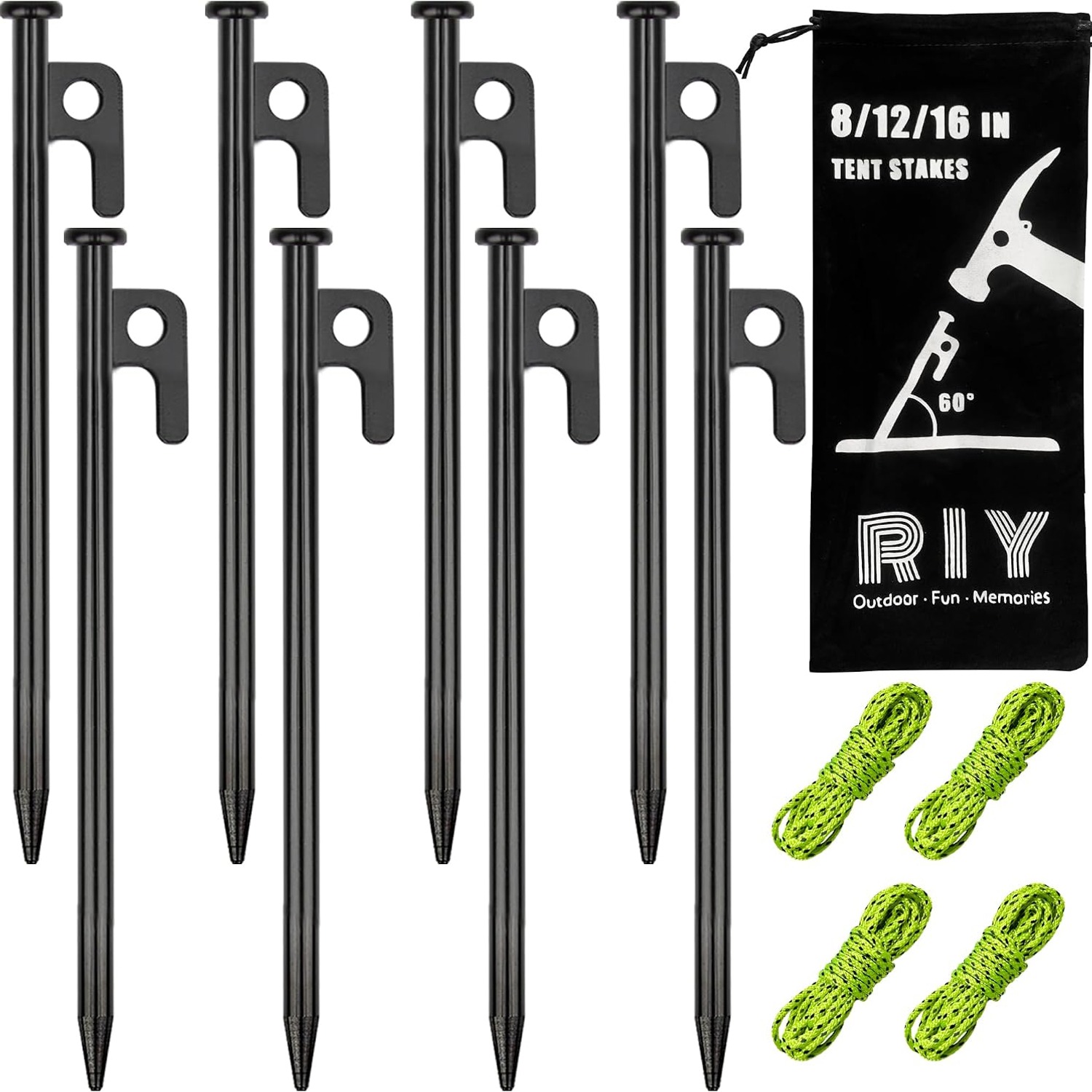
Heavy Duty Forged Steel Tent Pegs (8 Pack)

C$73.99 C$88.99 Save C$15
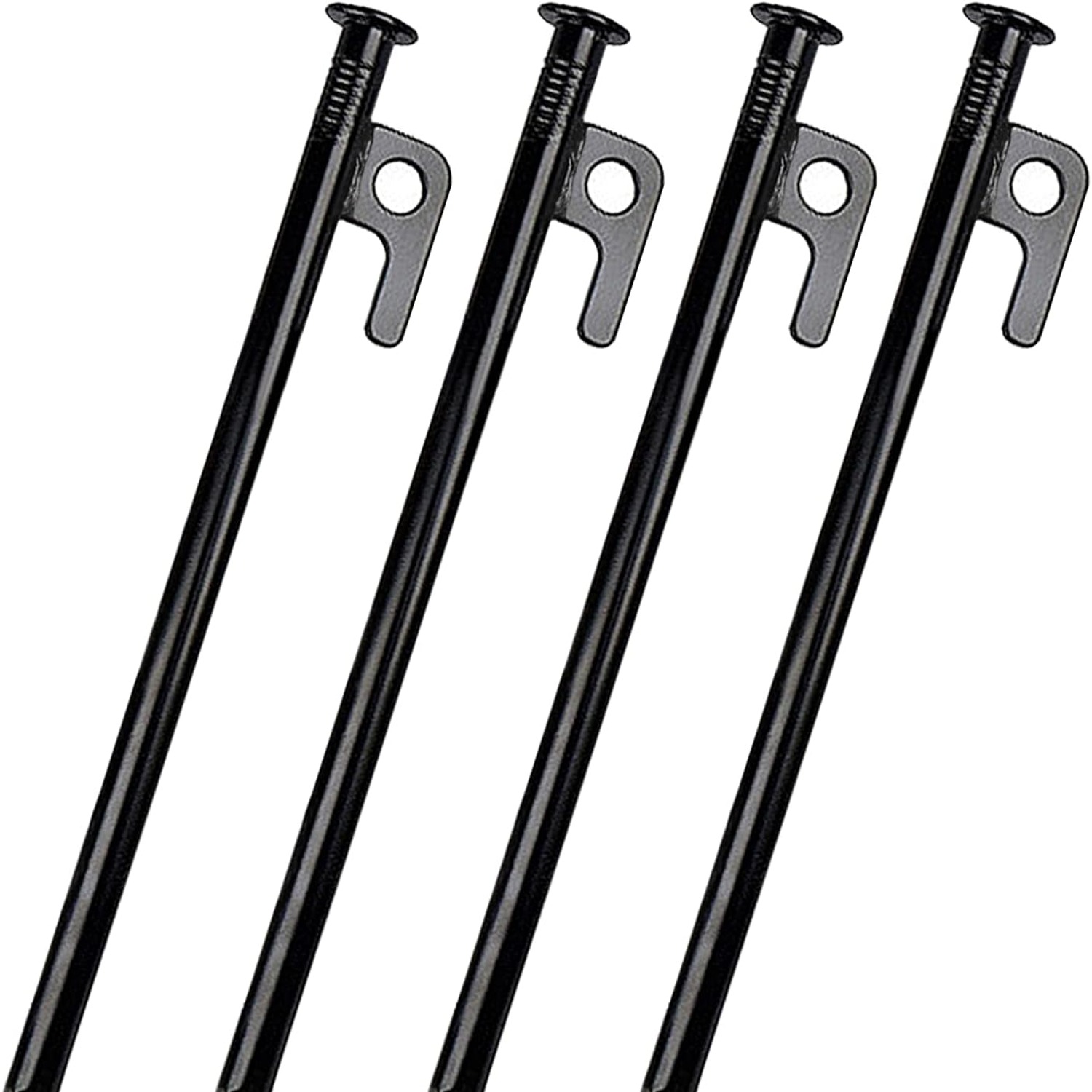
  • Forged Steel Build
  • Sharp Driving Tip
  • Wide Strike Head
  • Set Of Eight

Price: C$73.99 C$88.99

  • Free tracked Canada-wide delivery on orders C$150+, otherwise a flat C$20
  • Pay by card or PayPal, handled by the payment provider
  • 14 days to change your mind, plus your statutory rights
Product specifications
BrandRIY
Model NumberRIY-20cm-DD16
Manufacturer Part NumberRIY-20cm-DD16
MaterialForged steel
ColourBlack
StyleTent stake
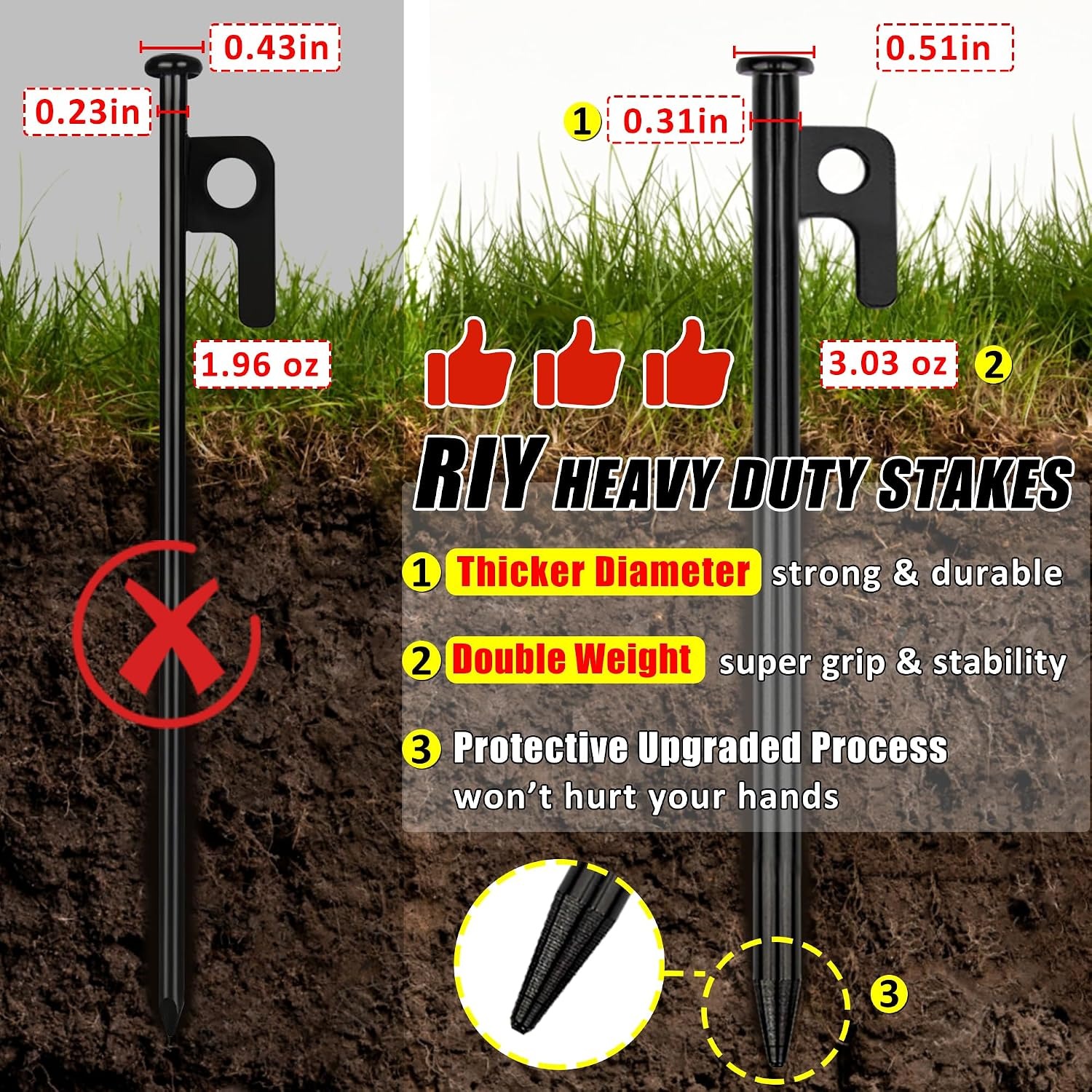
Peg Length20.3 cm (8 inches)
Peg Width1.5 cm
Pieces Per Set8
Set Weight762 g
Special FeaturesHeavy duty
Suggested UsesTent stakes, landscape fabric, plant support
Weight762 g
Shipping & returns

Tracked delivery anywhere in Canada. It is free on orders of C$150 or more, and a flat C$20 below that.

If it is not right for you, send it back within 14 days of delivery in resaleable condition and we refund the price you paid, including standard delivery. That is a voluntary policy we offer on top of your legal rights. You cover the cost of returning it unless the item is faulty.

If it arrives faulty, damaged or not as described, we put it right at no cost to you under the consumer protection law of your province or territory (for example the Ontario Consumer Protection Act, 2002), return postage included.

Shipping details · Refunds and returns

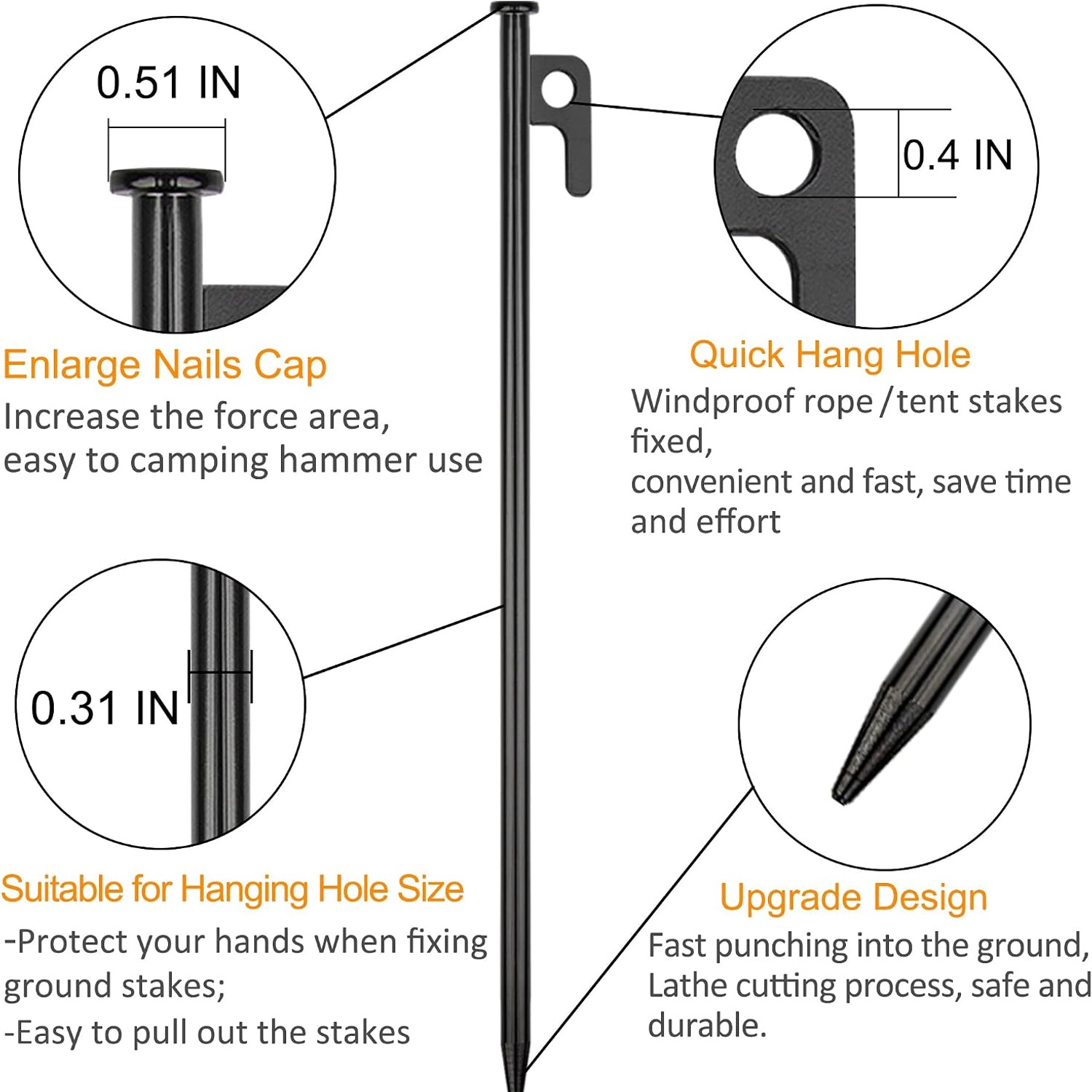
Forged Steel BuildMade from forged steel so they take hammer blows without folding over.
Sharp Driving TipA pointed end helps the peg start cleanly in packed or stony ground.
Wide Strike HeadThe large head gives you a bigger target and a place to hook a line.
Set Of EightEight 20.3 cm pegs, enough for a small tent, tarp or canopy corner set.

Forged steel heavy duty tent pegs that bite into hard ground and keep your shelter where you pitched it.

Eight 20.3 cm forged steel stakes with a wide driving head and a sharp tip, built for rocky, sandy, grassy and frozen ground.

A set of eight forged steel tent pegs built for ground that chews up cheap wire stakes.

Each peg measures 20.3 cm long and 1.5 cm across, with a sharp tip and a broad head for hammering.

The black finish and solid steel body suit repeat trips through dirt, sand, gravel and grass.

Useful well beyond tents, including tarps, canopies, shade sails, garden netting and landscape fabric.

Total set weight is 762 g, light enough for car camping and base camp kit bags.

Heavy Duty Forged Steel Tent Pegs (8 Pack)

Most tents ship with thin wire pegs. They are fine on soft lawn and hopeless everywhere else. The first time you hit a buried stone or try to pitch on a gravel pad, those wire pegs bend into a question mark and you end up tying guy lines to rocks. This set of eight forged steel tent pegs is the fix. Each one is a solid piece of steel, 20.3 cm long and 1.5 cm wide, with a sharp end that starts in hard ground and a head broad enough to take a proper swing from a mallet.

Heavy Duty Forged Steel Tent Pegs (8 Pack)

Forged steel matters here. A forged peg is shaped under pressure rather than simply cut and bent, which is why these handle repeated hammering better than the stamped stakes that come free in a tent bag. The black finish keeps them looking tidy and helps them blend into the ground rather than glaring at you across the campsite. At 762 g for the full set, they are heavier than aluminum pegs, which is exactly the point. Weight and mass are what let a peg drive into packed clay instead of bouncing off it.

Heavy Duty Forged Steel Tent Pegs (8 Pack)

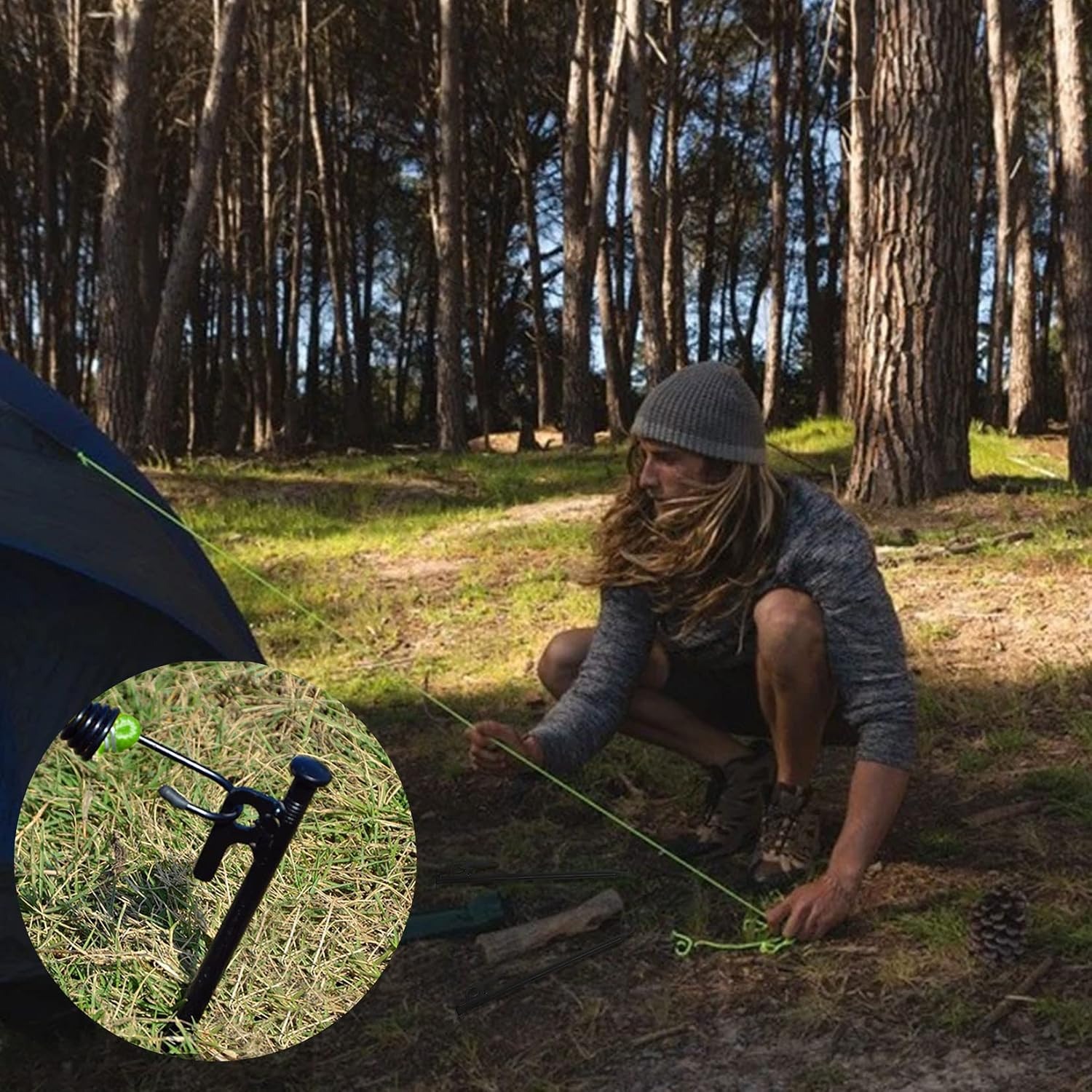
The 20.3 cm length is a sensible middle ground. It is long enough to get real holding power in loose soil and sand, yet short enough that you are not fighting a half metre spike into rocky ground. Drive them at an angle leaning away from the tent, leave the head just proud of the surface, and hook your guy line or peg loop over the top. The wide head gives the line something solid to sit against so it does not slip off in wind.

Heavy Duty Forged Steel Tent Pegs (8 Pack)

These are not tent-only pegs. Campers use them for tarps, tarp ridgelines, canopy legs, gazebo feet and awning guy ropes. At home they hold down landscape fabric, weed matting, garden netting, trampoline anchors, shade sail corners and temporary fencing. If you run a market stall or a sports club tent, a set like this lives permanently in the kit box because the ground at those venues is usually compacted and unkind.

Heavy Duty Forged Steel Tent Pegs (8 Pack)

Eight pegs is a useful quantity rather than a full replacement for every stake you own. Many campers buy a set to cover the four high-load corners and the main guy lines, keeping the original lightweight pegs for low-stress points. Two sets will peg out most family tents end to end. Either way, having real steel on the corners changes how a shelter behaves once the wind picks up at three in the morning.

Not sure yet? That is fine.

Camping gear has to suit your trip and your climate, and you cannot always judge that from a photograph. If it is not right for you, send it back within 14 days of delivery in resaleable condition and we refund the price you paid, including standard delivery. That is a voluntary policy we offer on top of your legal rights.

If it turns up faulty, damaged or not as described, that is on us. The consumer protection law of your province or territory covers you, and we pay the return postage. Read the full detail on our refunds and returns page, or ask us anything before you order.

Frequently Asked Questions

What exactly is in this set?

You get eight forged steel tent pegs in black. Each peg is 20.3 cm long and 1.5 cm wide, and the set weighs 762 g in total. There are no extra accessories listed with the set.

How long is each peg?

Each peg is 20.3 cm long, which is 8 inches. That length suits most tents, tarps and canopies without being so long that it is hard to drive into firm ground.

What are the pegs made from?

They are made from forged steel. Forging shapes the metal under pressure, which is why these cope with hammering better than thin stamped or wire pegs.

Will these bend if I hit a rock?

Solid forged steel is far more resistant to bending than the wire pegs supplied with most tents. No peg is unbreakable, but if you hit an immovable rock, back off and move the peg a few centimetres rather than keep swinging.

Are these the best heavy duty tent pegs for rocky ground?

The combination of a sharp tip, a 1.5 cm wide steel body and a broad strike head is what you want for stony sites. You will still need a mallet or a small hammer. Stones can deflect any peg, so angle your strike and reposition if the tip starts to wander.

Can I push these in by hand?

In soft turf or damp sand you often can, at least partway. On anything firmer you should use a mallet. The wide head is there specifically so you can strike it without the tool slipping.

What should I use to hammer them in?

A rubber or steel camping mallet is ideal. A standard claw hammer works too. Avoid using another peg or a rock, as that can mushroom the head over time.

Do they work in sand?

They hold better than thin pegs because of the extra surface area, but loose dry sand is difficult for any straight peg. Bury them deeper at an angle, or pair them with a sand anchor or a buried stick for the main guy lines.

Will they work in frozen or snowy ground?

Steel pegs are a common choice in cold conditions because they can be driven into frozen crust. In deep soft snow, a straight peg has little to grip, so use a deadman anchor method instead.

How many tents will eight pegs cover?

Eight will peg out a small one or two person tent, or cover the four corners plus four main guy lines of a larger tent. For a big family tent you will likely want two sets.

Can I use these as canopy or gazebo pegs?

Yes. They are a popular upgrade for pop up canopies and gazebos, which usually come with very light pegs. Run a line from each leg to a peg driven at an angle away from the frame.

Are they suitable for landscape fabric?

The listing names landscape fabric as a recommended use. Drive them through the fabric with the head sitting flat so the material cannot lift at the edges.

Can I use them for garden plant support?

Plant support is one of the listed uses. They work well as anchor points for ties, netting hoops, small trellis frames and temporary wind protection.

Do they rust?

Steel pegs can develop surface marks over time, especially if they are packed away wet or used near the coast. Wiping them dry before storage is the simplest way to keep them in good shape. No specific coating detail beyond the black finish is given in this record.

What colour are they?

Black. A dark finish is less obtrusive around a campsite than bright metal, though it also means they are easier to lose in long grass, so count them in as you pack.

Are they heavy for hiking?

At 762 g for eight, they are better suited to car camping, base camps, events and backyard use. Hikers counting grams usually prefer aluminum or titanium pegs and keep steel for vehicle based trips.

Can I leave them in the ground long term?

For seasonal jobs like holding down weed matting or netting, yes, many people do. Check them occasionally, and lift and clean them at the end of the season to keep the tips sharp.

How do I get them out of hard ground?

Hook the head with a peg puller, a spare peg or the claw of a hammer and lever straight up. Twisting the peg slightly first breaks the soil seal and makes it come out easier.

What is the model number?

The model number and manufacturer part number are both RIY-20cm-DD16. The brand is RIY.

Is a GTIN or barcode listed?

No GTIN is given in this product record. The manufacturer part number RIY-20cm-DD16 is the reference to use when identifying the item.

Where are they made?

Country of origin is not specified in this record, so we have left that field blank rather than guess.

Do they come with a bag?

No storage bag is listed with this set. A small drawstring pouch or an old tin is worth adding so the sharp tips do not poke through your gear.

Can I buy more than one set?

Yes. Many customers order two or three sets to peg out a large tent, a tarp and a canopy from the same kit, or to keep one set permanently in the car.

How do I stop them loosening in wind?

Drive them in at roughly 45 degrees, leaning away from the shelter, and go deep enough that only the head shows. Check the tension on your guy lines after the first hour, as fabric and lines settle once the shelter is loaded.

Are they safe around kids and pets?

The tips are sharp, so keep the set closed and out of reach when it is not in use. Once pegged, keep heads low to the ground and consider marking guy lines with tape so nobody trips.

Can I use them on a gravel driveway or hardstand?

They will go into compacted gravel with a mallet, but you cannot drive steel into concrete or bitumen. For those surfaces, use weights or a ballast system instead.

Do these suit market stalls and event tents?

They are a good fit. Event grounds are usually compacted and hard, and heavier steel pegs are the standard upgrade over the light stakes packed with most trade canopies.

How is the order delivered?

Orders are shipped to the address you give at checkout, with tracking sent to your email once the parcel is on its way. Delivery timing depends on your location.

Does this make a good gift?

It is a practical gift for anyone who camps, runs a stall, or looks after a garden. Pegs are the sort of thing people never think to upgrade until a trip goes badly, which makes them a genuinely useful present.

What if the pegs are not right for me?

If they do not suit your ground, your shelter, or you simply change your mind, contact us and we will walk you through the return process. Keep them unused and in the original packaging where you can, as that makes the return simpler and faster.

Choosing Heavy Duty Tent Pegs, A Practical Buyer's Guide

6 min read Camping Company

The problem with the pegs in your tent bag

Almost every tent sold today comes with a small bundle of thin wire pegs. They cost the manufacturer a few cents, they weigh almost nothing, and they work perfectly well in one situation: soft, damp lawn with no stones in it.

Step outside that situation and they fall apart fast. A gravel pad at a caravan park. A dry summer campsite where the soil has set like concrete. A beach site. A paddock full of buried rock. In all of those places you swing once, hit something solid, and the peg folds. Then you spend twenty minutes hunting for rocks to tie your guy lines to while the wind gets up.

That is the gap heavy duty tent pegs fill. They are not glamorous gear. Nobody posts photos of their stakes. But a shelter is only as good as what is holding it down, and the cheapest point of failure in most camping setups is the peg.

What makes a peg heavy duty

Three things matter: the metal, the shape of the tip, and the shape of the head.

Metal first. Forged steel, which is what these pegs are made from, is formed under pressure rather than cut from sheet or bent from wire. That process packs the grain of the metal and gives the peg real strength through its body. It is why a forged peg takes repeated mallet strikes without going soft or folding. Aluminum pegs are lighter and fine for soft ground, but they deform. Plastic pegs snap. Steel is the one you reach for when the ground fights back.

The tip comes next. A sharp point concentrates all the force of your swing into a tiny area, which is what gets the peg started in packed soil. A blunt tip just spreads the load and bounces. These pegs have a pointed end, and if it ever dulls after years of use, a few passes with a flat file brings it back.

Then the head. The wide head on a steel tent stake does two jobs. It gives you a target you can actually hit with a mallet without your hand being in the way, and it gives your guy line or peg loop a lip to sit against so it cannot ride up and off. On a windy night that lip is the difference between a taut tent and a flapping one.

Length, width and weight

These pegs are 20.3 cm long and 1.5 cm wide, and the full set of eight weighs 762 g.

Twenty centimetres is a good general purpose length. Holding power comes from how much soil sits against the peg, so longer is generally stronger in loose ground. The trade off is that very long pegs are hard work in hard ground and you can run out of swing before you run out of peg. At 20 cm you get genuine grip in sand and soft soil while still being able to sink the whole thing into firm clay with a mallet.

Width matters more than people expect. A 1.5 cm body displaces a lot more soil than a 4 mm wire peg, which means more friction and more resistance to being pulled sideways by a guy line. It also means the peg itself is much harder to bend.

On weight, be honest about how you camp. Eight steel pegs at 762 g is nothing in a car trunk and noticeable in a hiking pack. If you walk your gear in and count every gram, keep these for base camp and carry something lighter on the trail. For everyone else, car campers, caravanners, festival goers, market stallholders, gardeners, the extra weight is simply the price of pegs that work.

Who these suit

Family campers are the obvious group. A six person tent catches a lot of wind, and the corner and guy line loads are much higher than people assume. Putting steel on the four corners and the main guys makes the whole pitch feel more settled.

Canopy and gazebo owners are the second group. Pop up canopies are notorious for taking off in a gust because they come with pegs barely strong enough for a picnic blanket. Four strong pegs and four decent lines change that completely.

Then there is the home and garden side. Landscape fabric, weed matting, bird netting over fruit, shade sails, temporary fencing, trampoline anchor straps, hoop house covers. All of those need something that will go into dry ground and stay there. The listing names landscape fabric and plant support as recommended uses, and they do that job well.

Finally, event and sports club use. Club tents, market stalls, scout camps. These live in a crate, come out dirty, and get hammered into compacted public ground week after week. Light pegs do not survive that cycle. Steel does.

How to peg properly

Good technique gets more out of any peg than buying a longer one.

Drive the peg at about 45 degrees, leaning away from the tent, so the pull of the guy line works against the length of the peg rather than straight up along it. Sink it until the head is just above the surface. A head sticking up 5 cm is a trip hazard and a lever that helps wind work the peg loose.

Put your line over the head rather than halfway up the shaft. The lip holds it down where you want it.

Check tension after the first hour. Tent fabric stretches, lines bed in, and soil compresses. One pass with the line tensioners after everything has settled makes a real difference overnight.

If you hit a rock and the peg stops dead, do not keep hammering. Pull it, shift 5 cm, and try again. Forcing it is how tips get mangled.

Care and storage

Steel pegs ask very little, but a couple of habits keep them in good shape for years.

Knock the soil off before they go in the bag. Dried mud holds moisture against the metal and is also unpleasant to handle next trip. If the pegs are wet, let them dry properly before storage rather than sealing them into a damp pouch.

Keep them together in a pouch or a tin. Loose steel pegs rattling around a gear box blunt their own tips and scratch everything else they touch.

After a coastal trip, give them a wipe. Salt is harder on metal than mud is.

And count them in. Black pegs disappear in long grass with astonishing speed. Tying a short length of bright cord to one or two makes the whole set easier to find when you break camp at dusk.

Matching your set to your gear

A simple way to work out quantity: count your tent's peg points, add the guy lines you actually use, then add two spares. For a small tent that lands around eight. For a three room family tent it is often sixteen to twenty.

You do not have to replace everything at once. A common and sensible approach is to put steel where the load is, the corners and the windward guys, and keep the original pegs for low stress points like inner tent loops and vestibule edges. That gets you most of the benefit for one set.

If you are buying for a canopy, four to six strong pegs plus proper guy lines is usually enough. If you are buying for garden use, think about how many metres of fabric or netting you are holding and space your anchors every metre or so along the edges.

The short version

Thin wire pegs are the weakest link in most shelters. These are eight forged steel stakes, 20.3 cm long and 1.5 cm wide, with a sharp tip for getting into hard ground and a wide head you can hit squarely with a mallet. The set weighs 762 g, which makes it a car camping, event and garden product rather than a lightweight hiking one.

Drive them at an angle, keep the heads low, wipe them before they go away, and they will outlast several tents. If you have ever stood in the wind trying to straighten a bent peg with your boot, you already know why they are worth having.

Browse the shop

Not sure how many pegs you need?

Count your tent corners and main guy lines, then add two spares, and you will have the right number for most pitches.

Ask us a question

Page summary

This is an eight piece set of heavy duty tent pegs from RIY, model RIY-20cm-DD16. Each peg is made from forged steel, finished in black, and measures 20.3 cm long by 1.5 cm wide (8 inches). The full set weighs 762 g. The design uses a pointed tip for driving into hard, rocky or compacted ground and a wide head that takes mallet strikes and holds guy lines in place. Listed uses include tent stakes, landscape fabric anchoring and plant support, and the pegs also suit tarps, canopies, gazebos, shade sails and garden netting. Country of origin, GTIN and a manufacturer warranty are not specified in this record. Sold as a set of eight.