
The complete guide
How To Choose A Rechargeable Headlamp That Actually Earns Its Place
The problem with holding a torch
Anyone who has tried to change a tire at night knows the routine. You hold the torch in one hand, the wheel brace in the other, and then you need a third hand for the nut. So the torch goes in your mouth, or under your arm, or on the ground pointing at nothing useful.
A head mounted light removes that whole problem. The beam goes where your eyes go. You get both hands back. That is the entire pitch, and it is the reason headlamps have quietly replaced hand torches in camp boxes, tackle bags and tool drawers.
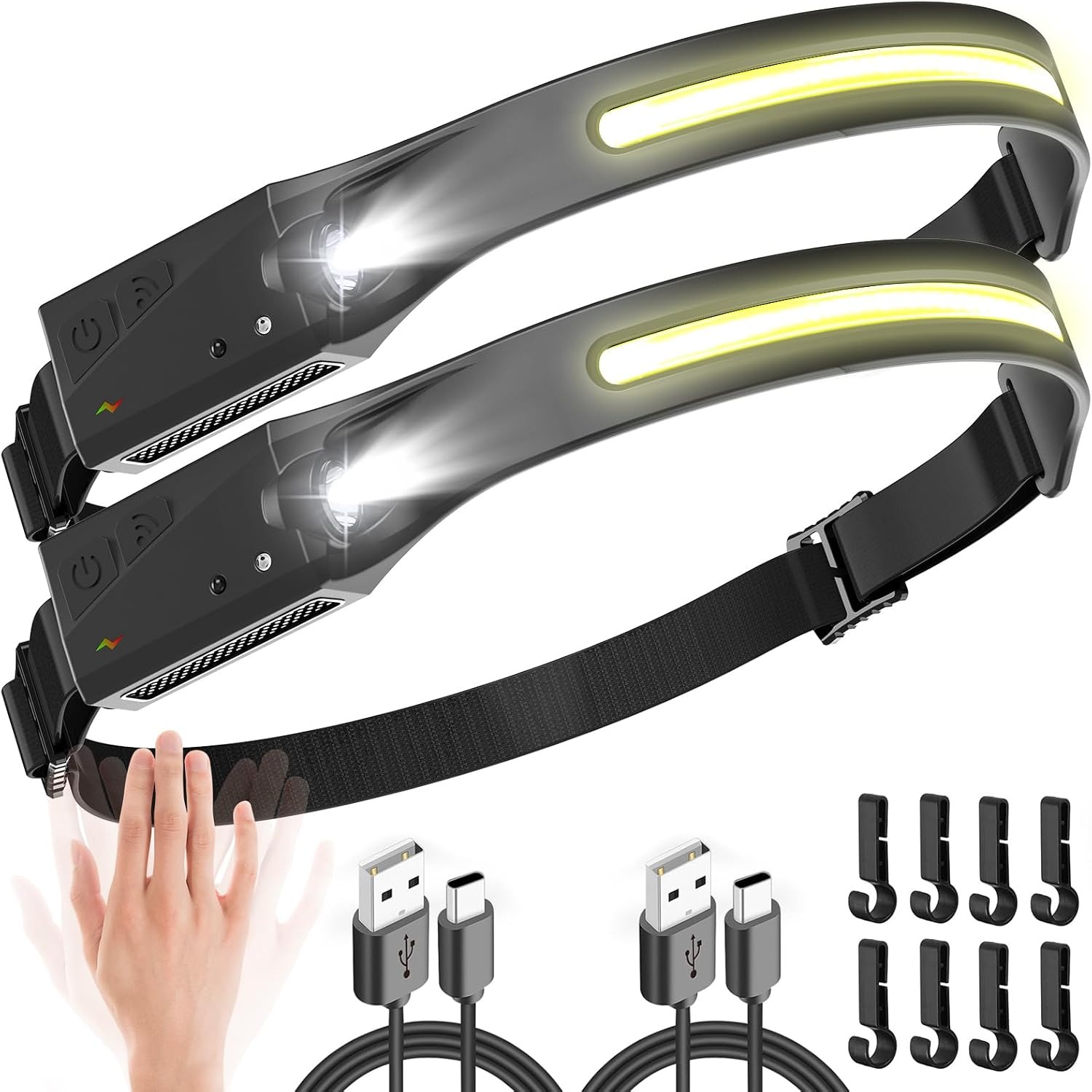
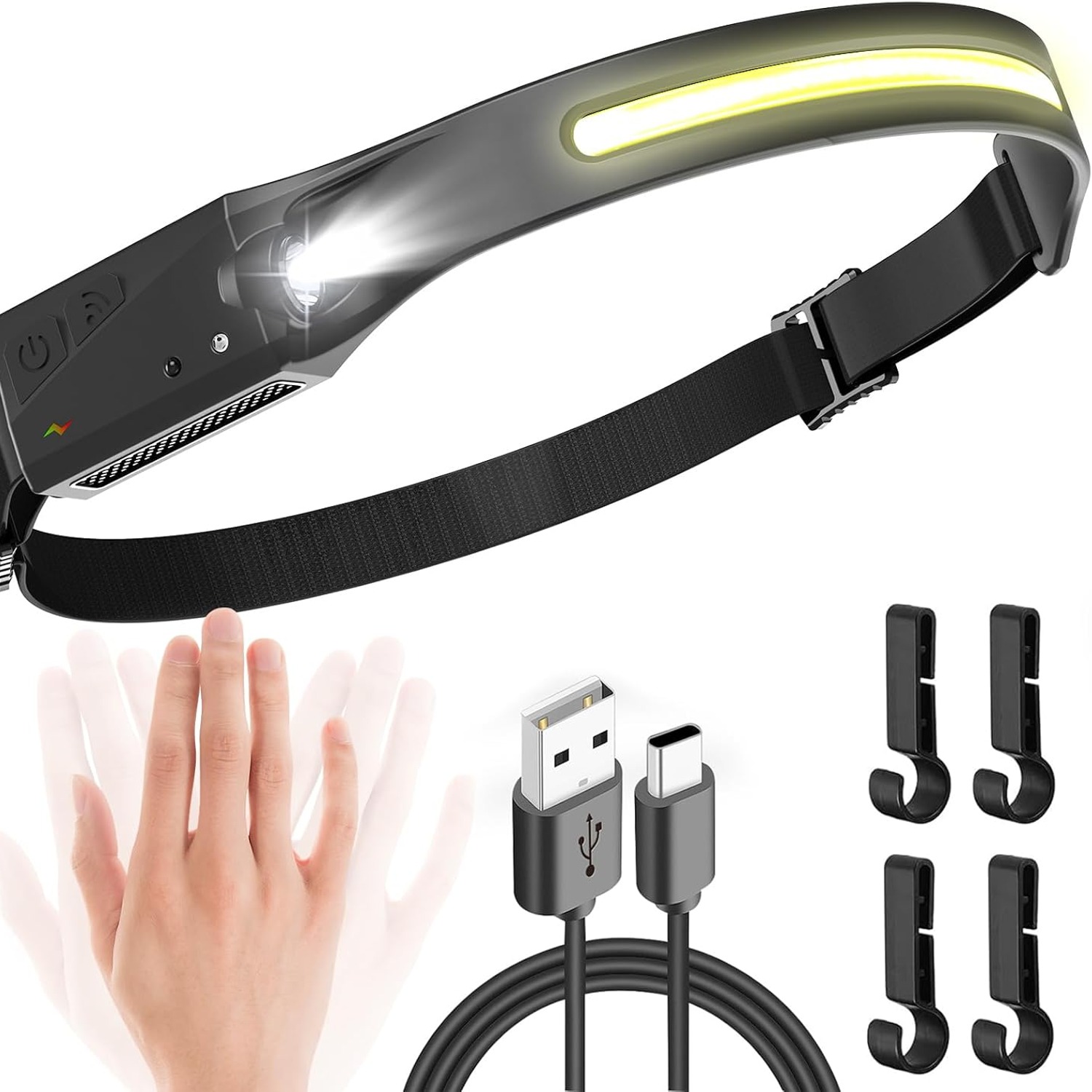
This pack gives you two of them. That matters more than it sounds. One lamp in the house is a lamp that is never where you need it. Two means one lives in the car and one lives with the gear, and you stop hunting.
Flood and spot, and why both are in there
Each lamp carries two different light sources, and they are not the same thing with different brightness levels.
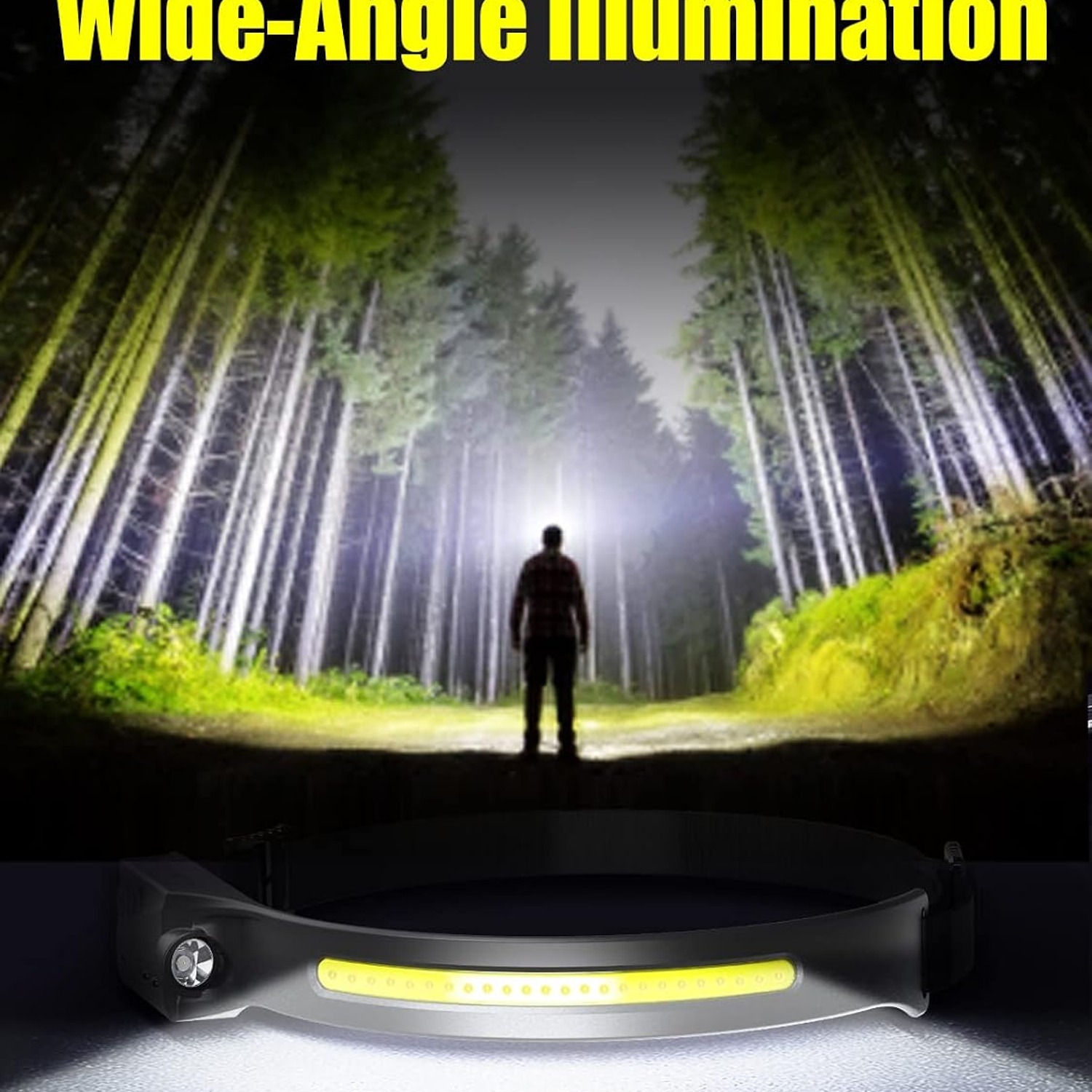
The COB strip is a long, flat emitter that throws a wide, even wash of light. Here it covers a 230 degree field at up to 350 lumens. This is the beam you use for anything within a few metres. Cooking, reading, sorting a tackle box, finding a tent peg, working under a bonnet. Because the light is spread out, there is no harsh hot spot burning into whatever you are looking at, and your eyes relax.
The XPE spot does the opposite. It collects the light into a tight column and throws it out to a stated 300 metres. You use this to check a track, scan a paddock, find the dog, or look across water. It is almost useless up close, because a narrow bright circle at arm's length just dazzles you.
Most cheap headlamps give you only the spot, which is why people find them annoying for close work. Having both on the same unit means you stop compromising.
Reading the five modes
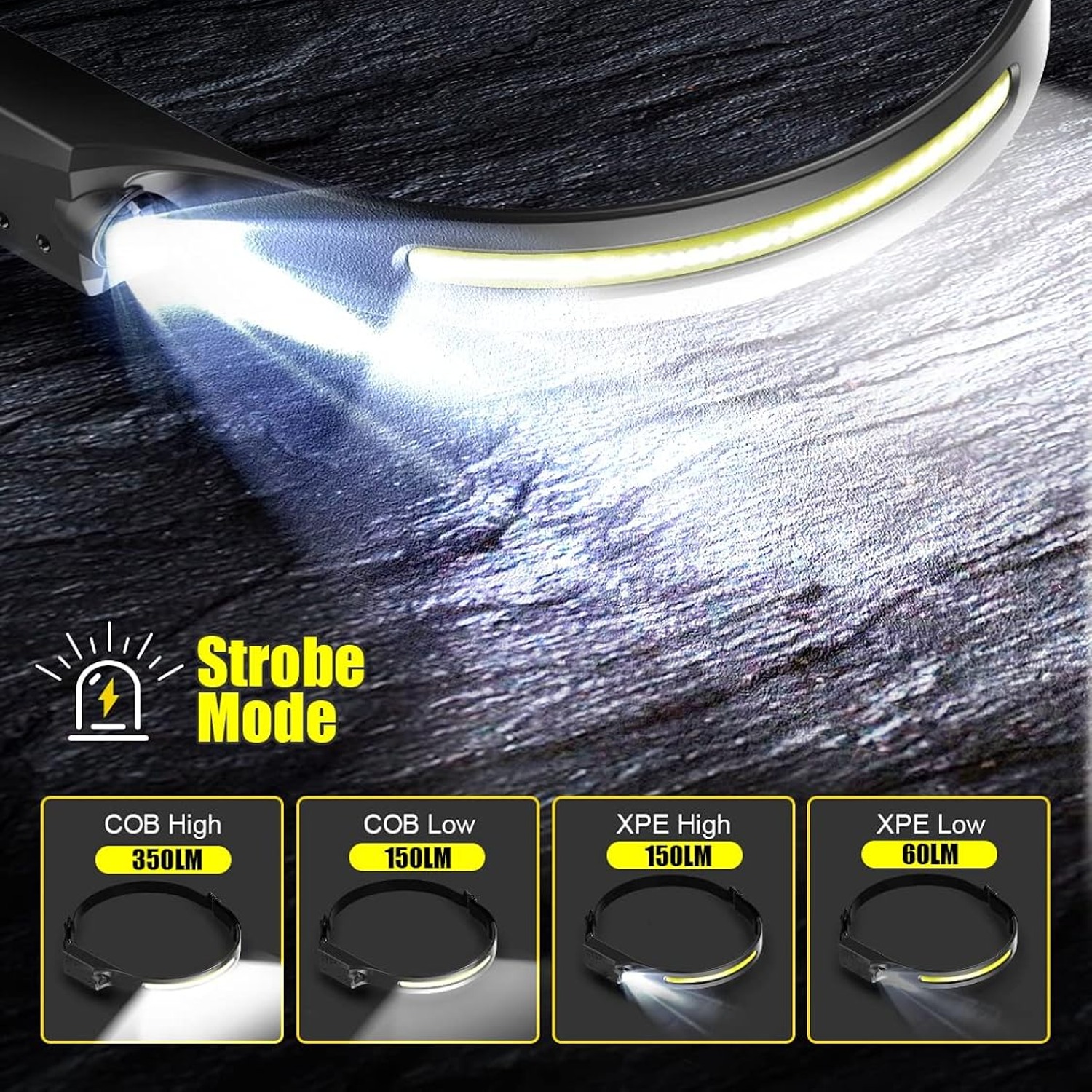
The mode list looks like marketing until you use it. In practice it breaks down like this.
Flood at full power is for setting up or packing down, when you want to see everything at once. Flood at 40 percent is the setting most people live on, because it is enough for close work and it treats the battery kindly. Spot at full is the search beam. Spot at 40 percent is for walking a known path where you only need to see the ground ahead. Flashing is for being seen, not for seeing, so it belongs on a roadside or a dark footpath.
Runtime is quoted at up to 8 hours. That top figure comes from the lower modes, not from running the spot flat out. If you plan a long night, work out roughly how much of it needs full power and how much can run dim. Most people are surprised by how little full power they actually need.
The wave switch is not a gimmick
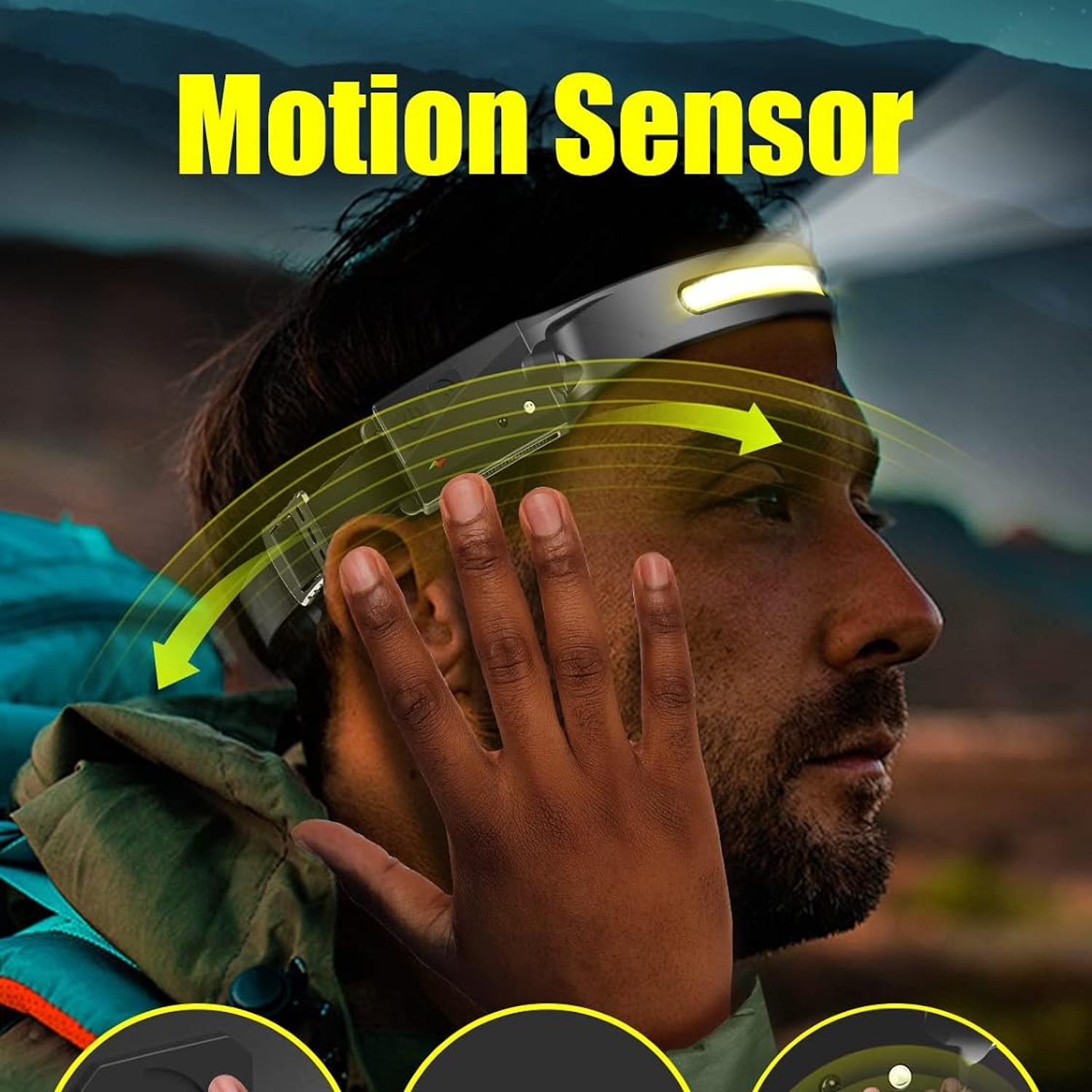
Motion sensing sounds like a feature invented in a meeting. It is not. The moment your hands are greasy, wet, muddy or inside gloves, pressing a small rubber button becomes a genuine nuisance.
With this design you pass a hand in front of the sensor and the light responds. No grease on the housing. No taking a glove off at four degrees. No fumbling at the side of your head in the dark while something you need is rolling away.
The people who rave about this feature are usually mechanics and night anglers, which lines up with the uses the maker lists. If you fit either description, it will probably be the reason you keep reaching for this lamp over others you already own.
One practical note. A sensor that responds to movement can also respond to a sleeve or a branch passing close by. It takes a day or two to learn the distance, after which it stops happening.
Weight, fit and wearing it for hours
Eighty grams is light. For comparison, that is around the weight of a small apple, split across a band that sits on your forehead and around the back of your head. Weight is the single biggest factor in whether a headlamp gets worn for a whole evening or gets taken off after twenty minutes.
The band is soft elastic silicone. That kind of band grips without needing to be cranked tight, which is what causes headaches with cheap woven straps. It also stays put when you bend forward, which is exactly when a loose lamp slides down over your eyes.
Adjust it before you need it, not in the dark. Loosen it fully to fit over a beanie or a helmet, then tighten until it is snug and no further. If you are looking for the best lightweight headlamp for long sessions, weight and band quality matter far more than the lumen number on the box.
Who this suits
Campers get the most obvious use. The wide flood covers camp chores, and the spot handles the walk to the amenities block or a check on the dog.
Runners and walkers benefit from the low weight and the flashing mode. If you are hunting for the best headlamp for running, the thing to check is bounce, and a light lamp on a grippy band bounces far less than a heavy one.
Anglers, especially night anglers, use the sensor constantly. Cyclists can use it for trails and paths, though check your local rules, because many places still require a bar mounted light on the road.
Then there is the ordinary domestic use that nobody plans for and everybody ends up doing. Looking under the sink. Getting into the roof space. Finding the fuse box during a blackout. A good hands free light becomes the thing you grab first.
Charging and looking after it
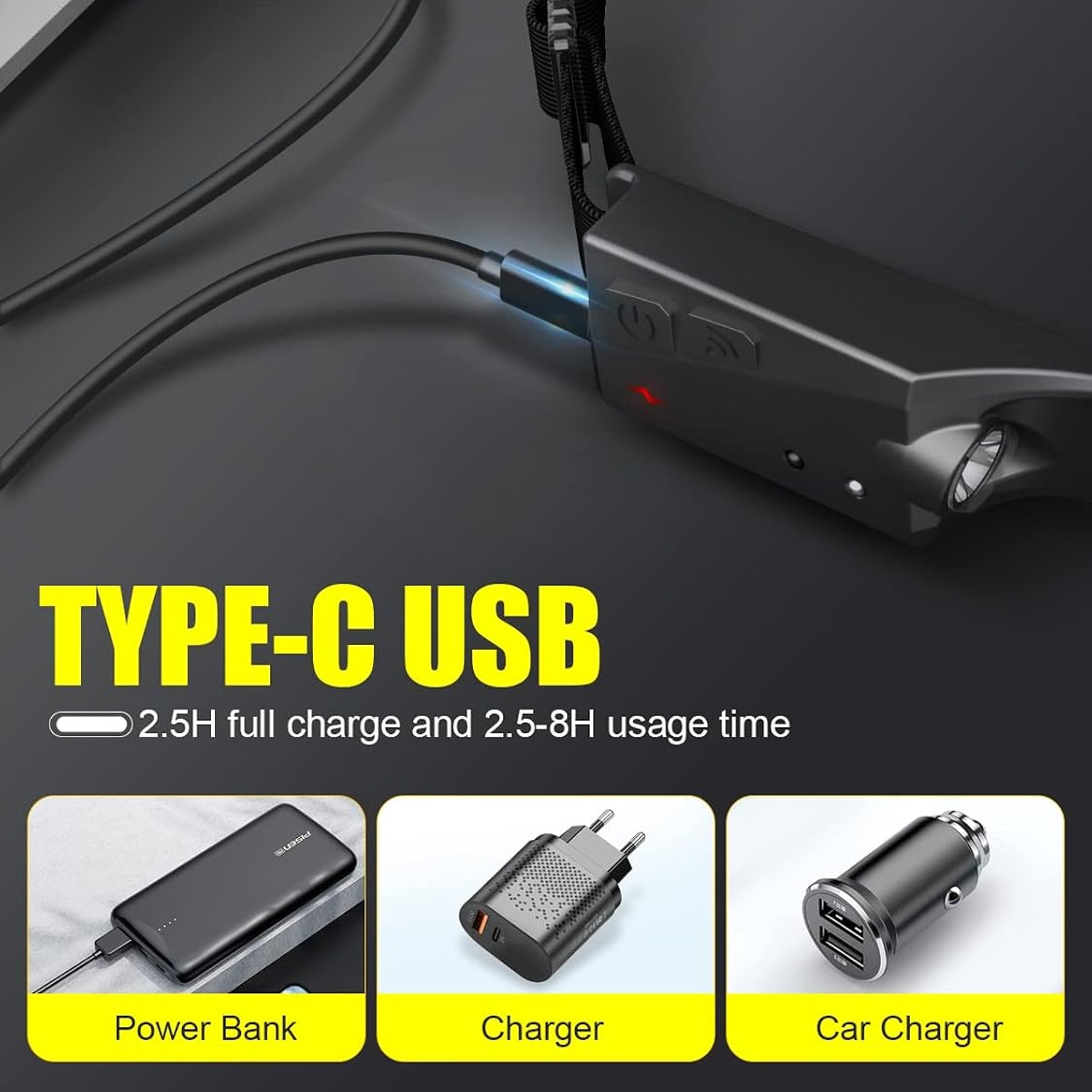
Charging is over USB-C, which means the same cable as most modern phones and the same charger. A full charge takes about two and a half hours. There are no disposable batteries to buy, which is both cheaper and tidier than the old three AAA arrangement.
Two habits keep lithium ion cells healthy. Do not store the lamp flat for months, and do not cook it. If a lamp is going into storage, give it a charge first and top it up every few months. Keep it out of a hot car in summer, because heat is harder on batteries than cold.
The lamp is rated water resistant, which covers rain and spray. It is not rated for being dunked. If it does get wet, wipe it down and let the USB-C port dry fully before plugging anything in. Keep grit out of that port, since a cable that will not seat properly is the most common reason a rechargeable light stops charging.
Cleaning is simple. Damp cloth on the body and band, then dry. No solvents, no dishwasher, no running it under a tap.
The short version
Two lamps, 80 grams each, a 350 lumen wide flood at 230 degrees and a spot that reaches 300 metres. Five modes so you can match output to the task, up to 8 hours of runtime on the sensible settings, and USB-C charging in about two and a half hours.
The motion sensor is the part that changes how you use it, because switching the light with a wave means dirty or gloved hands stop being a problem. The two pack means there is always a spare.
If you want one light that handles camp chores, a dark walk, a tackle box and a job under the car, this covers all four without you having to think about it.