
The complete guide
How to Choose a Cotton Flannel Sleeping Bag
The problem with most sleeping bags
There is a particular kind of bad night's sleep that only happens in a tent. You are warm enough, more or less, but the bag is narrow. Every time you try to roll onto your side you have to lift and twist the whole thing with you. The lining is slippery nylon that feels cold when you get in and clammy by two in the morning. By the time the birds start, you have given up and you are lying there watching the roof of the tent get light.
Most of that comes down to two design choices made by the bag, not by you. The first is shape. The second is what the lining is made of.
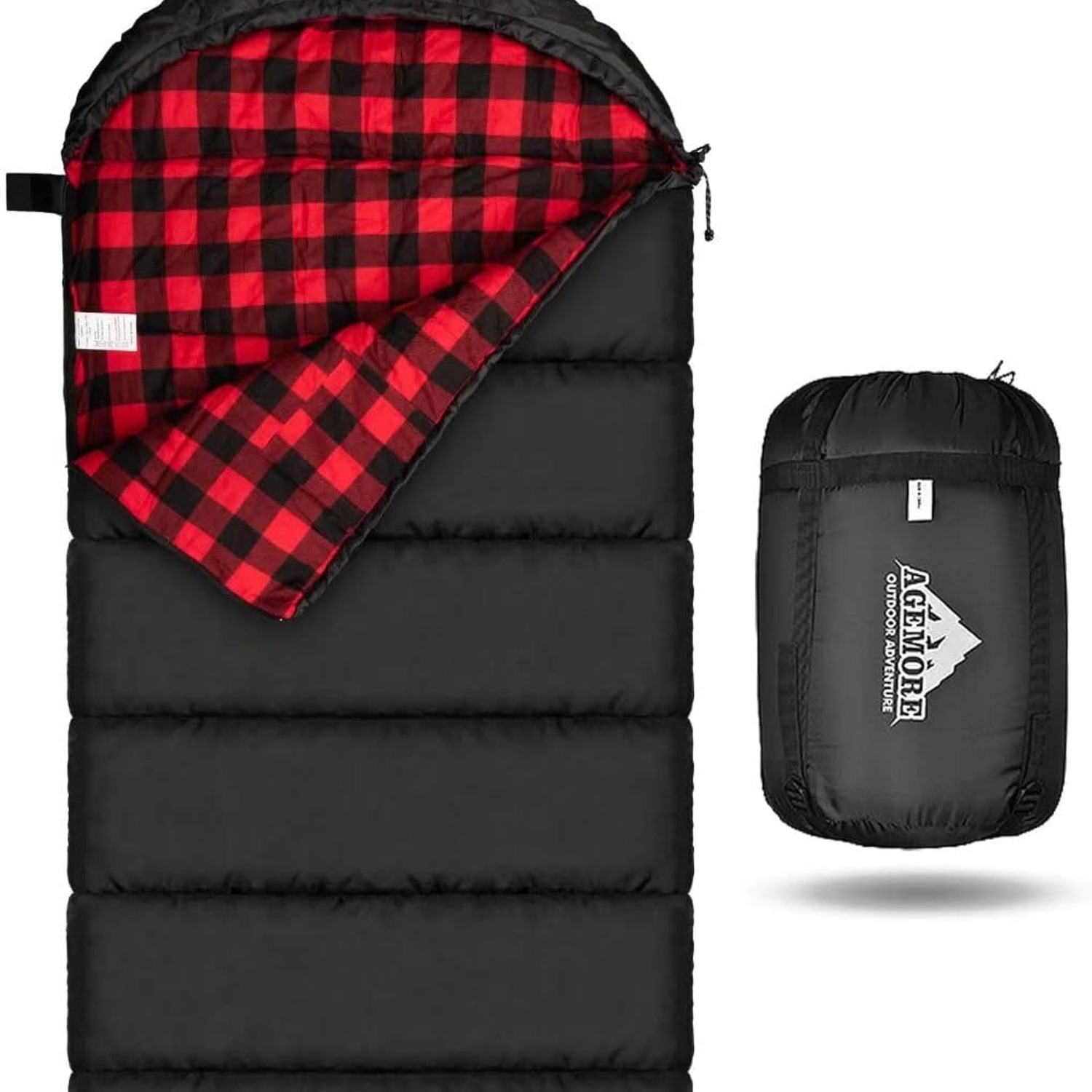
A cotton flannel sleeping bag fixes the lining problem directly. Flannel is brushed cotton, the same material in the sheets people put on the bed in winter. It feels warm against skin straight away instead of needing five minutes to stop feeling cold. It breathes, so when your body heat builds up you are not lying in a plastic bag. And if you kick a leg out, the fabric does not stick to you.
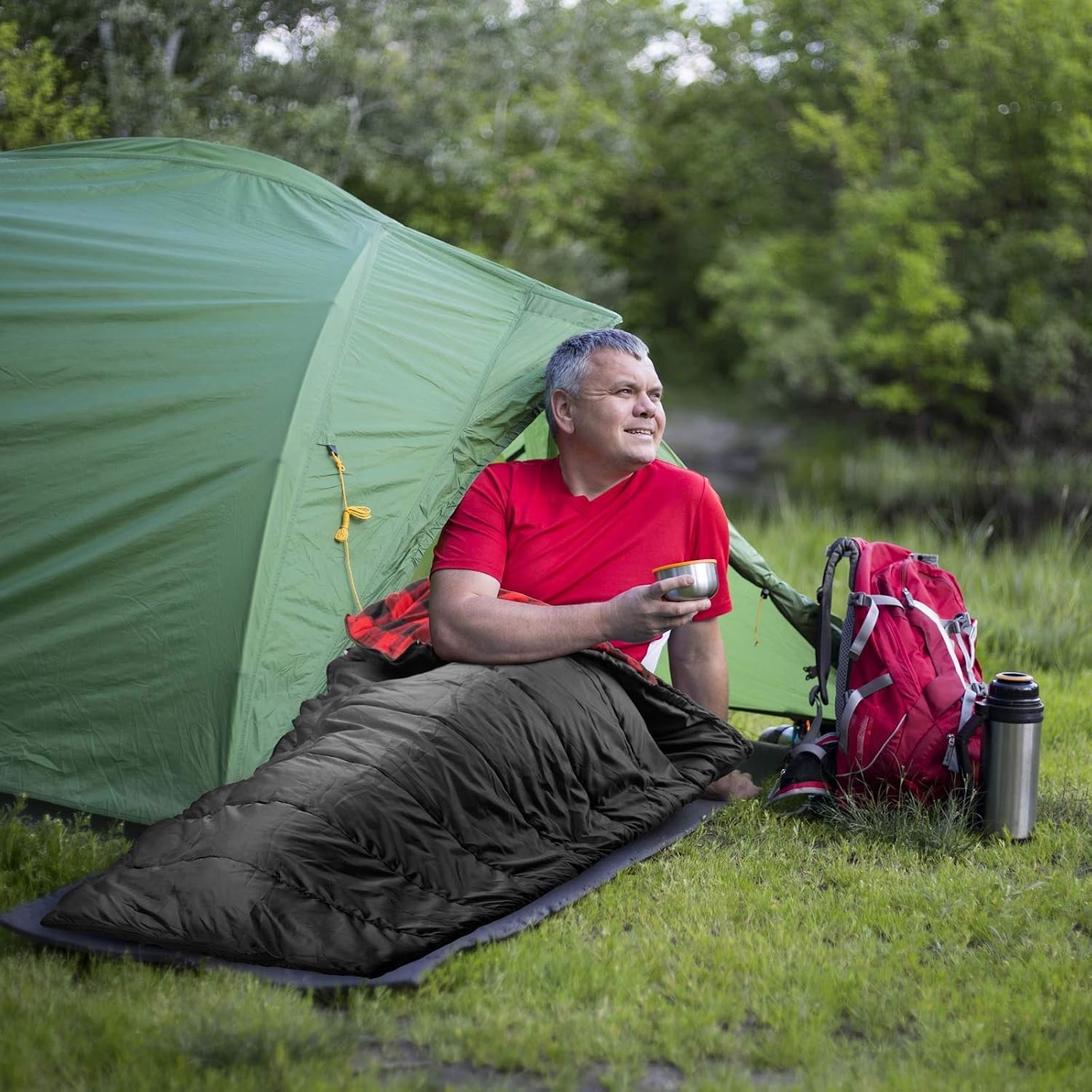
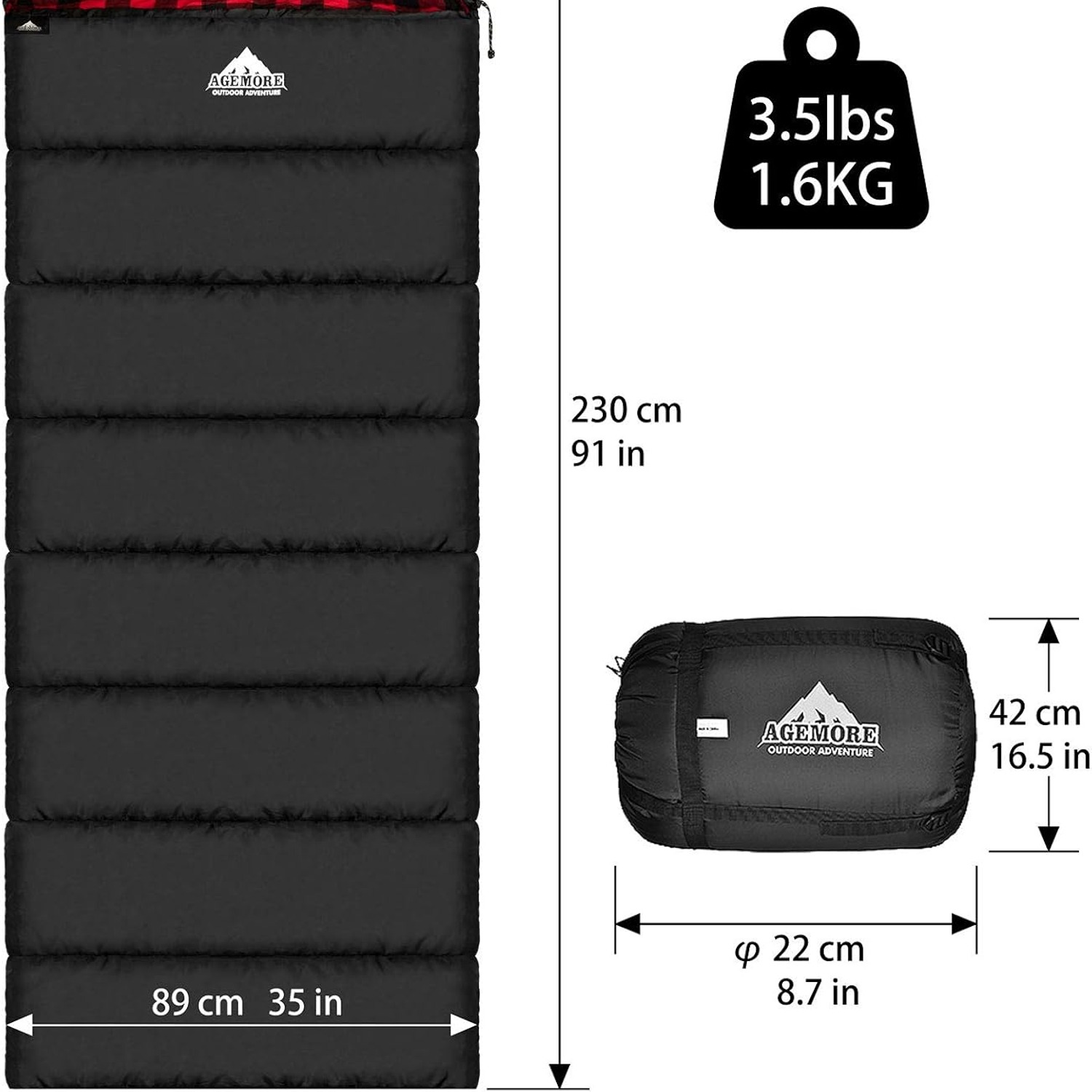
The rectangular shape fixes the second problem. This bag is 0.89 metres wide and 2.31 metres long. That is close to the width of a single mattress. You can bend a knee, roll over and sleep on your front without the bag fighting you.
How the construction works
There are three layers doing three jobs here, and it helps to understand each one.
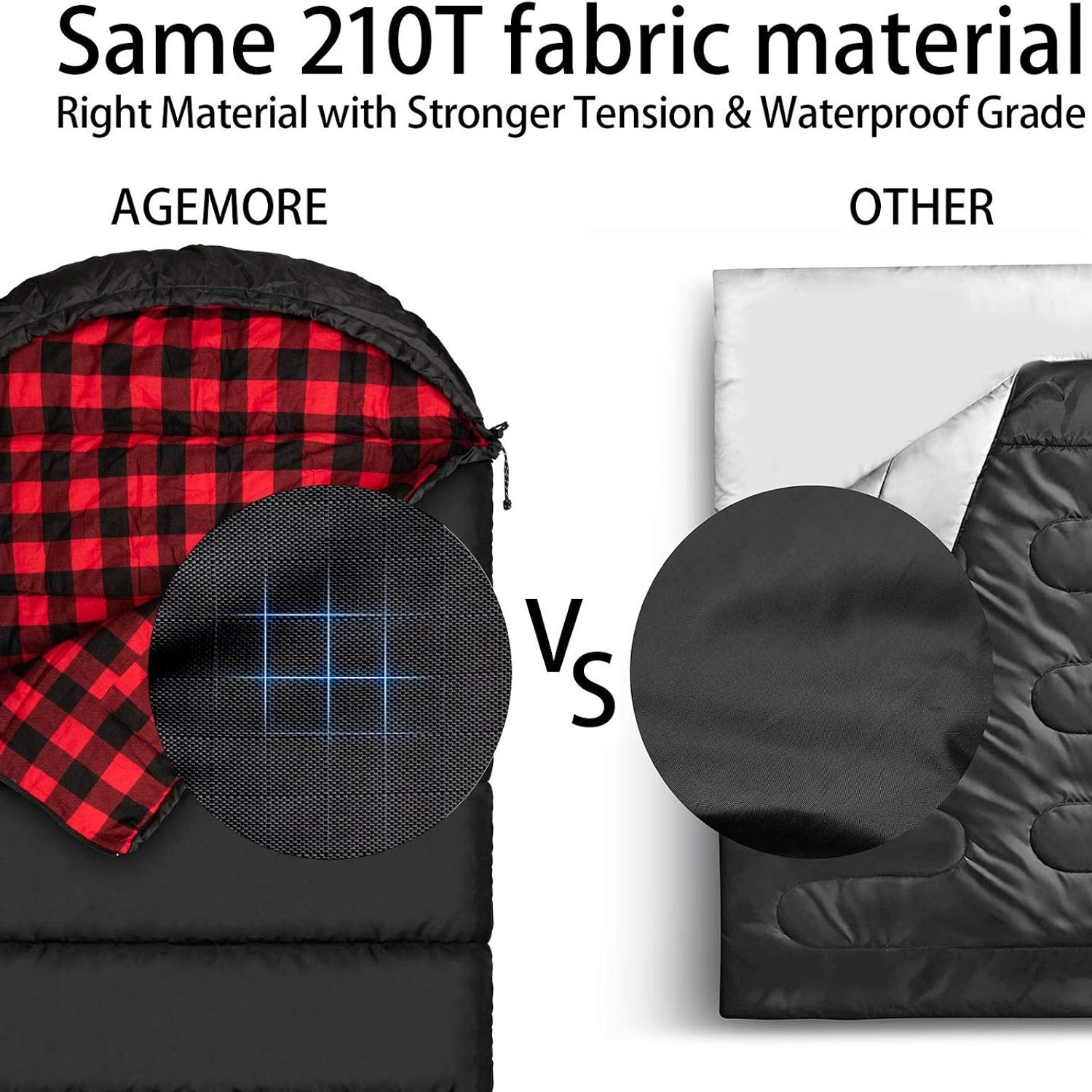
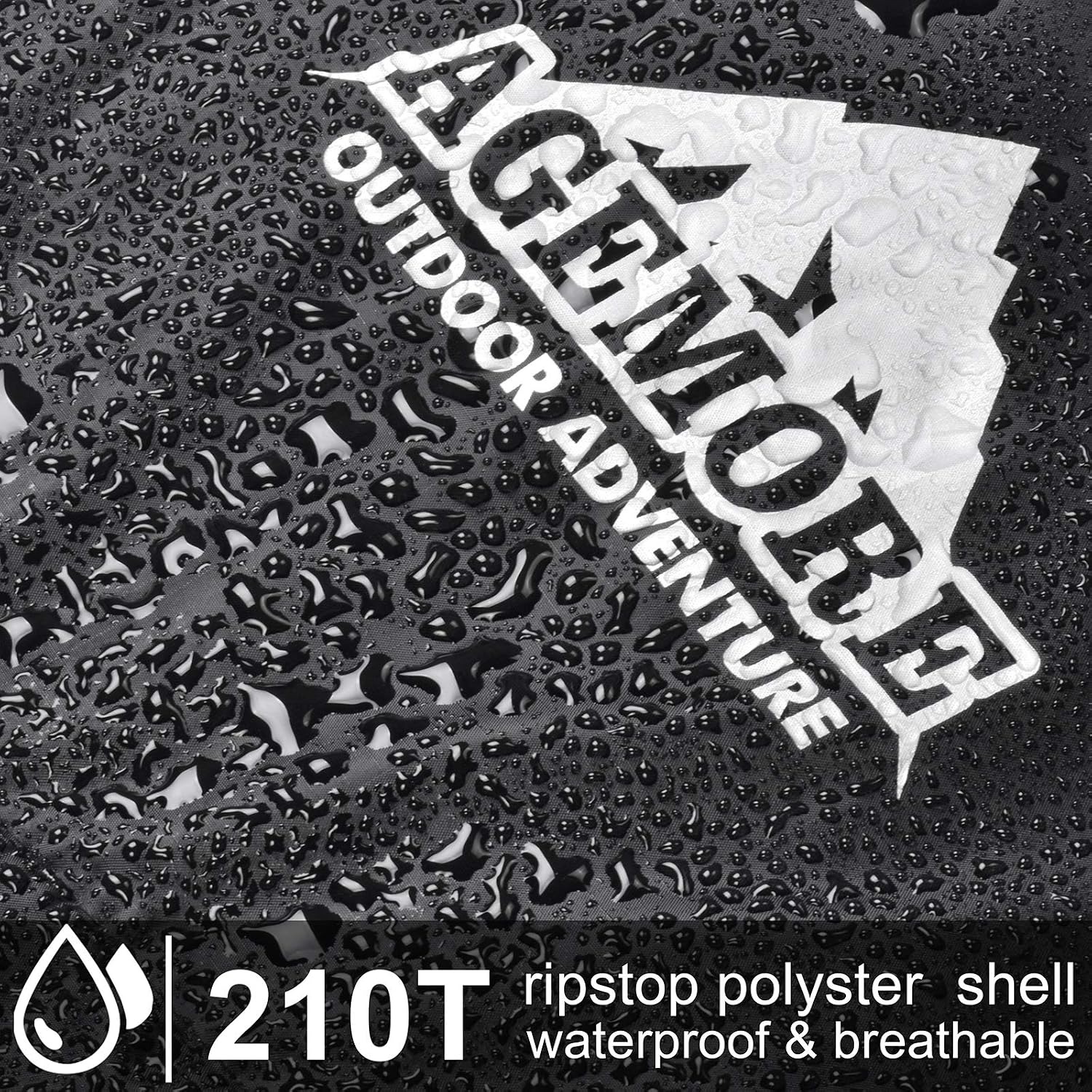
The outer shell is 210T polyester. The number refers to thread count in the weave, and at 210T it is a close, tight fabric. Its job is to take the abuse: tent floors, grass, dust, the trunk of a car, the odd spill. It also sheds light moisture like condensation on a tent wall. What it is not is a waterproof outer layer you can sleep under in rain. You still need a tent or a swag.
The fill is cotton. Cotton fill behaves differently from down or lofted synthetic. It is heavier for the warmth it gives, and it holds moisture longer. In exchange, it feels natural, it does not have that crinkly sound some synthetics make, and it is comfortable in mild and moderate conditions rather than being over-engineered for cold you will never see. This is a bag for the camping most people actually do.
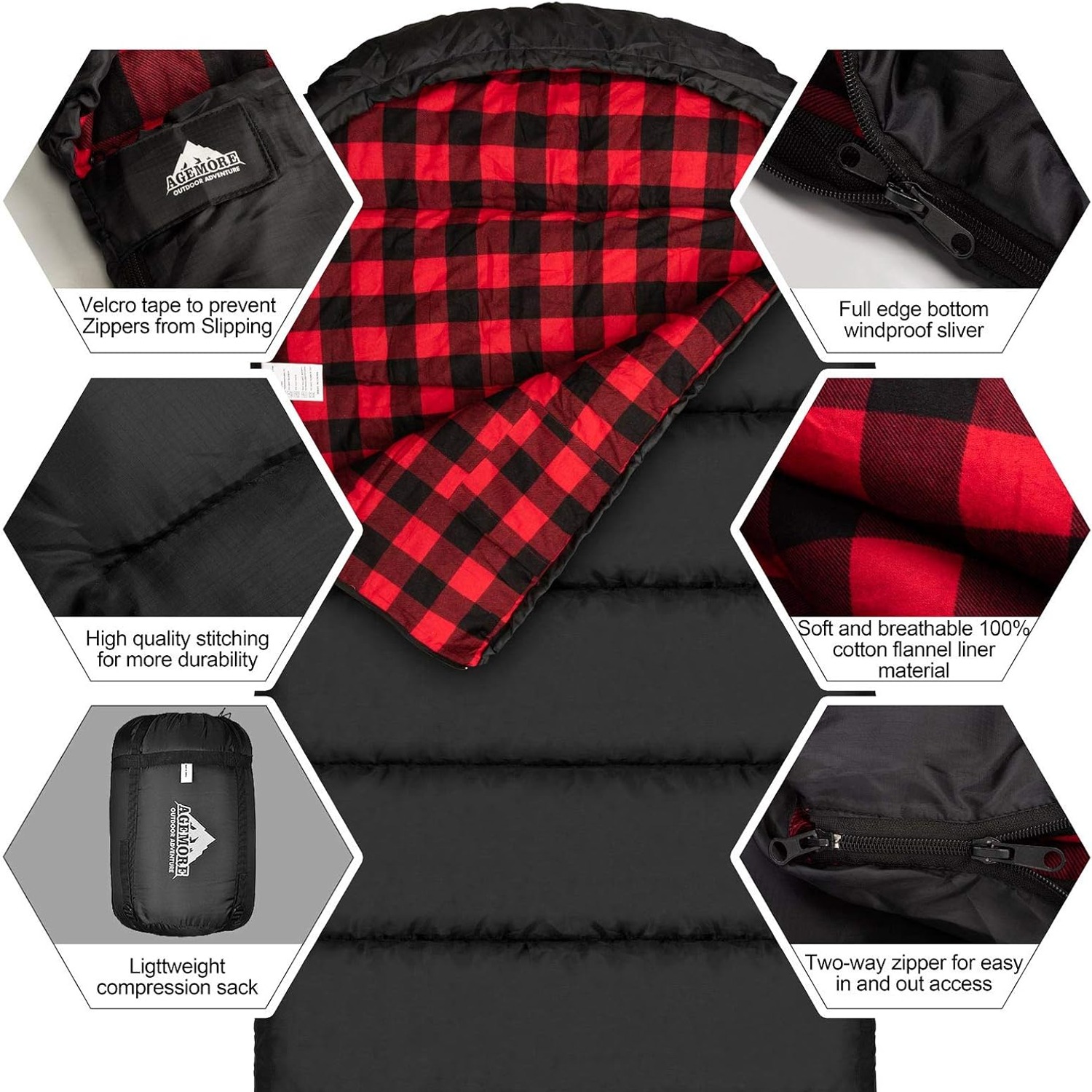
The lining is 100% cotton flannel, and this is the part you feel. It is what turns a functional piece of outdoor gear into something you are happy to climb into at the end of a long day.
A hood sits at the head end. Heat escapes fastest from your head and shoulders, so being able to pull the hood around makes a noticeable difference on a cool night. On a warm night you just leave it flat.
Reading the temperature rating honestly
The listing describes this as an all seasons bag with three to four season use and a temperature rating to 40 degrees. Here is how to read that without being disappointed.
Temperature ratings on sleeping bags are rarely a promise. They are a guide, and they assume a few things: that you are using a sleeping mat, that you are not already cold and wet when you get in, and that you have something on rather than sleeping bare. Change any of those and your experience shifts by several degrees.
What the rating tells you in plain terms is that this is a warm-weather and shoulder-season bag. Spring camping, summer nights, autumn weekends, mild early winter. That covers festivals, coastal trips, caravan parks, national park campgrounds and most family holidays. If you plan to camp in frost or at altitude in the middle of winter, buy a bag built for that instead. Using a three season bag in genuine cold is miserable and no amount of layering fully makes up for it.
The flip side is useful too. Because flannel breathes, this bag handles warm nights better than a heavily insulated one. On a hot evening you can run the zip right open and use it as a quilt.
Who this suits
Think about the camping you do, not the camping you imagine doing.
Car campers and caravanners get the most out of a bag like this. Weight barely matters when it lives in the trunk, and the comfort of flannel is worth every gram. The same goes for anyone who sets up a base camp and stays put for a few nights.
Taller adults should pay attention to the numbers. At 2.31 metres long with a 6 feet maximum height recommendation, the bag has room for most people. If you are near or over that height, measure it out at home against your own length plus a bit of room at the feet. Nothing ruins a night faster than toes pressing on the foot of the bag.
Weekend hikers can carry it. At 1.59 kg it is not an ultralight choice, but for an overnight walk or a bike tour it is perfectly reasonable, especially if your group splits the tent and cooking gear.
People who need a spare bed should also look at it. Unzipped flat it is a throw, zipped up it is a guest bed on the lounge room floor, and it folds into its own sack when the visitors go home. A good adult camping sleeping bag earns its shelf space by doing more than one job.
Who it does not suit: deep winter campers, ultralight thru-hikers counting every hundred grams, and couples hoping to share one bag. Occupancy is one person.
Getting the best out of it
A few habits make a real difference.
Always use a sleeping mat. The fill underneath you gets squashed flat by your body weight and stops insulating, so the mat is doing the work of keeping ground cold away. Even a cheap foam mat changes a cold night into a tolerable one.
Air the bag out in the morning. Drape it over the tent or a chair for twenty minutes while you make coffee. Moisture from your body builds up overnight, and letting it go keeps the fill fresher.
Use the two-way zipper rather than suffering. If your feet are hot, open the bottom slider a hand's width. If you are getting cold around the shoulders, pull the hood in. Small adjustments beat getting in and out.
Store it loose at home. The compression sack is for travel, not for the wardrobe. Months of being squashed flattens the fill and you lose warmth you paid for. Hang it, or keep it in a big breathable bag on a shelf.
Keep it clean with spot cleaning where you can. A damp cloth and mild soap handles most marks. Save full washes for when it genuinely needs one, follow the care label, and dry it completely before putting it away. Cotton that goes into storage damp will smell, and that smell is hard to get rid of.
The short version
This is a wide, hooded, rectangular sleeping bag for one adult, lined in cotton flannel, filled with cotton and shelled in 210T polyester. It measures 2.31 metres by 0.89 metres, weighs 1.59 kg, has a two-way zipper and comes with a compression sack. The maker describes it as all seasons with three to four season use and a temperature rating to 40 degrees.
Buy it if you want comfort over technical performance, if you camp in mild to moderate conditions, and if you are tired of narrow bags with slippery linings. Pair it with a decent mat, store it loose, and air it out after trips. Look elsewhere if you need a sub-zero bag or you are counting grams on a long-distance trail.