


The complete guide
How to Choose a Camping Air Mattress That You Will Actually Sleep On
The real reason people stop camping
Ask anyone who gave up on camping why they stopped and the answer is rarely the weather. It is the sleep. You spend the day walking, cooking over a stove and watching the fire burn down, then you lie on a thin mat and feel every pebble under your hip. By two in the morning you are curled up trying to find a position that does not hurt. By the next evening you are sore, short-tempered, and quietly planning a motel.
A good sleeping mat fixes this better than almost any other piece of gear. It is the layer between you and the cold, hard ground, and it does two jobs at once. It cushions your body, and it keeps the ground from pulling heat out of you. Get that layer right and a tent stops feeling like an endurance test.
What this mat actually does
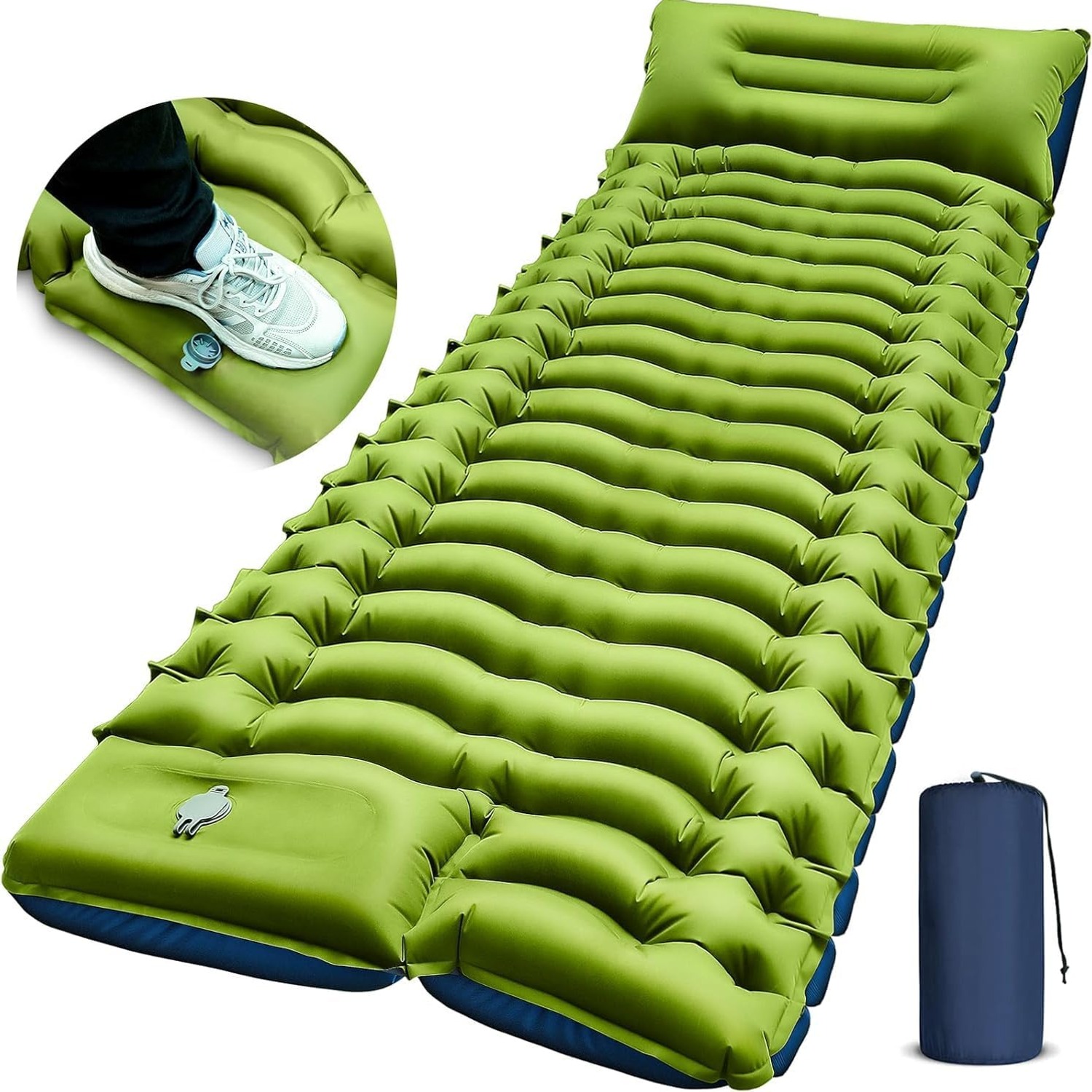
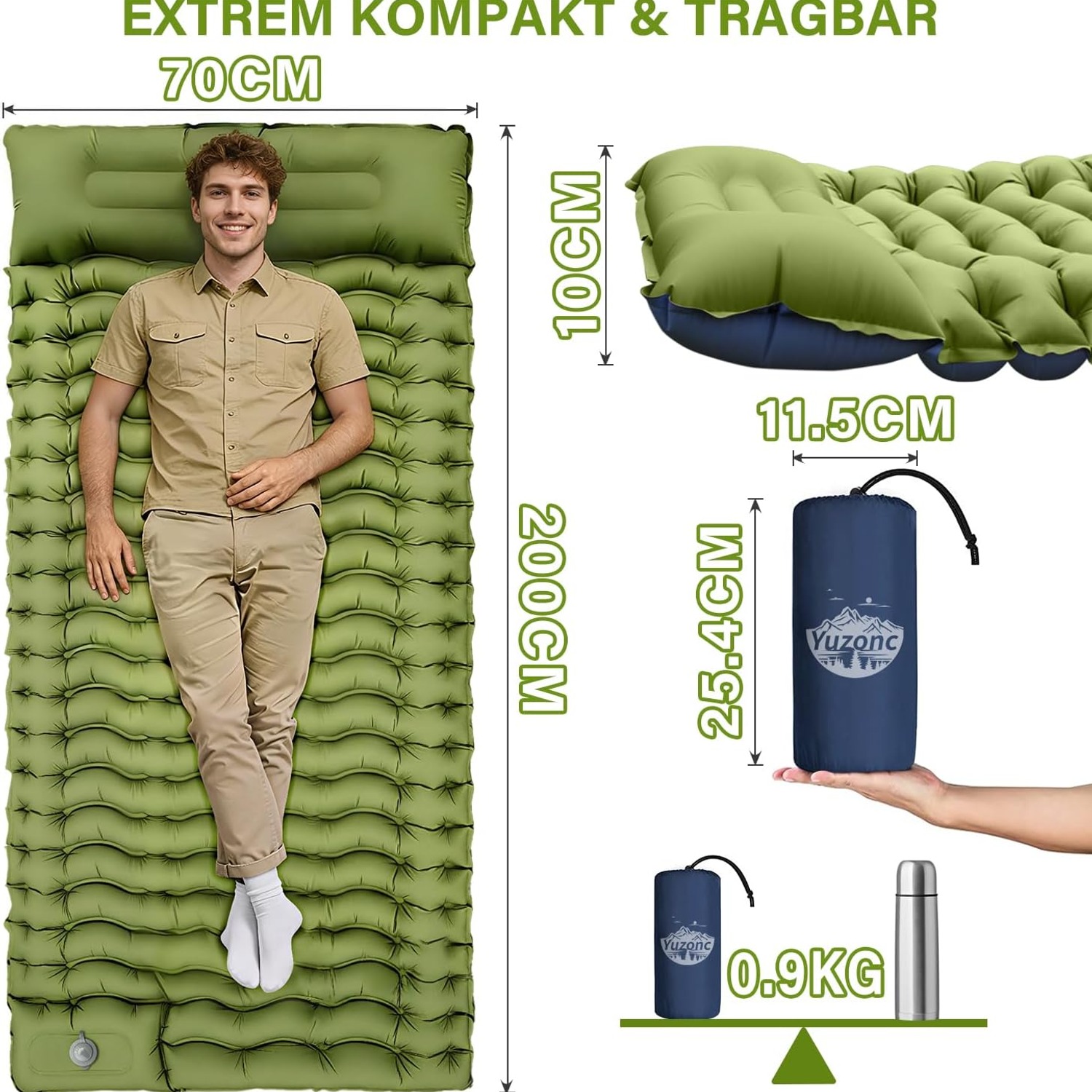
This is a self-inflating camping air mattress that measures 195 x 68 x 10 cm when it is filled. Those numbers matter more than any marketing line. The 195 cm length suits most adults head to toe. The 68 cm width is noticeably wider than a lot of narrow backpacking pads, which means you can roll over without one arm sliding off the edge. And the 10 cm thickness is the figure that decides whether you feel the ground or not.
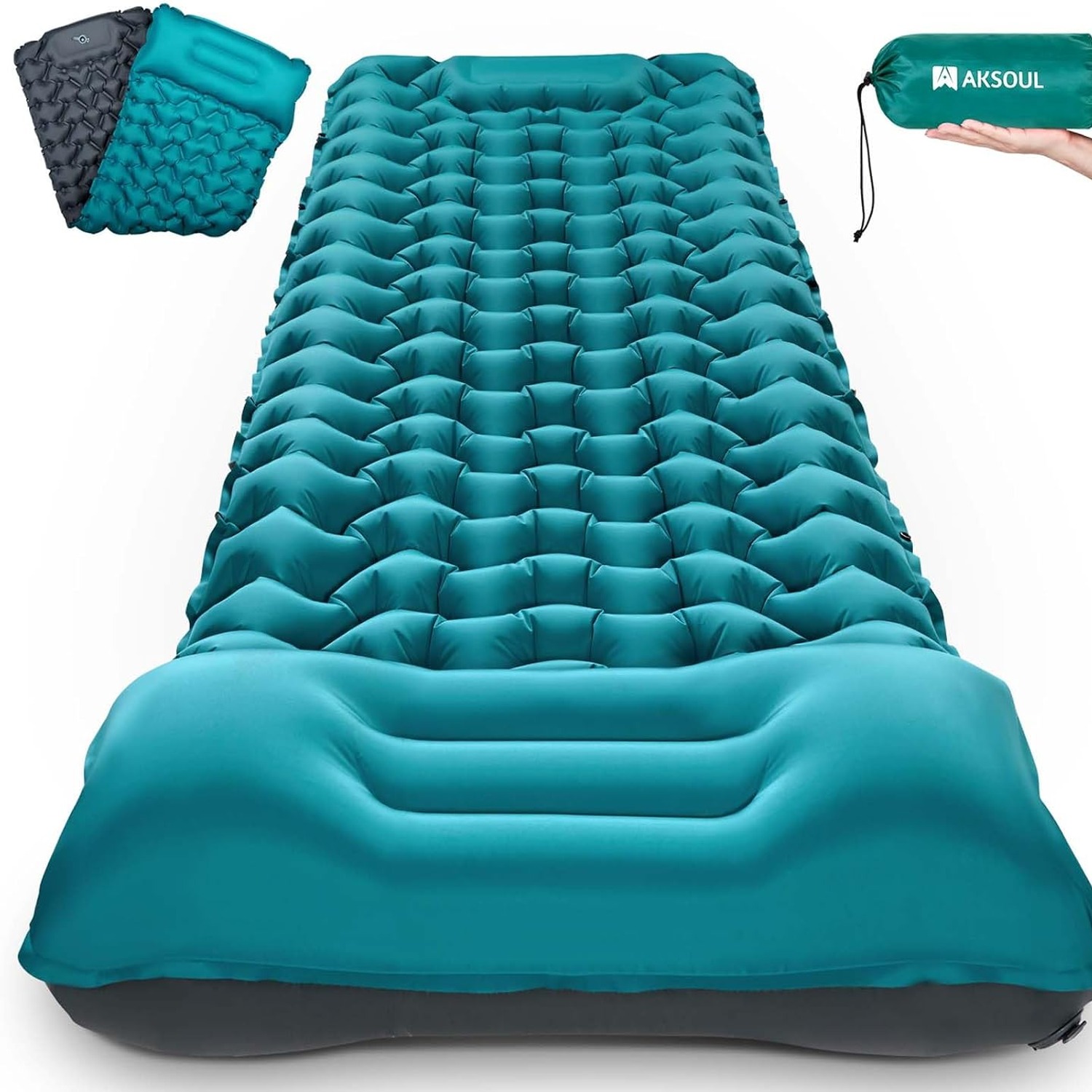
Inside, the mat uses an air cell structure rather than one single chamber. That is a small design detail with a big effect. One big chamber behaves like a pool lilo, where your weight pushes air to one end and you slowly roll. A run of cells spreads the support more evenly so the mat holds its shape under your hips and shoulders.
The head end has an integrated cushion built in. In practice that means you have a pillow without packing a pillow, which saves both space and the usual 3am hunt for a bundled-up jumper.
Why the foot pump changes things
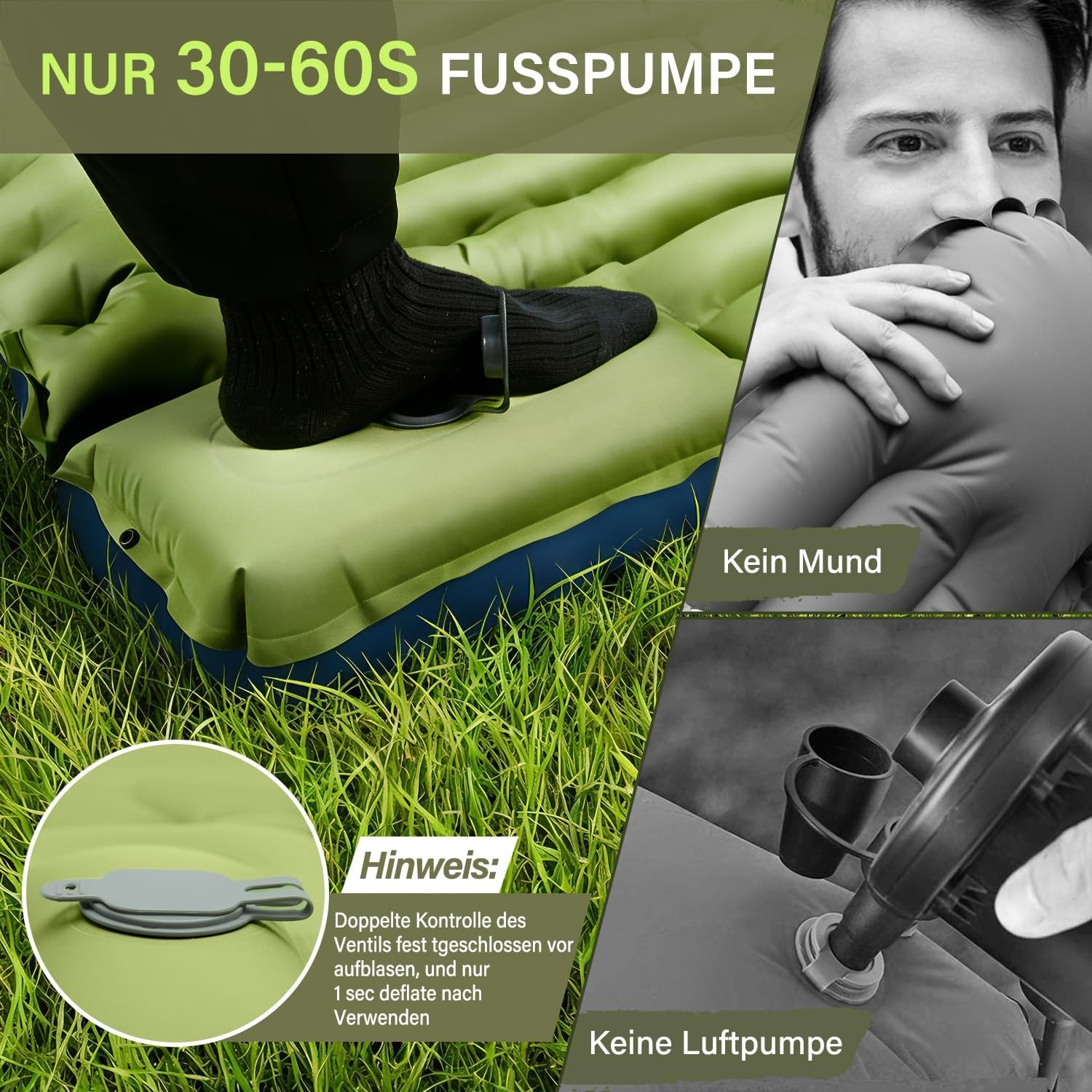
Inflating a camping mat by mouth is miserable. It takes several minutes, it makes you light-headed, and it blows warm damp breath into the mat, which is not great for the inside over time. Separate pumps work, but they are another item to pack, another thing to lose, and electric ones need charge.
A built-in foot pump cuts all of that out. You lay the mat flat, press the pump panel with your foot and pedal for about 30 to 60 seconds. The mat fills. You close the valve and you are done. It works in the dark, it works when it is raining, and it works when you have arrived late and want to be horizontal as quickly as possible.
Packing up is just as quick. Opening the valve dumps the air in around a second, then you fold and roll to push out the remainder. The whole thing goes back into its storage bag at a size meant for a backpack.
Who it suits
Tent campers and weekenders. If your camping is a few trips a year to a campground or a national park, this is the sort of mat that makes the difference between coming back and not. Thick, wide, quick to set up.
Hikers who care about pack size. It is built to compress small and comes with a storage bag. The foot pump means you are not carrying a separate inflation device.
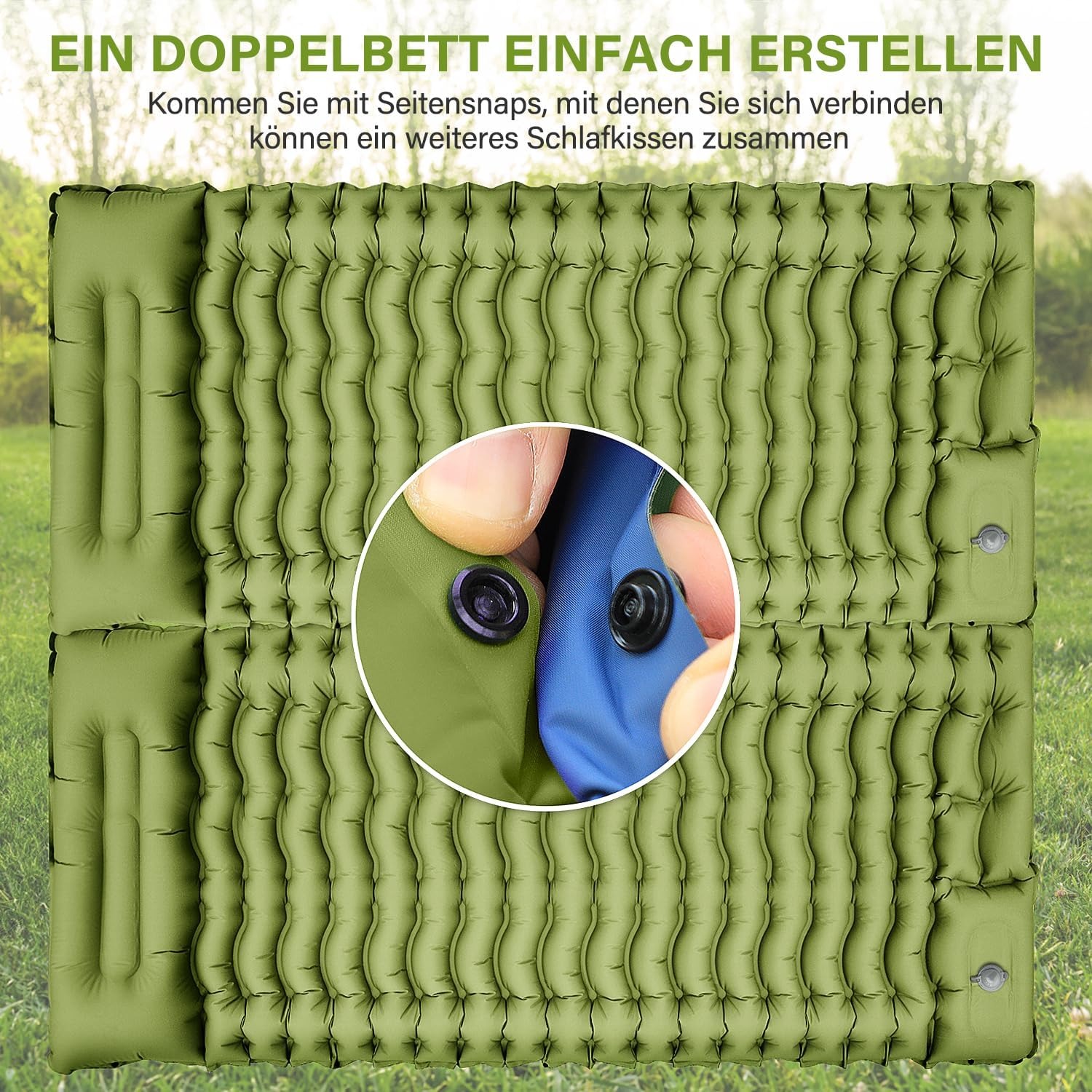
Couples and families. This is where the side buttons come in. Two mats button together into a double sleeping surface, so you are not fighting the cold gap that forms between two separate pads. A parent can also sleep right alongside a child who is new to sleeping outdoors.
Anyone who hosts. Plenty of these end up living in a hall cupboard for visitors. A single mat sets up in a minute and rolls away small.
How to pick the right mat
Start with thickness. If you sleep on your side, you need more depth than a back sleeper does, because your shoulder and hip push down harder into a smaller area. Ten centimetres is a sensible minimum for side sleepers. Thinner than that and you will feel the floor.
Then look at width. Narrow mats save grams but cost you sleep if you move around at night. At 68 cm this one gives decent room to shift without dropping off the edge.
Check the length against your height. Your feet hanging off the end is how you wake up with cold toes. 195 cm covers most people.
Think about how you inflate it. This is the factor buyers underestimate. A mat you dread setting up is a mat you leave at home.
Consider firmness control. Firmness here is adjustable. Fill it completely for a firm, supportive feel, or bleed a little air out for softer give. It is worth playing with this at home before your first trip so you know what you like.
Know the limits. The maximum weight capacity is 250 lb per mat. If two adults want to share, join two mats rather than stacking onto one.
Warmth, ground and groundsheets
Air mats keep you off the ground, and that alone is a big improvement on sleeping on bare tent floor. The record for this mat does not list an R-value, so treat it as a comfort mat first and a warmth layer second. In mild to moderate conditions it will be fine with a decent sleeping bag. For genuinely cold ground, frost or shoulder-season trips at altitude, add a thin closed-cell foam mat underneath. That combination is cheap, light and very effective.
Always use a groundsheet or footprint under the tent as well. It protects the mat and the tent floor from sticks and grit, and it keeps damp from wicking up.
Looking after it
Care is simple. Spot clean marks and wipe the surface with a damp cloth and a little mild soap. Do not put it through a washing machine or a dryer. Let it dry fully before it goes away, because a mat rolled up damp will smell by the next trip.
For storage, loose is better than tight. Keep it rolled gently or laid flat with the valve open so no moisture is trapped inside. A cupboard is a better home than a hot car trunk.
For field care, brush the grit off before you roll it, keep it away from the fire and anything sharp, and carry a small patch kit if you are heading somewhere remote. Punctures in nylon air mats are usually a five-minute fix if you have the right patch on hand.
The short version
Camping gets a lot better when you sleep properly, and the mat is the piece that decides that. This one gives you 195 x 68 cm of surface, 10 cm of air cell cushioning, a pillow built into the head end and a foot pump that fills it in under a minute. It is waterproof, it wipes clean, and it buttons to a second mat if you want a double.
If you have been putting up with a thin foam roll and waking up sore, this is the straightforward upgrade. Set it up on the living room floor once before you go, find the firmness you like, then take it out and enjoy the trip instead of counting the hours until sunrise.