
The complete guide
How to Choose a Camping Kettle That Earns Its Space
The first job at every campsite
Think about how a camp morning actually goes. Someone unzips the tent, someone else looks for the matches, and everybody wants a hot drink before anything useful happens. Hot water is the start of almost everything outdoors. Coffee, tea, porridge, a hot water bottle on a cold night, the washing-up bowl after dinner.
Plenty of people try to do this with a saucepan. It works, barely. A pan has no spout, so pouring into a mug means a slow, wobbly dribble and usually a splash on the table. It has no lid seal, so heat escapes and the boil takes longer. Worst of all, nothing tells you when it is ready, so you either hover over the flame or forget it and come back to a pan that has boiled half dry.
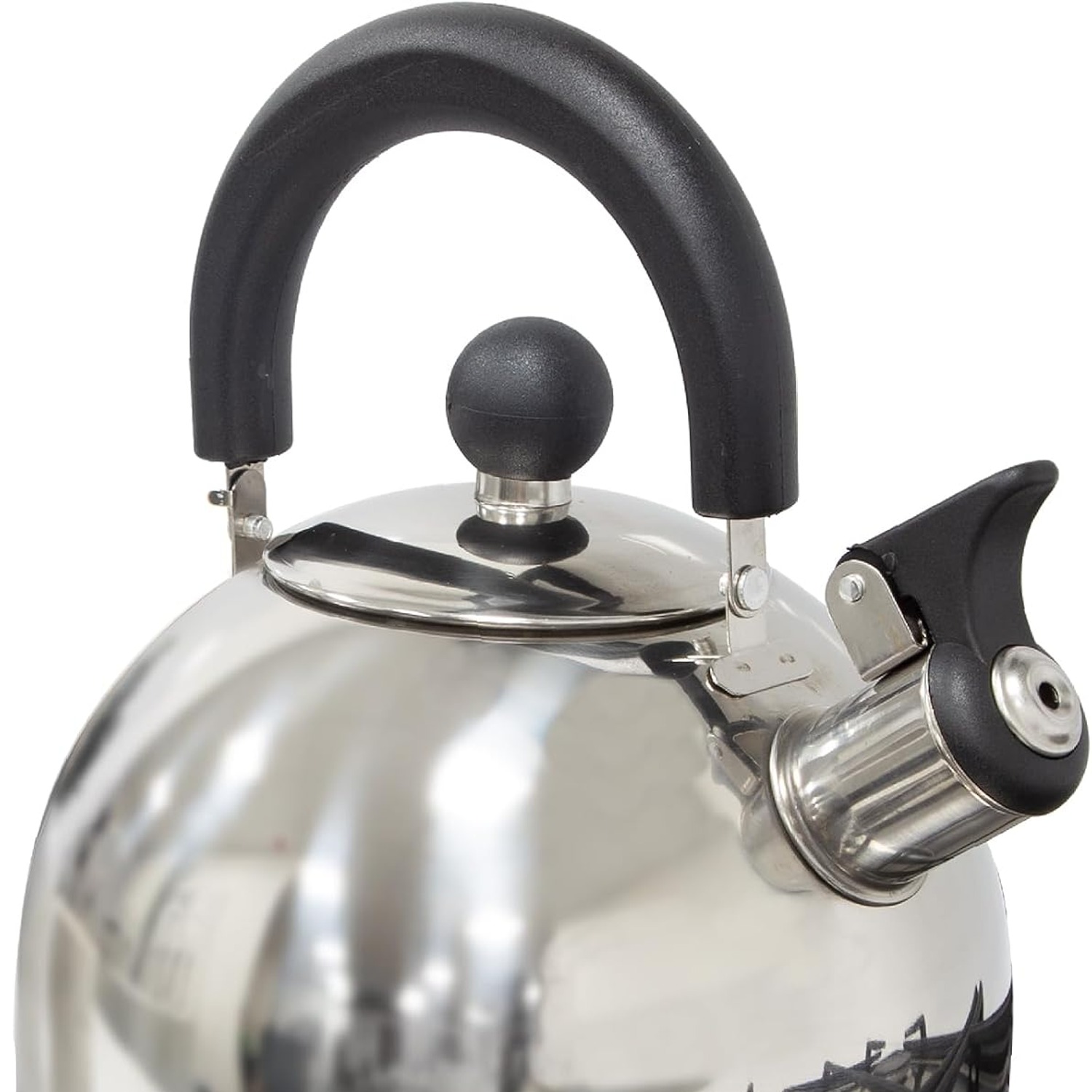
A proper camping kettle fixes all of that. It has a spout shaped for pouring, a lid that keeps heat in, and a whistle that calls you over when the water is done. That is the whole case for owning one.
What the whistle really does for you
At home, a whistle is a convenience. Outdoors, it is closer to a safety feature.
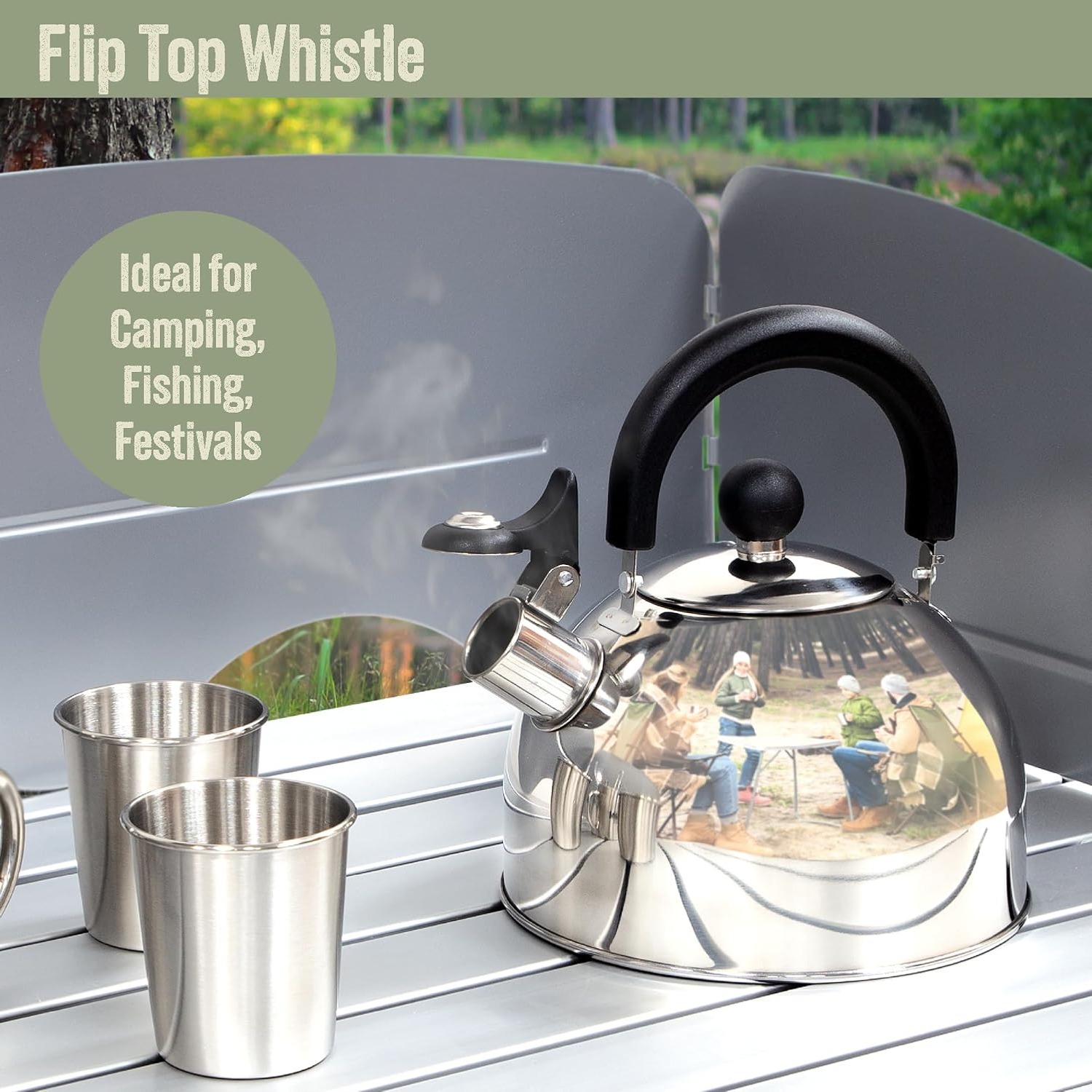
Camp life is busy. You are rarely standing still in front of the stove. You are pumping up an airbed, untangling guy lines, keeping an eye on the dog or walking back from the tap with a water container. The whistle means you can do all that and still catch the exact moment the water boils.
It also protects the kettle. Boiling a stovetop kettle dry is bad for it and bad for your gas supply. The whistle gives you a clear cue to turn off the burner, which means less wasted fuel on a trip where you only brought two canisters.
One practical note. The whistle only works properly when the lid is seated and the spout is clear. If the sound ever seems thin, check those two things first.
Why 2 litres is the sweet spot
Capacity is the decision most people get wrong. Too small and you boil three times before everyone has a drink. Too big and you are heating water you do not need, which burns fuel and takes longer.
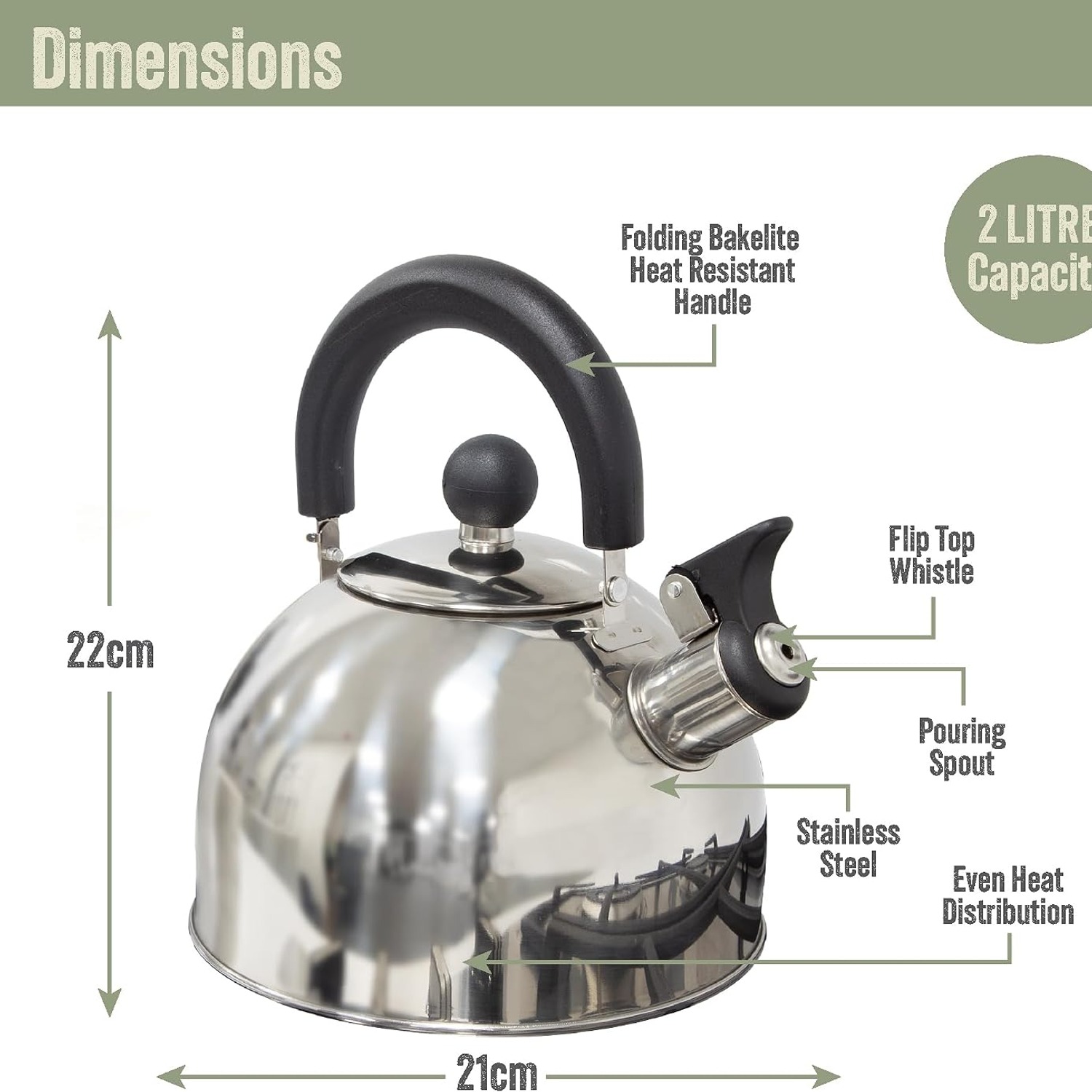
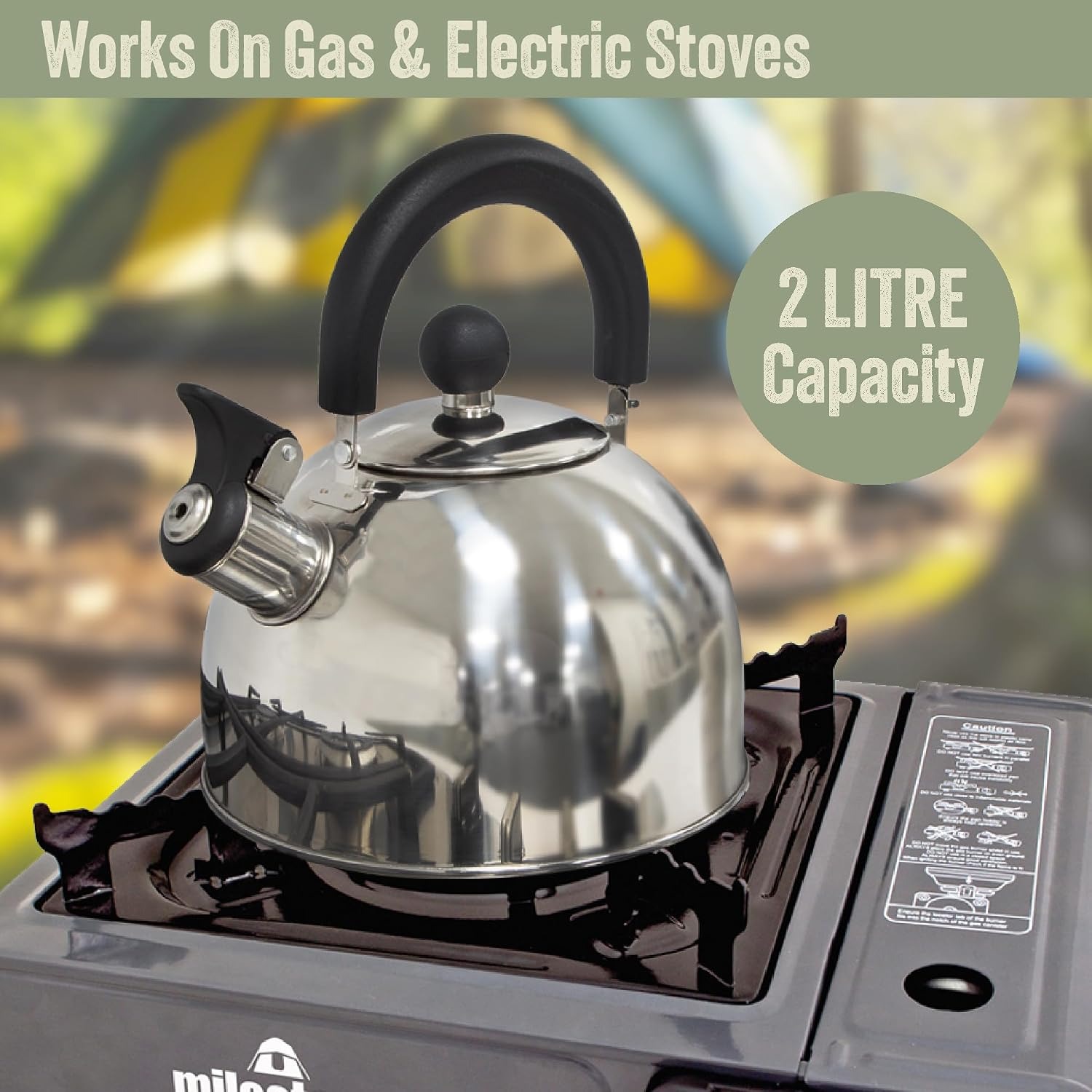
Two litres sits in a comfortable middle. It fills roughly four large mugs with some left over. For a couple, one boil usually covers drinks plus a decent start on the washing up. For a family of four, it means nobody is waiting for the second round.
This kettle is 18 cm deep by 18 cm wide by 15.5 cm high. That is a tidy footprint. It sits on a standard single-burner camp stove without hanging over the edge, and it fits in a kitchen crate alongside your pans rather than demanding a box of its own.
If you are shopping for a lightweight camping kettle to carry on your back over long distances, 2 litres is more volume than you want. This is a kettle for car camping, caravans, boats, base camps and sheds, where you can afford a bit of size for the convenience it buys you.
Materials, and what they mean in practice
The body here is stainless steel and aluminum. That combination is common in outdoor cookware for a good reason. Aluminum is light and moves heat well, so the water comes up to temperature evenly instead of scorching in one hot spot. Stainless steel handles knocks, resists rust and cleans up without much fuss.
The lid is stainless steel and lifts off, which matters more than it sounds. A removable lid means you can fill the kettle under a tap or from a water container without squeezing everything through the spout, and you can get a cloth right inside when you clean it.
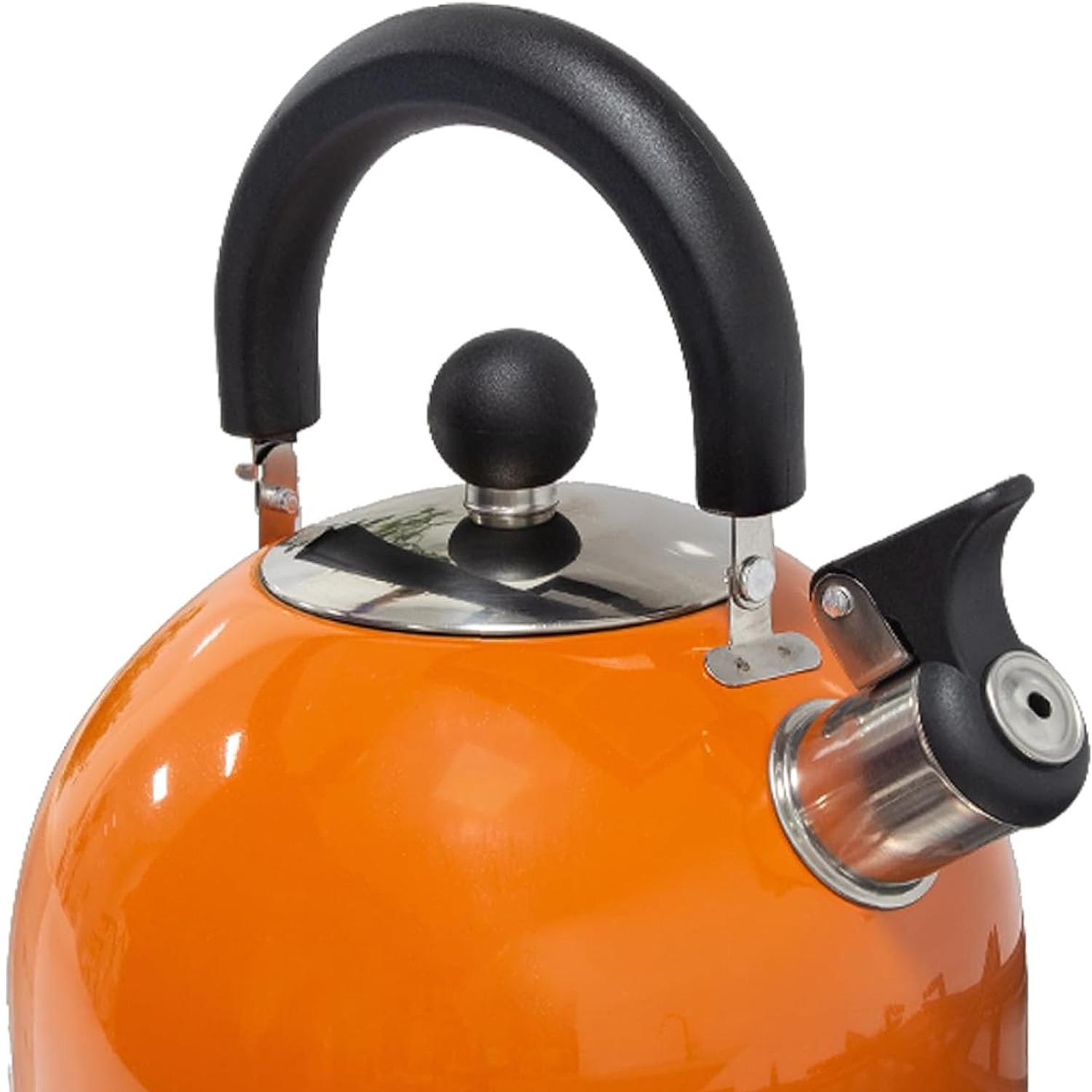
The handle is Bakelite. It is a hard moulded material that resists heat, which is why it has been used on kettles and pan handles for generations. It folds flat against the body. That folding action does two useful things. It keeps your hand away from steam rising out of the lid and spout while the kettle is heating, and it lets the kettle pack flat without the handle snagging on every other item in the crate.
One honest caveat. Heat resistant is not the same as fireproof. If you put the kettle on a grate over an open fire, keep the flames under the base rather than wrapping up the sides, and expect soot on the outside. That is the trade-off with campfire cooking and it happens to every kettle used that way.
Who this kettle suits
Car campers get the most out of it. You have the space, you have a gas stove, and you want hot water fast without fiddling.
Caravan and motorhome owners are the next group. A camping kettle for caravan use needs to sit safely on a small hob and store without taking over a cupboard, and the folding handle helps with that.
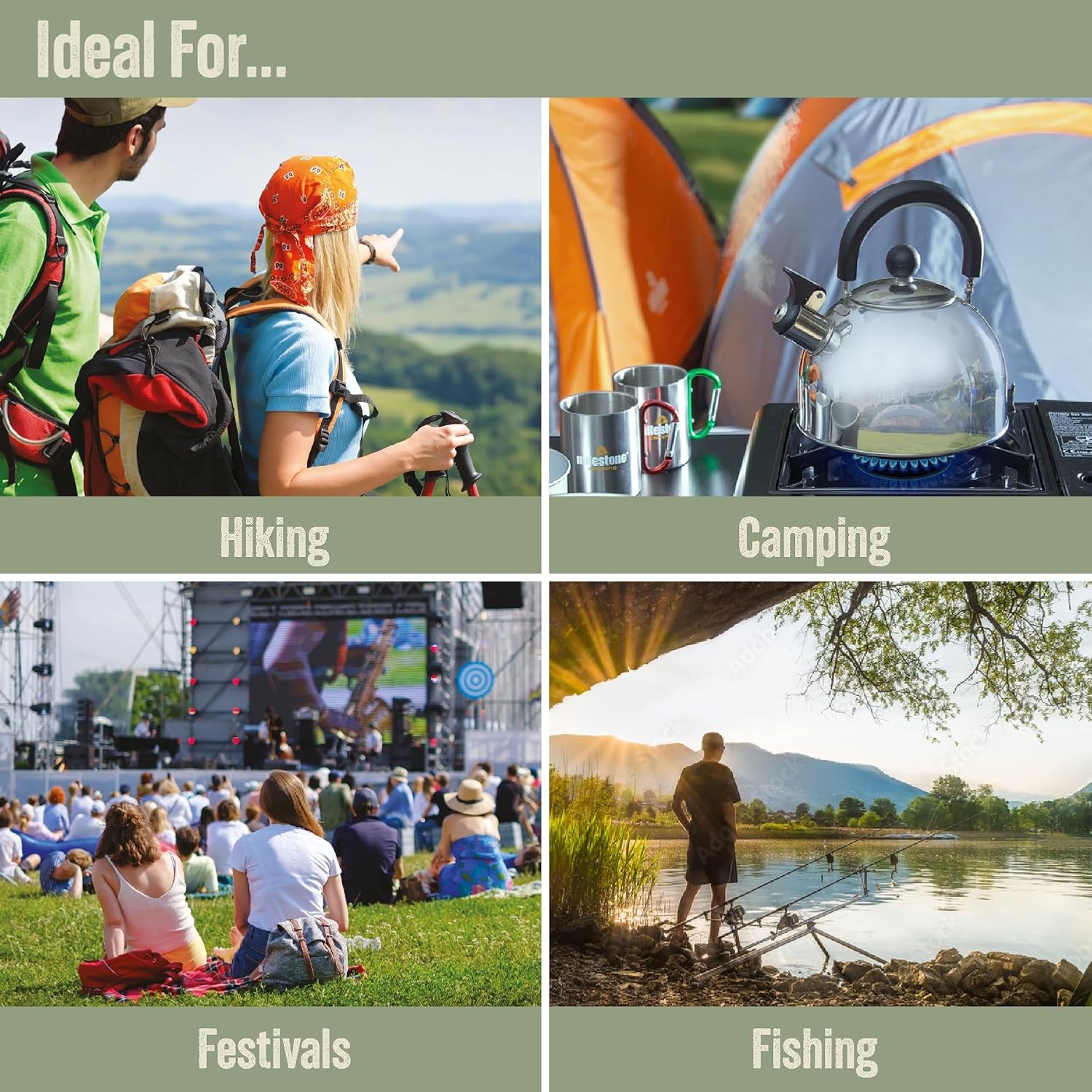
Then there are the users people forget. Anglers on a long session who want a brew without a mains socket. Boat owners cooking in a small galley. Anyone with a workshop or garage and a portable burner who would rather boil water on the bench than walk back to the house. The supplier lists all of these, and they are all the same job really. Hot water, away from a kitchen.
How to use it well
Fill to around two thirds. Leave clear space below the spout so the water does not spit as it climbs, and so the steam has somewhere to build before it reaches the whistle.
Centre the kettle over your burner. Keep the flame inside the base footprint. A flame that creeps up the sides wastes gas and puts heat where the handle lives.
Lift with the handle folded up and your hand clear of the lid. Steam escaping around a lid will burn you faster than hot metal will, so pour at a steady angle rather than tipping it fast.
Turn the burner off when the whistle starts. There is nothing to gain from a longer boil, and plenty of gas to lose.
Keeping it in good shape
Hand wash only. This kettle is not dishwasher safe, and that is normal for cookware with a moulded handle.
Warm water, a little dish soap and a soft cloth do the job. Skip steel wool and rough scouring pads, since they scratch the finish and give grime somewhere to hide. Rinse well so no soap taste carries into the next brew.
Drying is the step people skip, and it is the one that matters most. Water left sitting inside leaves mineral marks and can make the next cup taste flat. Tip it out, wipe it dry and store the kettle with the lid slightly ajar so air moves through.
In a hard water area, scale will build up over time. A mix of water and white vinegar left to stand inside will soften it. Rinse thoroughly afterwards, two or three times, before you boil for drinking.
If you have used it over a fire, you can leave the soot or scrub it off. Many people leave it. A blackened campfire kettle is a badge of use, not a fault.
The short version
A camping kettle is one of those bits of kit that seems optional until you own one, then you wonder why you spent years pouring from a saucepan. This one holds 2 litres, which covers a family round of drinks in a single boil. It whistles, so you get on with other jobs instead of watching the flame. The stainless steel and aluminum build keeps the weight sensible, and the folding Bakelite handle packs flat and stays cool enough to grip.
Hand wash it, dry it properly, store it with the lid cracked open, and it will be making your first coffee of the morning for a long time.