
The complete guide
How to Choose a Portable Camping Table That You Will Actually Bring
The problem nobody mentions until the first night
You can spend months choosing a tent, a sleeping system and a stove, and still end up on your first evening holding a mug in one hand and a plate in the other with nowhere to put either. Camping is full of small frustrations, and almost all of them trace back to the same gap. There is no flat surface.
Without one, the cooler lid becomes the kitchen bench. The ground becomes the drinks station, which means grit in the coffee and ants in the biscuits. Food prep happens on your lap. And the single worst moment, which every camper has lived through, is the mug of something hot going sideways into a sleeping bag.
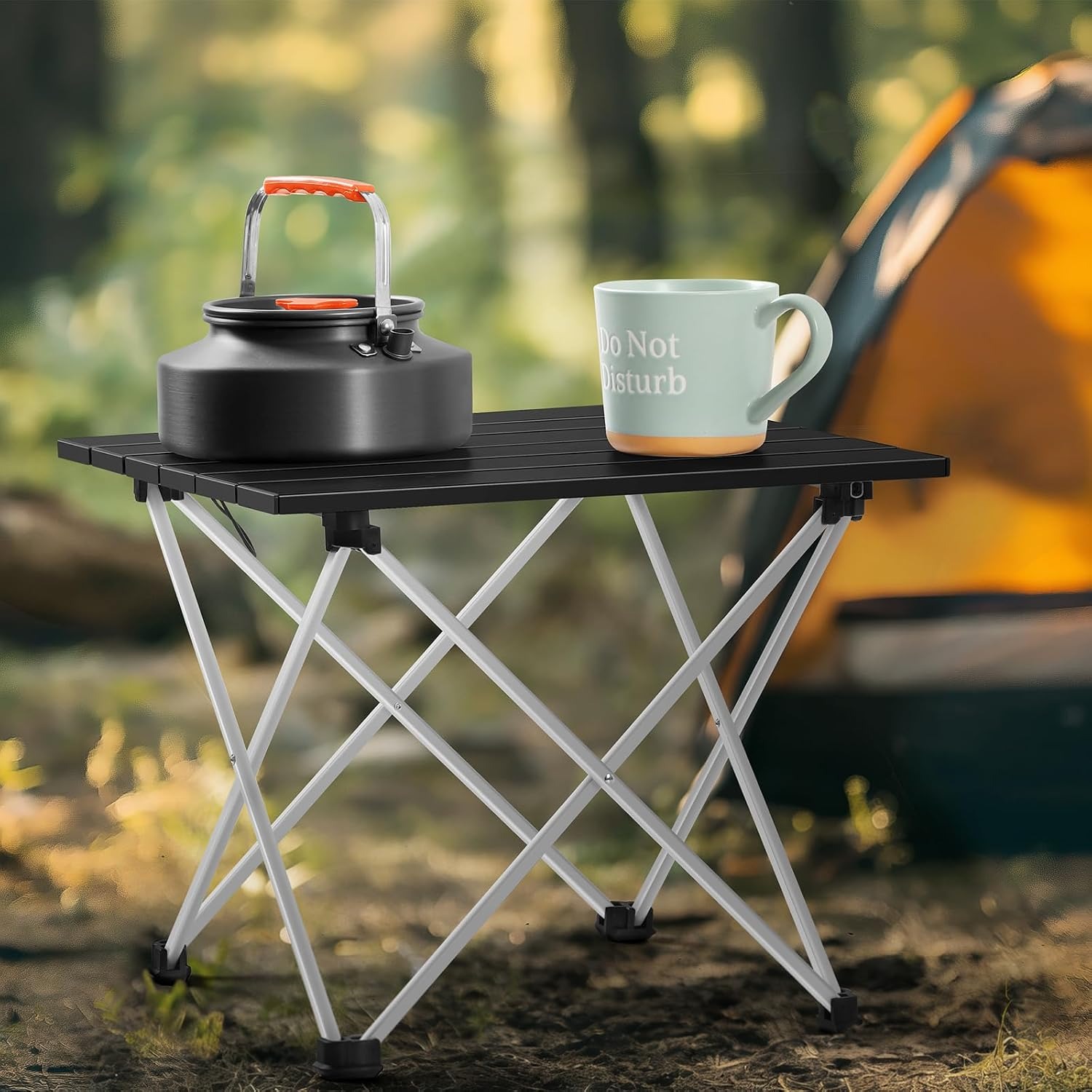
A small folding table fixes this, but only if it is light and small enough that you actually pack it. The heavy aluminum trestle in the garage does not count. It is the table that lives in the car permanently and never feels like a chore to carry that earns its keep.
What this table actually is
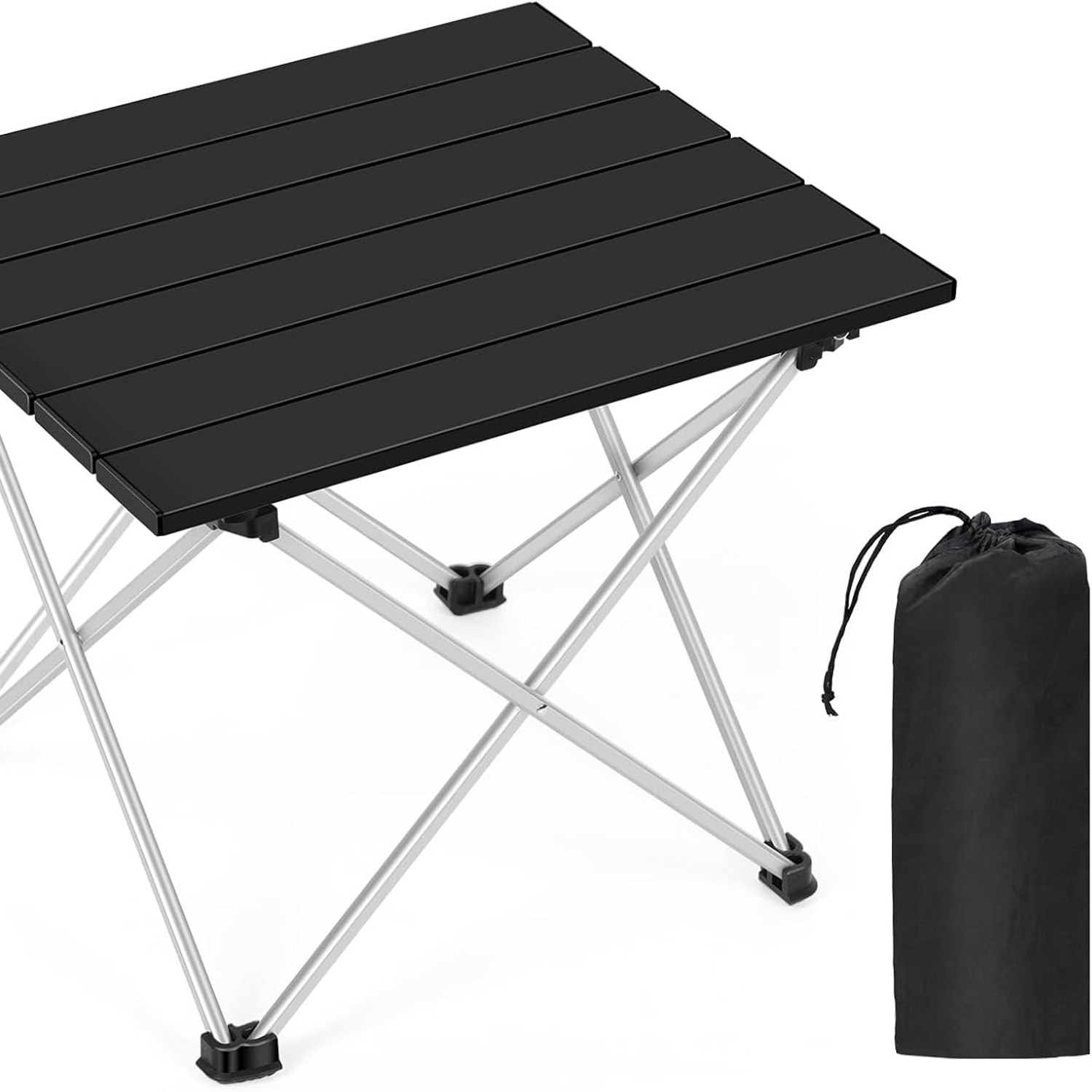
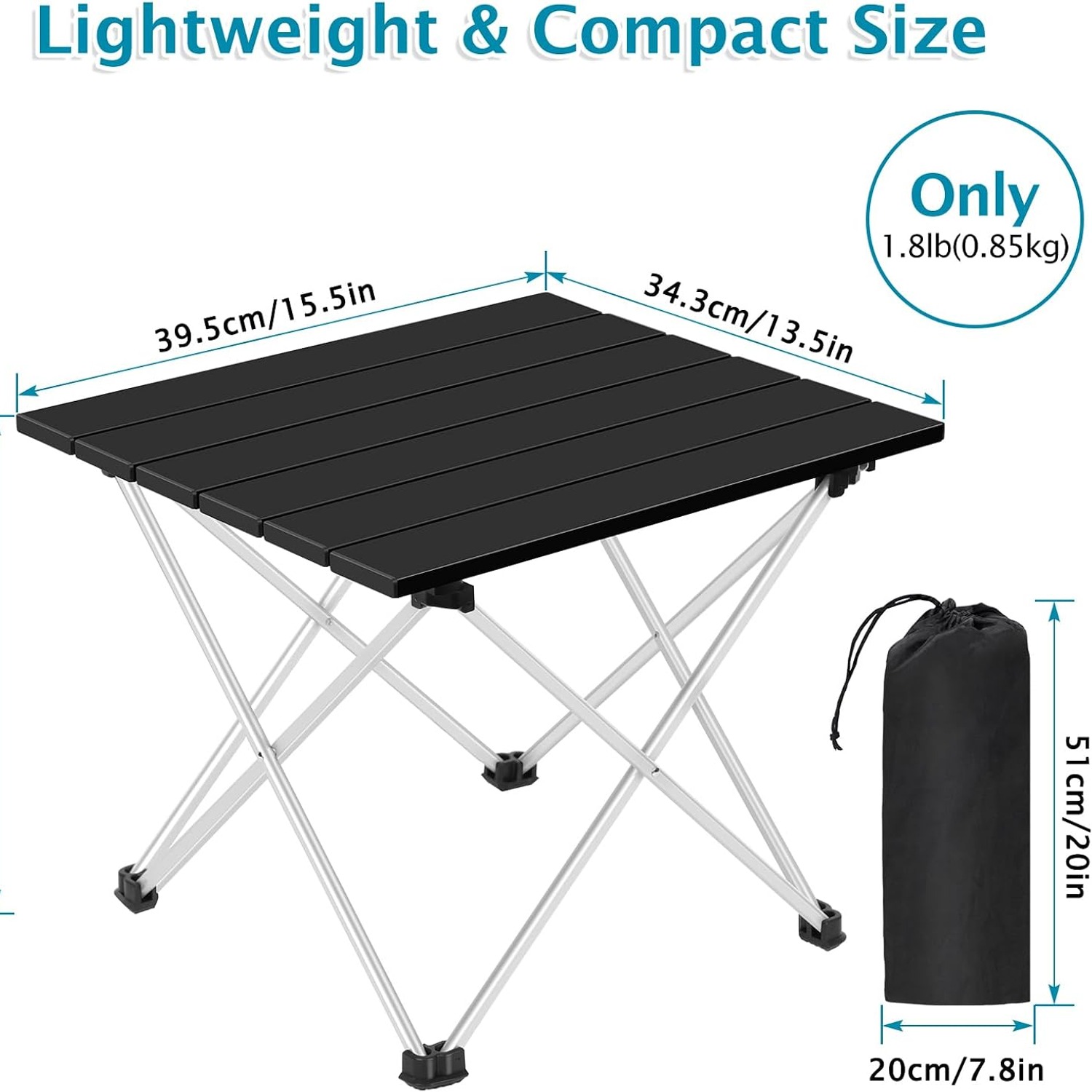
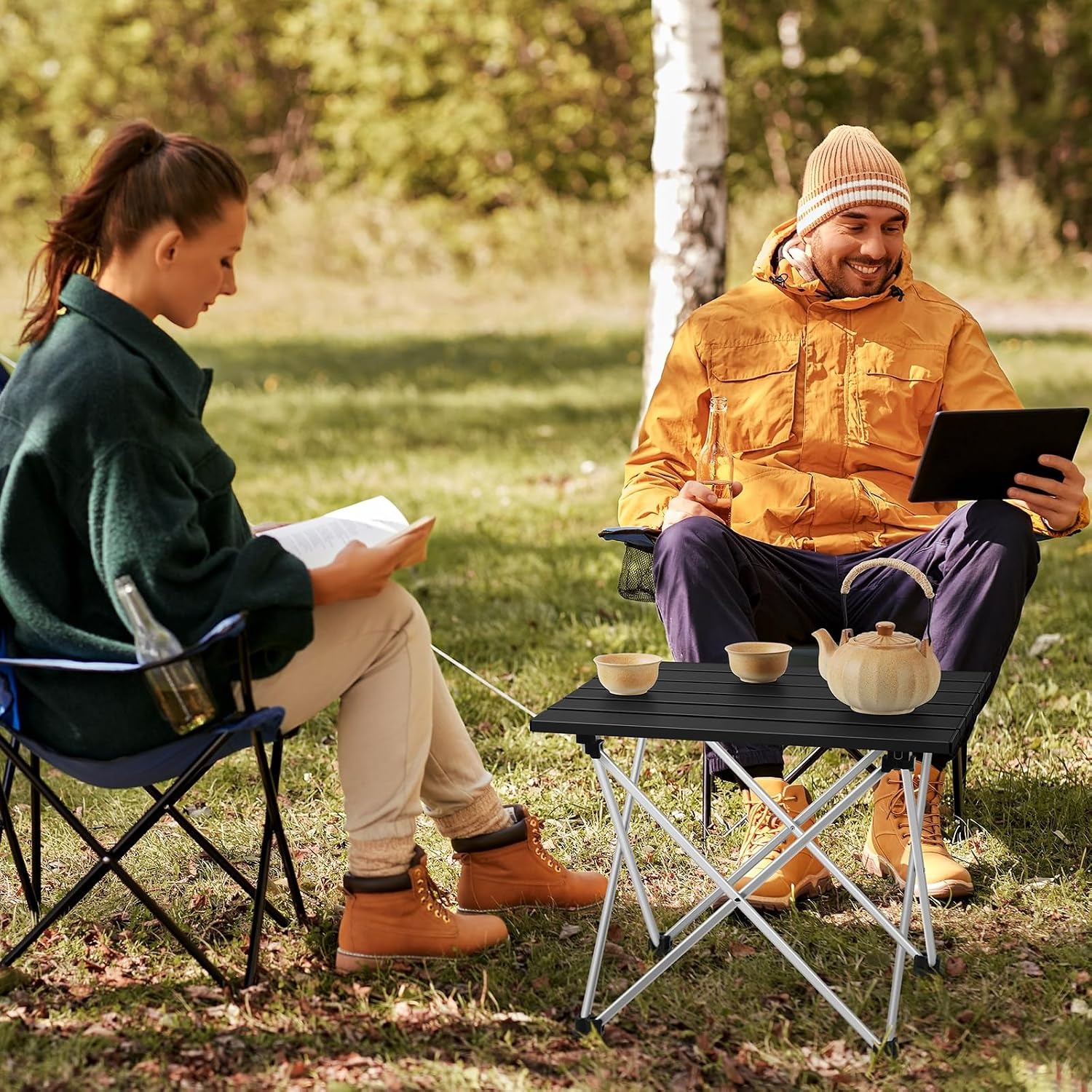
This is a compact folding table built around a metal aluminum frame with a powder coated finish and a waterproof plastic slat top. Set up, it stands 32.5 cm high, 39.6 cm wide and 34.5 cm deep. Folded, its collapsed length is 440 mm. The whole thing weighs 780 g.
Those numbers matter more than any marketing line. Under a kilogram means you can carry it in one hand with a chair in the other. A 440 mm packed length means it fits in gaps you already have, down the side of a boot, behind a seat, in a roof box. You are not reorganising the car to make room.
The maximum recommended load is 22.68 kg, which is well beyond what most people put on a camp table. A twin burner stove with a full pot, a loaded cool bag, a chopping board with dinner spread across it, all comfortably inside that figure.
How the folding mechanism works
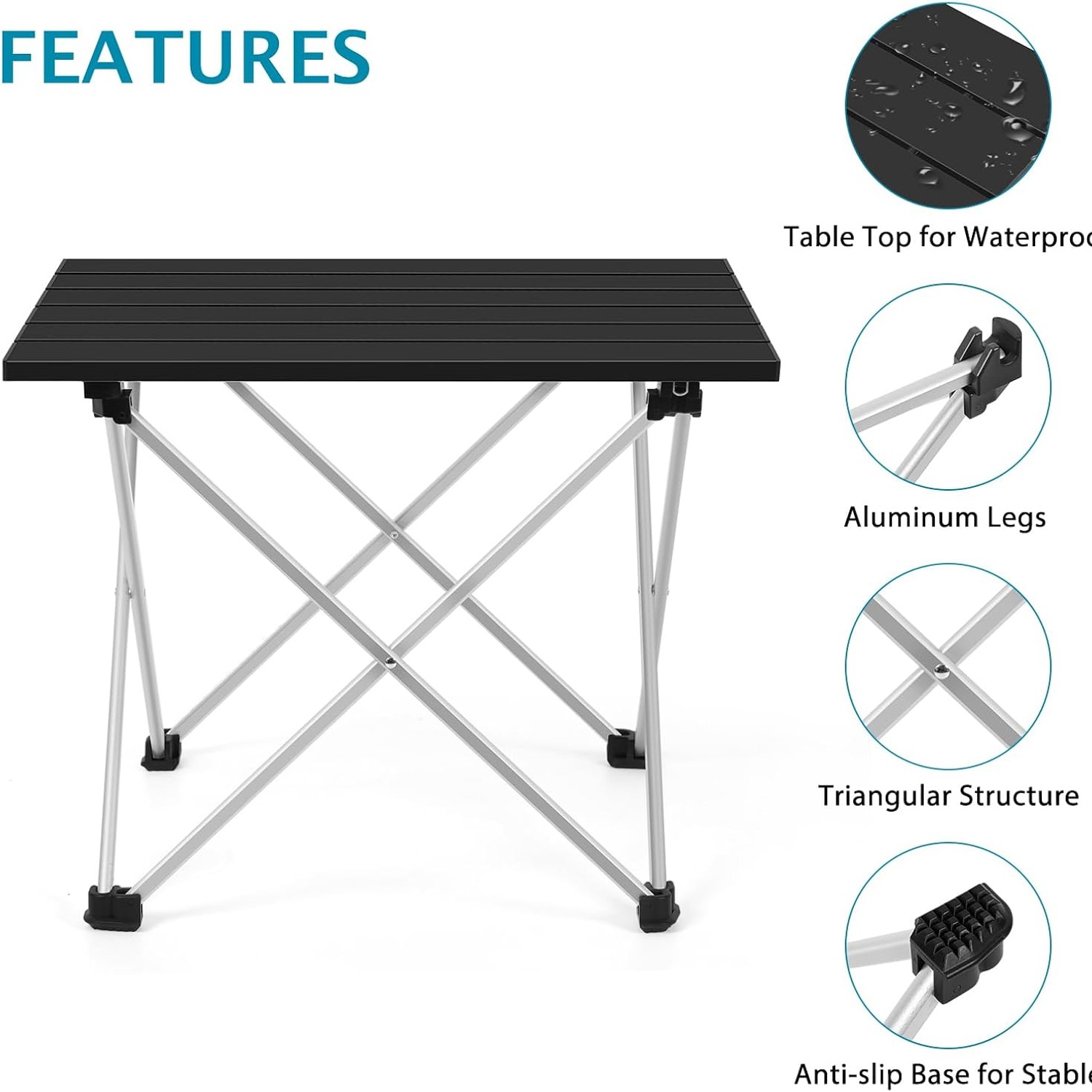
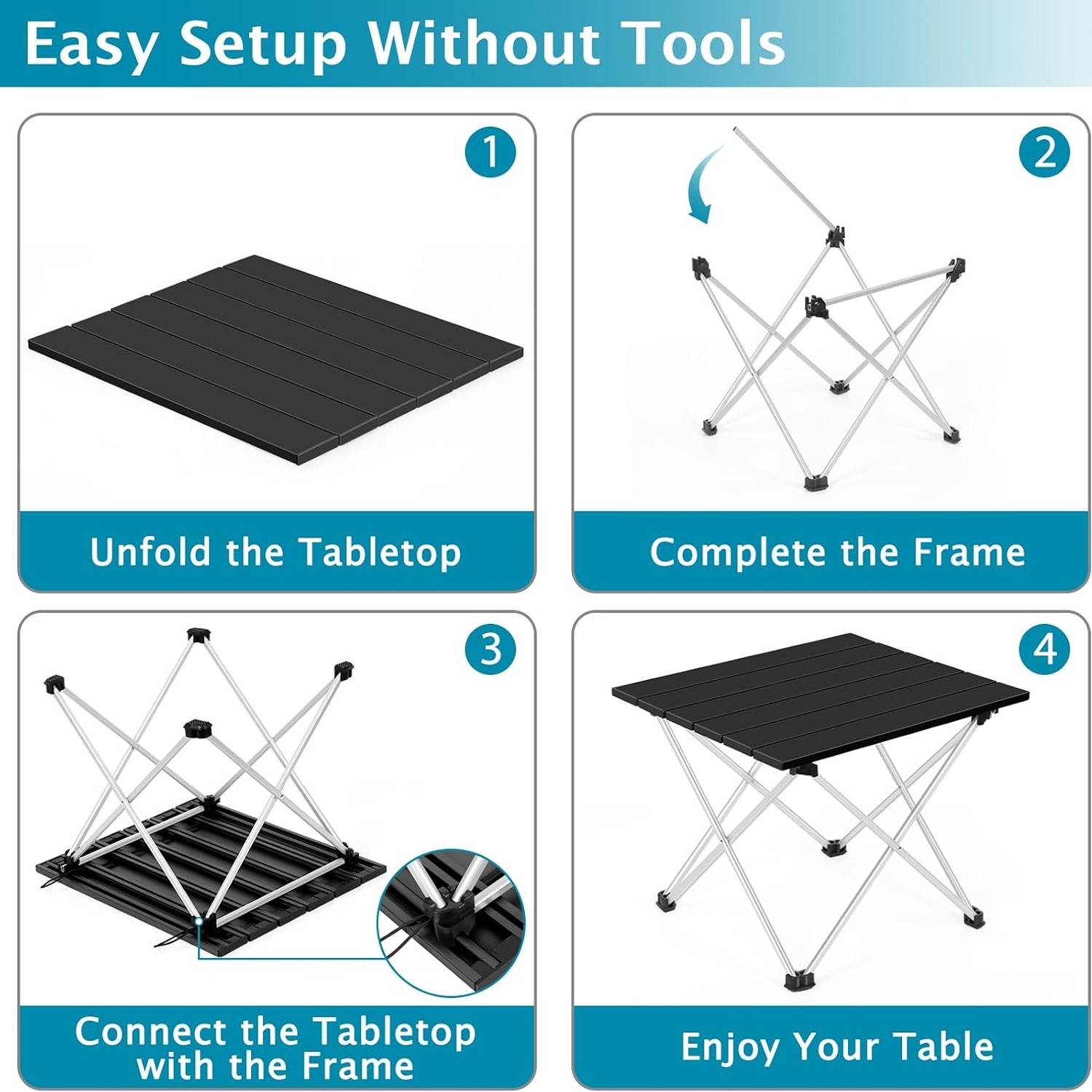
The frame uses hinge joints and a cross base. Open the frame out and the legs lock into position. The slatted top then rolls flat across the support rails, and the whole surface tensions into place.
There are no bolts to thread, no pins to drop in the dark and no tools required. Assembly is listed as required but no tools are included, because none are needed. There is an assembly guide in the box for the first time, and after that it becomes muscle memory. Open, roll, done.
The cross base is the quiet hero here. A straight four leg design can rock on uneven ground. A cross base spreads the contact points, which gives the table a steadier stance on grass, gravel and sand than the footprint size alone would suggest.
Who it suits
Car campers. This is the obvious fit. It lives in the trunk, comes out at every stop and never takes up meaningful space. If you have been looking for the best small camp table for a weekend setup, the combination of low weight and quick setup is hard to beat.
Caravanners and van owners. A low side table beside an awning chair is one of those things you do not know you need until you have one. The compact size means it does not clutter the awning area.
Anglers. Fishing is listed among the recommended uses, and the waterproof top is the reason why. Bait, scales and wet hands do not bother a plastic surface. A damp cloth takes care of the mess in seconds, which fabric topped tables simply cannot match.
Beach and picnic users. Sand brushes off, drinks stay upright and the table sits at a sensible height for people sitting on rugs or low chairs. For a compact picnic table, the 32.5 cm height is well judged.
Tailgaters and BBQ cooks. Prep space next to the grill, or a drinks station away from the heat. Just keep hot pans off the plastic and use a board or trivet.
Light hikers. At 780 g it is realistic for short walk-in sites. It is not ultralight gear in the strict sense, but for anyone who values comfort at camp over shaving grams, it earns its place.
How to choose between camp tables
A few questions sort most of it out.
How are you carrying it? If the table only ever moves from boot to pitch, weight matters less and surface area matters more. If you are walking it in, weight becomes the deciding number. At 780 g this one sits firmly in the carry-it-anywhere bracket.
What height do you need? Tables come in roughly three heights. Low tables around 30 to 35 cm pair with camp chairs and ground sitting. Mid height tables suit folding stools. Full height tables stand at kitchen bench level for standing prep. This one is a low table at 32.5 cm, so check it matches your chairs before buying.
What are you putting on it? Be honest about the load. Stoves, cast iron and full cool bags add up fast. A 22.68 kg rating covers almost everything a weekend camper will throw at it, but spread the weight across the top rather than hanging it off one edge.
Fabric top or hard top? This is the quiet dividing line. Fabric tops are lighter and pack smaller, but they sag, soak up spills and take ages to dry. Hard tops, like the waterproof plastic slats here, give you a surface you can actually chop on and wipe clean. For cooking and fishing, hard wins every time.
How does it pack? Check the collapsed dimensions against where it will live. A 440 mm packed length fits most car boots and roof boxes without rearranging anything else.
Looking after it
None of this is complicated, but it makes the difference between a table that lasts years and one that gets sticky and stiff.
Wipe the top with a damp cloth after each use. Warm water and a drop of dish soap handles grease and sauce. Keep abrasive scourers and strong solvents away from the powder coated frame, because scratched coating is where corrosion starts.
Before you fold it, shake off sand, grass and crumbs. Grit in the hinges is the single most common reason folding tables start to feel rough. Thirty seconds of shaking saves a lot of annoyance later.
Let it dry fully before packing it into its bag. A damp table sealed in a bag for a week comes out smelling bad and with slower joints. If you packed up in rain, open the table at home and let it air before storing.
Store it indoors in a dry spot. It handles weather during a trip, but it is not built to sit outside all season.
One more thing. Do not put hot pans, hot grill plates or anything straight off a fire onto the plastic top. Use a board or trivet. Plastic and direct heat never end well.
The short version
This is a small, light folding table that does one job properly. It gives you a flat, wipeable surface wherever you set up, and it weighs 780 g, which is light enough that bringing it stops being a decision.
The aluminum frame and cross base keep it steady. The waterproof plastic top handles food prep, bait, spilt drinks and sandy hands. Setup takes seconds and needs no tools. It packs to 440 mm and holds up to 22.68 kg.
It is a low table at 32.5 cm, so pair it with camp chairs rather than expecting dining height. Within those limits, it is the sort of kit that quietly improves every trip and then lives in the car permanently.