
The complete guide
The Ultralight Buyer's Guide to Solid Fuel Stoves
The weight problem nobody solves last
Most people trim their pack in the same order. Tent first, then sleeping bag, then clothes. By the time they get to the kitchen, the stove, the pot, the fuel canister and the windscreen are sitting there as a stubborn lump that has not changed since the first trip. It is easy to ignore because a stove feels like a fixed cost of eating hot food.
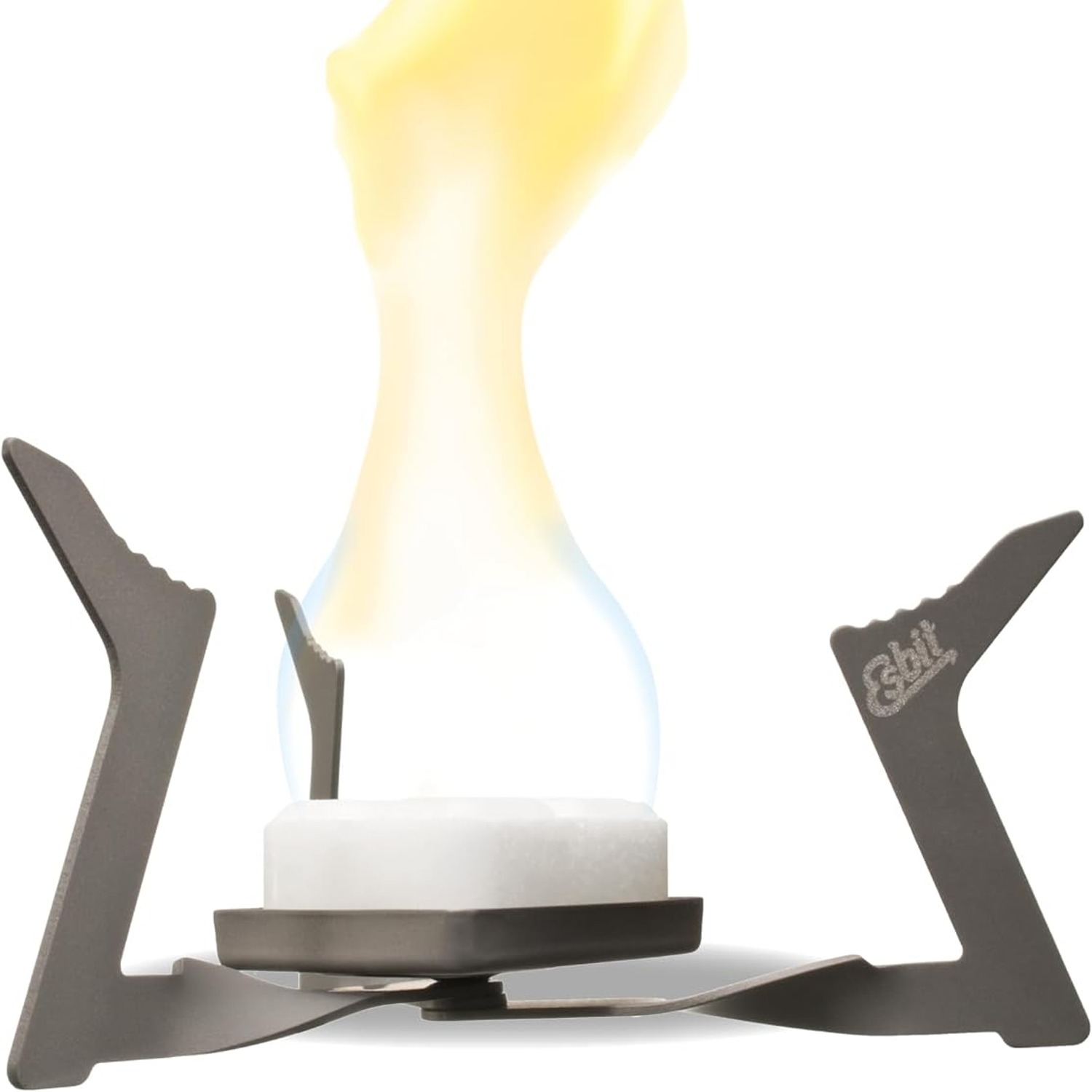
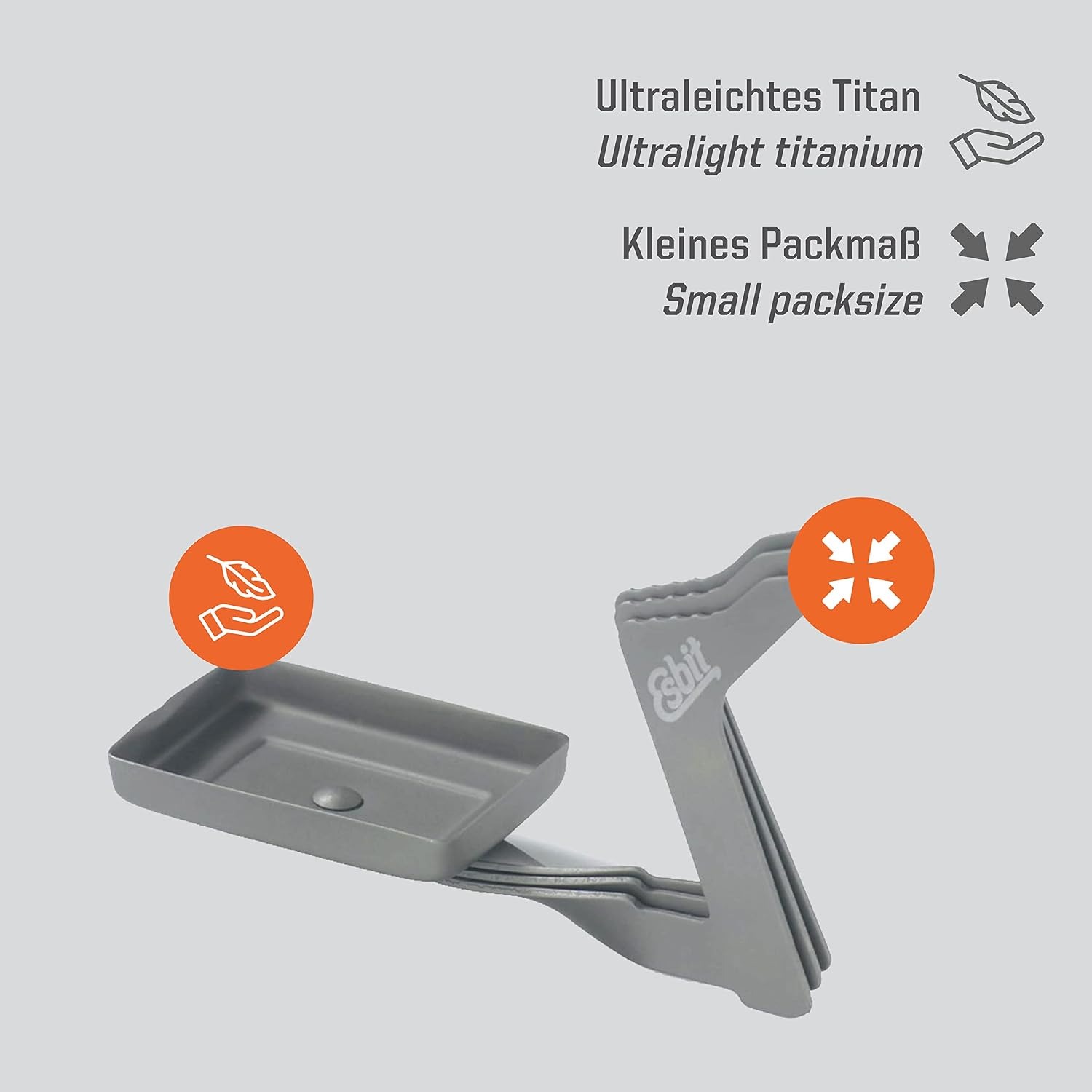
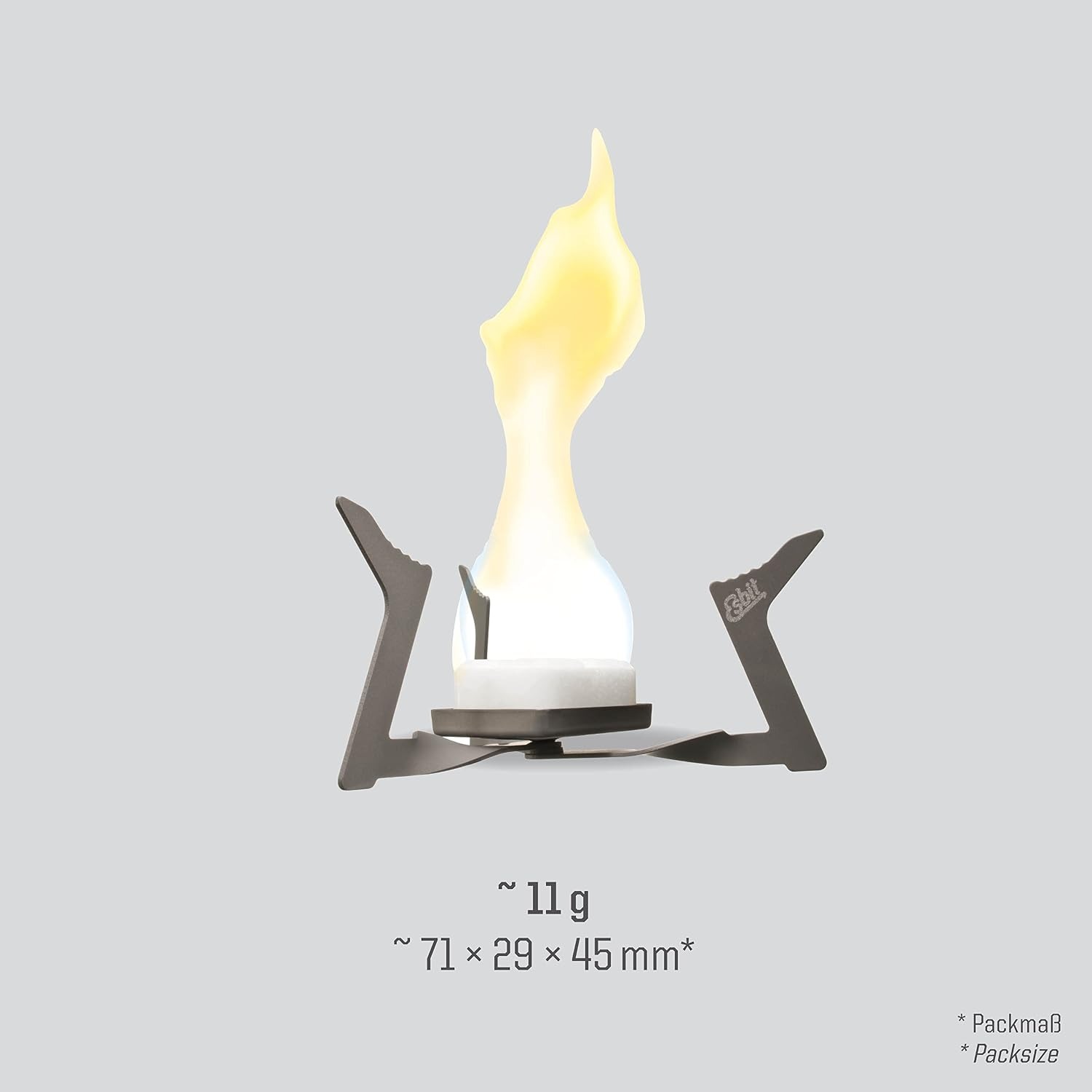
It is not fixed. A solid fuel stove rewrites that part of the list completely. This one has a listed item weight of 0.02 kg and packs down to 28 x 28 x 84 mm. Put it next to a canister stove with its canister and the difference is not a few grams, it is most of your kitchen gone.
That matters most to a specific kind of walker. If you are doing an overnight adventure race, a fastpacking push, a long thru-hike section or a bike tour where you count everything, this is the category of gear that moves the needle. If you are car camping and cooking bacon, it is the wrong tool and we would rather tell you that now.
How a solid fuel stove actually works
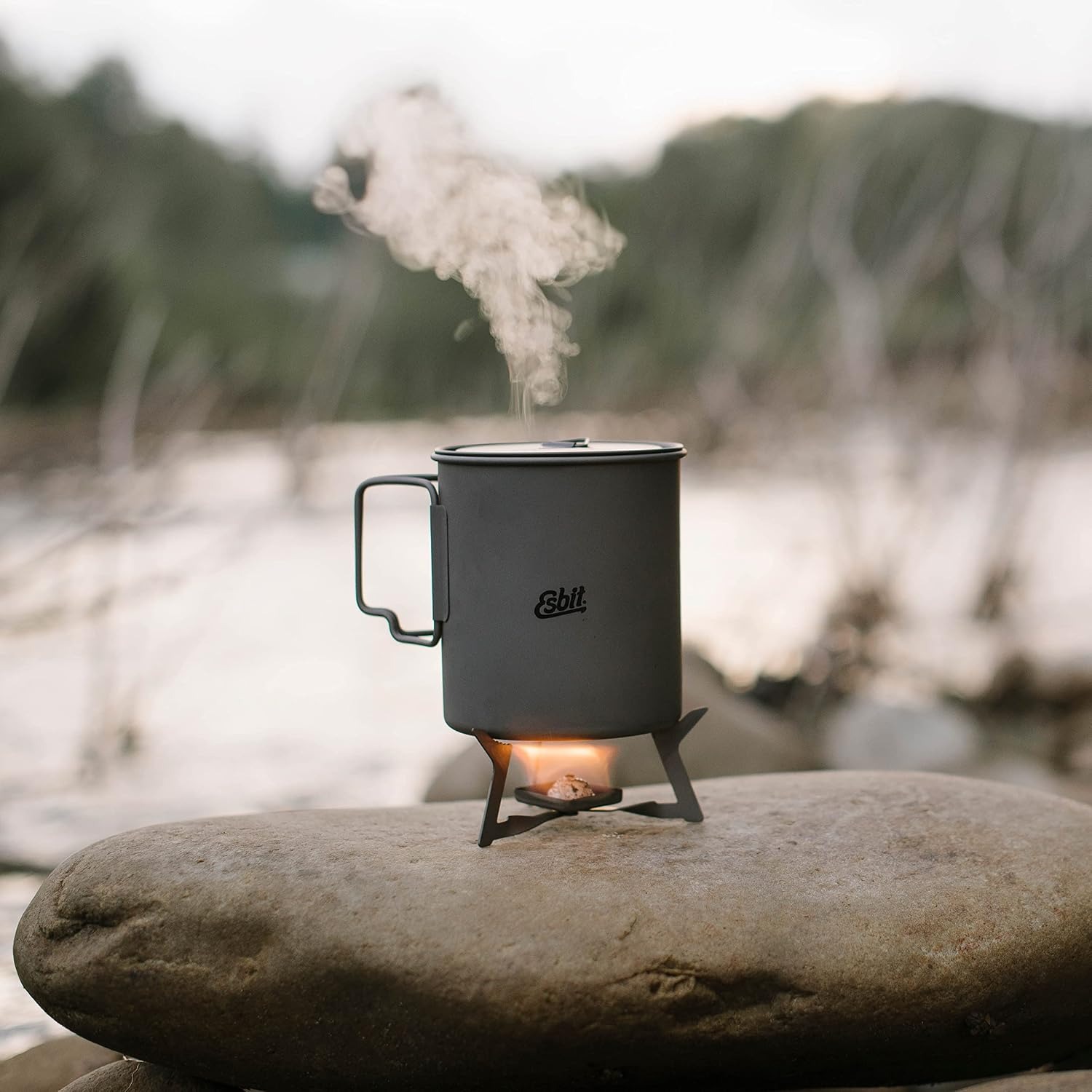
There is almost nothing to it, which is the point. You unfold three legs from the body, set a solid fuel tablet in the base, and light the tablet. The legs form a tripod that holds your pot above the flame. When the tablet is finished, the flame goes out.
No pump. No valve. No jet that clogs when you cook with a dirty pot. No O-ring that perishes in a hot car trunk. Nothing that can leak fuel into your pack.
The fuel is a dry block. You can carry tablets loose in a side pocket and they will not spill, weep or lose pressure. That is a bigger advantage than it sounds, especially if you have ever found a slick of white gas on the inside of a pack.
The trade-off is control. A tablet burns at the rate it burns, and you cannot turn it down. Think of this as a water-boiling stove rather than a cooking stove. Coffee, tea, instant noodles, couscous, freeze-dried meals and rehydrated anything all work. Pancakes do not.
Where titanium earns its place
Titanium does one job here extremely well. It gives you a stove frame that is strong enough to hold a full pot but light enough that you forget it is in the bag. It also resists corrosion, which matters because this stove spends its life cycling between hot, cold and damp.
Expect the metal to change colour with use. Heat cycling can leave blue, straw and grey tones across the surface. That is a surface effect, not damage. Soot builds up too, and it wipes off well enough with a cloth, though you are never getting it back to showroom finish. Most owners stop caring after the second trip.
The folding legs are the only moving part. Keep grit out of the hinges, do not force them, and they will keep working for years.
Who this suits, and who it does not
This stove suits the solo walker who boils water and nothing else. It suits adventure racers and anyone whose pack list is measured in grams. It suits cyclists who want a hot drink without carrying a canister. It also makes a very good backup for people who normally run gas, because it costs almost nothing in weight and will still work when the canister runs dry on day four.
It is a strong option for emergency kits too. A gas stove in a car trunk ages badly. Tablets and a titanium frame just sit there and wait.
It does not suit groups. Heating a two-litre pot with solid fuel is slow and burns through tablets fast. It does not suit cooks who want real meals with sauces and simmering. And it does not suit anyone who wants a push-button start in the rain. Solid fuel needs a flame, a bit of shelter and a little patience.
Choosing fuel and planning how much
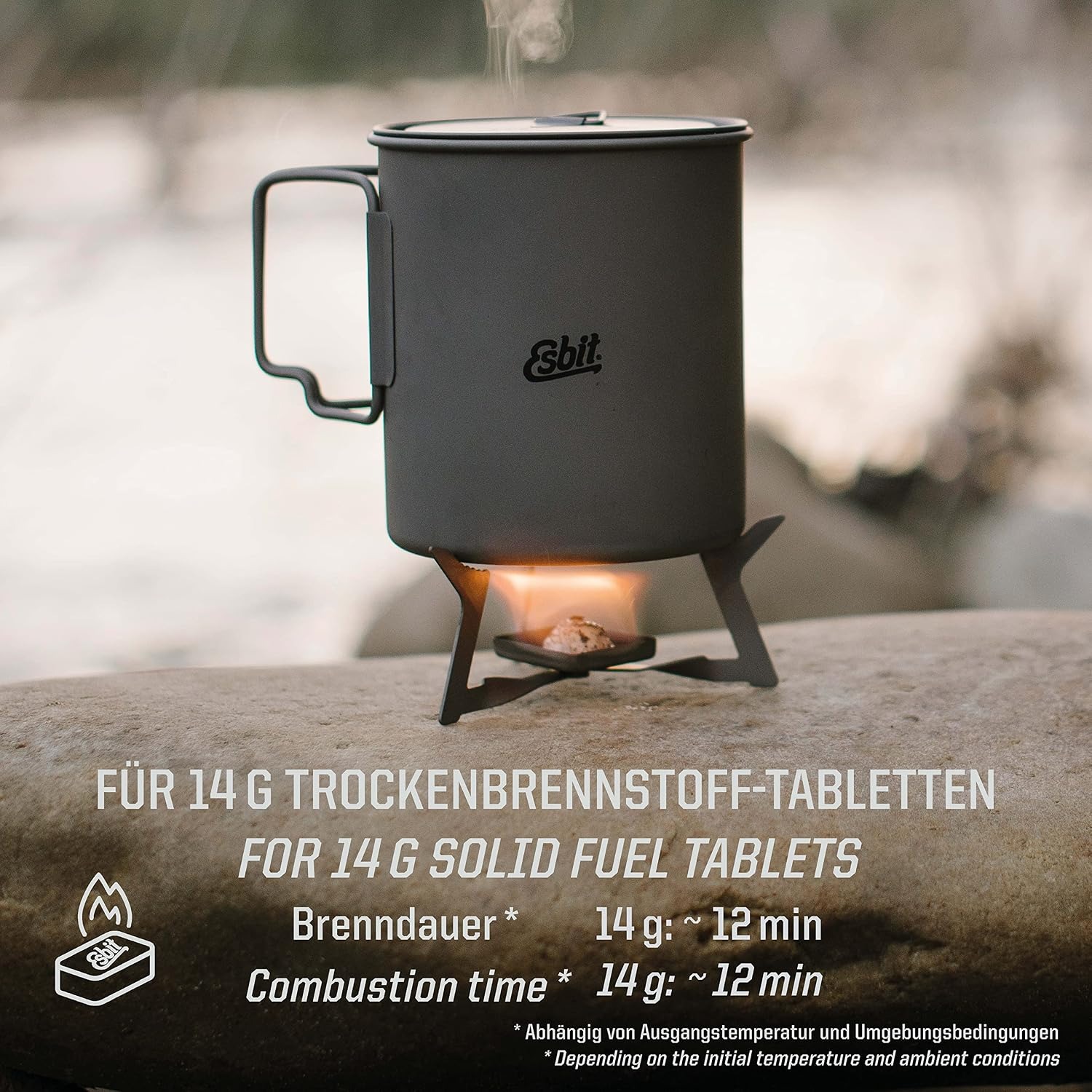
Work out your fuel from your routine, not from a chart. Count the hot drinks and hot meals you actually make per day, then count the tablets that takes, then add a couple of spares for a cold snap or a windy camp.
Three things push your fuel use up. Cold water takes more energy to boil than water from a warm tap. Wind steals heat from the side of the pot faster than the flame can replace it. And a wide pot with a lot of exposed surface loses heat quickly. If you are planning a trip in shoulder season, assume your tablet count goes up rather than hoping it will not.
Partly burned tablets can be smothered and relit, which is how experienced users stretch a pack. A metal spoon pressed on the flame is usually enough.
The accessories that genuinely help
You do not need much, but two items make a real difference.
A windscreen is the big one. A strip of heavy foil bent around the stove, leaving a gap at the base for air, can cut your boil time noticeably. Without it, a breeze that feels gentle on your face can double what you burn.
A base plate is the second. A flat stone, a tent peg scrap of foil or a purpose-made heat shield protects the ground and gives the legs something solid to sit on. Solid fuel can leave a scorch mark and a sticky residue on surfaces, so never run it straight on a timber table or a painted surface.
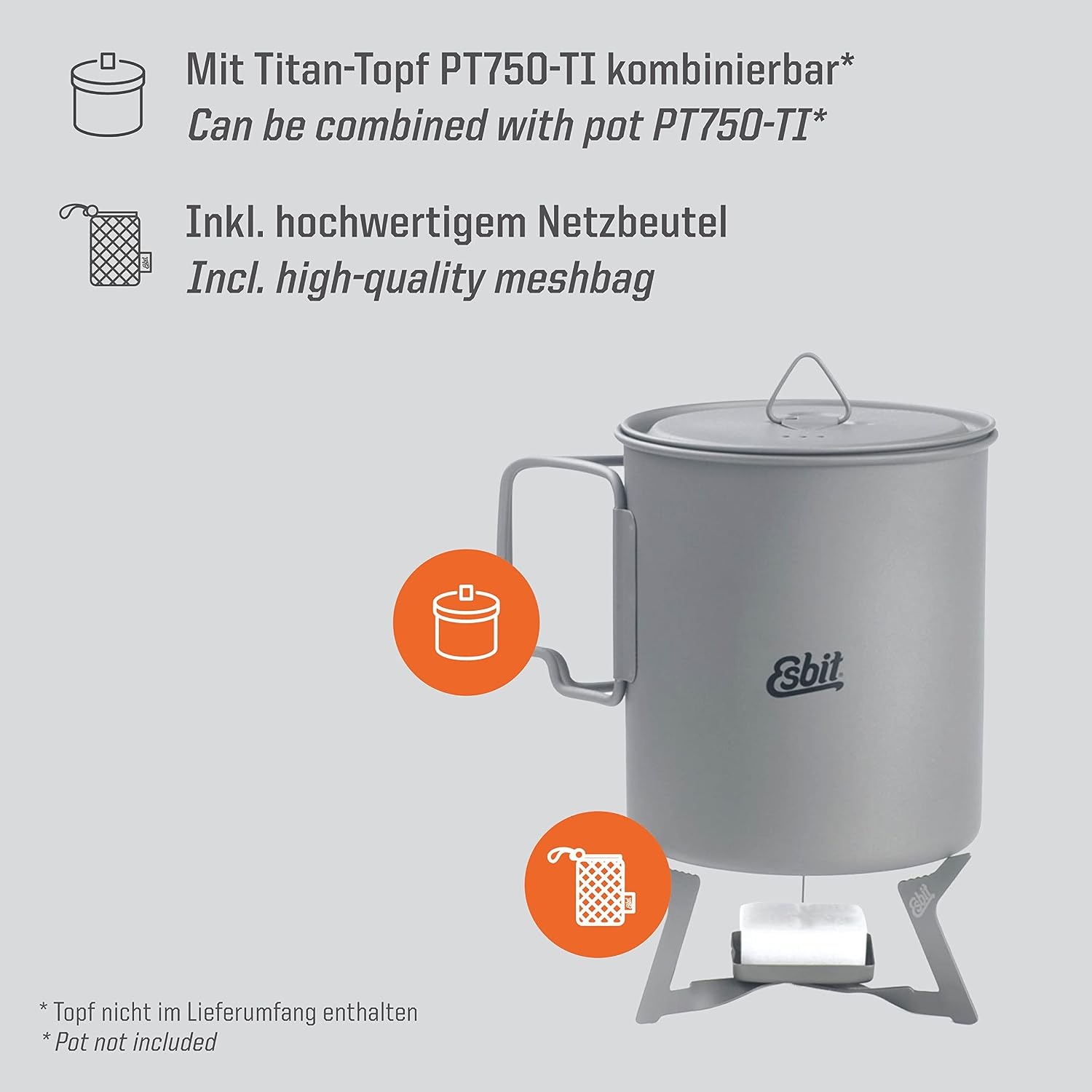
Beyond that, a narrow pot works better than a wide one, because more of the flame stays under the base where it belongs. A 750 ml titanium mug-pot is a common pairing and makes a very tidy best minimalist cook kit.
Living with it on the trail
The routine is quick once you have done it twice. Find flat ground out of the wind, unfold the legs, drop in a tablet, light the corner, wait a few seconds for it to catch, then set the pot on. Watch it rather than wandering off, because an open flame with no shut-off deserves attention.
When the water is up, lift the pot with a cloth or a pot lifter. Let the stove cool properly before you touch it or pack it. Titanium cools fast, but not instantly.
Wipe off the worst of the residue, then slide it into the mesh bag that came with it. That bag is the difference between a tidy pot and a sooty one, so use it. The whole package then nests inside most backpacking pots and disappears.
Care that keeps it going
Cool first, always. Then wipe with a dry cloth, or a little warm water if the residue is stubborn. Dry it completely before it goes away, because trapped moisture in a pot is how your kit starts to smell.
Skip the scouring pads. They scratch titanium and gain you nothing, since the soot marks are cosmetic. Check the hinges before each trip and clear out any sand or grit with a brush or a puff of air.
Store it somewhere dry with the legs folded. Keep fuel tablets in their packaging, away from heat, and separate from food if you are fussy about smells.
The short version
If weight is the thing you care about most, this is one of the simplest upgrades available. A titanium frame at 0.02 kg, three folding legs, a 28 x 28 x 84 mm packed size and a mesh bag to keep it clean. It boils water, it does not simmer, and it has almost nothing that can break.
Carry a windscreen, count your tablets honestly, and give it a flat surface. Do that and you have a reliable hot meal for a weight you will not notice. If you need flame control or you are feeding a group, a canister stove is still the better buy, and this one makes a very good second string sitting in the lid pocket.