

The complete guide
How to Choose a Camping Pillow That Actually Packs Small
The jumper-under-the-head problem
Most people who camp have done the same thing. You get to the site, roll out the mat, and realise you forgot a pillow. So a fleece gets rolled up, a jacket gets stuffed into a dry bag, and you spend the night with your head slipping off a lump that keeps unrolling itself.
It works, in the sense that you survive. It does not work in the sense of waking up without a stiff neck. Sleep is what makes the next day's walk enjoyable, and head support is a bigger part of sleep quality than people give it credit for. Your neck wants to stay roughly in line with your spine. A bundled jumper has no interest in doing that.
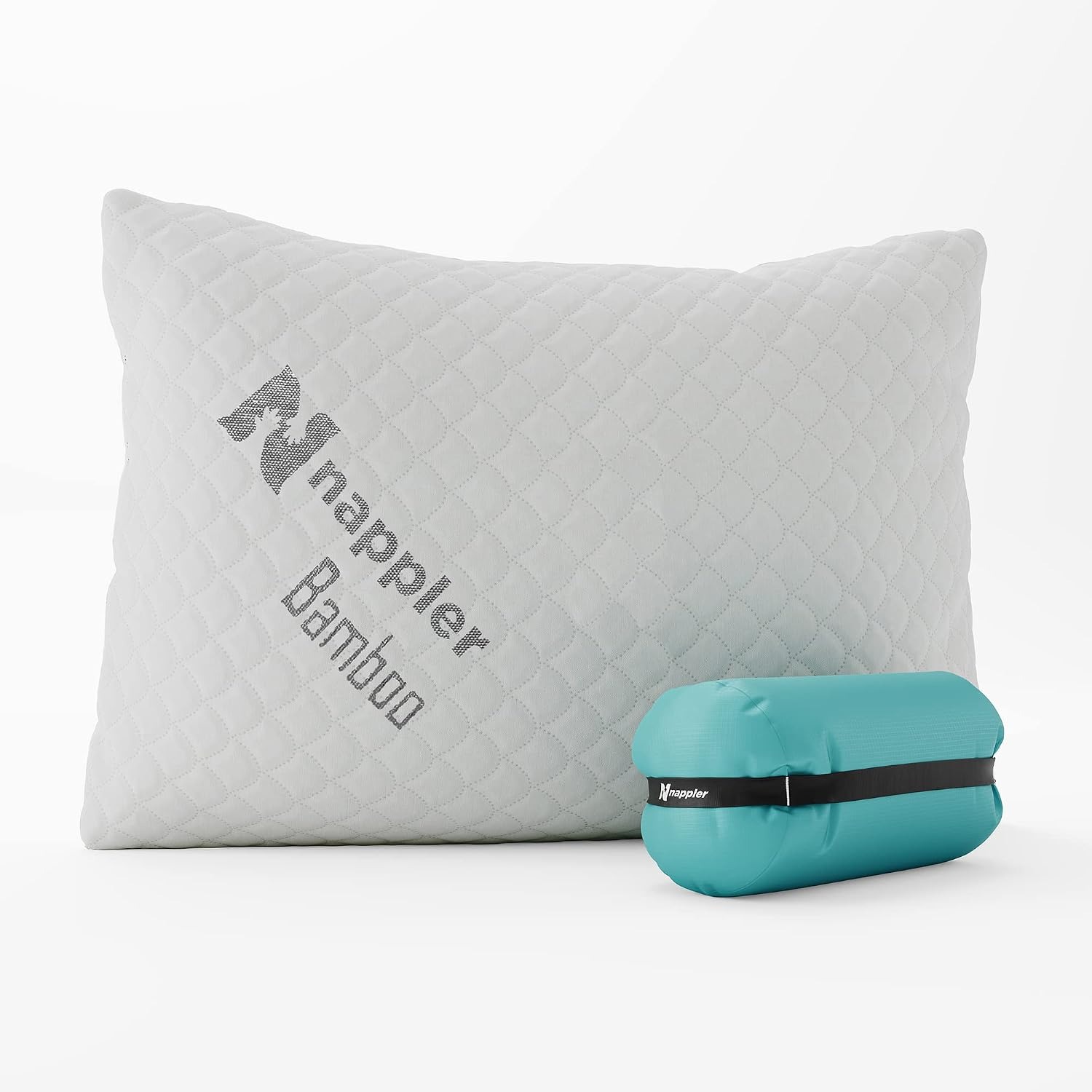
The reason pillows get left behind is simple: a normal bed pillow is enormous and light things that take up volume are the enemy of packing. A compressible camping pillow solves that specific problem. It squashes into a case, then becomes a real pillow again when you need it.
How a shredded foam pillow works
There are three common types of camping pillow, and they behave very differently.
Inflatable pillows are the lightest and smallest. You blow them up, and they go flat again for packing. The trade-off is feel. Air bladders are bouncy, they squeak against nylon, and your head tends to slide off the dome. They can also puncture.
Solid foam pillows feel the most like a real pillow, but they do not compress. A moulded block stays a block, which is why they live in car boots and campervans rather than on backs.
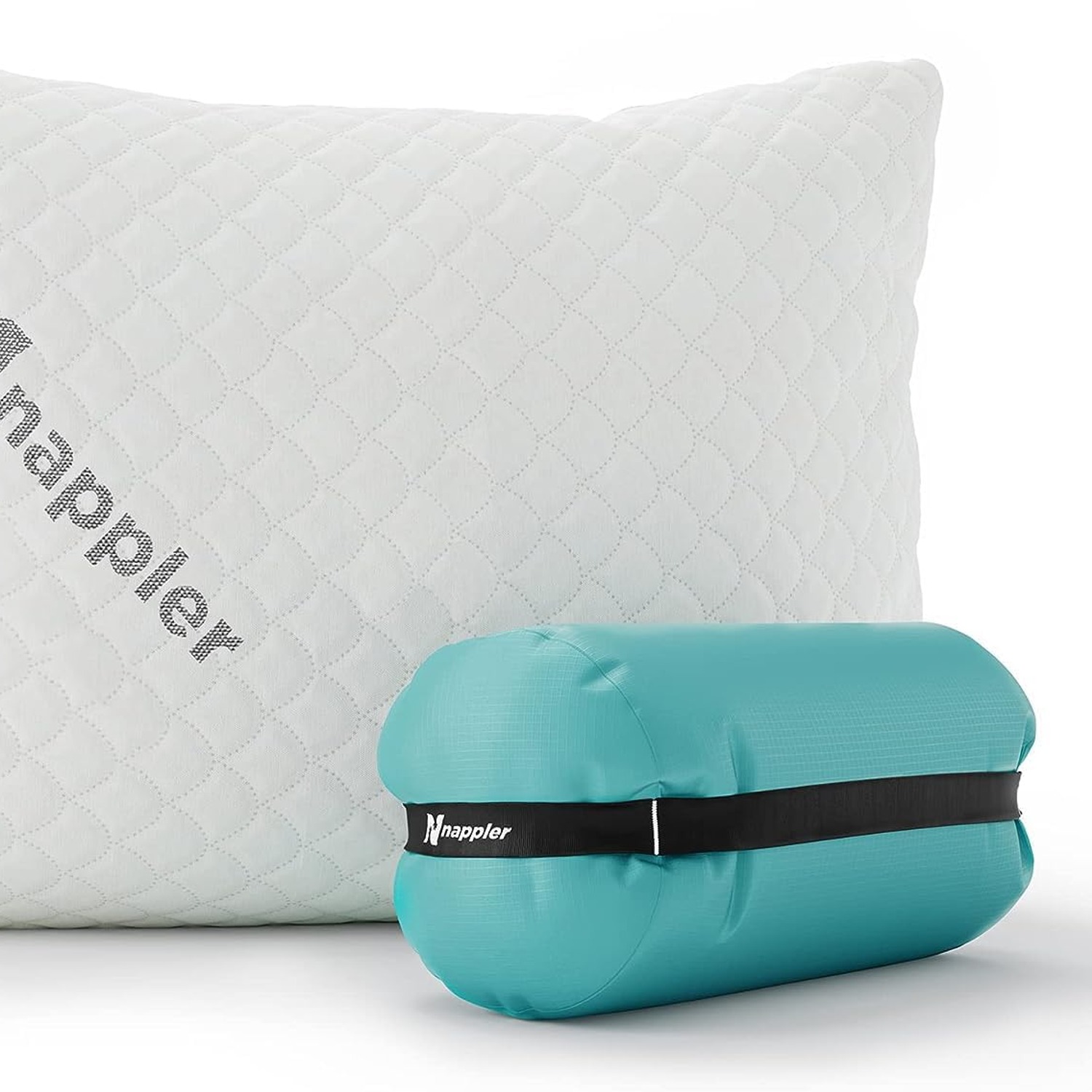
Shredded memory foam sits in the middle and is where this pillow lands. The fill is chopped into pieces, so it collapses under pressure and expands again when released. That is what makes it compressible. It also means the fill moves, so you can push it around with your hands until the shape suits your sleeping position. A side sleeper can bunch it up for height. A back sleeper can spread it flat.
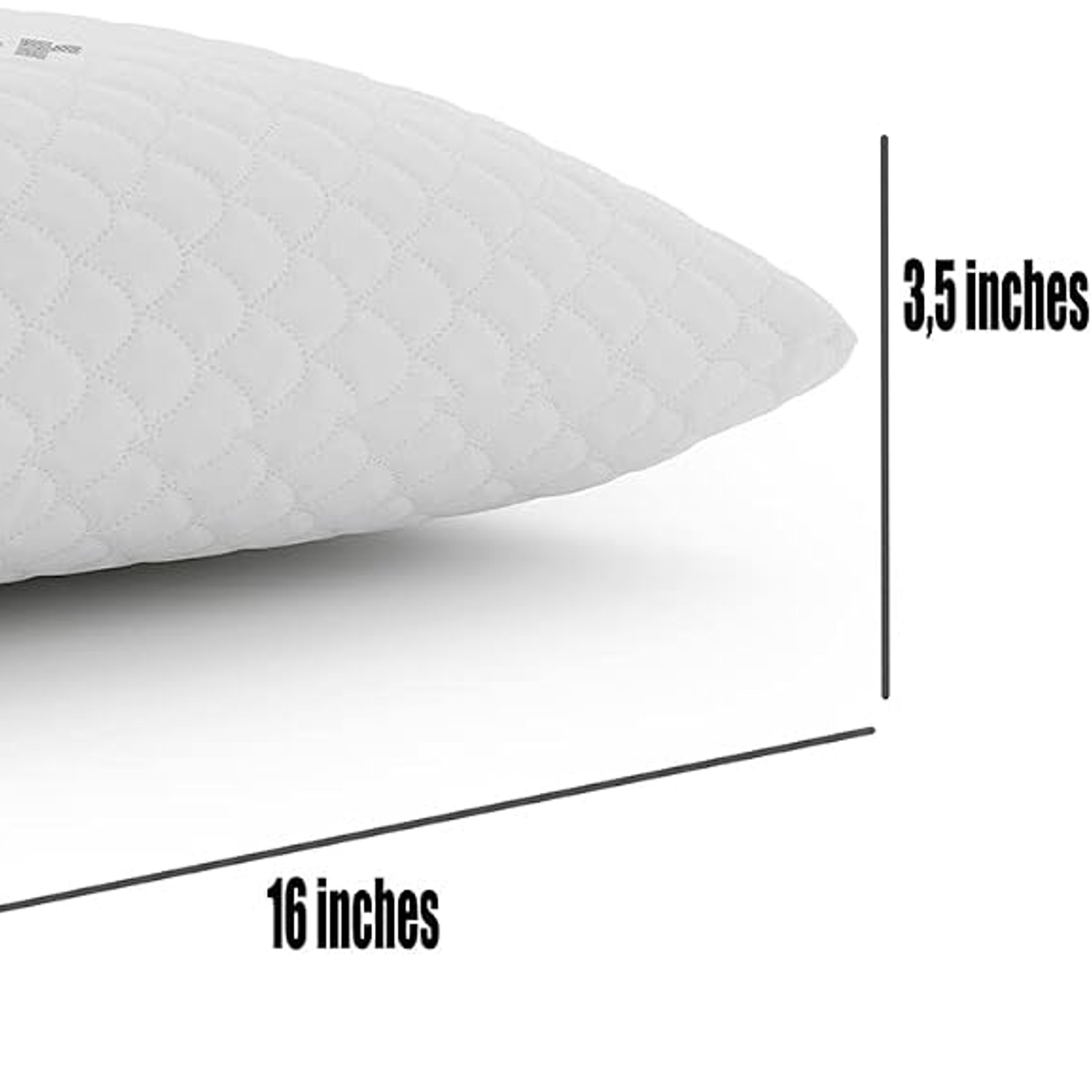
The listed firmness here is medium firm, which is a sensible middle ground. The open size is 48.3 cm by 33 cm, so it is a proper rectangular pillow rather than a token travel cushion. There is nothing to inflate and no valve to fail. You take it out of the case, give it a shake and a few squeezes, and it fills out on its own.
Heat, sweat and why ventilation holes matter
Foam has a well-earned reputation for running warm. It sits against your skin, it does not breathe much on its own, and in a zipped tent on a mild night that can get uncomfortable fast.
This pillow uses ventilation holes through the fill so air can move rather than sit trapped. Combined with the cover fabric, a 35% viscose and 65% polyester blend, the surface stays closer to a workable temperature across the night. It is not air conditioning. If you are a very hot sleeper, you will still want a thin pillowcase and some airflow through the tent. But it is noticeably better than a sealed block of foam against your face.
Washing is not optional
This is the part people skip when comparing pillows, and it is the part that decides whether you still own the thing in two years.
Camping is messy. Sunscreen, insect repellent, smoke, sweat, dust, and whatever was on your hands when you fell into the tent all end up on the pillow. By the end of a long trip a pillow that cannot be cleaned becomes something you would rather not put your face on.
The cover on this one comes off and goes into a normal machine wash, then air dries. That is the whole routine. The foam insert is a different story and this part is firm: never put shredded memory foam in a washing machine or a dryer. The agitation breaks the foam pieces down and heat damages their structure. Spot clean the insert with a damp cloth if something spills, and let it dry completely before you put the cover back on.
If you are comparing options, make washability a hard requirement. The best washable travel pillow is the one you keep using.
Who this suits
Tent campers get the most obvious benefit. You are already carrying a mat and a sleeping bag, and this slots in without much of a weight penalty at 0.23 kg shipping weight.
Hikers and backpackers need to make a judgement call. If you count every gram, an inflatable will always be lighter. Plenty of people carry foam anyway because the comfort difference is large and the failure risk is zero. There is no bladder to puncture when you are camped on gravel.
Car campers and campervan travellers have no reason to hesitate. Space is less tight and the snap loop means it can hang off a grab handle rather than get lost under seats.
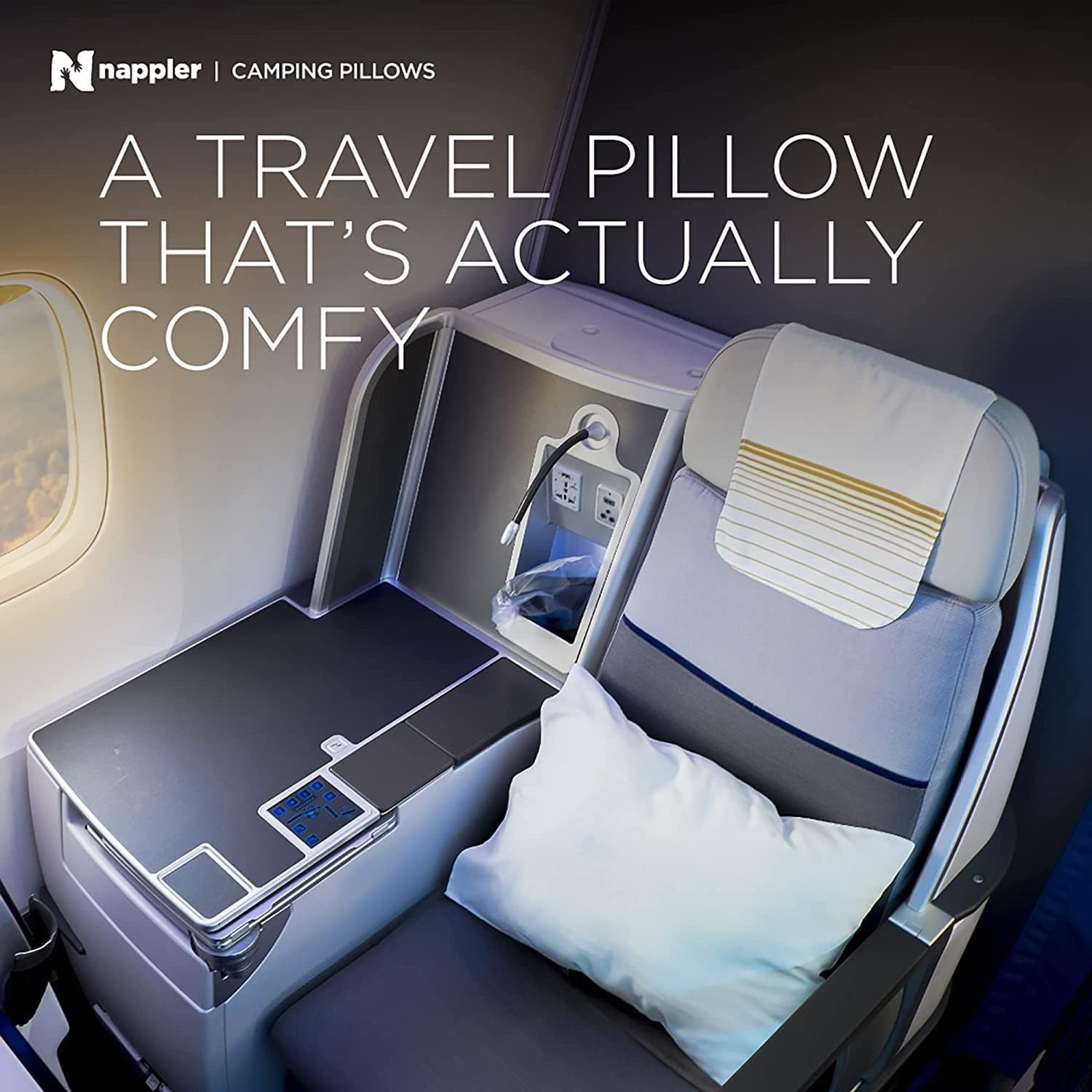
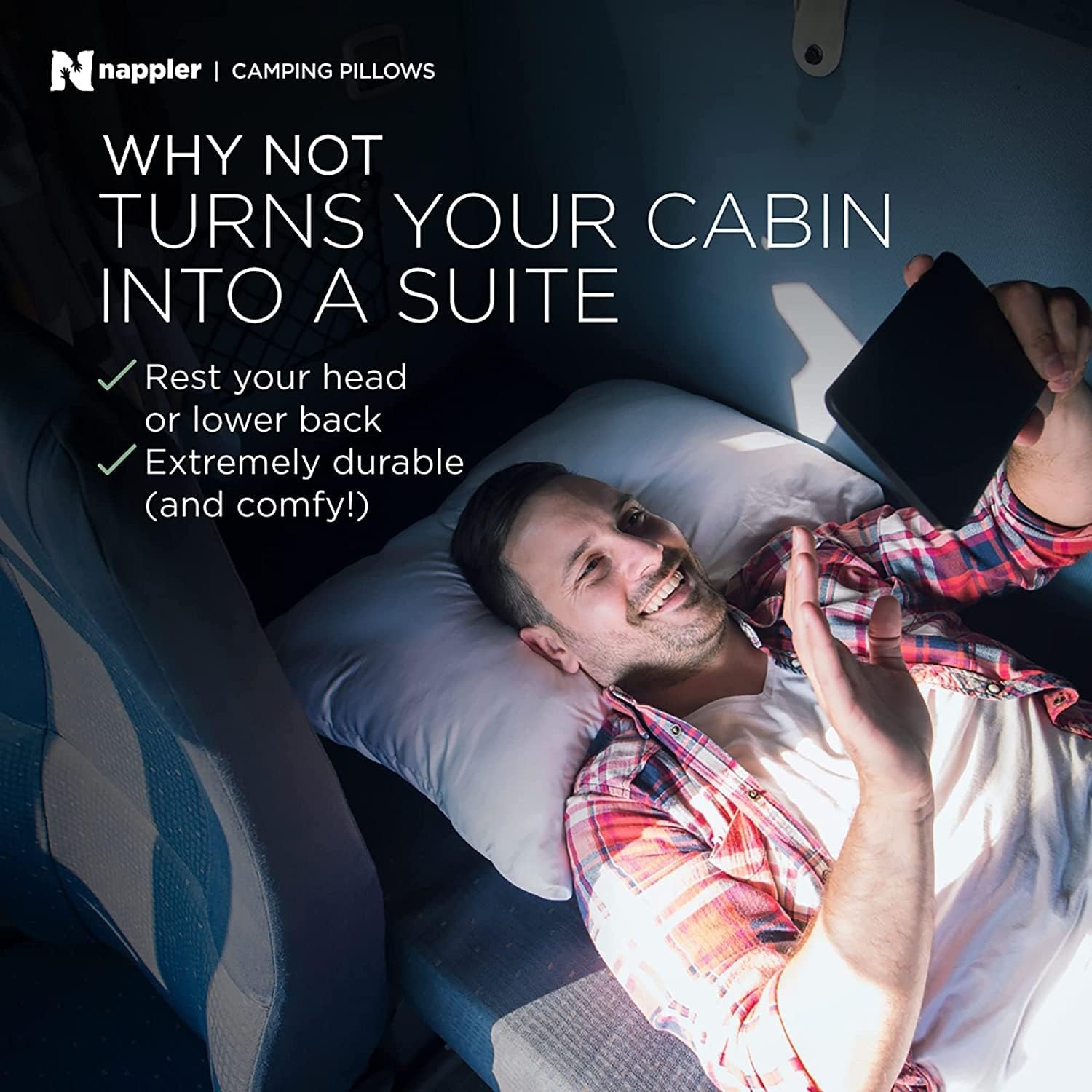
Flyers and long-distance drivers use it differently. It is a flat rectangular pillow, not a U-shaped neck pillow, so it is at its best against a window, a door, or a headrest rather than holding your head upright in open space. For a window seat it is genuinely good.
Festival campers probably need it more than anyone. Dusty ground, crowded tents, and no chance of a proper bed make a washable cover and a clean carry case worth a lot.
Choosing between styles
Work backwards from two questions.
First, how are you travelling? If every litre of pack space is contested, you are in inflatable territory. If you have a boot, a van, or a short walk from the car, foam wins easily on comfort.
Second, how do you sleep? Side sleepers need height under the head. Shredded fill lets you build that by bunching the foam up toward the centre, which a fixed-shape pillow cannot do. Back sleepers want something flatter, and the same adjustability covers that. Front sleepers generally want the least height, so spread the fill wide and thin.
If you are buying for someone else and you do not know how they sleep, shredded foam is the safer choice precisely because it adjusts.
Looking after it
Two habits make the difference between a pillow that lasts and one that flattens out in a season.
Store it loose. The carry case is for transport, not for the cupboard. Foam that spends months compressed takes a long-term set and never quite bounces back the same. Pull it out when you get home and let it sit on a shelf.
Fluff it by hand. Give the fill a shake and a squeeze before each night so the pieces redistribute. It takes five seconds and keeps the pillow even rather than clumped at one end.
Beyond that, wash the cover regularly, dry everything fully before packing, and keep the foam out of machines. There is not much else to it.
The short version
A compressible camping pillow earns its place because it solves the exact reason people leave pillows at home. It packs into a case, it weighs very little, and it comes back out as a real head-sized pillow rather than a lump.
The shredded memory foam fill is the useful bit. It compresses properly, it moulds to your head, and you can push it around to suit how you sleep. The ventilation holes help with heat. The washable cover means it survives dirt. The snap loop means you can find it.
If you need the absolute lightest option and you are willing to trade comfort for it, buy an inflatable. For everyone else camping, driving, flying or heading to a festival, this is the straightforward choice.