
The complete guide
How To Choose A Camping Sleeping Pad That Actually Lets You Sleep
The real reason camping sleep is bad
Ask anyone who has come home from a weekend away looking worse than when they left, and the story is usually the same. The tent was fine. The weather was fine. The sleeping bag was warm enough. The problem was the ground.
Ground is harder than people remember. It is also uneven in a way you only discover once you lie down, and it pulls heat out of you all night long. A thin foam mat softens the lumps a bit but does very little about the rest. You end up rolling over every twenty minutes, hunting for a position where your hip is not pressed into a root.
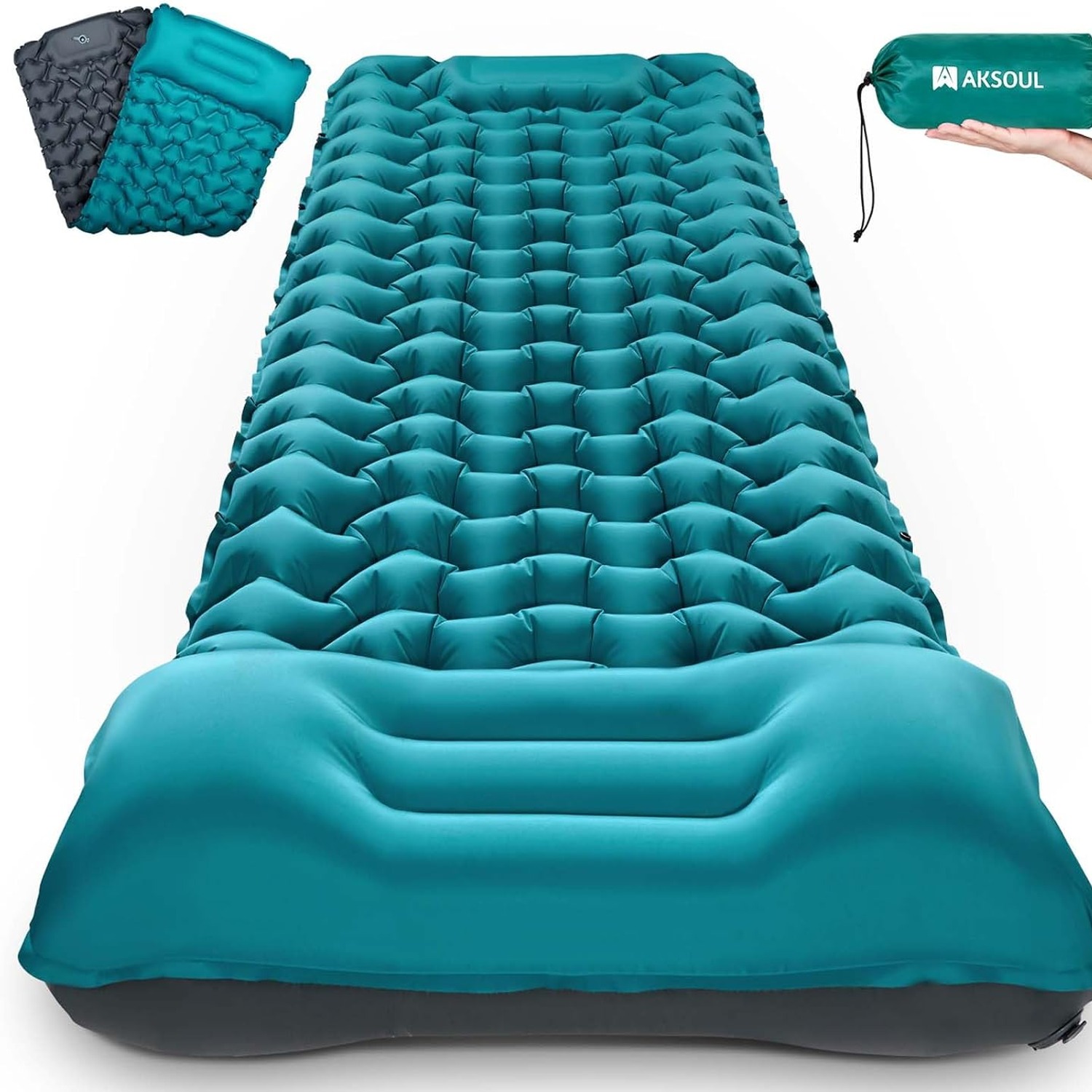
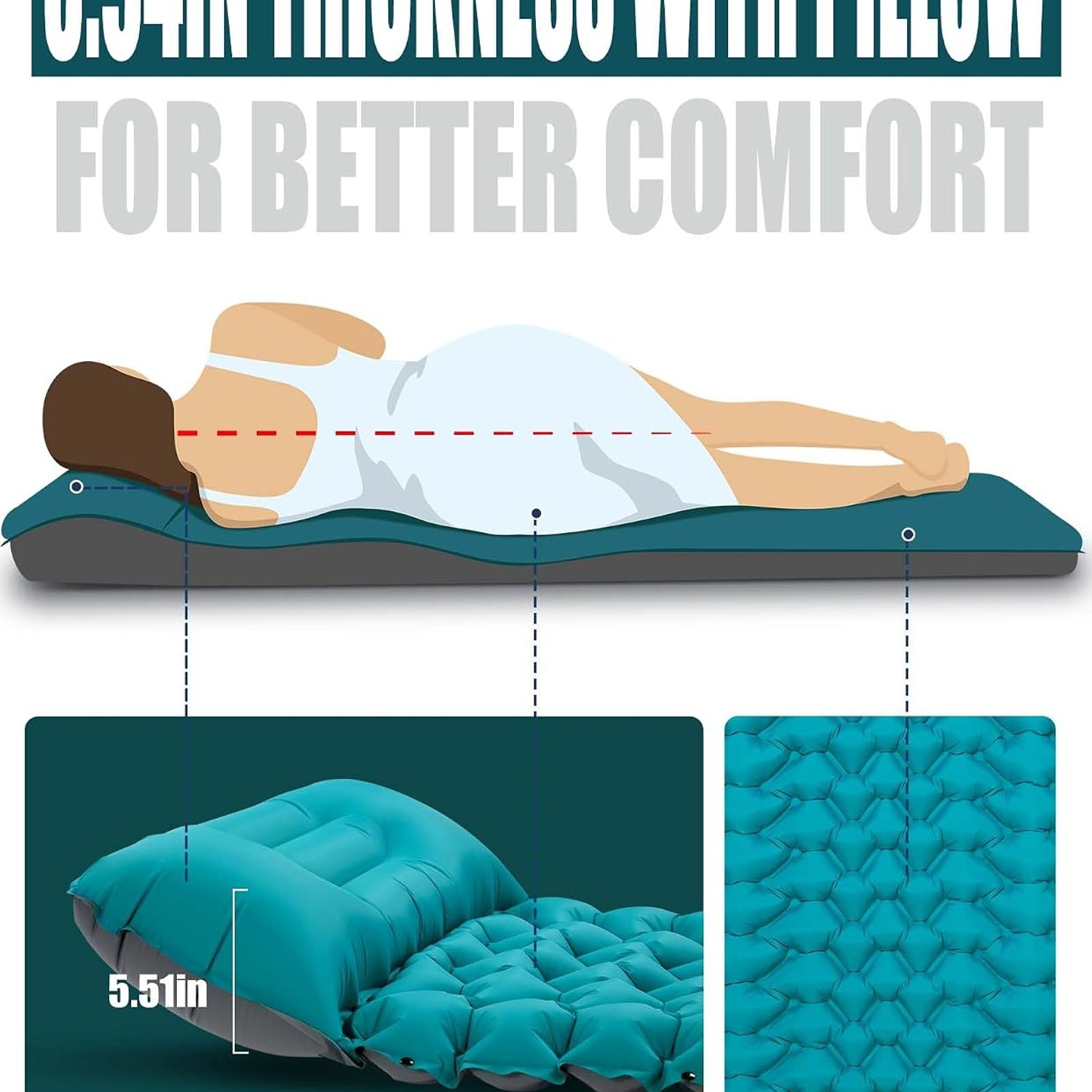
A thick inflatable pad changes the maths. Put nearly 10 cm of air between your body and the dirt and the small irregularities stop registering. Your hips and shoulders, the two places that take the most pressure when you side-sleep, float instead of bottoming out. This pad sits at 9.9 cm inflated, which is firmly in the comfort camp rather than the bare-minimum camp.
How this one works
Three things make this pad different from a basic roll mat.
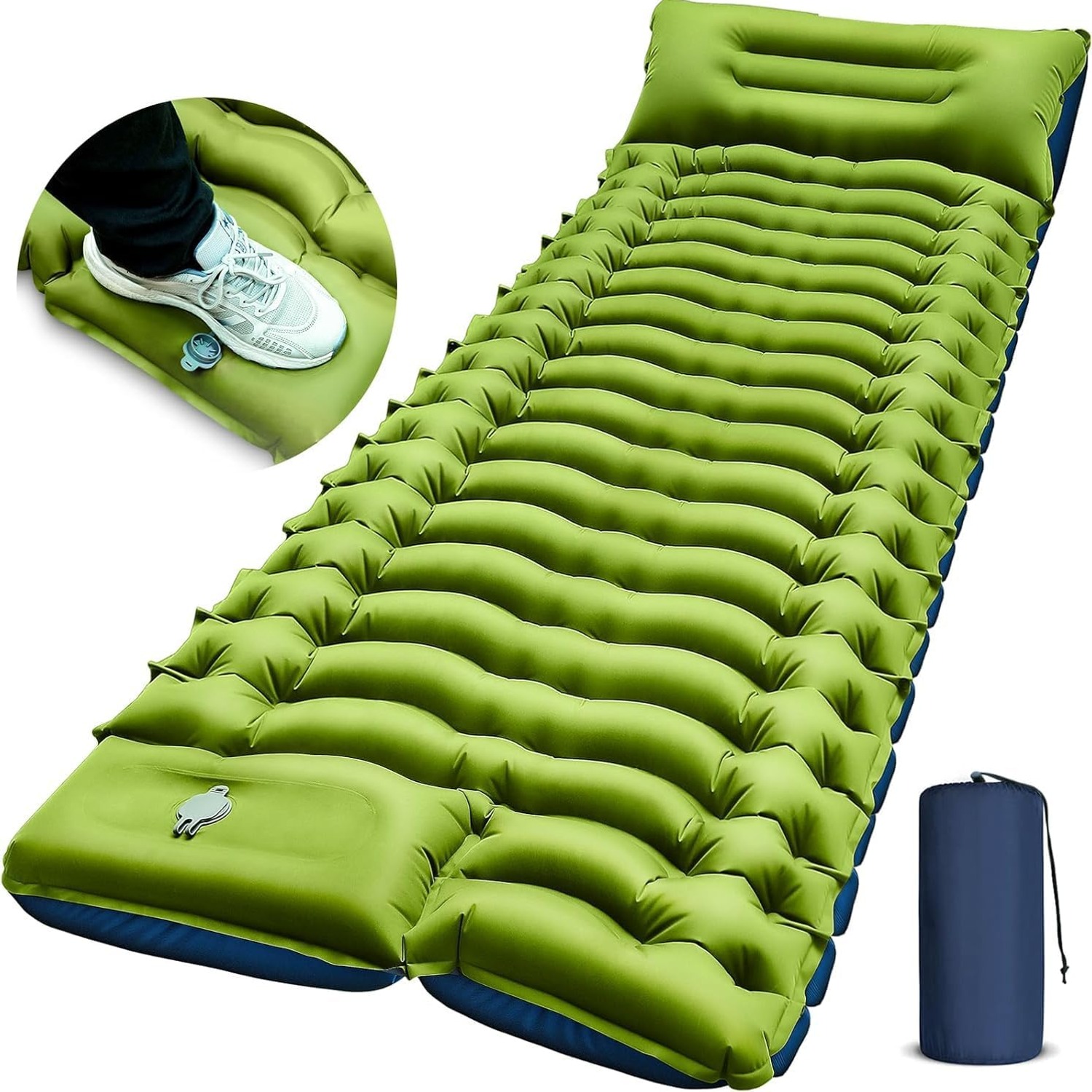
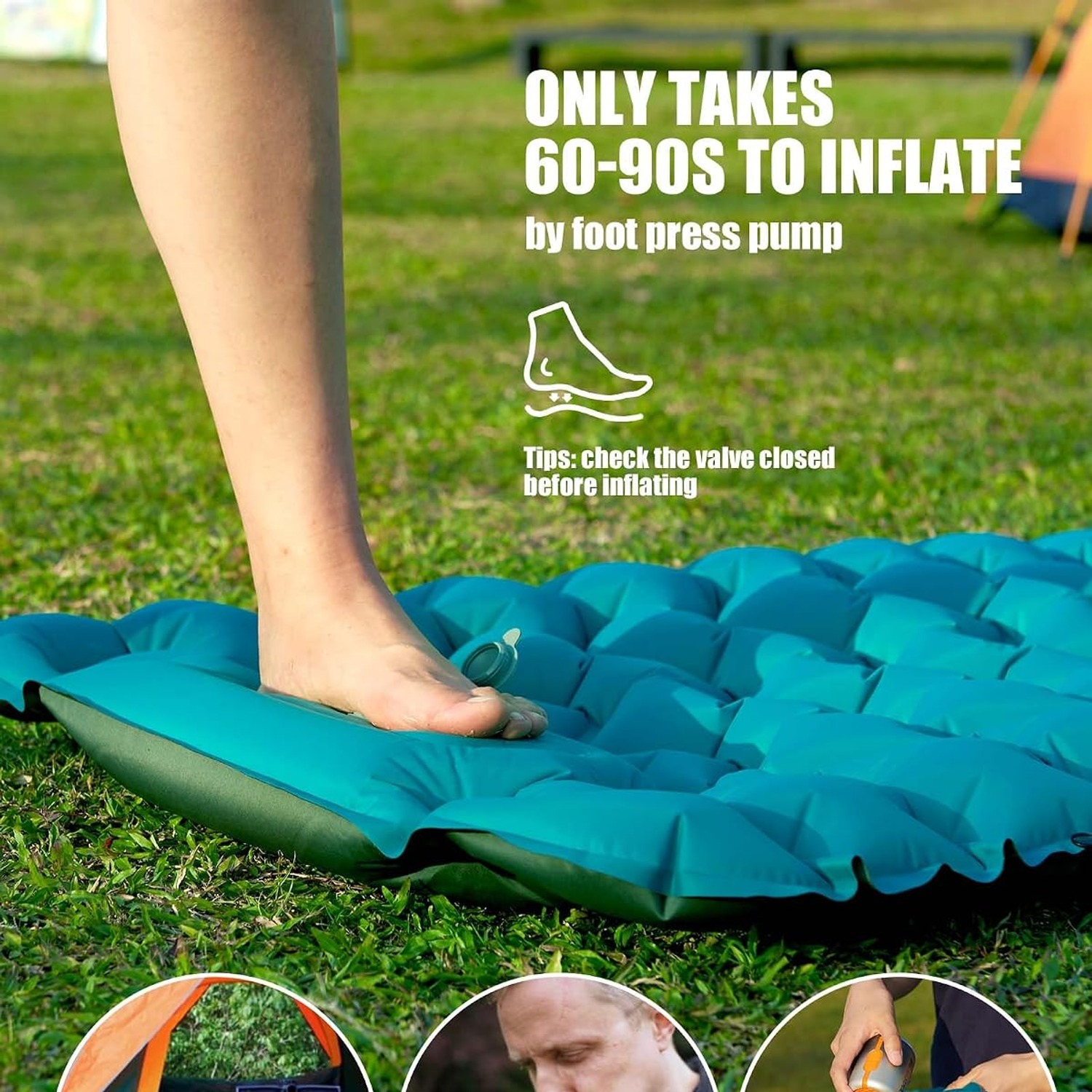
The first is the built-in foot pump. Instead of a separate pump or a lot of puffing, you step on the pump section and stomp. The listed inflation time is 30 to 40 seconds. In practice that means you can arrive at a site, pitch the tent, and have a bed ready before the kettle boils. It also means nothing extra to carry and nothing to forget on the kitchen bench at home.
The second is the attached pillow. Camping pillows have a habit of disappearing into the corner of the tent by midnight, and jumpers rolled into a bundle flatten within the hour. Having the pillow built into the pad keeps your head where it should be and removes one item from the packing list.
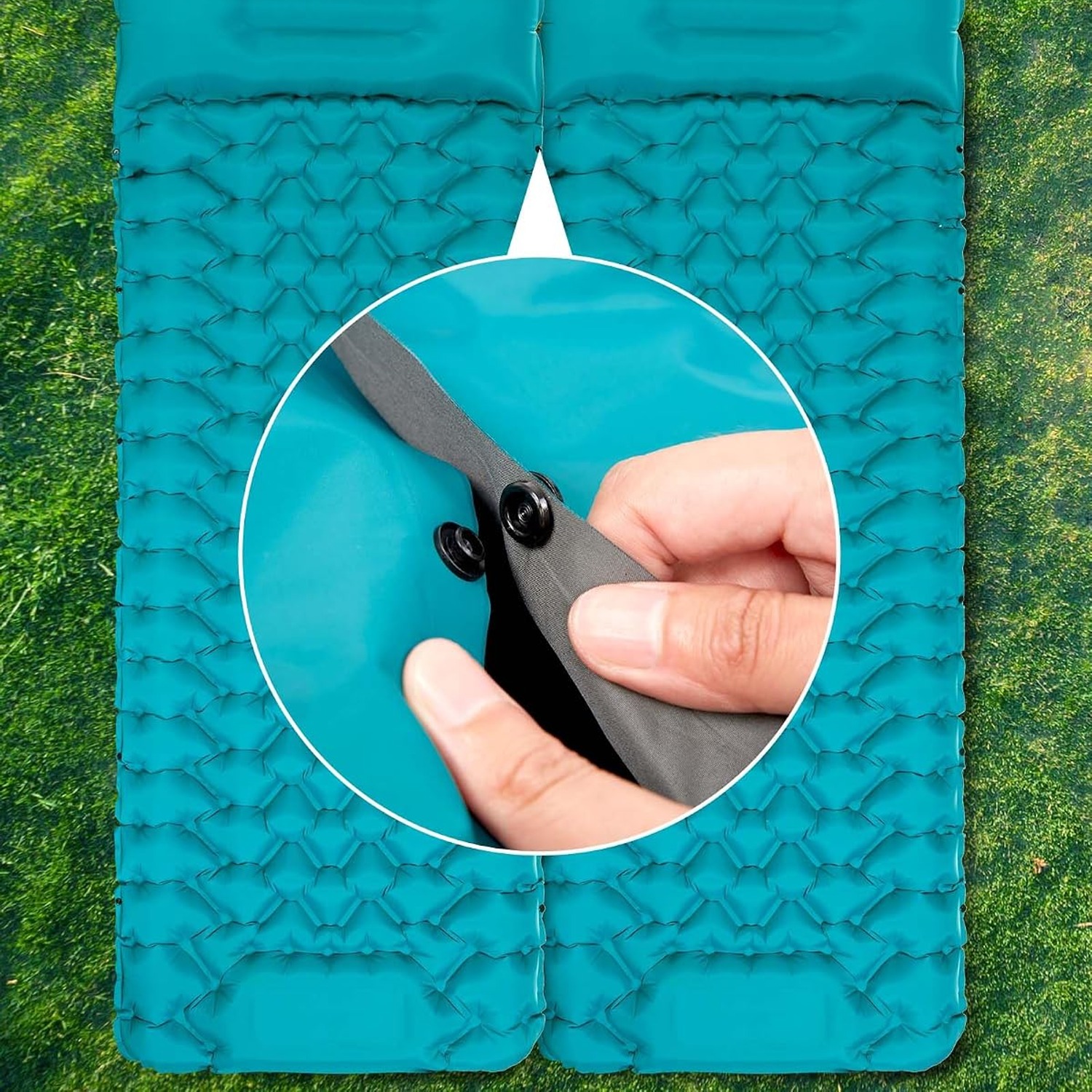
The third is the snaps. Both long sides of the pad carry snaps, so two pads clip together into one continuous double surface. If you have ever shared a tent with someone and woken up in the gap between two mats, you will understand why that matters. It also makes the pad easy to grow into. Buy one now, add a second later, and they join without any adapter.
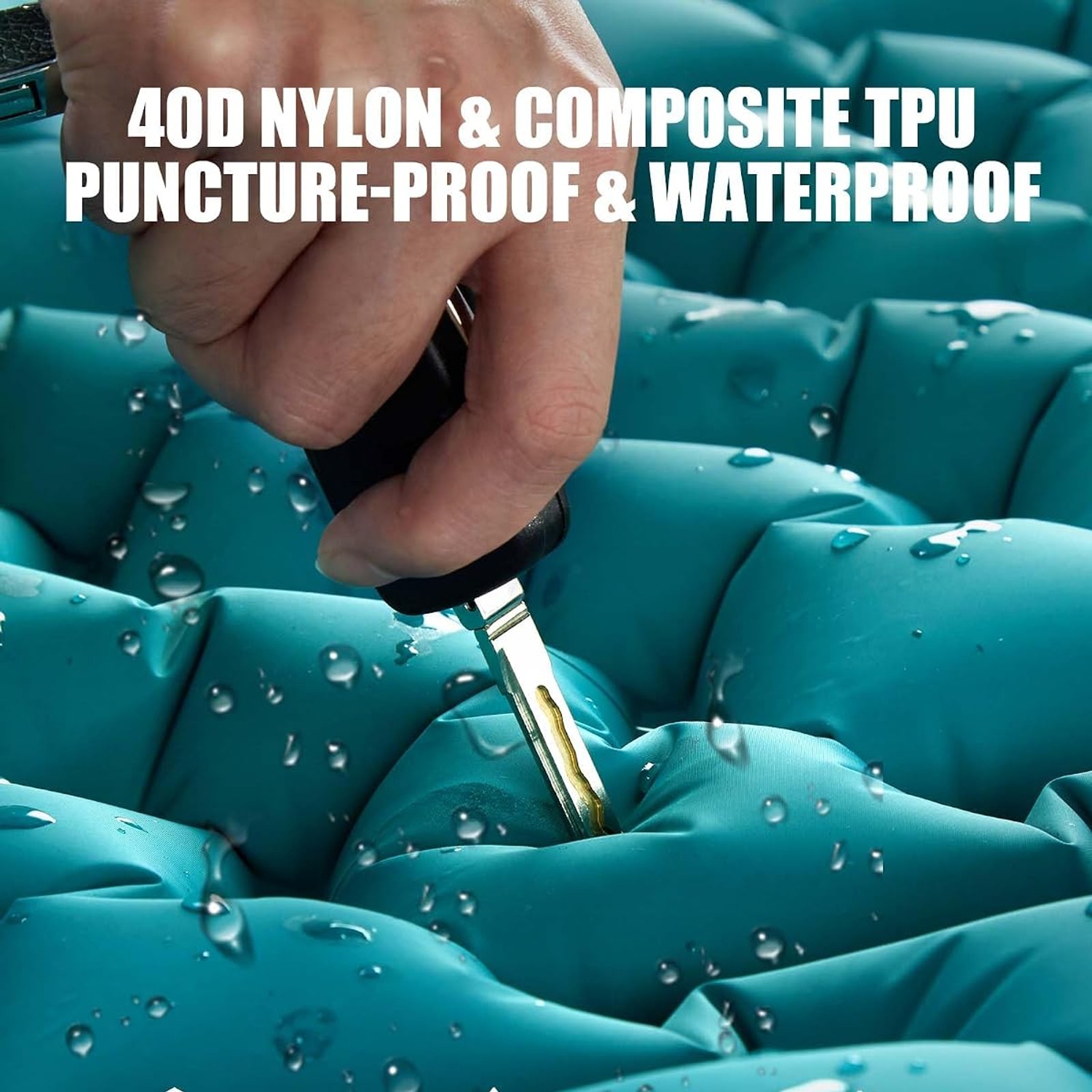
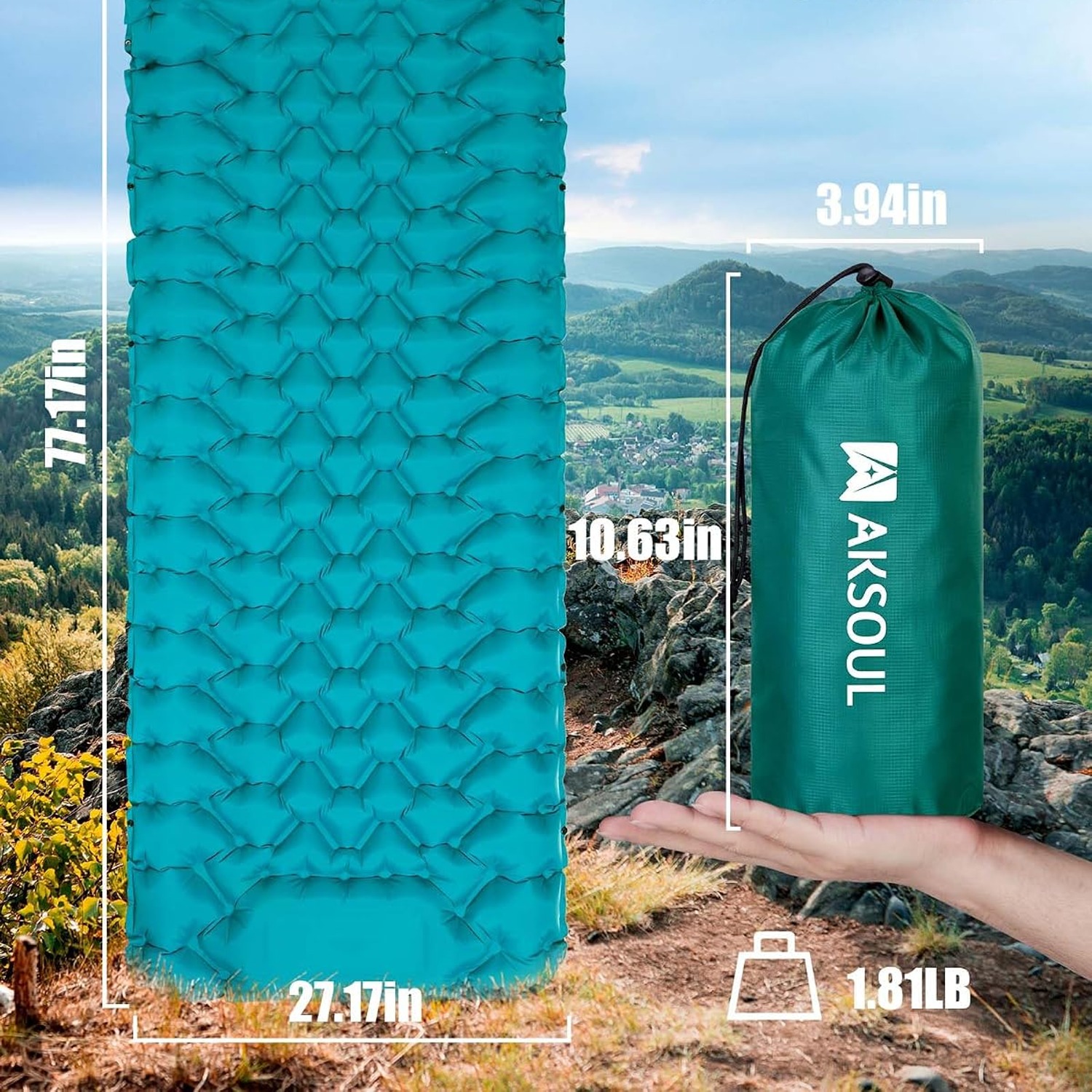
Underneath all that, the construction is nylon with two layers and a water resistant surface. Capacity is listed at 199.58 kg, so it handles most adults without complaint. Packed weight is 850 g.
Who it suits
Car campers are the obvious match. When weight is not the limiting factor, there is no reason to settle for a thin mat, and the fast inflation makes setup painless when you have three or four beds to sort out.
Festival-goers get a lot from it too. Festival ground is usually flat, hard and shared with several thousand other people, and the difference between a foam strip and a proper air pad is the difference between enjoying the Sunday and surviving it.
Van and 4WD travellers like it because it rolls away when not in use and does not need a permanent bed platform. Hut walkers use it on wooden bunks, where a bit of padding over bare boards is very welcome.
It also doubles as a spare bed at home. At this price, having a usable guest bed that lives in a cupboard is good value even if you never camp.
Hikers covering long distances with every gram counted may want something lighter, and that is a fair call. At 850 g this is a comfort-first pad, not a gram-shaving one. For overnight walks and short trips it is perfectly carryable.
Choosing between thickness, weight and size
Most pad decisions come down to a trade-off between three things.
Thickness drives comfort. Thinner pads pack smaller and weigh less, but you feel the ground sooner, especially if you sleep on your side. Around 9 to 10 cm is the point where most side sleepers stop noticing what is underneath them.
Weight drives portability. Anything under about a kilogram is reasonable to carry on foot for a night or two. Above that and you really want a car or a van doing the carrying.
Size drives how you actually sleep. Narrow pads force you to stay still, which is fine if you sleep like a log and miserable if you do not. At 68.8 cm wide, this one gives you room to shift without a shoulder falling off the edge.
Then there is the question of one pad or two. If two of you are sharing, two connected pads give each person their own air chamber, which means one person turning over does not launch the other. That is usually a better outcome than a single large airbed where every movement travels across the whole thing.
Setting it up well
Clear the ground before you pitch. Thirty seconds spent kicking away stones and snapping off small sticks will save you a repair later. A groundsheet or footprint under the tent adds another layer of protection.
Do not over-inflate. It is tempting to pump until the pad is drum tight, but a slightly softer pad conforms to your body better and takes less strain at the seams. Fill it fully, then let a short burst of air out and lie on it. Adjust from there.
Remember that air contracts as the temperature drops. A pad that felt perfect at 6pm can feel soft at 2am on a cold night. A few extra stomps before bed sorts that out.
Pair the pad with a sleeping bag rated for the conditions. The pad lifts you off the cold ground, which helps a great deal, but it is not a substitute for proper insulation. A thermal rating for this pad is not listed in the product record, so for genuinely cold trips plan your sleep system around your bag.
Care and storage
Care here is simple because the instruction is hand wash only. Wipe the surface with a damp cloth and a little mild soap, rinse lightly, and let it air dry fully. Do not put it in a washing machine, a tumble dryer, or anywhere near bleach.
The part people get wrong is storage. Packing a pad away even slightly damp is how you end up with a musty smell and, eventually, mildew. Open the valve, let it sit open in a warm room for an hour or two, and only then roll it.
If you have the space, storing the pad loosely rolled or flat with the valve open is kinder to the material than keeping it crushed in its stuff sack for months. Keep it away from heat sources, direct sun for long periods, and anything sharp.
Carry a patch kit in your camping box. Punctures in nylon and TPU pads are usually a five minute fix if you catch them early, and having the patches on hand means a hole does not end your trip.
The short version
This is a thick, wide, fast-inflating camping pad with a pillow attached and snaps on the sides so two of them become a double bed. It is 195.8 by 68.8 cm, 9.9 cm thick, weighs 850 g and holds up to 199.58 kg.
If you camp from a car or van, go to festivals, sleep in huts, or just want a decent spare bed that stores in a cupboard, it covers all of that. If you count grams on multi-day hikes, look at something lighter and accept less padding.
For most people, the honest answer is that the thickness and the built-in pump are what make the difference. Thirty seconds of stomping, a proper pillow, and 10 cm of air is usually all that stands between a rough night and a good one.