
The complete guide
How To Choose A Dome Tent That Actually Suits Your Trips
The problem with buying a tent online
Tents are one of those purchases where the photos look identical and the specs decide everything. Two tents can both say "4 person", both look navy blue and domed, and give you completely different nights. One goes up in five minutes and shrugs off a shower. The other needs three people, two tries and a towel for the puddle inside.
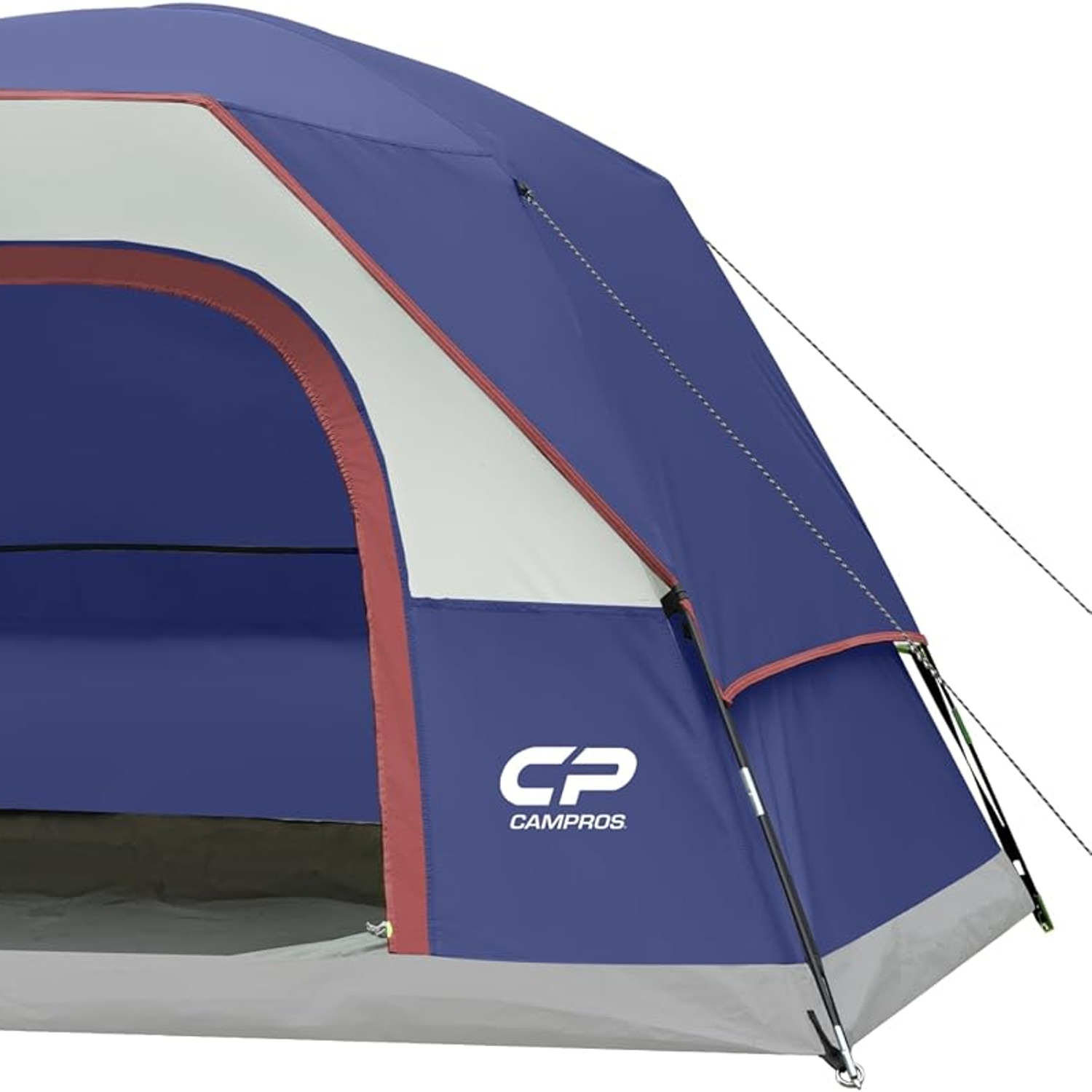
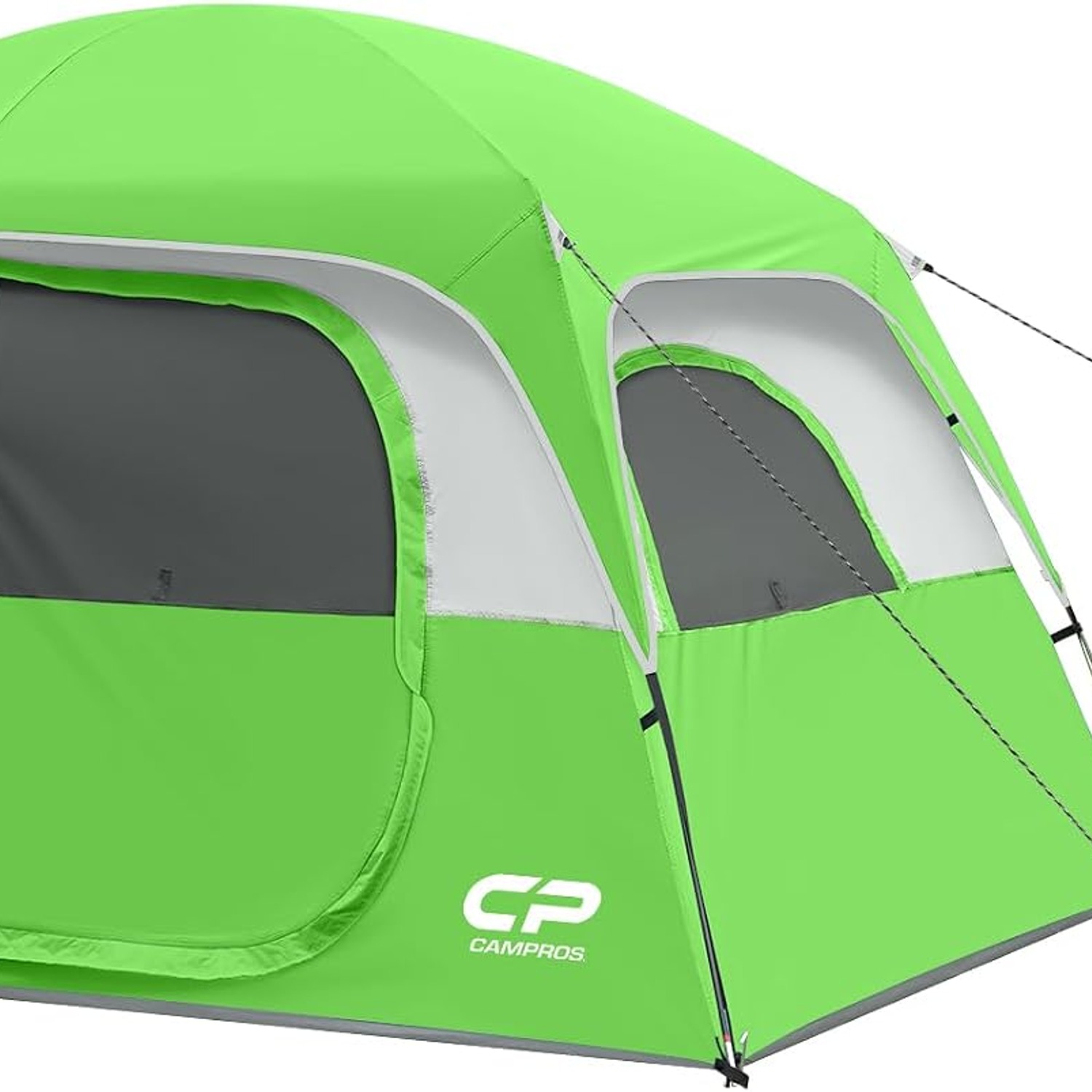
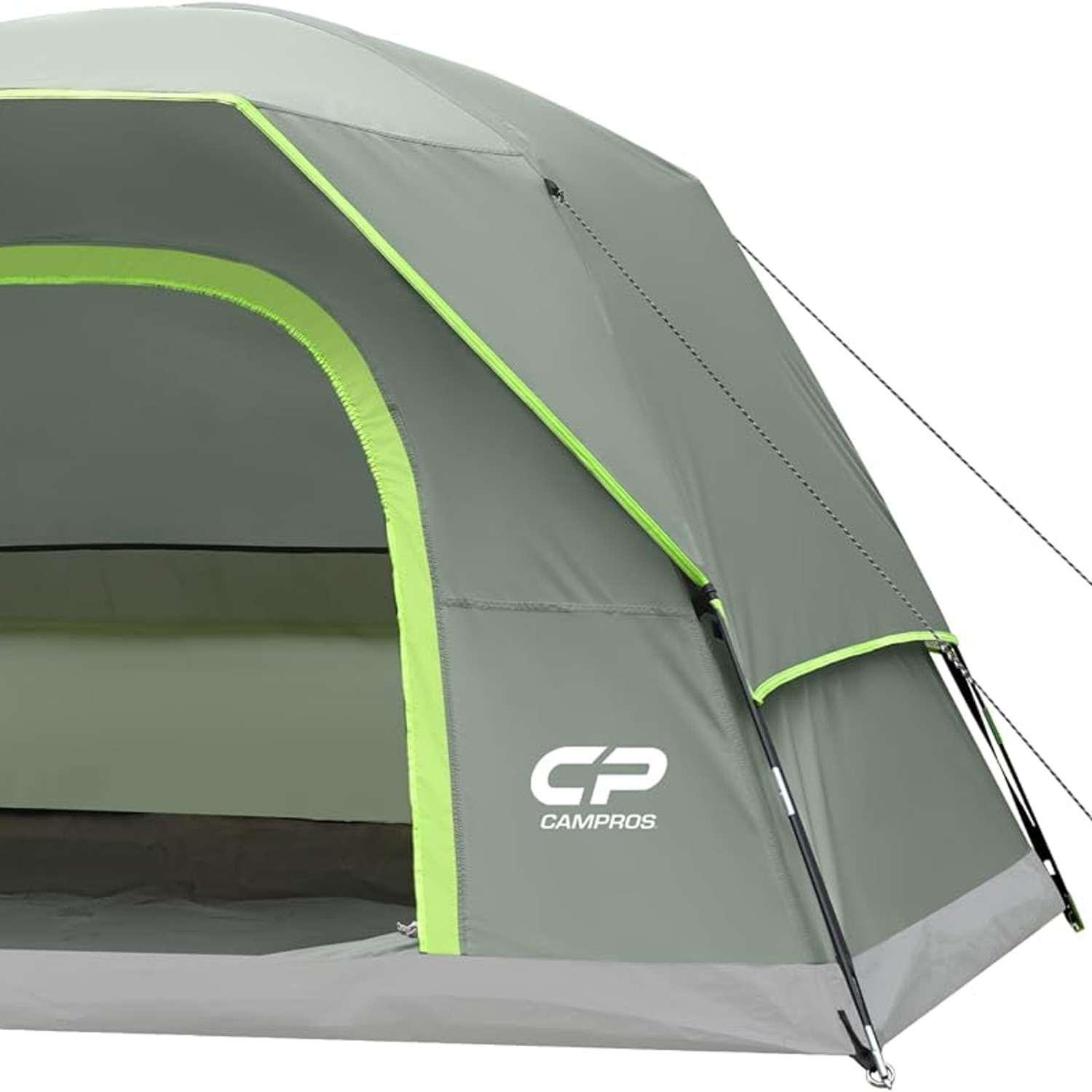
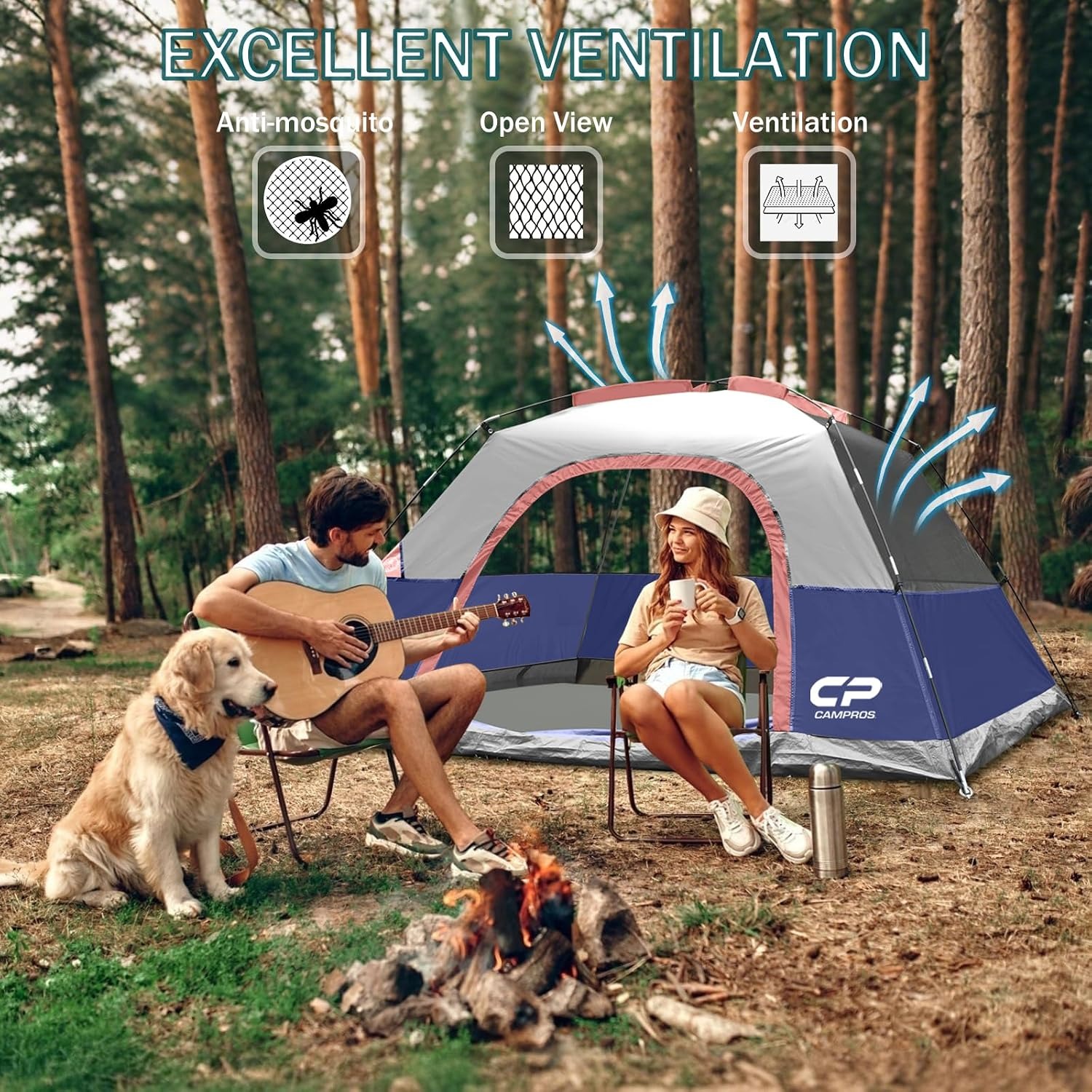
The gap usually comes down to four things: how the poles attach, how high the ceiling is, what the waterproof rating is, and how heavy the thing is when it is packed. Everything else is detail. This guide walks through those four, using the CAMPROS CP dome as the reference point, so you can tell whether it is the right tent for your weekends or whether you need something else.
Floor space versus sleeping capacity
A tent's person rating is a measurement, not a recommendation. It tells you how many standard sleeping mats fit shoulder to shoulder on the floor with nothing left over. It does not account for packs, boots, a dog, or the fact that people like a few centimetres between them.
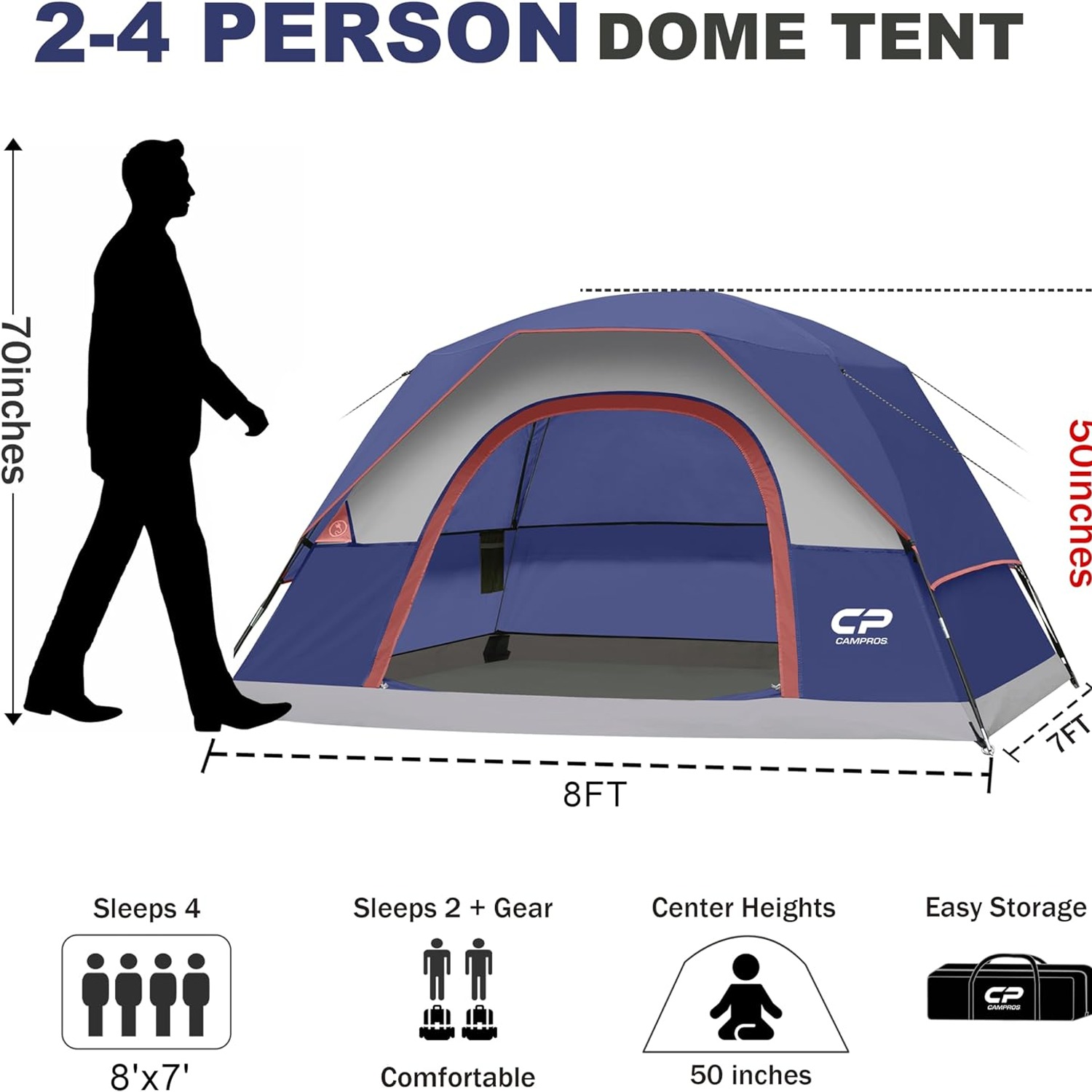
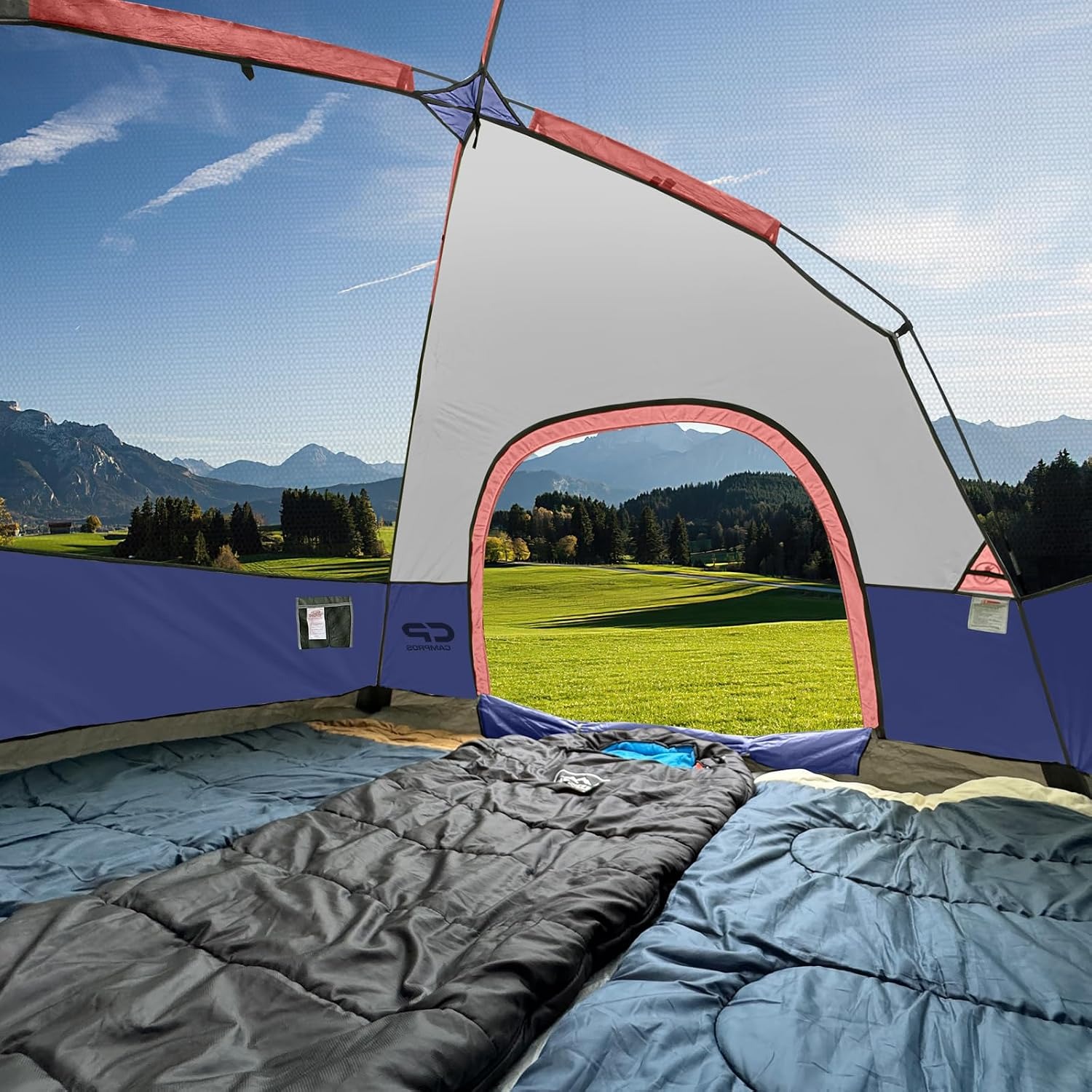
This tent has a 56 square foot floor, 8 ft by 7 ft, rated four person. Translate that honestly and you get a very roomy two person tent, a comfortable three person tent, and a workable four person tent for one night when everyone is tired enough not to care. If you are two adults who want gear inside and room to sit up and read, this is a generous amount of space. If you are a family of four planning a week away, you will want something bigger or a second tent.
The 50 inch peak height is the other number to sit with. That is sitting height, not standing height. You can kneel, change clothes, play cards and reach the far corner without crawling. You cannot stand to pull on a jumper. For most people, sitting height is the right trade: taller tents catch far more wind and weigh more.
How the poles attach, and why it decides your evening
There are two common ways to get a tent standing. Sleeve tents have long fabric tunnels you feed the poles through. They are strong, but threading a pole through four metres of nylon in fading light with cold hands is genuinely annoying. Clip tents, like this one, have plastic clips along the body that snap onto the pole after it is already arched.
Clips are faster, easier to do alone, and easier to undo when you are packing in drizzle. The stated assembly time here is about five minutes with two people, and clips are why that figure is believable. Four aluminum poles do the work. Aluminum matters because it flexes under load and springs back, where fibreglass eventually splinters and pokes through its sheath.
The tent is also freestanding. That sounds like a small thing until you are on hard ground where pegs will not go in, or until you realise you pitched directly over a tree root. Freestanding means you can lift the whole assembled tent and move it. Just remember to peg it afterwards anyway, because an unpegged dome tent becomes a kite the moment a gust finds the door.
Reading waterproof ratings without getting lost
Fabric waterproofing is measured as hydrostatic head in millimetres. Picture a tube of water standing on the fabric: the number is how tall that column gets before water pushes through. This tent is rated PU 1500mm.
Here is the practical translation. Around 1000mm handles light rain and heavy dew. Around 1500mm, which is where this one sits, covers showers and a decent amount of steady rain over a night. Expedition tents go to 3000mm and beyond, and they cost and weigh accordingly. For spring to autumn camping in normal weather, 1500mm with a rainfly over the top is a sensible place to be, and it is where most people land when comparing the best waterproof tent options at this price.
The other half of staying dry is the floor. This one is polyethylene, which is a thicker, tougher sheet than the polyester walls. It resists ground moisture and takes the scuffing that floors always take. A cheap tarp underneath adds another layer of protection and makes packing up much less muddy.
One more thing worth knowing. If you wake to damp inner walls after a cold night, that is almost always condensation rather than a leak. Warm breath meets cold fabric and turns to water. Cracking the window, leaving a gap under the fly and never cooking inside all reduce it.
Weight, packing and what you can realistically carry
Packed weight is 3.5 kg with everything included: body, rainfly, poles, stakes and carry bag. That is a useful number to anchor on.
For car camping, 3.5 kg is irrelevant. You could take a tent twice that weight and never notice. For festivals, where you might haul everything half a kilometre from a field car park with a bag of food in the other hand, it starts to matter a lot. For walk-in campsites and short overnight hikes, it is very manageable, particularly split between two people with one carrying poles and the other carrying body and fly.
Serious long distance hikers counting grams will still choose something lighter and lower, often a one or two person shelter under 2 kg. That is a different tool for a different job. This sits in the middle: light enough to carry, roomy enough to actually enjoy.
Who this tent suits
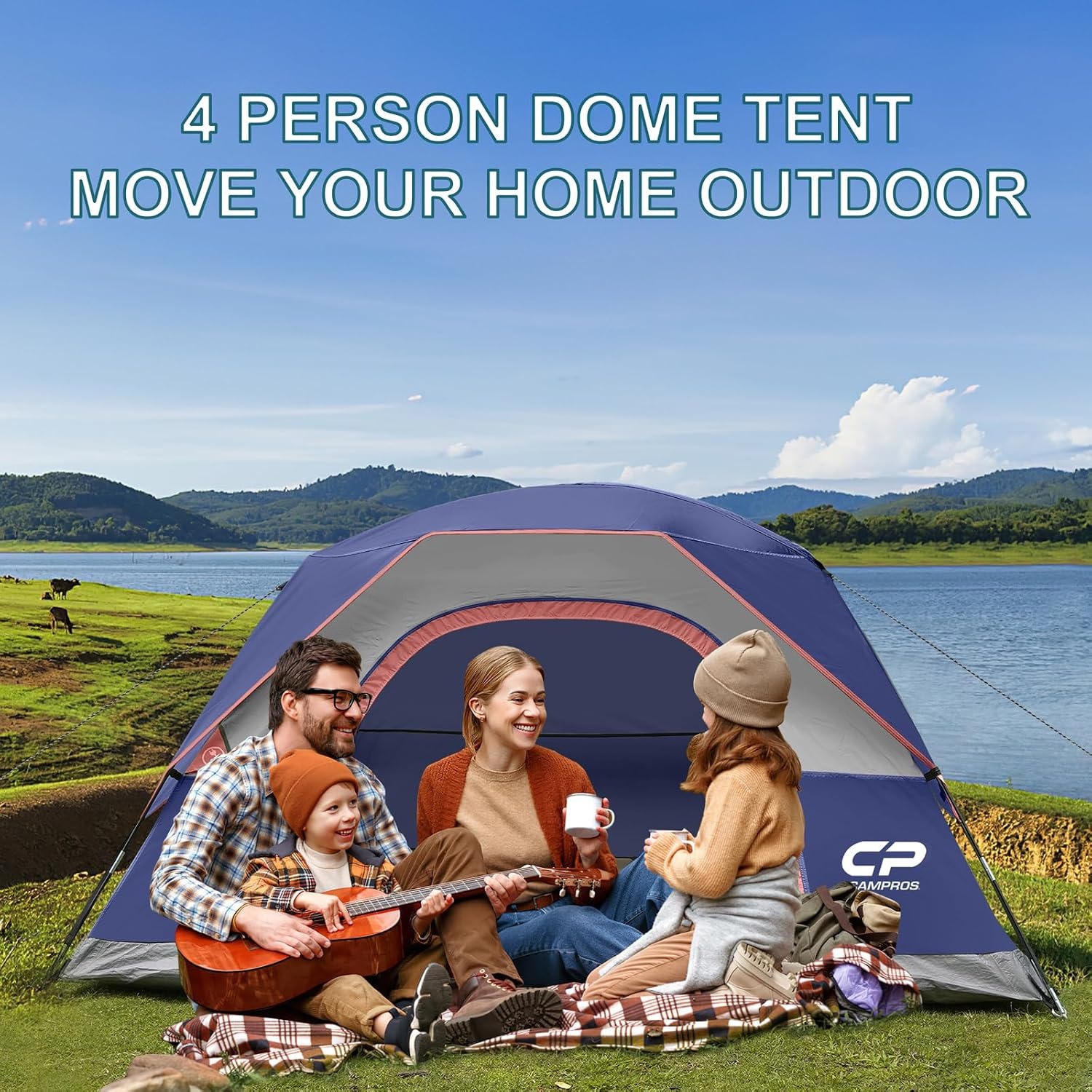
It suits weekend campers, couples who want space, small families doing one or two nights, festival goers, anglers who want a dry base, and anyone buying a first proper tent. The quick pitch is forgiving if you have never done this before, and the three season rating covers the months most people actually camp.
It does not suit winter camping, snow, exposed ridgelines in bad weather, or long trips where four adults need to live in it. If that is your plan, look at a four season design or a multi-room family tent instead.
Looking after it
Tents mostly die from being packed wet. Mildew sets in, the coating goes tacky, and the smell never fully leaves. So the single most useful habit is drying the tent fully before it goes in the bag, even if that means draping it over a fence at home the next day.
Care here is hand wash. Sponge it with cool water and a mild soap, rinse, air dry. No machine, no tumble dryer, no bleach, no iron. Shake out grit before folding, because sand sitting in a fold grinds away at the coating every time you pack it. Store it loose in a dry place rather than compressed in a hot shed.
Over several seasons you may notice the fly wetting out faster than it used to. That is normal ageing, and a proofing spray made for tent fabric plus a seam sealer will buy you more years. Test anything new on a hidden corner first.
The short version
This is a 56 square foot, 50 inch high, freestanding dome tent with clip-on aluminum poles, a PU 1500mm waterproof coating, a removable polyester rainfly and a polyethylene floor. It packs to 3.5 kg with stakes and bag included, and it goes up in about five minutes with two people.
Buy it if you want a spacious two or three person tent for spring to autumn trips, festivals and fishing weekends, and you value a fast, uncomplicated pitch. Look elsewhere if you need standing height, winter capability, or genuine room for four adults over a long holiday. Pitch it once in the garden before your first trip. That ten minutes saves a lot of grief later.