
The complete guide
Choosing a Rechargeable Camping Light That Earns Its Place in the Pack
The problem with camp lighting
Anyone who has camped more than a few times has lived through the same evening. The sun drops faster than you expected, dinner is half-cooked, and the only light on the site is a head torch that blinds whoever you look at. Somebody holds a phone over the pan. Somebody else is digging through a bag by feel. It works, barely, and it is annoying every single time.
The fix is not a brighter torch. A torch throws light in one direction, which is useful for walking to the toilet block and nearly useless for cooking, eating, playing cards or getting kids into sleeping bags. What you want is a light source above head height that spreads in all directions, so shadows soften and everyone can see their hands.
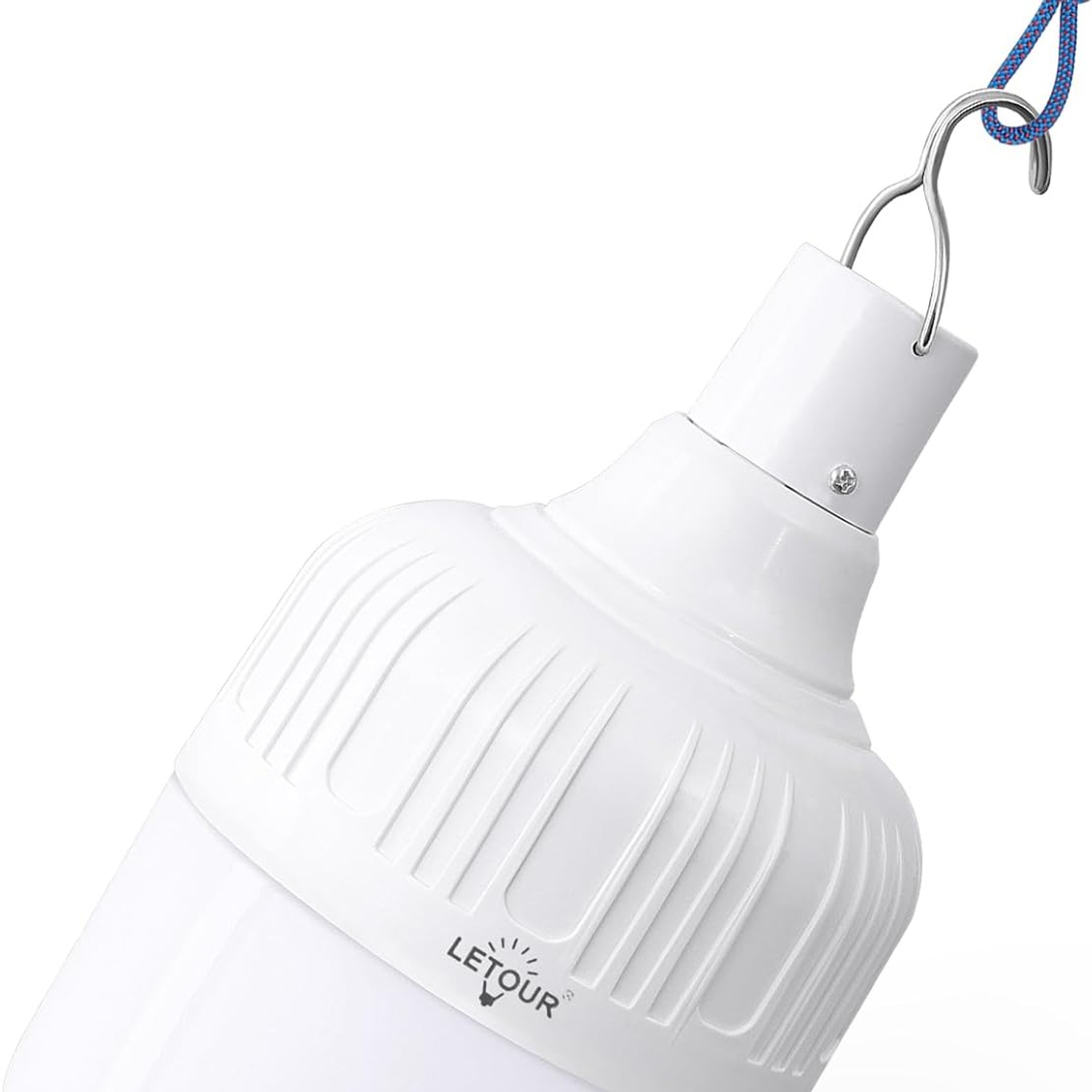
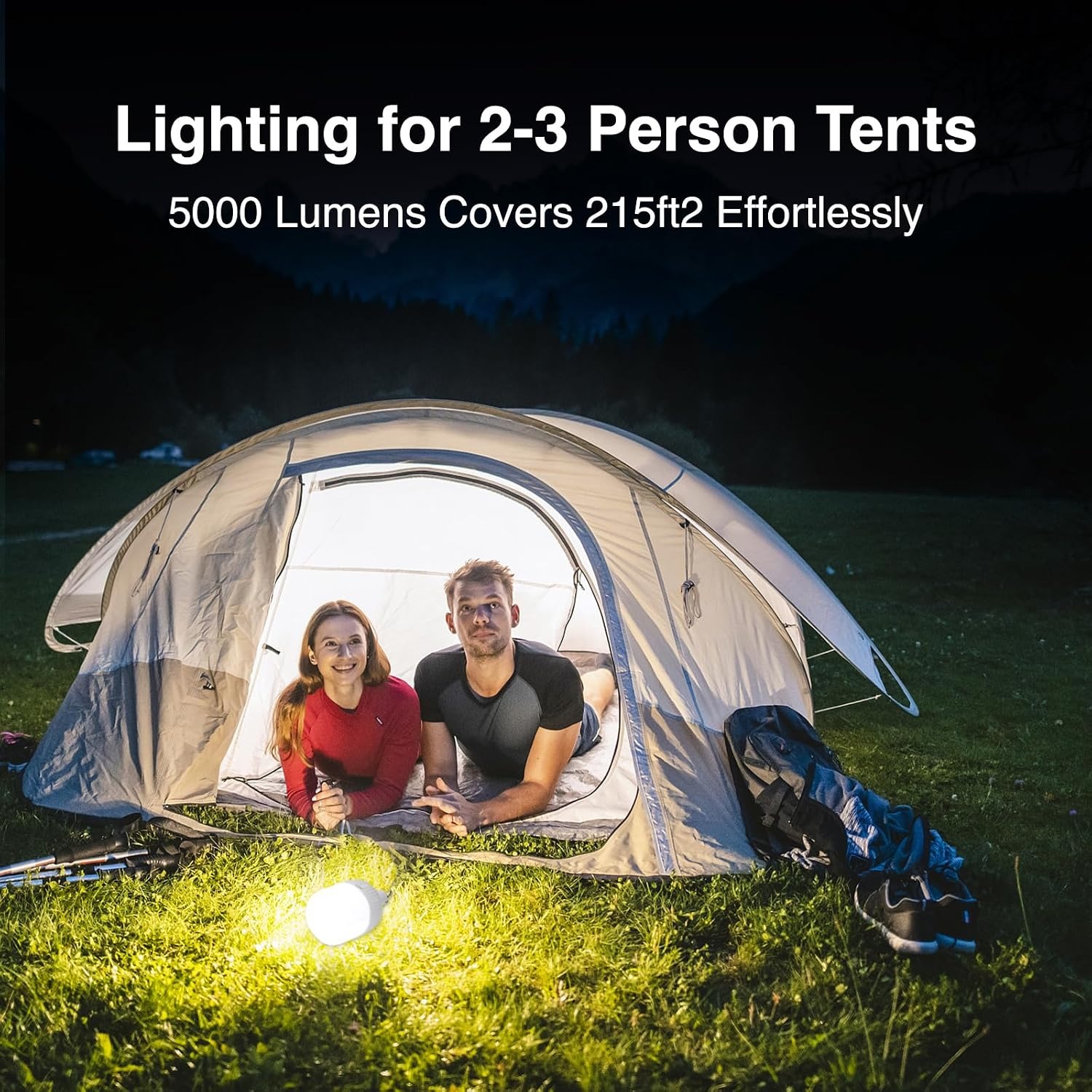
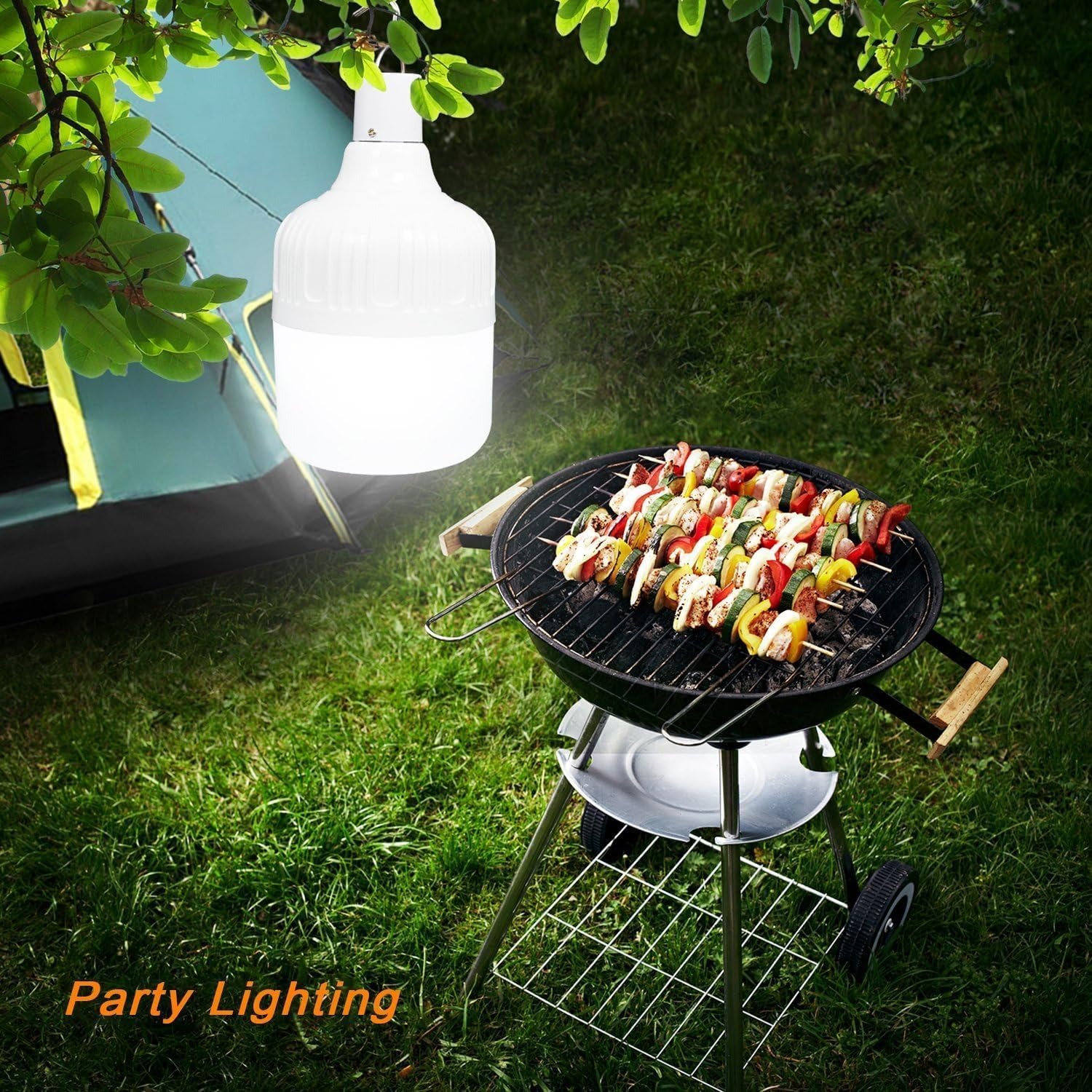
That is what a hanging lantern does. This one runs 24 LED sources behind a white ABS housing, with a maximum rated output of 5000 lumens, and it hangs from a tent loop, a gazebo frame, an awning pole or a branch.
How a rechargeable lantern works
The basic idea is simple. A lithium-ion battery sits inside the body, feeding a cluster of small LED beads. The housing spreads that light out so it looks like a glow rather than a set of bright dots. A button cycles the brightness.
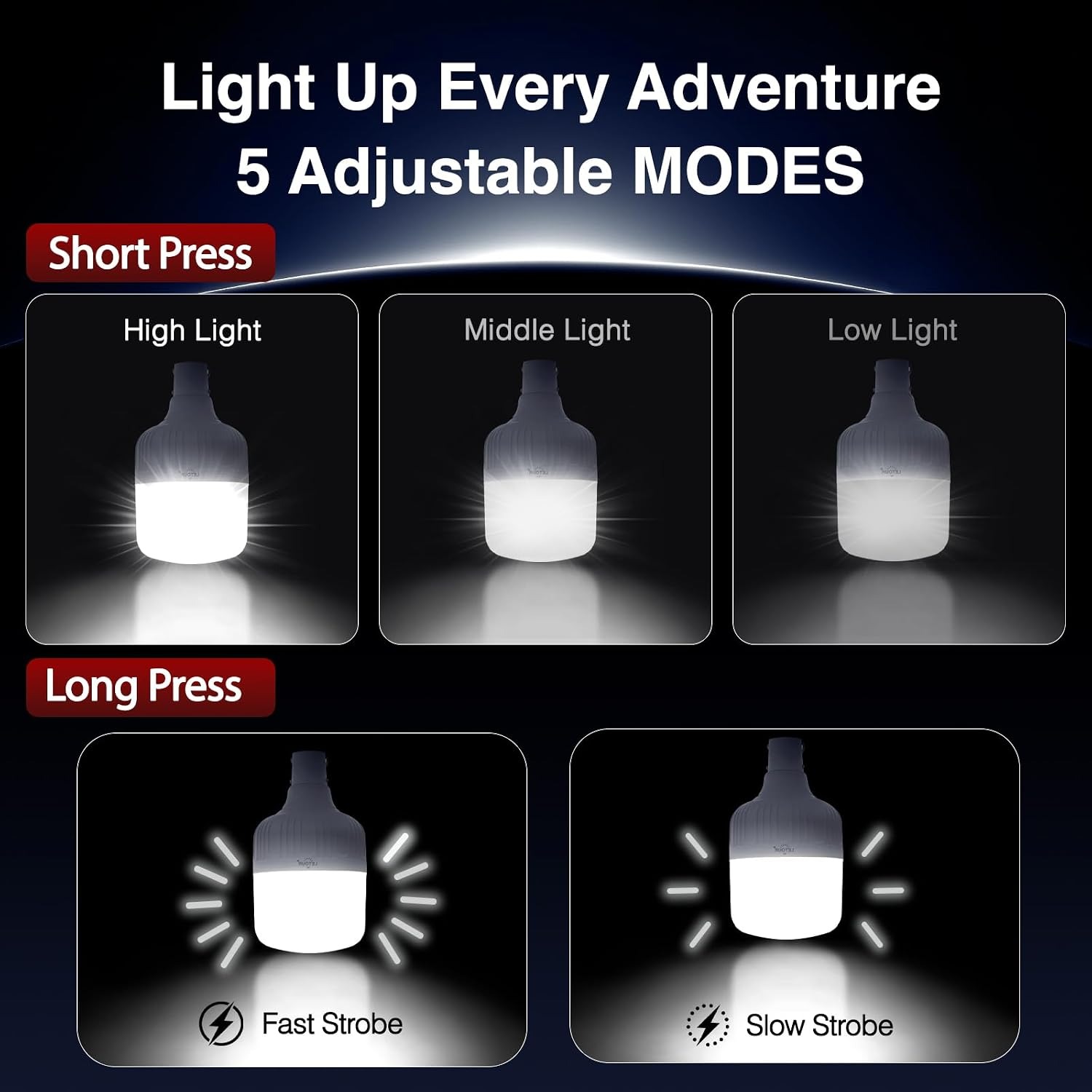
This model has five modes. High, middle and low light are the three you will actually live with. Fast strobe and slow strobe are for being seen, flagging a car down, marking a spot in the dark, or signalling across a field.
Charging happens through a USB port. That one detail changes how you pack. Instead of carrying spare AA cells and hoping you brought enough, you top the lantern up from the same power bank that charges your phone, or from the car's USB socket on the drive in. For a weekend away, a single power bank can keep a phone and a lamp going without any mains power at all.
The listed voltage is 5 volts, the light source wattage is 50 watts and the overall wattage figure is 60 watts. The battery is included, so there is nothing extra to buy before the first trip.
Who this suits
Car campers and caravanners get the most out of a lamp like this. Weight is barely a factor when you are driving in, and 272 grams is light anyway, so you can bring two and still not notice. One hangs inside the tent, the other over the table.
Festival-goers are another good fit. Tents go up in the dark, and being the person with a proper light makes you very popular very quickly.
Then there is home use, which people underestimate. A charged lantern in a kitchen drawer is a far better blackout plan than candles. Hang it from a door handle or a cupboard knob and a whole room becomes usable again. It also earns its keep for shed work, late-night tire changes under cover, garage sorting and anything else where you need both hands free and even light.
Hikers counting grams will want to think harder. It is light for what it is, but a minimalist ultralight setup usually runs a tiny lamp or a headlamp instead. If your pack list is measured to the gram, this is probably more lantern than you need.
The water resistance question
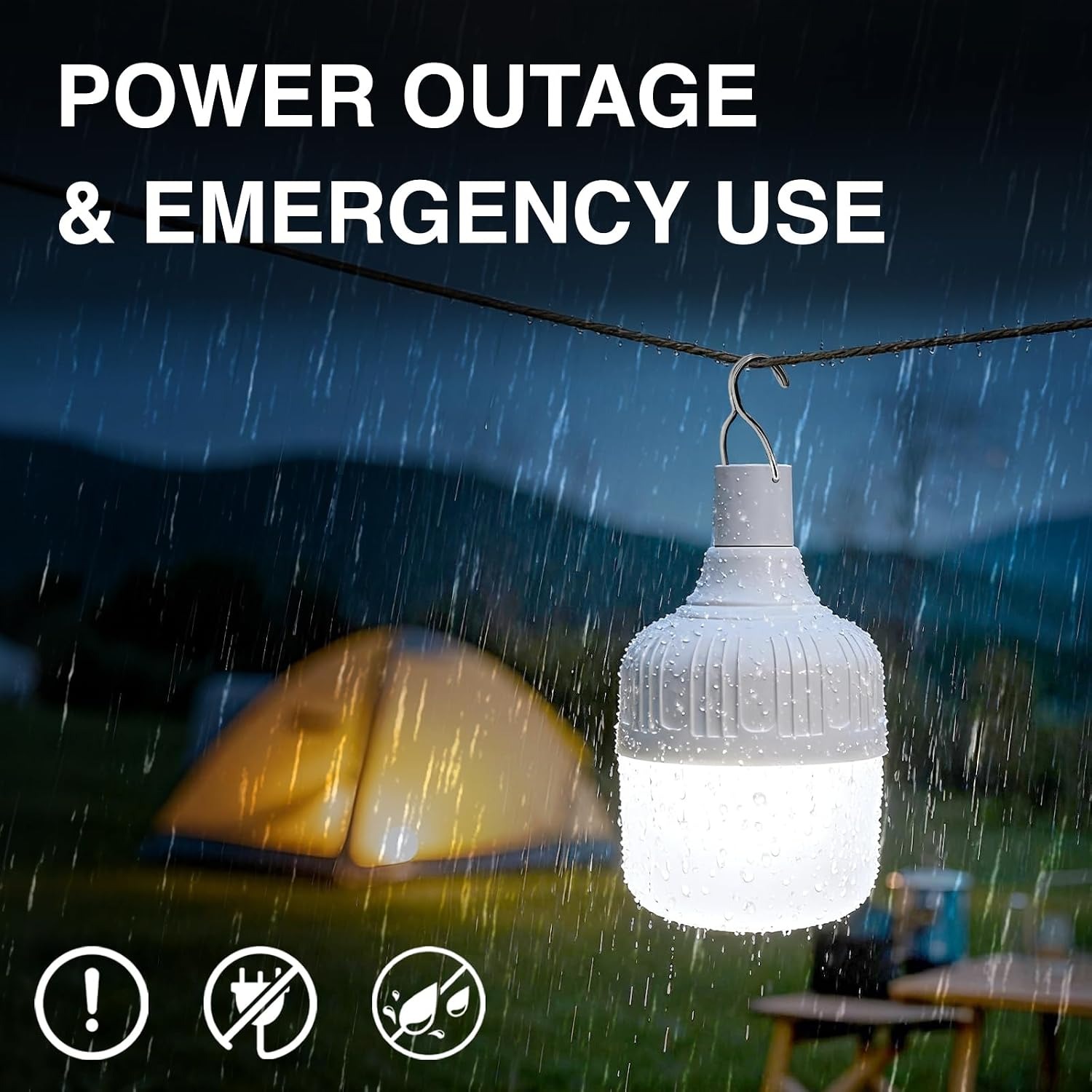
This matters, so it gets its own section. The product details list the water resistance level as not water resistant. That is not a design flaw, it is a category. Plenty of tent lights are built for inside a shelter rather than out in weather.
In practice it means you treat it like you would treat a book. Inside the tent, under the awning, in the camper, on a covered patio, in the house. If the sky looks like it is about to open, bring it in. Keep the USB port dry and do not leave it hanging outside overnight where dew can settle on it.
If you specifically want a lamp to hang on an open branch in Scottish drizzle, look for something with a published IP rating instead. If you want a bright, light, rechargeable lamp for sheltered spaces, this does the job well.
How to choose brightness
People fixate on the lumen number and then almost never use it. Here is a more useful way to think about it.
High light is for tasks and for setting up. Pitching a tent after dark, cooking, finding something small in a packed car, dealing with a problem. You will use it in bursts.
Middle light is the social setting. It is bright enough to eat by and read a map, and it does not wash the night out or draw every insect within fifty metres.
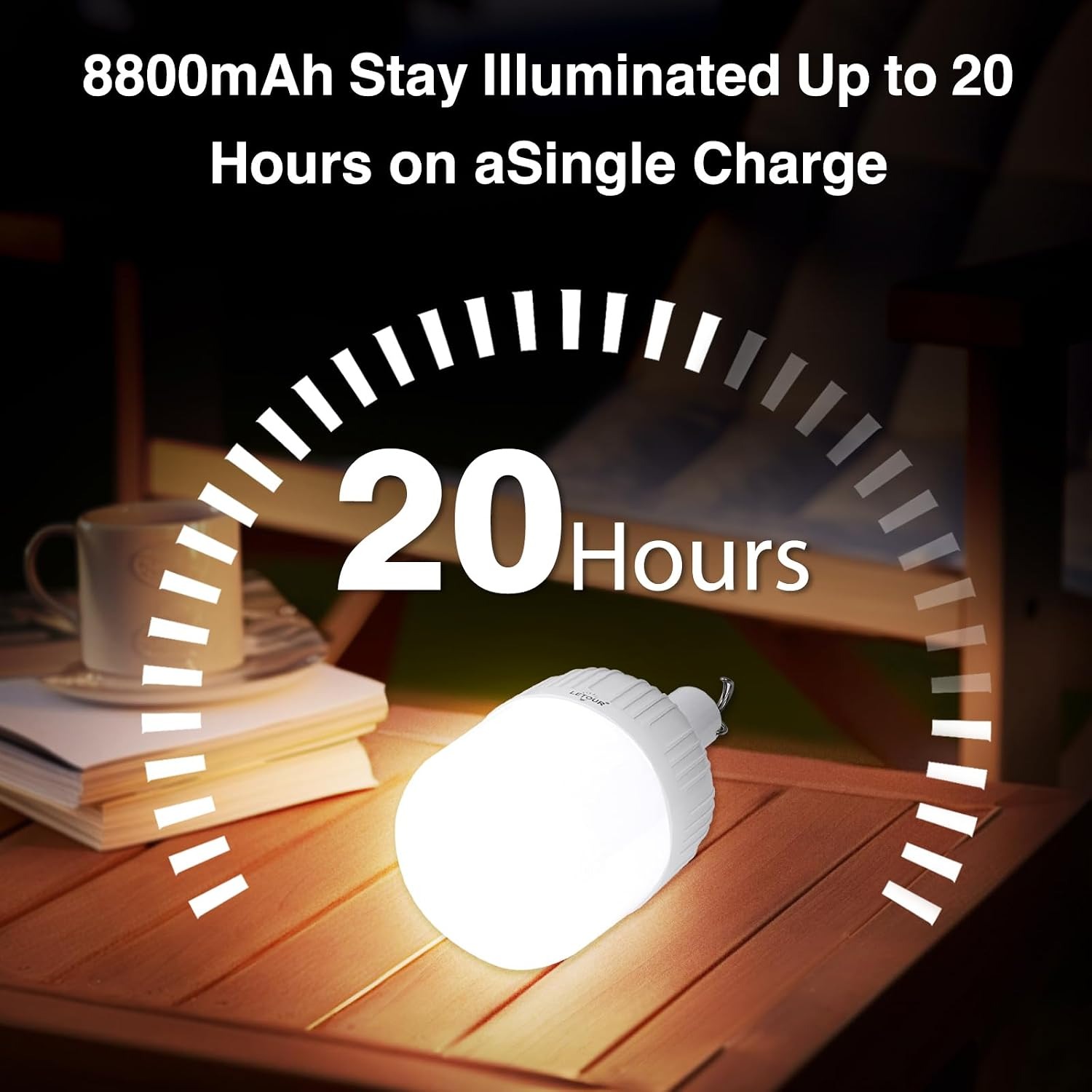
Low light is the long-run setting. It is the one you leave on while people drift off to sleep, or use as a tent nightlight for a child who does not like the dark. It also stretches the battery the furthest, so on a longer trip it does most of the work.
The strobe modes are not for atmosphere. Use them when you need attention, not when you want to see.
Run time varies with the mode, and the supplier does not publish a confirmed figure per mode in this record. The practical approach is to charge before you leave, run low light for anything that lasts more than a few minutes, and carry a power bank as backup.
Placement makes more difference than lumens
A good lantern in a bad spot still gives you a bad campsite. Two quick rules.
First, get it above eye level. Light coming from below makes faces look odd and puts your own shadow across whatever you are doing. Hanging it from a tent ceiling loop or a pole at head height or higher fixes that instantly.
Second, hang it slightly off to the side of your working area rather than directly in your eyeline. You want the light on the table, not in your face while you are trying to look across it. A hook on an awning leg often beats the obvious central position.
In a tent, the ceiling loop is almost always right. In a gazebo, a corner frame joint is usually better than the middle. Over a barbecue, hang it to the side and slightly behind where you stand so you are not cooking in your own shadow.
Looking after it
LED lamps are low maintenance, but batteries have habits worth respecting.
Wipe the housing with a barely damp cloth and dry it before it goes away. Do not rinse it, do not use solvents, and do not store it damp.
Between trips, top the battery up every couple of months rather than leaving it flat for a whole winter. Lithium-ion cells sit happiest somewhere in the middle of their range, and a long spell at zero is the thing most likely to shorten their life.
Store it indoors. Hot cars and damp sheds are hard on both plastics and batteries. A kitchen drawer, a cupboard or the camping box in a spare room is all it needs.
The short version
This is a rechargeable camping lantern built for sheltered spaces. It hangs, it dims across five modes, it tops up from USB, and it weighs 272 grams. The maximum output is listed at 5000 lumens from 24 LED sources, which is plenty for a tent, an awning or a patio table.
It is not water resistant, so it stays under cover. Dimensions are not specified in this record. Beyond that, it is a straightforward piece of kit that solves a very specific and very common annoyance, which is that the sun goes down earlier than you plan for and a torch is not enough.
Charge it before you leave. Hang it high. Run it on low unless you need more.