
The complete guide
How to Choose a Soft Cooler Bag That Actually Stays Cold
The warm drink problem
Everyone has had the same afternoon. You packed the drinks at 8am, the bag went in the trunk, and by two o'clock the ice is a puddle and the cans are lukewarm. Worse, when you lift the bag out, a thin line of water runs down the back of the seat.
Two separate things went wrong there. The bag did not hold cold long enough, and it did not hold water at all. Most cheap cooler bags fail on both counts because they are built like a padded shopping tote: woven fabric outside, a thin foil liner inside, and a zip that leaks air every time you open it.
A soft cooler bag that works is built differently. It seals better, it drains properly, and it cleans up without a fight. That is the whole brief, and it is worth understanding what to look for.
How insulation in a soft cooler actually works
Insulation does not make anything cold. It slows down the rate at which heat moves from the warm outside world into your cold contents. That sounds like a technicality until you realise it changes how you pack.
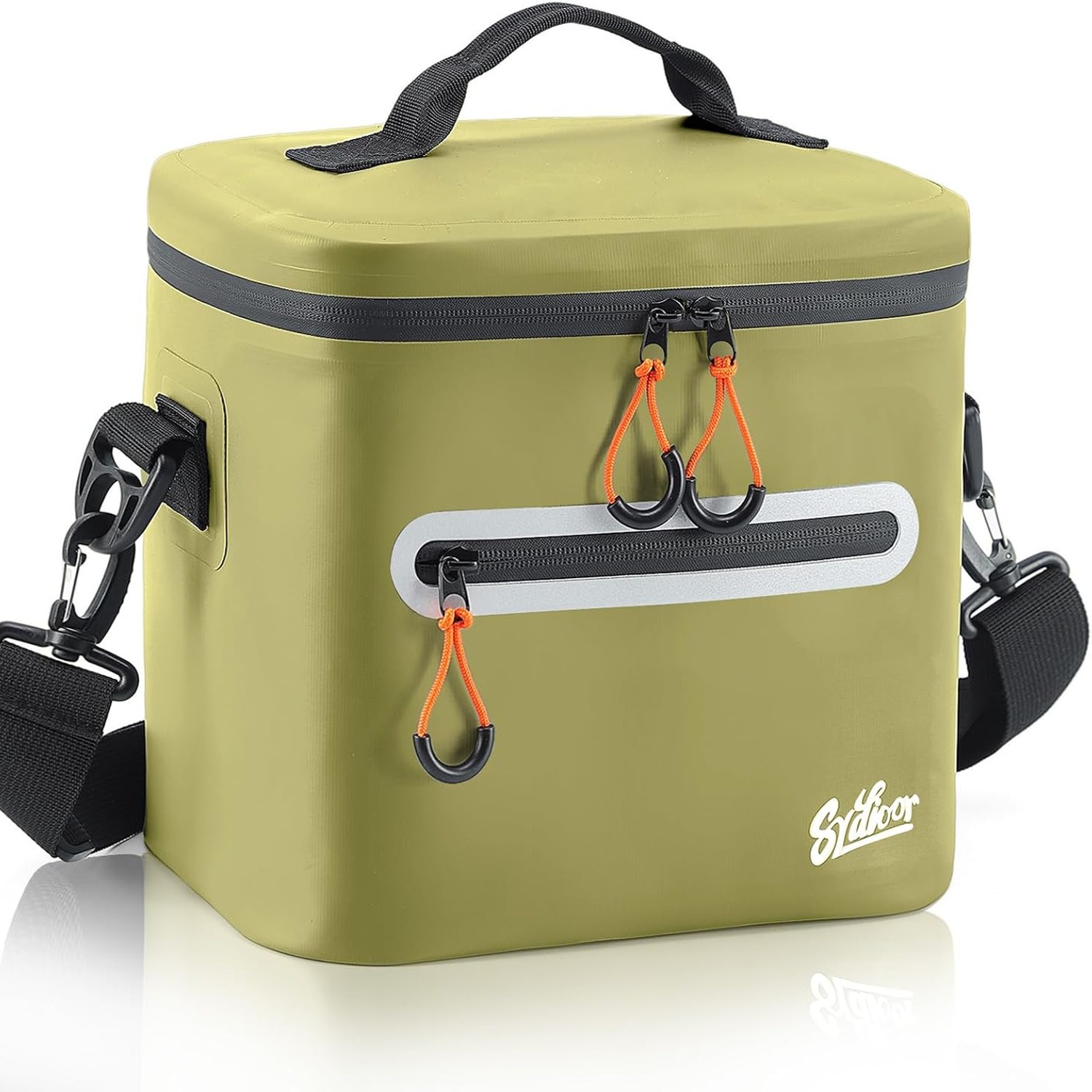
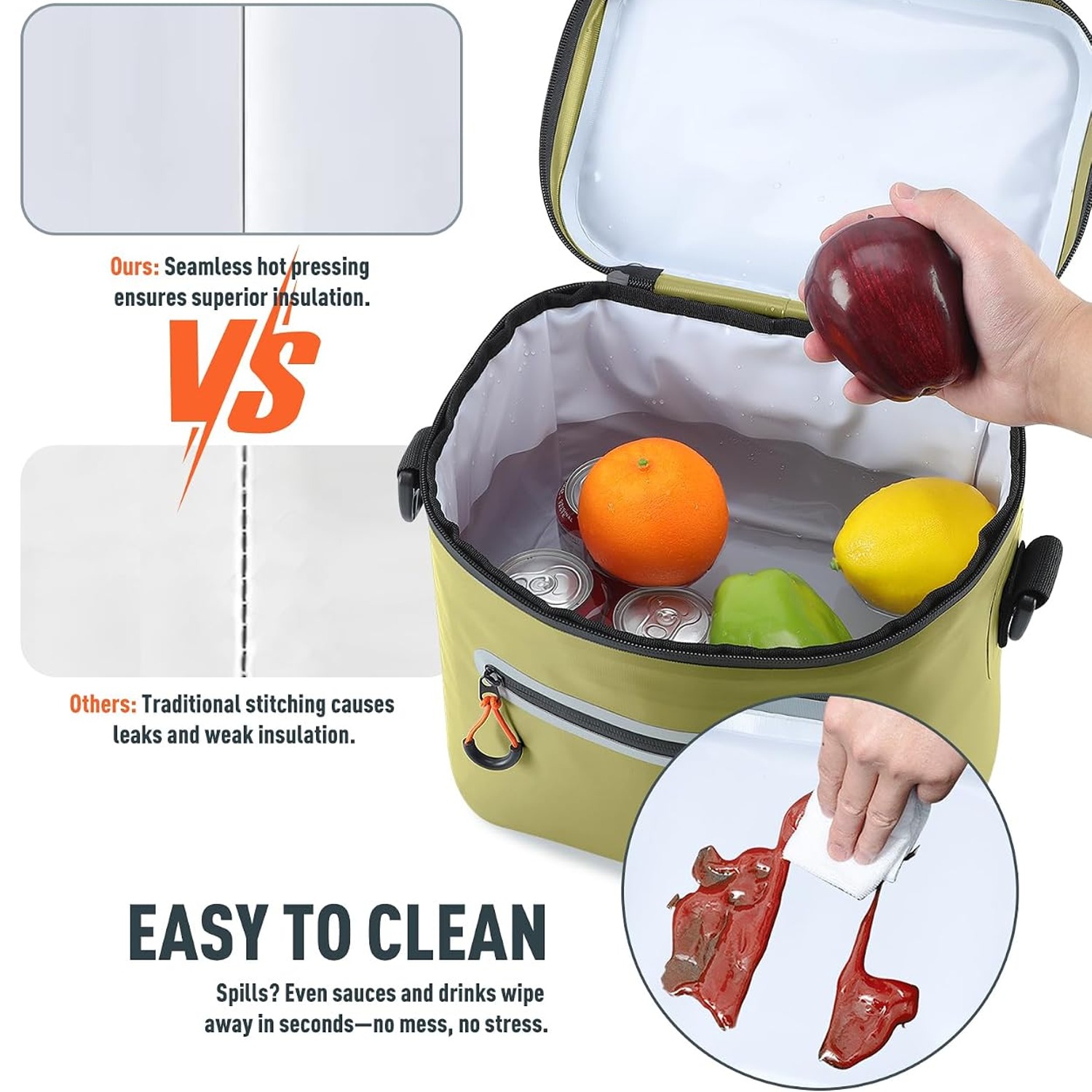
This bag uses an integrated five-layer construction. The shell, the insulating middle, and the liner are built as one piece rather than stitched together as separate panels. There are no inner pockets, and that is deliberate. Every inner pocket adds seams, and every seam is a small thermal shortcut where cold slips out.
The liner is food-grade PEVA and it is leak-proof. That is the part that handles the puddle problem. Ice is going to melt, so the design question is simply whether the water stays contained until you tip it out over a drain.
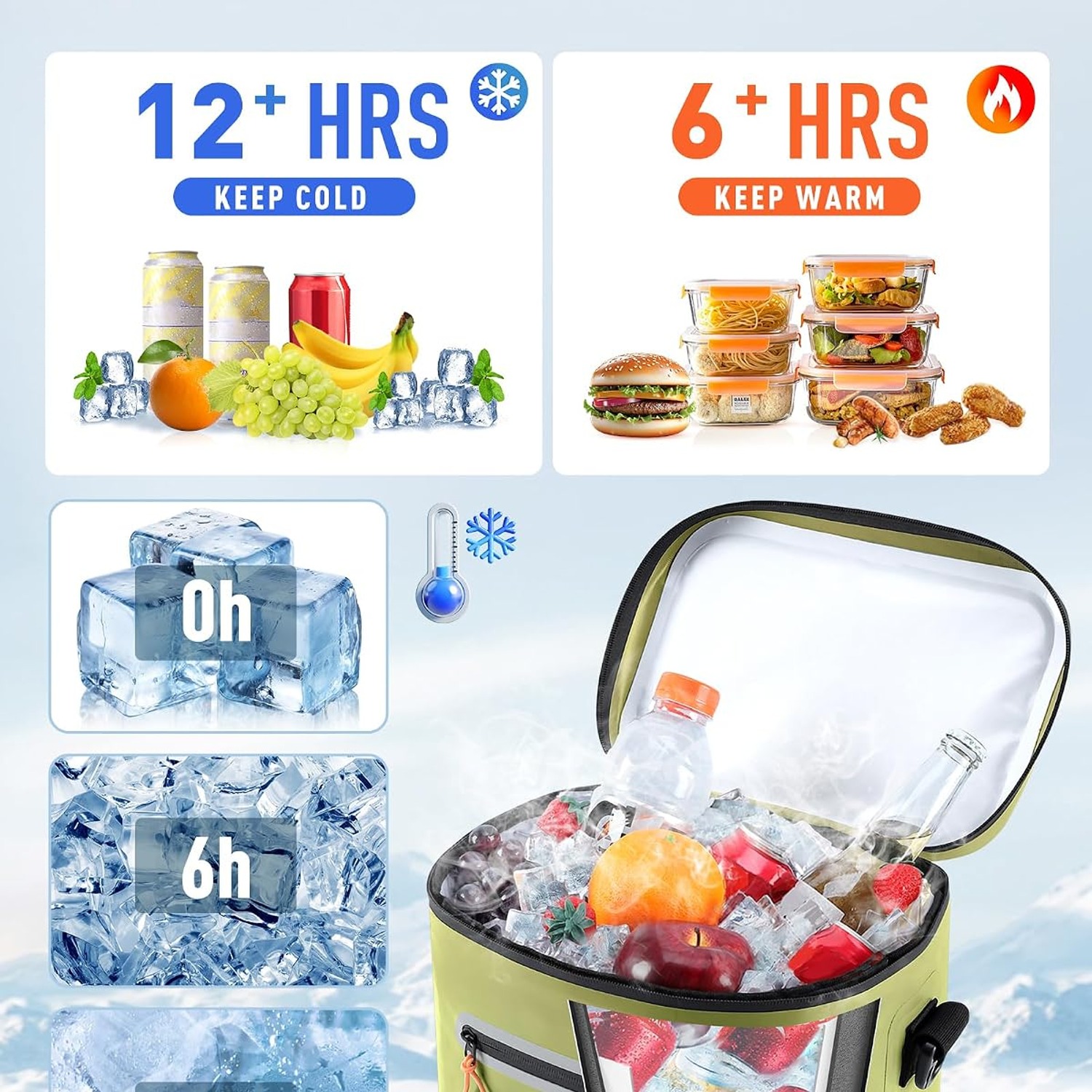
The manufacturer states that with ice, the bag can hold cool temperatures for more than 20 hours. Take that as a ceiling rather than a promise. A bag packed to the top with ice, closed in the morning and left in the shade, will perform very differently to a half-empty bag opened twenty times at a hot beach. Ambient temperature and ice quantity drive the result.
Why the outer material matters more than you think
Most cooler bags on the shelf use Oxford cloth or a similar woven polyester. It is cheap, it looks fine, and it soaks up everything. Rain, sunscreen, melted ice cream, fish smell. Once fabric takes on an odour it tends to keep it.
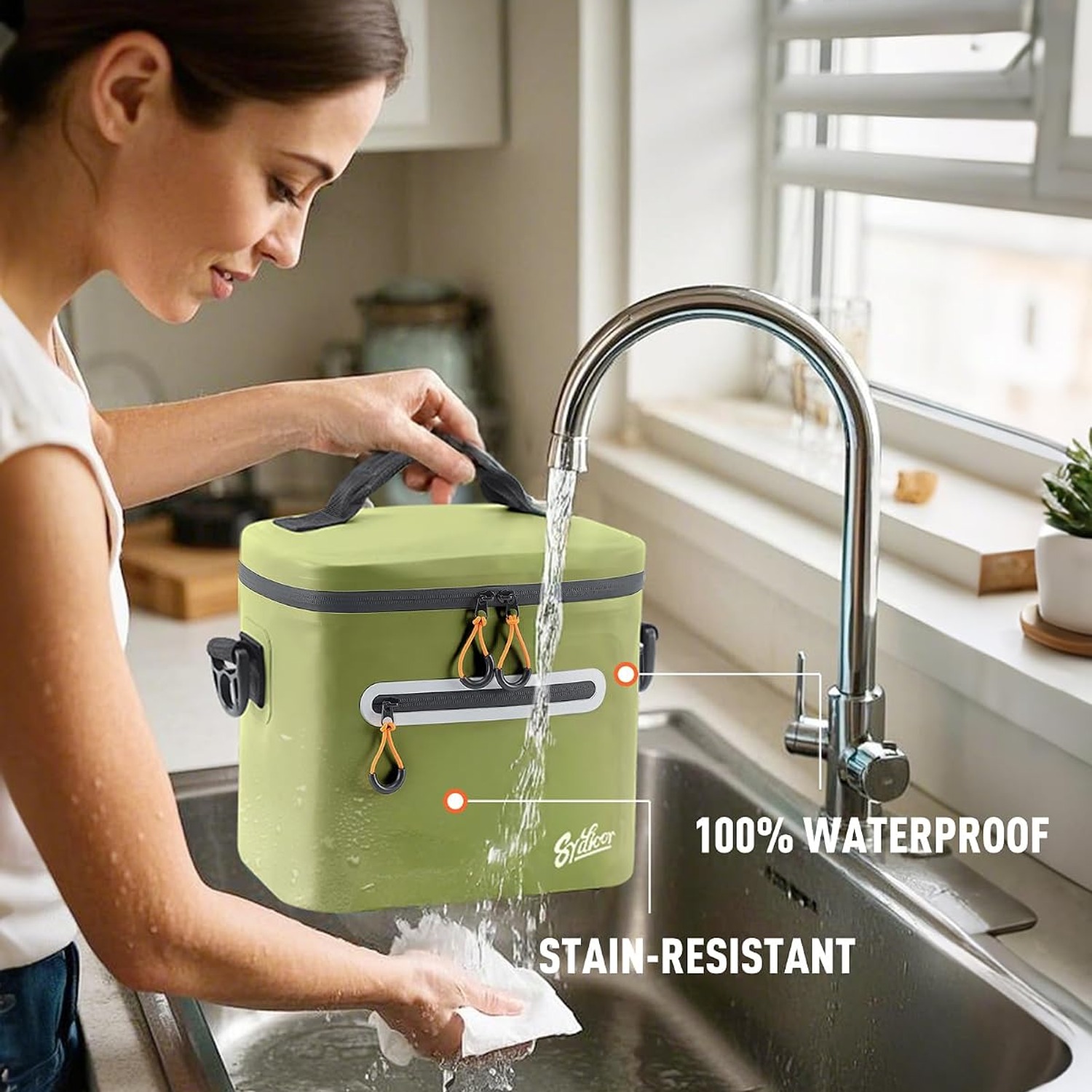
This bag uses a TPU shell instead. TPU is a smooth, flexible plastic surface, and it is listed as waterproof. Water runs off it. Spills sit on top rather than wicking in. You wipe it with a damp cloth and the job is done in about ten seconds.
The practical upshot shows up in the places you would actually use it. On a boat, spray does not soak through. At the beach, sand brushes off instead of lodging in the weave. In the car on a rainy day, you do not end up with a wet bag sitting on upholstery. It is a small material choice that changes the ownership experience quite a lot.
Picking the right capacity
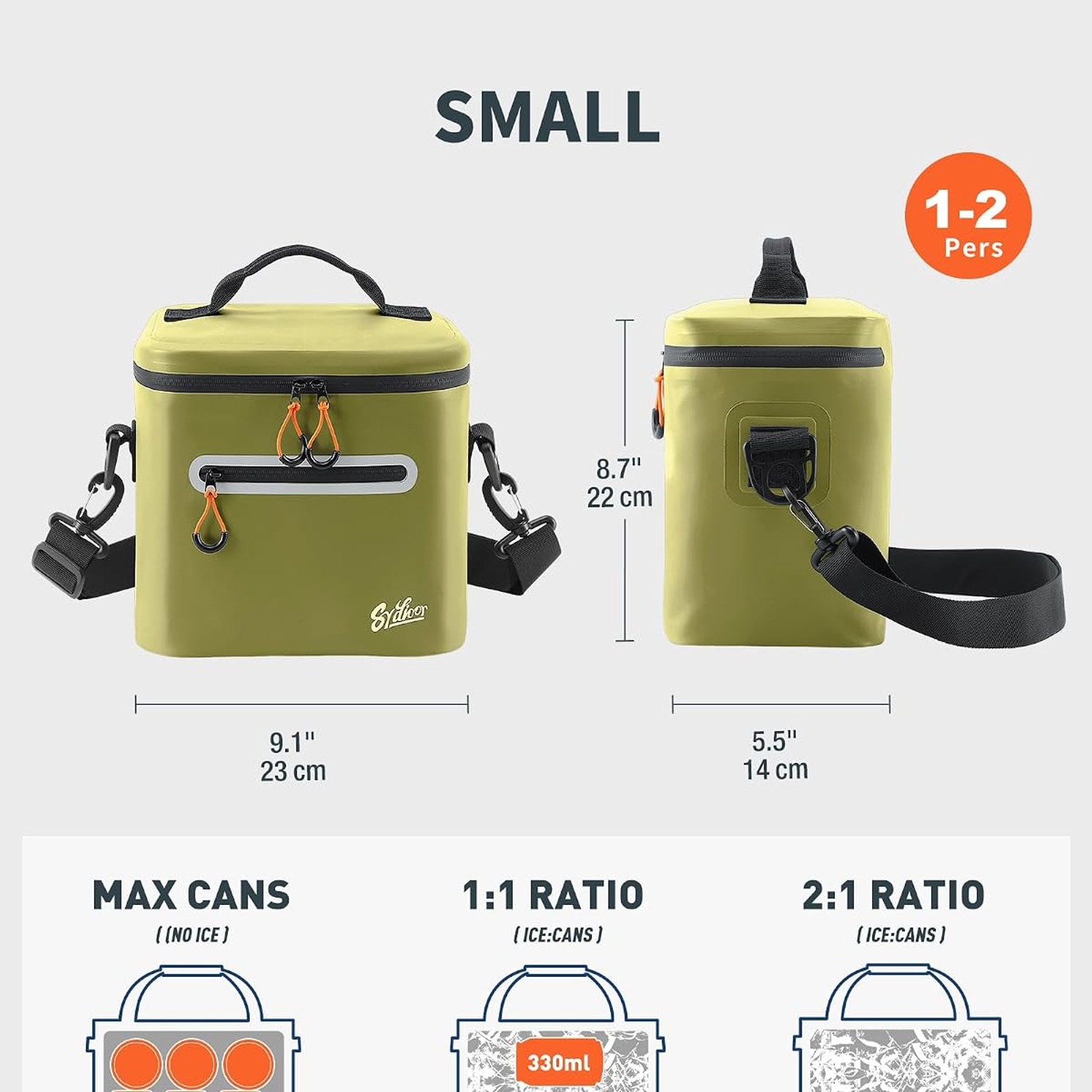
This version is 14 litres, rated at 16 cans. The external dimensions are 19 cm deep, 30 cm wide and 25 cm high.
Here is the honest way to read a can rating. The number assumes cans and nothing else. Add ice and you will land closer to 10 to 12 cans, or a sensible mix of a few drinks plus two or three food containers. That is not a flaw in the rating, it is just physics. Ice takes space.
So who does 14 litres suit? A couple heading out for the day. One person who works long shifts and wants lunch, snacks and two drinks to stay properly cold. A family doing a two-hour picnic rather than a full day. If you are catering for four people across a whole summer afternoon, you want more volume or a second bag.
Think about carry, too. A 14 litre bag loaded with ice is a comfortable one-shoulder weight. Go much larger in a soft cooler and you start wanting wheels or a second person.
Soft versus hard, honestly
Hard coolers insulate better. That is not in dispute. Thick rigid walls and a gasketed lid will hold ice longer than any soft bag.
What hard coolers do badly is everything else. They are heavy before you put anything in them. They occupy the same cubic space empty as full, which is a real problem in a small boot or an apartment. Carrying one across soft sand is an upper-body workout.
A soft cooler bag trades peak ice retention for weight, pack-down and ease of carry. For a day trip, a lunch run, a picnic or a weekend camp with a shop nearby, that trade is usually the right one. For a four-day trip into somewhere remote in summer, take the hard cooler.
Plenty of people own both and reach for whichever suits the day. There is nothing wrong with that.
Packing it so it performs
A few habits make a noticeable difference, and none of them cost anything.
Pre-chill the contents. Putting room-temperature cans into a cooler means the ice spends its first hour cooling the drinks instead of holding temperature. Fridge them the night before.
Fill the space. Air is the enemy. A bag that is two-thirds full of air warms faster than a full one. If you are short on contents, add an extra ice brick or a rolled towel to take up room.
Keep it out of direct sun. A black bag in full sun absorbs heat quickly. Under a chair, under a towel, in the shade of the car, anywhere but the open beach.
Open it less. Every opening swaps cold air for warm air. Decide what you want before you unzip rather than browsing with the lid open.
Looking after it
Cleaning is straightforward, which is largely the point of the TPU and PEVA combination. Wipe the shell and the liner with a damp cloth and mild soapy water, then go over it again with a clean damp cloth.
The step people skip is drying. Leave the bag open until the inside is completely dry before you put it away. Nearly every bad smell in a cooler bag traces back to moisture sealed inside a zipped bag in a cupboard for a fortnight.
Avoid the dishwasher and the washing machine. Heat and agitation are hard on bonded layers. Watch for sharp edges too, since a jagged chunk of ice or a loose skewer can nick a liner.
Store it flat or loosely folded, out of direct sunlight. Do not crush it under heavy gear for months at a time.
The short version
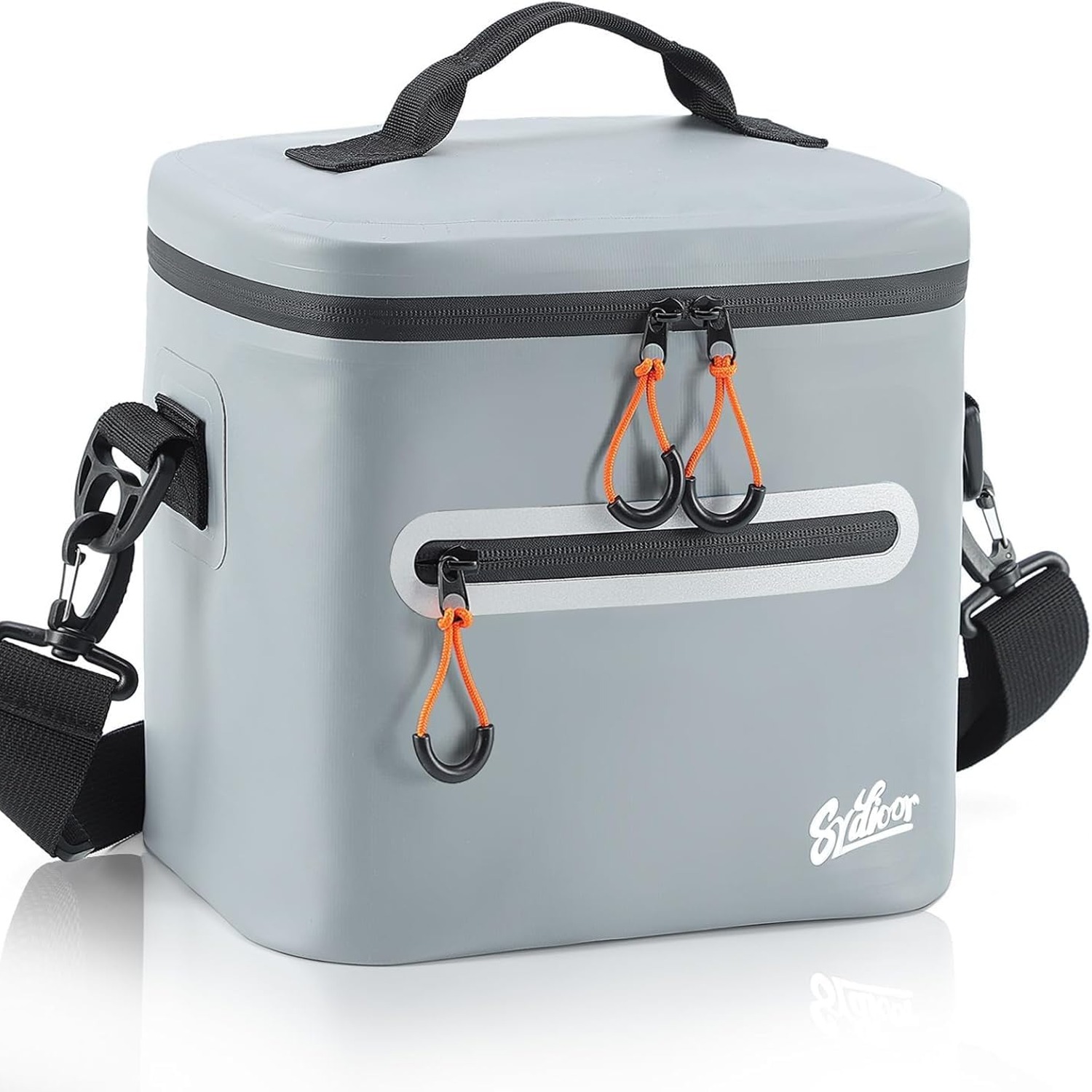
If you want one bag that handles the beach, the campsite, the boat and the work lunch, a 14 litre soft cooler covers most of it. The things to look at are the liner, the shell and the build.
This one has a food-grade PEVA leak-proof liner so meltwater stays contained, a waterproof TPU shell that wipes clean and does not hold smells, and a one-piece five-layer body without inner pockets to leak cold. The detachable adjustable strap and front zip pocket are the small conveniences you notice every single trip.
Pre-chill your contents, pack it full, keep it shaded, and dry it open afterwards. Do that and it will do its job for a long time.