
The complete guide
How to Choose a Camping Kettle That Earns Its Place in Your Pack
The small problem that ruins a morning
Camping gear fails in boring ways. Nobody tells the story about the kettle, they tell the story about the hour they spent trying to get coffee while the wind blew the stove out and the pot lid kept sliding off.
Hot water is the quiet backbone of a camp kitchen. Dehydrated meals need it. Tea needs it. Washing greasy plates in a creek is miserable without it. And yet the kettle is usually the last thing people think about, which is how you end up boiling water in a cook pot, pouring it badly, scalding your wrist, and tasting last night's chilli in your morning brew.
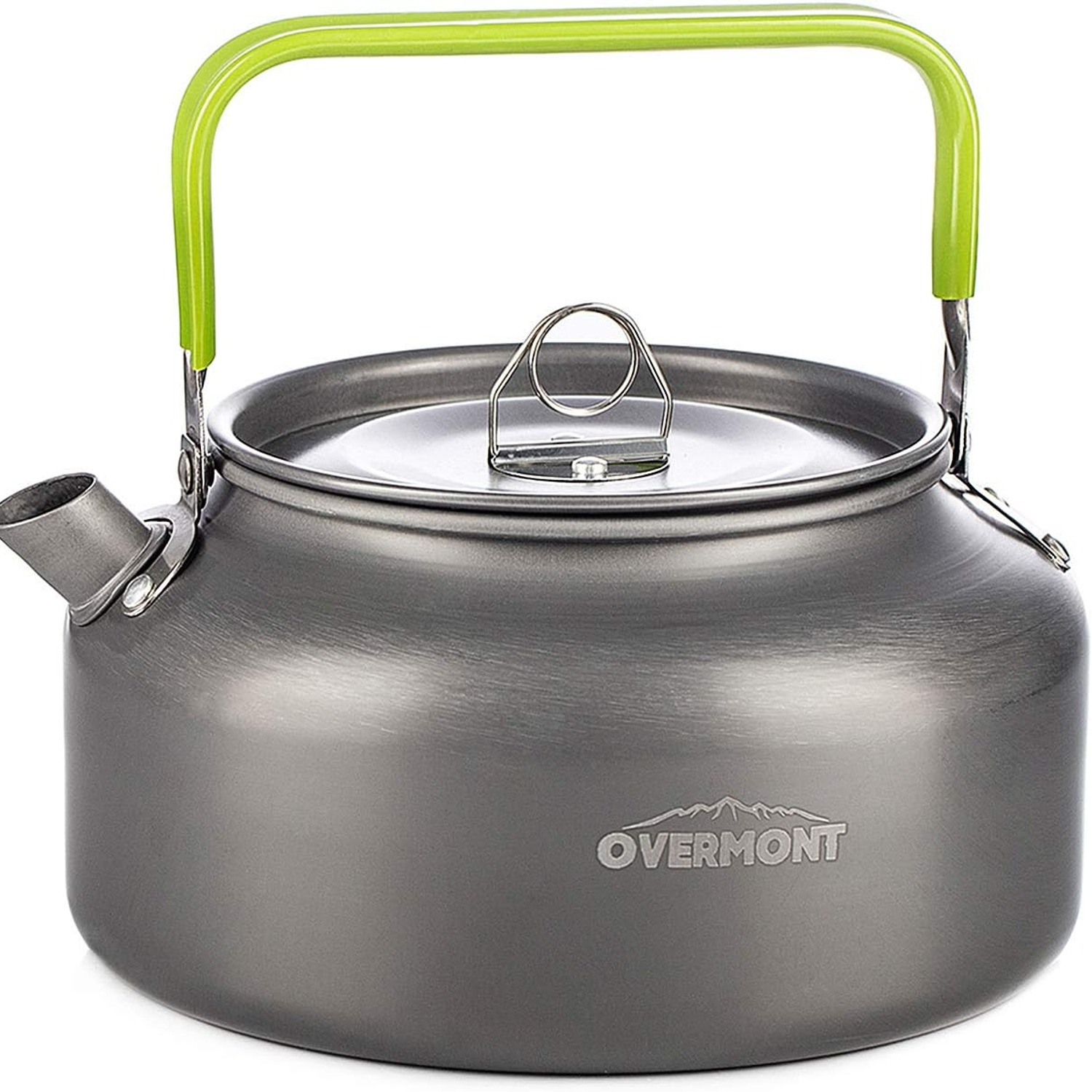
A dedicated kettle solves that for a very small weight penalty. This one is 318 grams. That is less than a full water bottle. For that you get 1.2 litres of capacity, a spout that pours in a line instead of a sheet, a whistle that tells you when to come back, and a handle you can actually hold.
How an aluminum camp kettle works
Aluminum is the material of choice for camp cookware for one simple reason. It conducts heat extremely well. Put a flame under an aluminum base and the heat spreads across the bottom and up into the water quickly, rather than concentrating in one hot spot the way it does in thinner steel.
That matters outdoors more than it does at home. On a gas canister stove you are paying for every minute of flame out of a finite fuel supply. On a fire you are managing a heat source that changes every few minutes as the wood burns down. A material that moves heat fast means less fuel used and less standing around.
The trade-off with aluminum is that it is softer than steel. It dents if you drop it on rock, and it scratches if you attack it with steel wool. Neither affects whether it boils water. It just means you treat it as a tool with a finish rather than a piece of kitchenware you keep showroom clean.
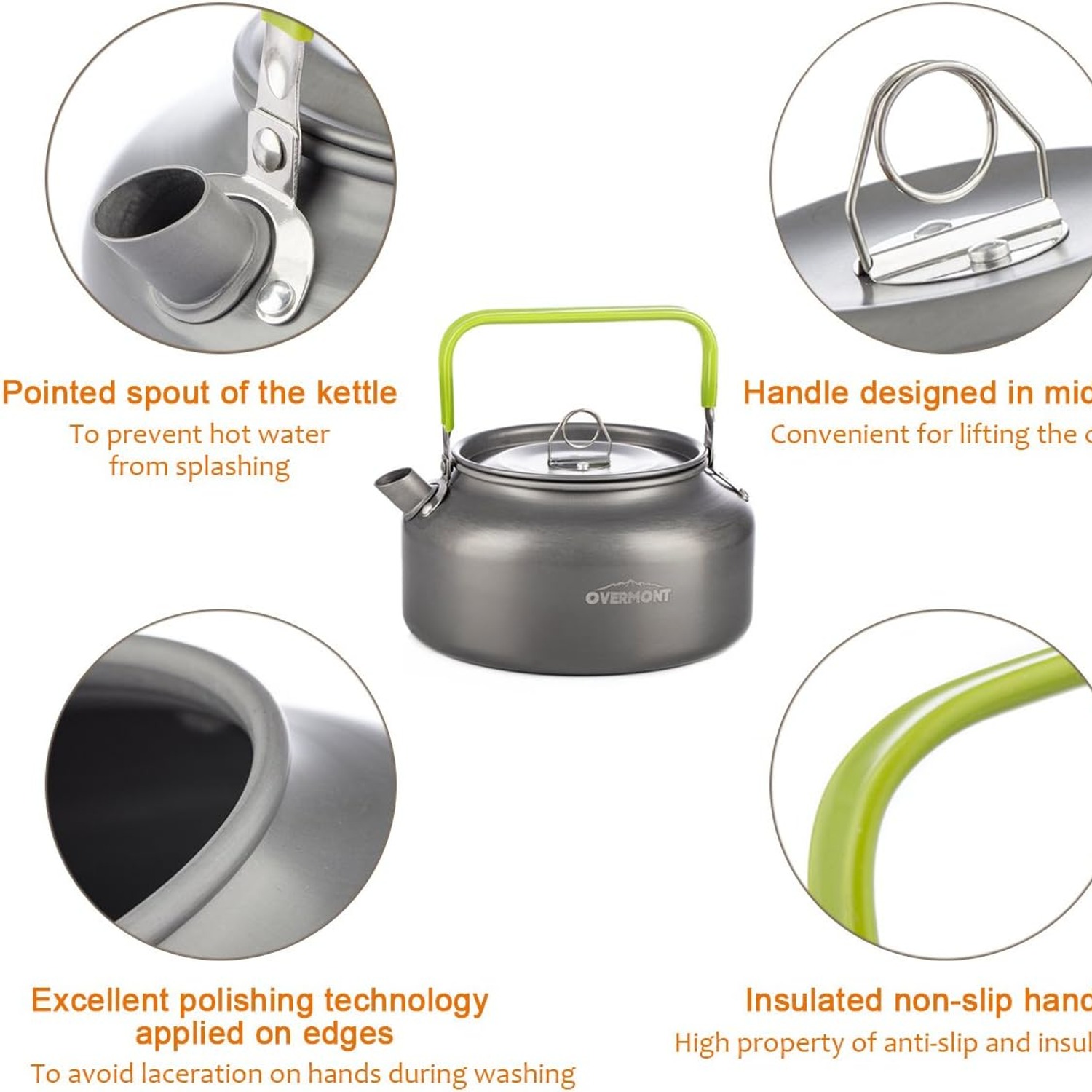
This kettle pairs that aluminum body with a stainless steel lid and a silicone-wrapped handle. The stainless lid holds up to repeated heating and the silicone gives you a cooler grip. Over a campfire the whole thing still gets hot, so a cloth or a glove is sensible, but on a stove the handle stays manageable.
The whistle is not a gimmick
Whistling spouts get dismissed as a kitchen nicety. Outdoors they do real work.
At camp you are rarely doing one thing at a time. You are rolling mats, hunting for the head torch, getting the tent pegs out of the ground. A kettle that calls you when it is ready means you can do all of that and come back at the right moment, instead of hovering over the burner or wandering off and boiling the thing dry.
Boiling dry is worth avoiding. An empty kettle on a hot flame will discolour and can warp. The whistle is cheap insurance against distraction, which is why a whistling camp kettle is usually the safer choice for anyone camping with kids or in a busy group.
Picking the right capacity
Capacity is the main decision, and people usually get it wrong in one of two directions.
Too small and you are boiling twice, which doubles the fuel and the waiting. Too large and you carry metal you never fill, plus you waste fuel heating a kettle body that is mostly air.
Here is the rough guide. Half a litre suits one person who only wants a single hot drink or one dehydrated meal. One to one and a half litres suits two to four people and covers drinks plus a meal plus a splash for washing up. Anything beyond two litres starts being a base camp item rather than something you walk with.
This kettle sits at 1.2 litres, which lands in the useful middle. Two people will find it generous. Four can get a round of drinks out of one fill. A solo hiker who likes a hot wash as well as a hot drink will not find it excessive.
Weight, shape and how it packs
Weight gets all the attention and shape gets none, which is backwards once you have actually packed a bag.
At 318 grams, the weight on this one is already settled. It is light. The more interesting number is the shape, 17 cm across by 10 cm tall. That is wide and low rather than tall and narrow.
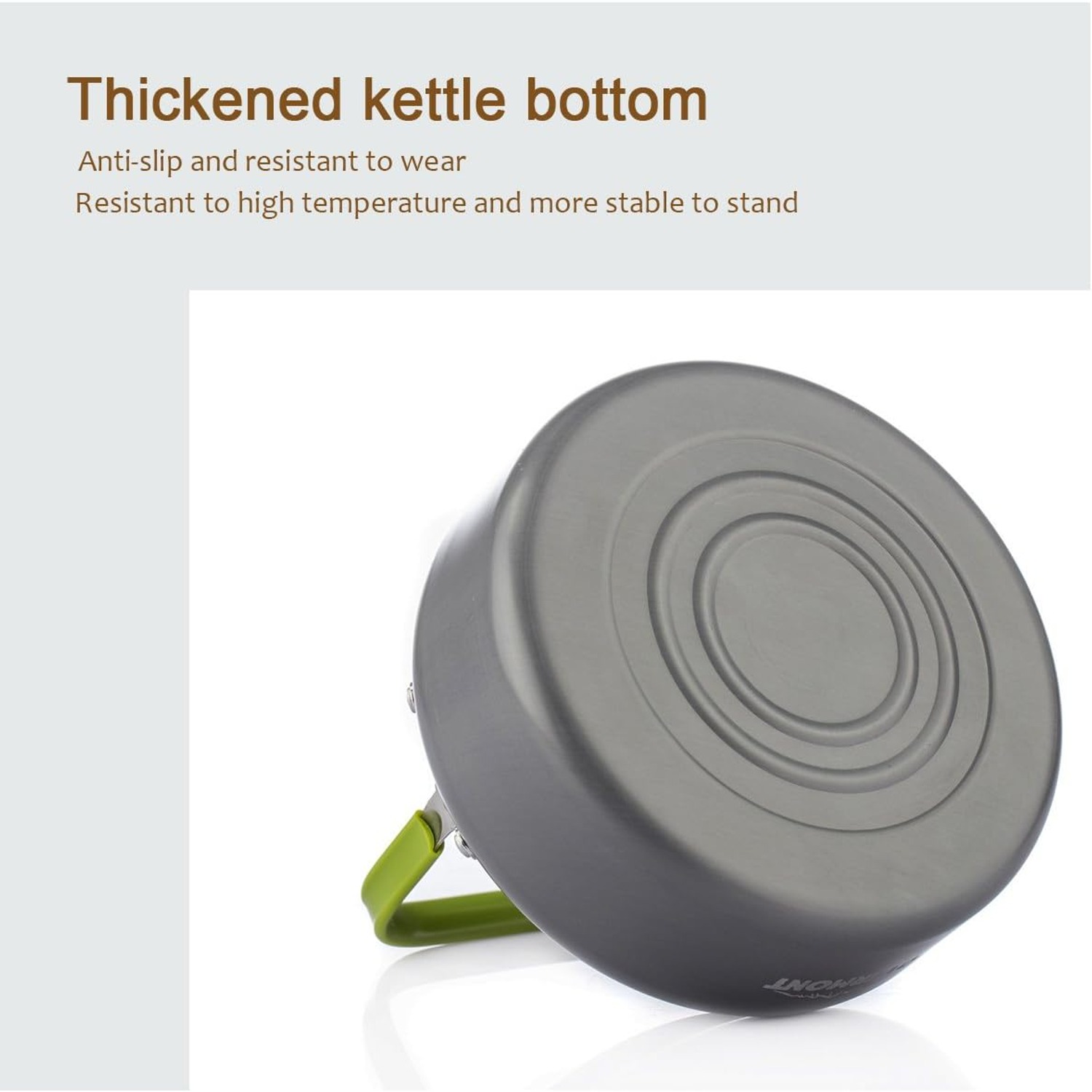
Wide and low helps in three ways. It sits stable on a burner or a grate so the kettle does not tip when you nudge it. It puts more surface area over the flame, which means faster heating. And it packs into the bottom of a rucksack more neatly than a tall kettle that wants to stand upright.
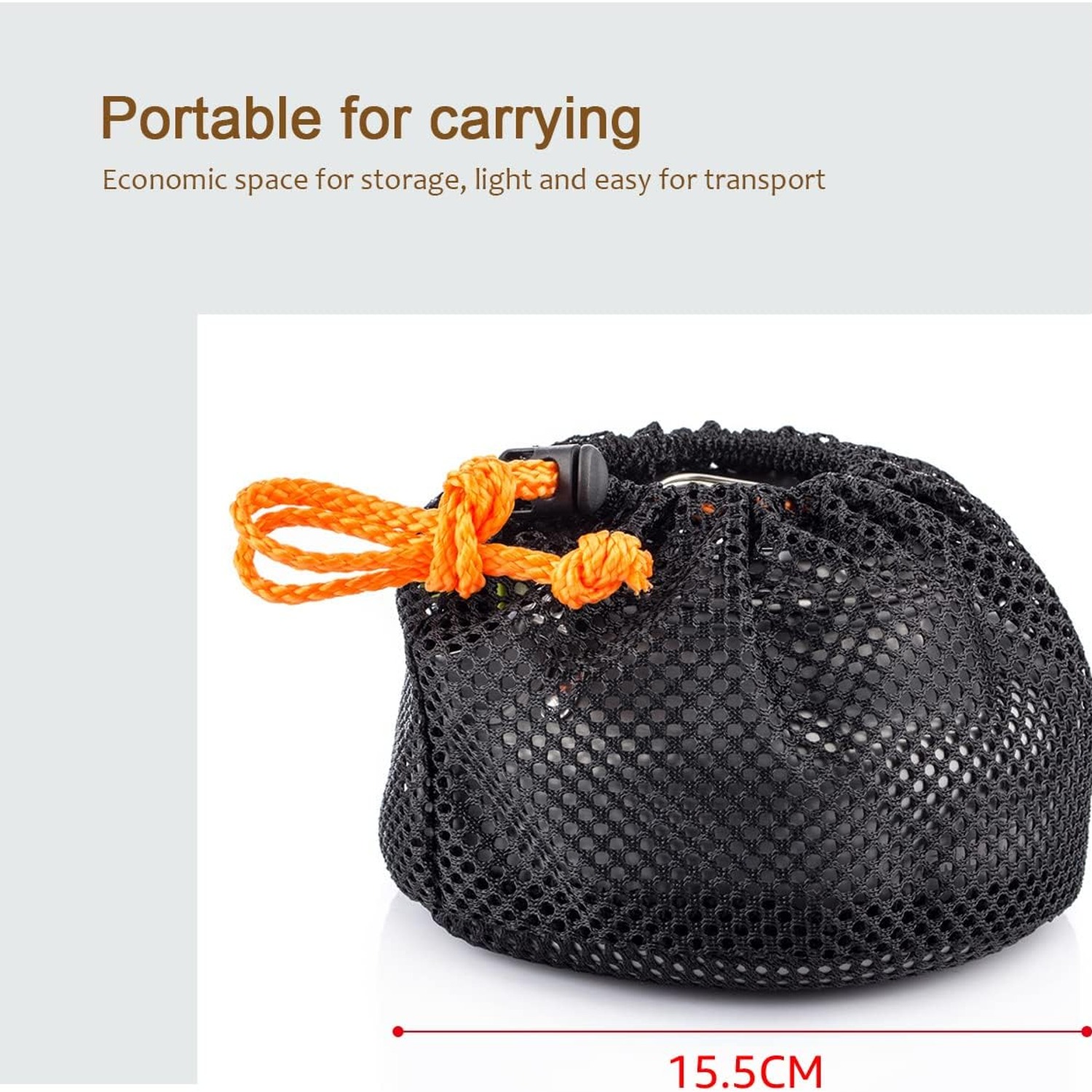
The carry bag matters more than people expect too. Once a kettle has been over a fire, the base carries soot, and soot gets on everything. Bagging it means your down jacket does not come out of the pack with a grey smear across it.
Who this suits
Hikers who want a real pour. If you are making pour-over coffee or filling a narrow bottle, a spout beats a pot lip every time.
Couples and small groups. 1.2 litres covers two to four people without a second boil.
Car campers who want something tidy. It lives in the camp box, takes up very little room, and goes straight on the fire.
People moving up from boiling in their cook pot. Once you have a separate kettle, your pot stays a pot and your tea stops tasting of dinner.
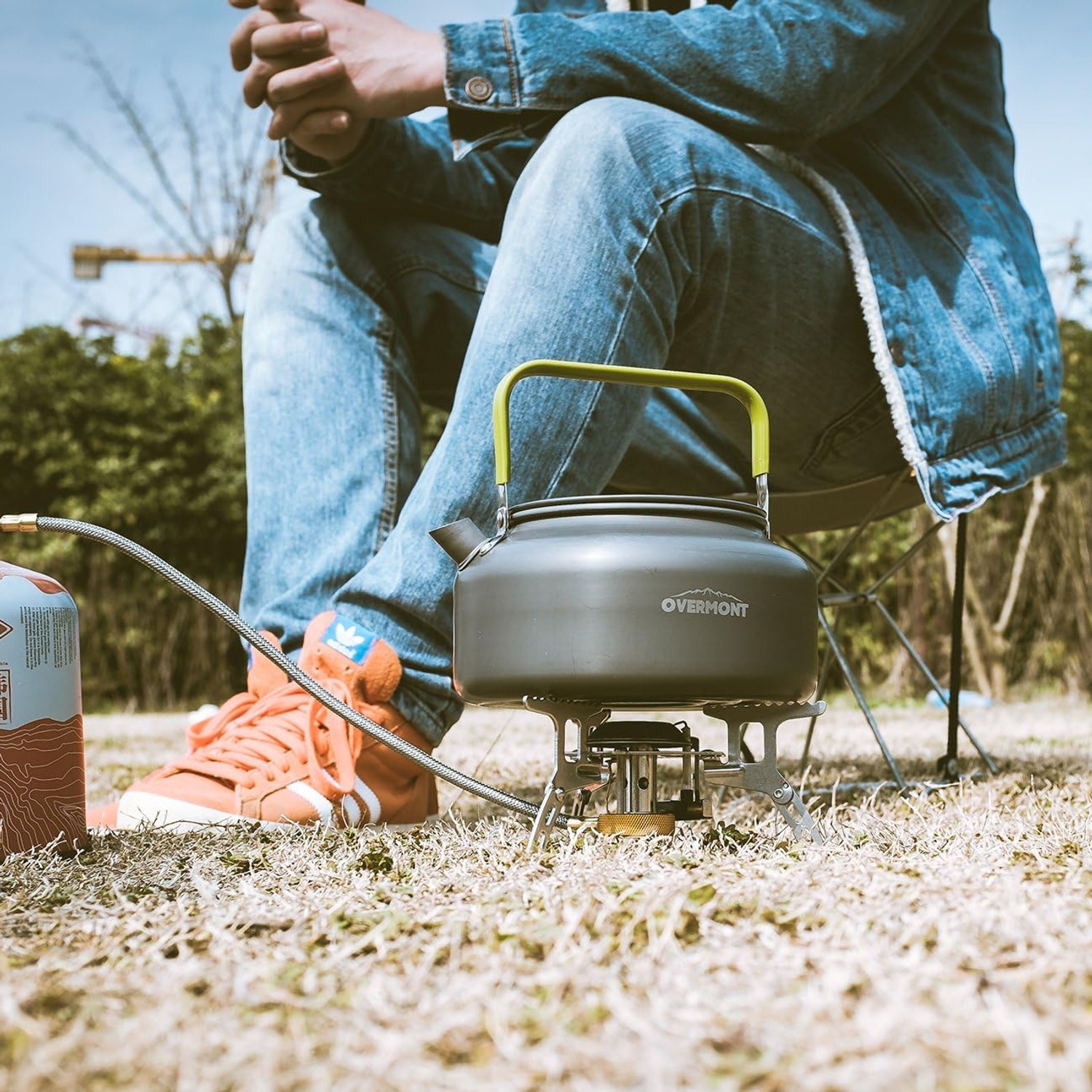
It suits open fire cooking and camp stoves. It is not an induction kettle, and this record does not specify any magnetic base plate, so plan around gas, fire or other radiant heat.
Looking after it
The care routine is short.
Hand wash only. This kettle is not dishwasher safe. Let it cool, wash with warm water and a mild detergent, use a soft cloth or sponge, and skip the steel wool. Anodised aluminum does not enjoy being scoured.
Dry it properly, inside and in the spout, before it goes in the bag. Trapped moisture in a packed kettle is how you end up with marks and a musty carry bag.
Soot on the base is cosmetic. Wipe off the loose stuff and accept the rest. Every kettle that has met a fire looks the same after a few trips, and a blackened base actually absorbs heat slightly better.
Before the first use, give it a wash and run one boil through it that you then tip out. That clears any residue from manufacturing and is standard with new metal cookware.
The short version
A kettle is one of those bits of gear that seems optional right up until you own one. Then you wonder how you managed with a pot and a bad pour.
This one is 1.2 litres, 318 grams, aluminum with a stainless lid and a silicone handle. It whistles, it works on fires and camp stoves, and it comes with a filter and a bag. For two to four people it is about the right size, and for one person it is still light enough to justify.
If you camp with a group larger than four or you are counting every single gram on a long solo route, look at a different capacity. For almost everyone else, this is the sensible middle of the range, and it will keep making coffee long after you have stopped thinking about it.