
The complete guide
How to Choose a Headlamp for Camping, Hiking and Everyday Dark
The problem with holding a torch
Everything useful you do in the dark needs two hands. Pitching a tent, cooking, changing a tire, digging through a pack, holding a map. A hand torch means one of those hands is busy, so you end up clamping it in your teeth or balancing it on something where it rolls off and points at the sky.
A headlamp fixes that, and it fixes it so completely that most people never go back. The light goes where your eyes go. You stop thinking about the lighting and start thinking about the task.
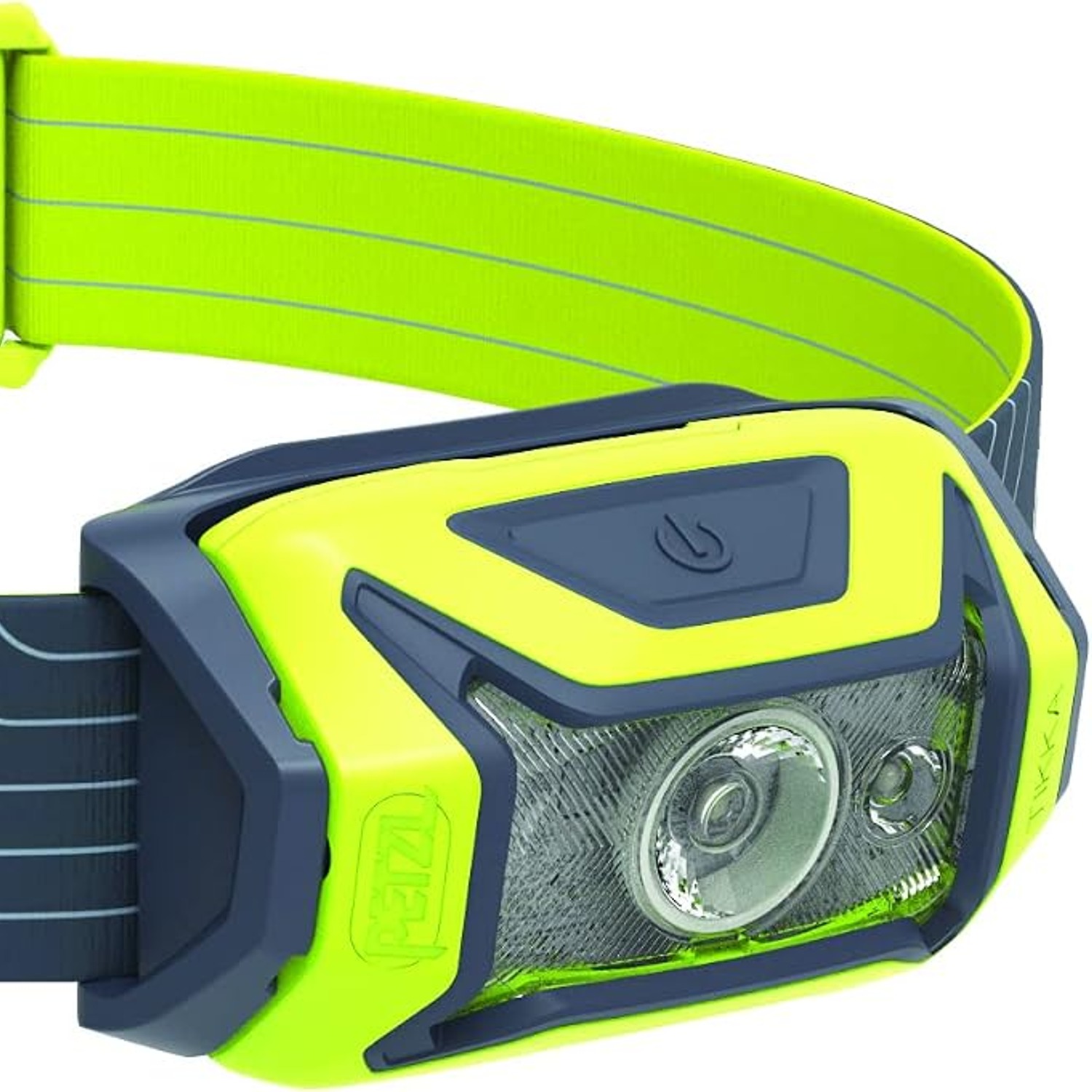
The Petzl TIKKA is the compact end of that category. It is not a long-range lamp built for finding a route across a mountain at midnight. It is the lamp you wear for the hundred smaller jobs that happen after the sun goes down, and it is light enough that you forget it is on your head.
How this lamp works
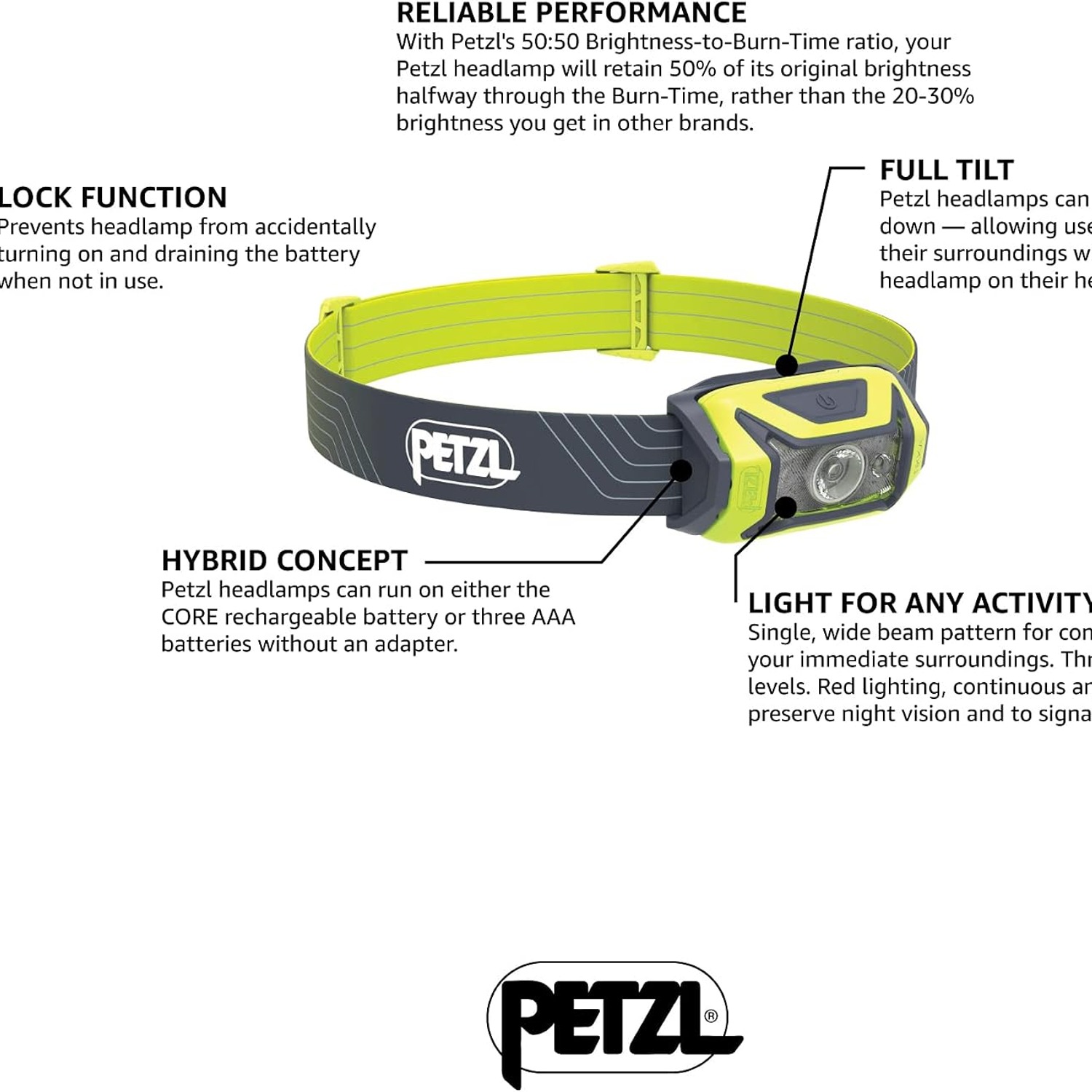
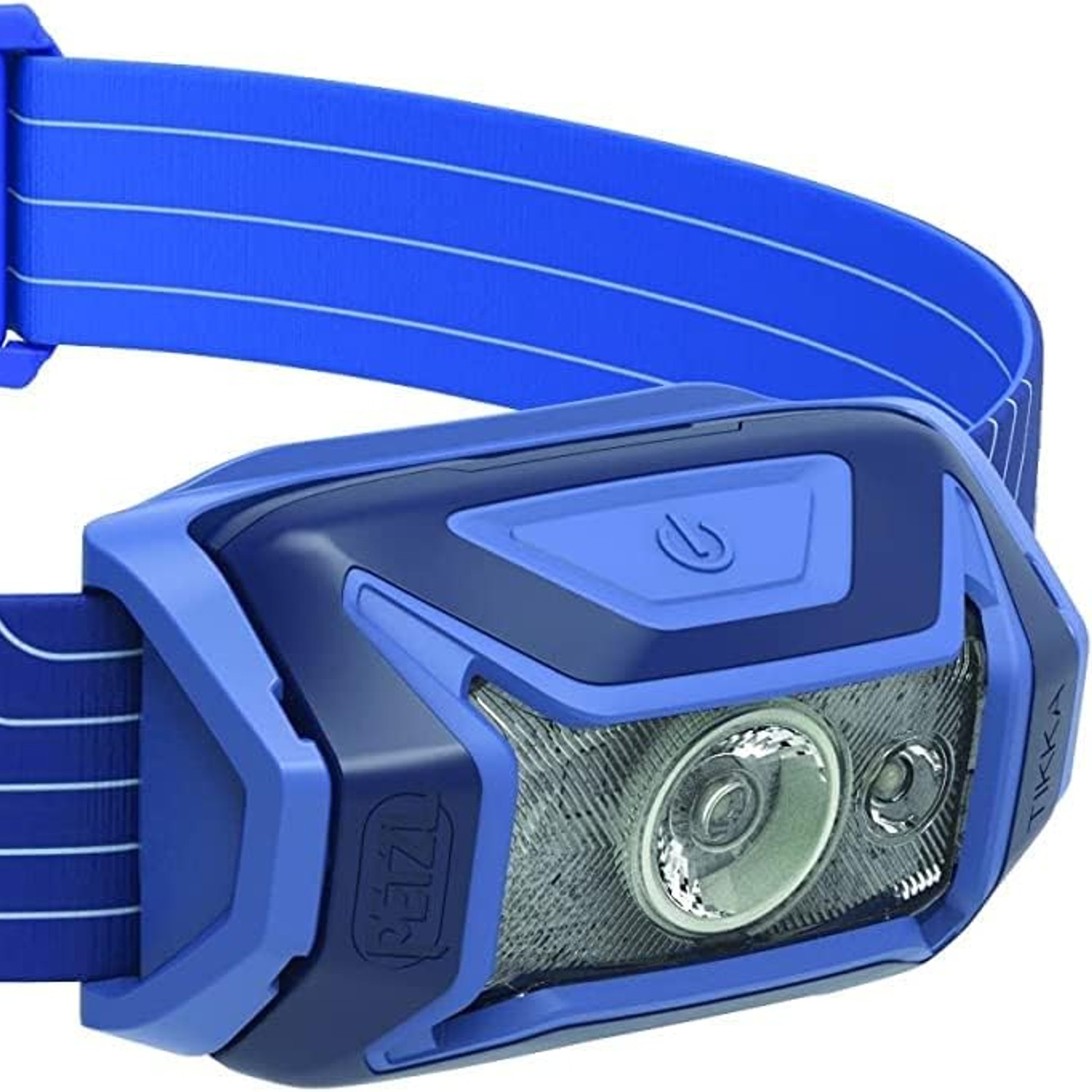
Inside the housing is a single LED behind a wide reflector. That wide reflector is the important part. Instead of a tight hot spot with darkness around the edges, you get an even spread of light that covers your hands and the ground in front of your feet at the same time.
That matters more than raw numbers. A narrow bright beam makes your pupils contract, which makes everything outside the beam look blacker than it really is. A broad, even beam lets your eyes settle, and you see more of your surroundings even though the lamp is not technically pushing light as far.
Brightness is listed at 350 lumens of white output, with a maximum light output figure of 300 lumens and a beam distance of 45 metres. Runtime is listed at 6 hours. Three AAA alkaline batteries supply the power, and they come in the box.
There are three white levels. The lowest is there to stretch your batteries as far as possible for close work. The middle one is the sensible default for most people, balancing output against burn time. The top level is full power for the moments when you want to look further down a path.
Then there is red. Red light does not reset your night-adapted vision the way white light does, so you can check a map, find a water bottle or read a label and still see the stars when you switch off. It also will not blind the person sitting across the camp table from you. There is a flashing red mode too, which is a signalling tool more than a lighting one.
A plate under the lamp lets you tilt the beam down or forward. Without that you spend your evening nodding at things like a pigeon. With it, you set the angle once for whatever you are doing and leave it.
Who it suits
This is a good fit for campers, weekend hikers, travellers, dog walkers, people who commute part of the year in the dark, and anyone who wants a decent light in a kitchen drawer for blackouts. It also works for trades and home maintenance, where a hands-free light in a tight space saves real time.
It suits families well. The controls are simple enough for a child, the weight is low, and the red mode means one person can get up in the night without waking a tent full of people.
It is less of a fit if you want a lamp for fast trail running in deep dark, for caving, or for searching across open ground at distance. Those jobs want more reach and usually a rechargeable battery with a bigger capacity. Be honest with yourself about which job you have.
How to choose, in plain terms
Start with distance. Ask how far you actually need to see. If the honest answer is "to the end of my arms and a few metres past my boots", a compact lamp is correct and anything bigger is weight you carry for nothing. If you need to pick a line across a slope at speed, you need more.
Next, weight. Ninety-four grams is light enough to wear for hours. Heavier lamps tend to need a top strap and a rear battery pack to stay put, which is fine for serious night use and overkill for camp.
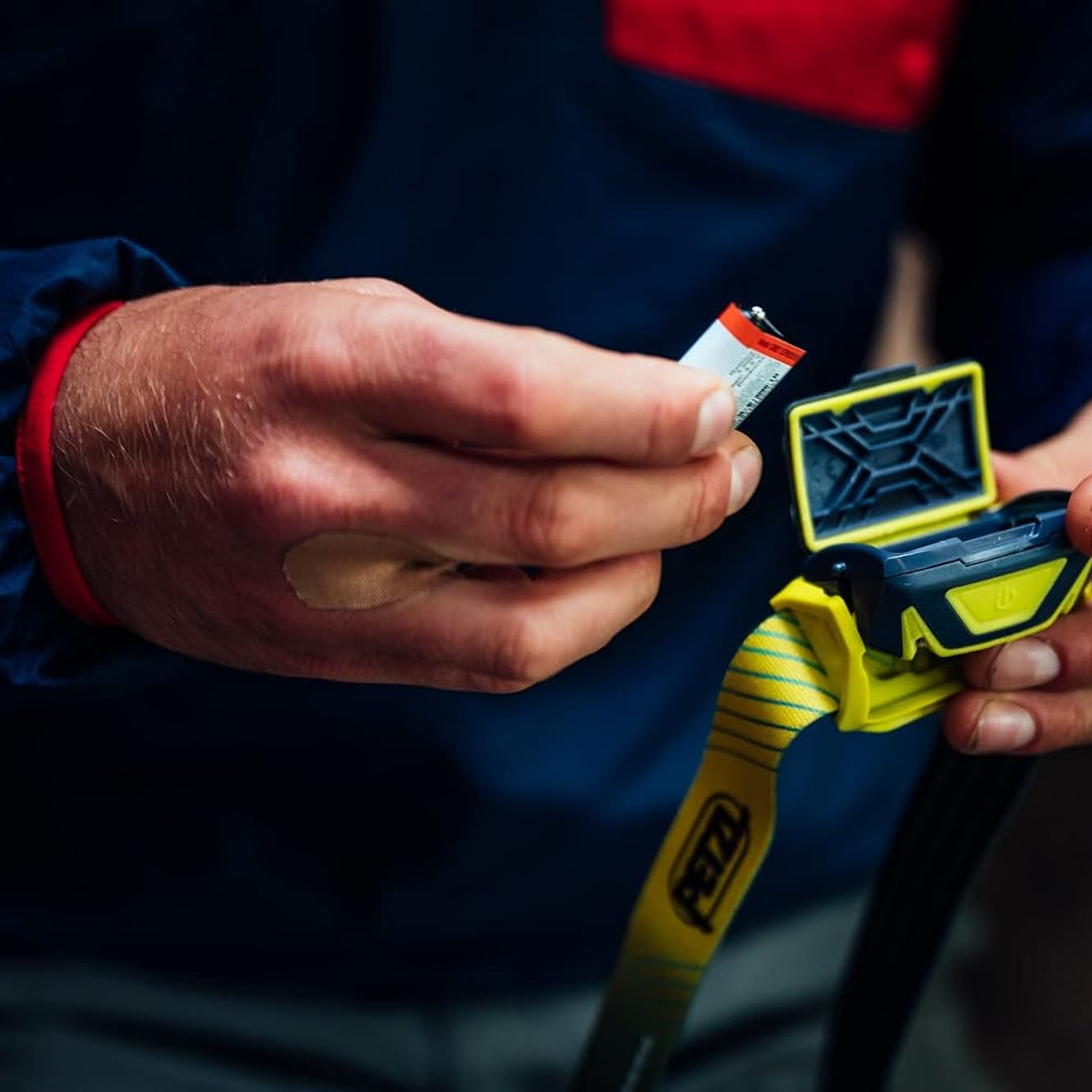
Then power. AAA batteries have a real advantage, which is that you can buy them anywhere in the world. That makes an alkaline lamp one of the best travel headlamp choices when you are far from a charger. Rechargeable lamps save money over time but tie you to a cable and a power source. Neither is wrong, they just suit different trips.
Look for a red mode if you camp with other people or share a room. It is the feature most buyers underrate before they own it and most defend after.
Check water resistance. IPX4 means splashes and rain from any direction are fine. That covers almost all normal outdoor use. If you plan on dropping your lamp in rivers, you need a different rating.
Finally, think about how many you need. One per person is the honest answer for a family camp. A shared lamp means someone is always sitting in the dark waiting.
Living with it
Set the tilt before you start a task rather than fiddling halfway through. Use the lowest white level that does the job, because the gap in battery life between low and full power is significant across a weekend.
Check the battery indicator when you switch the lamp on at home, before you pack. It shows the level each time you turn the lamp on or off, which means you never have to guess.
The phosphorescent reflector picks up a soft glow after it has been near light, so leave the lamp somewhere it catches your tent lantern and it will be easy to find later.
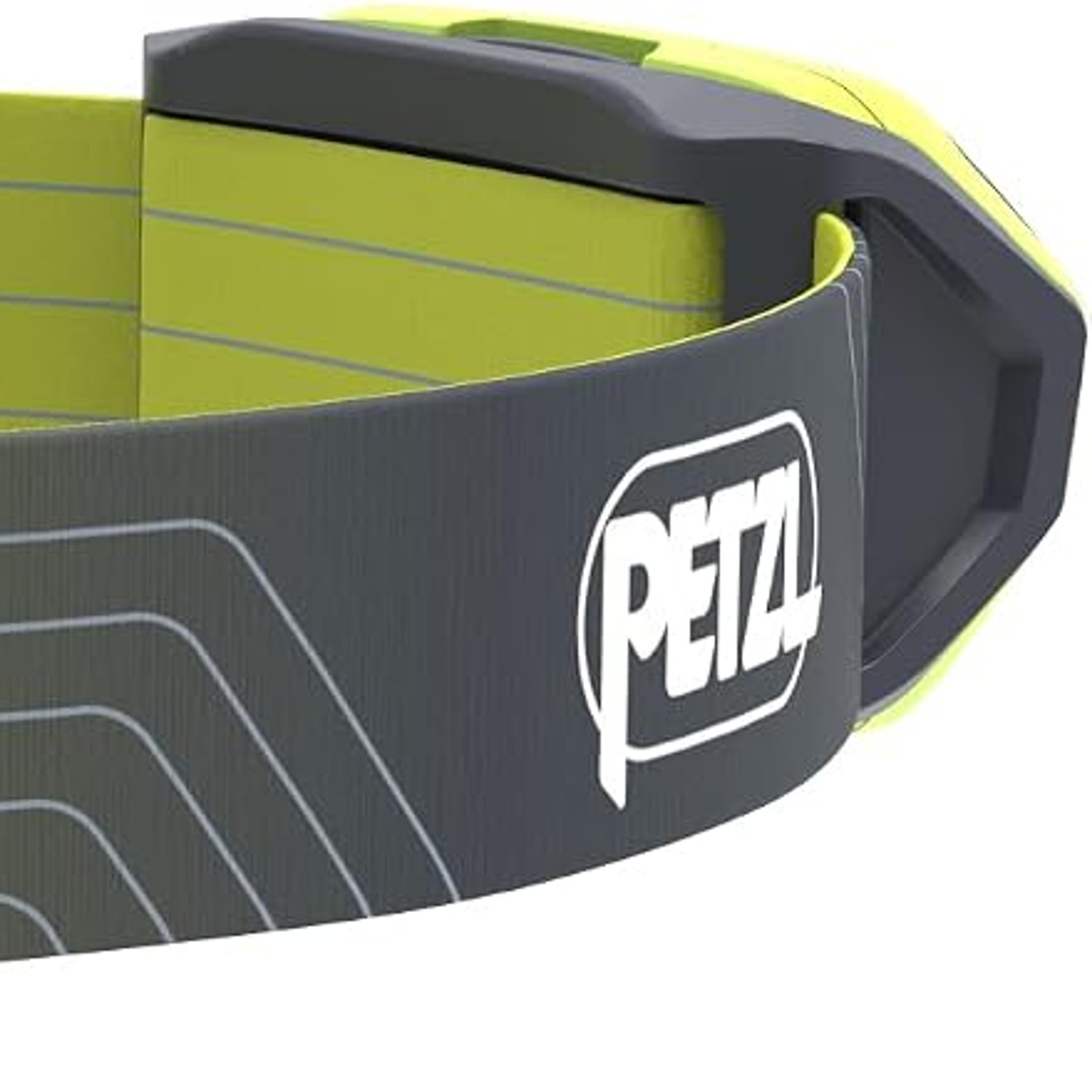
For care, wipe the body with a damp cloth and let it dry fully. Take the headband off and hand wash it in cool water now and then, since sweat and sunscreen build up. Pull the batteries out before long storage, because a leaking cell is the most common way an otherwise fine headlamp dies. Keep it somewhere dry and out of the sun.
The short version
The TIKKA is a small, light, honest headlamp. It gives you a wide and even beam for close work, three white levels so you can trade brightness against burn time, and a red mode that keeps your night vision and your tent mates on side. It weighs 94 g, it is rated IPX4 for rain and splashes, and the three AAA batteries are already in the box.
If you want a light for camp, travel, walking the dog, or a drawer at home for the next power cut, this is the right size of tool. If you need to see a long way at speed in the dark, buy something bigger and keep this one as a spare. Either way, a headlamp you actually wear beats a torch you have to hold.